Review Atlas
Review AtlasYour guide to a better purchase

Menu

Shop by Category

Get the App

Better experience on mobile

Beginners Guideβ€’Remote Control Driving

Is Best RC Truck for beginners Worth It? Honest Review (2026)

Everything beginners need to know to choose their first RC Truck with confidence.

If you're thinking about buying your first RC truck, you probably feel a mix of excitement and overwhelm. You've seen videos of trucks jumping, flipping, and crawling over rocks, and you want in. But then you look at the options and suddenly every term makes your head spin: brushless, brushed, 2WD, 4WD, LiPo, RTR, and water-resistant. It feels like you need a degree just to pick one.

The good news is it doesn't have to be that complicated. This guide is here to remove the mystery and help you choose your first RC truck the smart way. We'll focus on beginner-friendly features, honest budget advice, and simple explanations. No jargon, no pressure, and no guesswork. By the end, you'll know exactly what to look for, which trucks are worth your money, and how to start driving with confidence.

πŸ“‹ In This Guide

  • β€’ Why Beginners Struggle with RC Truck
  • β€’ What to Look For (Key Features)
  • β€’ Top 4 Beginner-Friendly RC Truck
  • β€’ Essential Accessories for Beginners
  • β€’ Common Beginner Mistakes to Avoid
  • β€’ Your Progression Path
  • β€’ FAQ & Learning Resources

😰 Why Beginners Struggle with RC Truck

Most beginners struggle because they don't yet know which features actually matter. An RC truck isn't like a pair of shoes where size and color are enough. The marketing pages throw around terms like "brushless power system" and "oil-filled shocks" without explaining what they mean for you. When you don't know what those things do, every product looks exactly the same, and the buying decision feels like a lottery.

The other big challenge is fear of buying the wrong thing. A beginner doesn't know if they'll love bashing across a field, crawling over rocks, or racing on a dirt track. They see expensive trucks with extra batteries and huge price tags and worry that they'll either waste money on a toy that breaks in a week or buy something way too fast to control. That fear is completely normal, but it's also why so many people either buy the cheapest thing they can find and get frustrated, or the fastest thing they can find and crash it within five minutes.

This guide addresses those fears directly. You'll learn what makes an RC truck beginner-friendly, what you actually need, and where to spend your money for a great first experience.

πŸ” What to Look For: Key Beginner-Friendly Features

The most important thing to look for in a first RC truck is "ready-to-run," usually abbreviated as RTR. That means the truck comes fully assembled and includes the controller, battery, and charger. You open the box, charge it, and drive. No building, soldering, or tuning sessions required. RTR is the only sane choice for a first truck.

Look for a hobby-grade truck rather than a toy-grade one. Toy-grade trucks use generic plastic parts, are not repairable, and are designed to be disposable. Hobby-grade trucks use standard materials and spare parts are available online and in local hobby shops. If you crash, you can replace parts. That alone makes the hobby less frustrating and more affordable over time.

Also look for 4-wheel drive (4WD). Four-wheel drive trucks are much more forgiving than 2WD because they deliver power to all four wheels. That gives you better traction on grass, gravel, and dirt, and it makes the truck feel more stable while you learn. You can also look for trucks with a dual-rate or speed control setting. Many beginner-friendly models let you lower the maximum speed while you're learning, then increase it as your skill improves.

βœ… Essential Features for Beginners

  • β€’Ready-to-Run (RTR): comes fully assembled, with controller, battery, and charger included.
  • β€’4WD drive: better traction and much easier to drive in grass, dirt, and gravel.
  • β€’Durable plastic body and bumpers: the truck can take hits while you learn.
  • β€’Adjustable speed settings: you can limit top speed until you're comfortable.
  • β€’Easy-to-replace spares: bumpers, arms, and wheels can be swapped without special tools.
  • β€’Proper proportional steering and throttle: the control gives you full control, not just simple on/off.
  • β€’Beginner-friendly battery: Li-ion or NiMH batteries are simple to charge, whereas high-power LiPo batteries need extra care and special bags.
  • β€’Hobby-grade parts support: you can find replacement parts online and on Amazon.

πŸ† Top 4 Best RC Truck for Beginners

#1
πŸ’° Budget

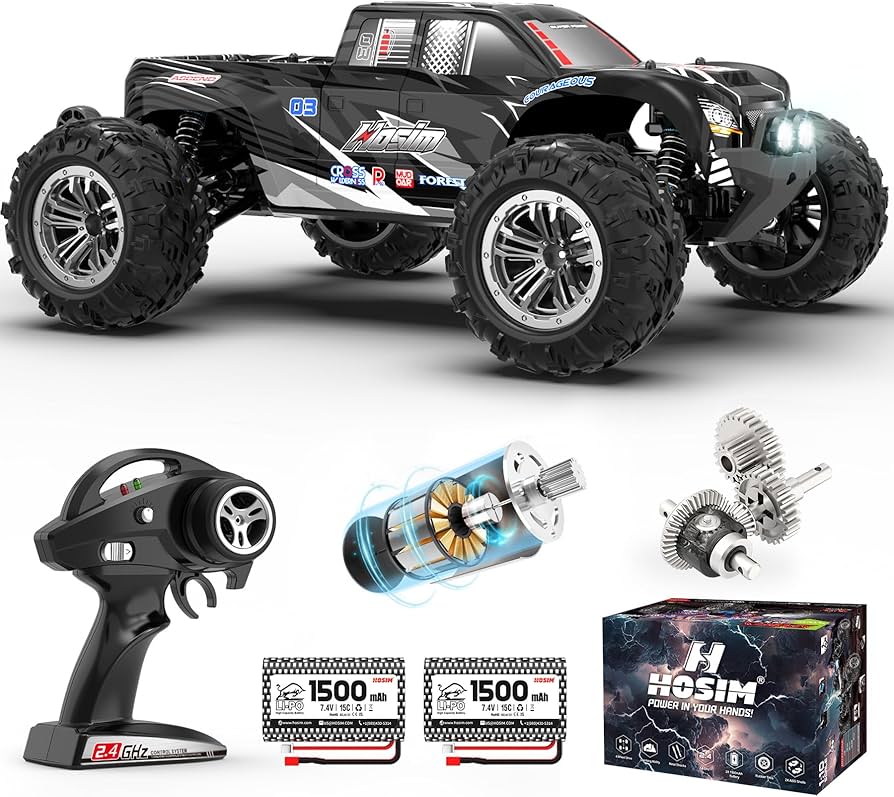
HOSIM 9125 1/12 Scale 4WD RC Monster Truck

Learning Curve: Easy

$79.99
Difficulty: 2/5
HOSIM 9125 1/12 Scale 4WD RC Monster Truck

Why Great for Beginners:

The HOSIM 9125 is an excellent budget-friendly 4WD truck that's ready to run out of the box. It's small enough to feel approachable, but tough enough to handle grass and dirt. It also includes two batteries, which doubles your driving timeβ€”a big deal for beginners.

πŸ”— Search on Amazon: https://www.amazon.com/s?k=HOSIM+9125+RC+Truck&linkCode=gg3&tag=ra075-20

βœ“ Beginner Pros

  • +Ready-to-run with two batteries included
  • +4WD gives better traction on loose surfaces
  • +Small size makes it easy to transport and store
  • +Low price means less stress about crashes
  • +Simple controls with proportional steering and throttle

βœ— Beginner Cons

  • -Smaller 1/12 scale can struggle on very tall grass
  • -Plastic suspension parts can break on big jumps
  • -Spare parts are not as widely stocked as larger brands
  • -Battery charging time is longer than the run time
πŸ‘ Best for: Budget-conscious beginners who want a fun, easy 4WD truck to try bashing in their backyard or at a local park.
πŸ‘Ž Not for: Beginners who want high speed or plan to grow quickly into competitive racing.
#2
πŸ‘ Recommended

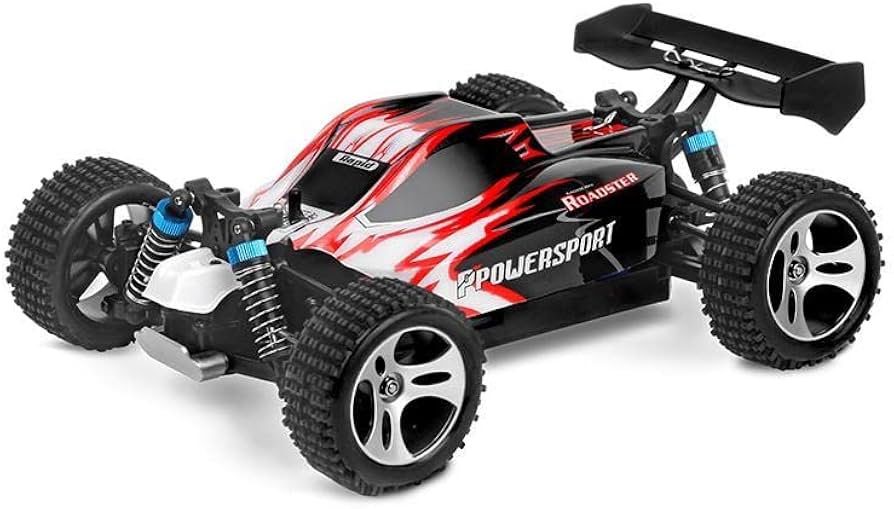
Wltoys 144001 1/14 Scale 4WD RC Buggy

Learning Curve: Moderate

$89.99
Difficulty: 3/5
Wltoys 144001 1/14 Scale 4WD RC Buggy

Why Great for Beginners:

The Wltoys 144001 is the most recommended beginner RC truck in budget hobby forums. It's a genuine hobby-grade buggy with 4WD, oil-filled shocks, adjustable camber, and tons of spare parts available on Amazon. It's fast enough to be fun, but with a brushed motor it's manageable for beginners.

πŸ”— Search on Amazon: https://www.amazon.com/s?k=Wltoys+144001&linkCode=gg3&tag=ra075-20

βœ“ Beginner Pros

  • +True hobby-grade, so you can repair it instead of throwing it away
  • +4WD gives stable, easy-to-control handling
  • +Oil-filled shocks absorb jumps and rough terrain
  • +Huge availability of cheap spare parts
  • +Adjustable suspension lets you learn basic tuning

βœ— Beginner Cons

  • -Speed can still feel fast for absolute beginners
  • -Electronics are not waterproof, so avoid puddles
  • -Battery connector may need an adapter for aftermarket batteries
  • -Small 1/14 scale is not as sturdy as larger 1/10 trucks
πŸ‘ Best for: Beginners who want an affordable, real hobby-grade truck with excellent parts support and room to learn and customize.
πŸ‘Ž Not for: People who want a huge monster truck truck or need a fully waterproof truck for snow and mud.
#3
Alternative

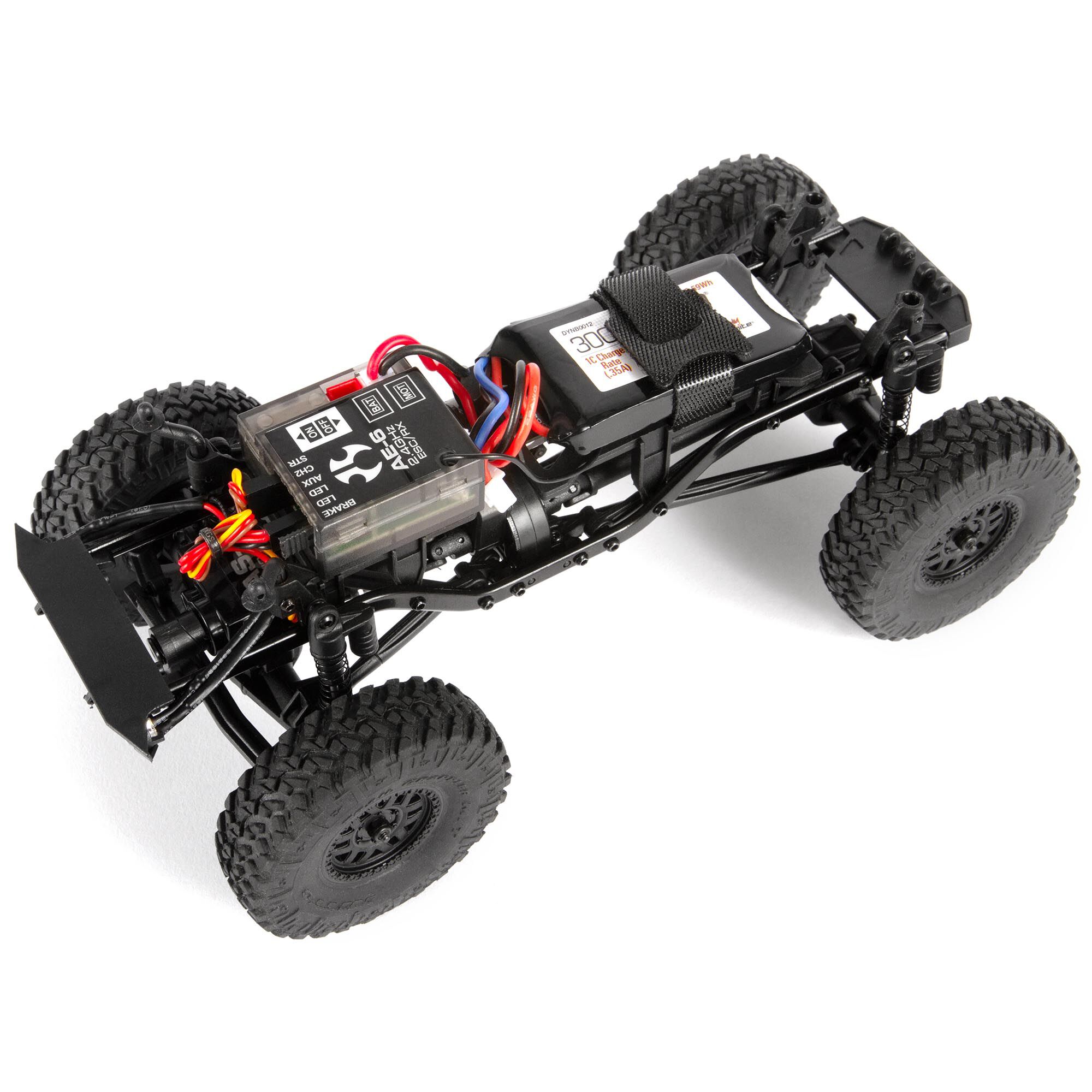
Axial SCX24 Deadbolt 1/24 Scale 4WD Rock Crawler

Learning Curve: Easy

$149.99
Difficulty: 1/5
Axial SCX24 Deadbolt 1/24 Scale 4WD Rock Crawler

Why Great for Beginners:

The Axial SCX24 is the best-selling 1/24-scale crawler and a wonderful first RC truck if you love realism and slow, technical challenges. It's tiny enough to drive indoors, entirely waterproof for puddle adventures, and surprisingly durable. Because it's so slow, it's extremely forgiving and safe to learn on.

πŸ”— Search on Amazon: https://www.amazon.com/s?k=Axial+SCX24+Deadbolt&linkCode=gg3&tag=ra075-20

βœ“ Beginner Pros

  • +Very slow speed makes crashes harmless and easy to control
  • +Fully waterproof, so you can drive through mud and snow
  • +Small scale means you can drive it in your home
  • +Large aftermarket following with countless upgrades
  • +Great for learning precise throttle control

βœ— Beginner Cons

  • -Not a speed truck β€” it's only made for crawling
  • -1/24 scale is tiny and can be lost in tall grass
  • -Battery life is short, around 10-15 minutes
  • -Premium price for its small size
πŸ‘ Best for: Beginners who prefer rock crawling, indoor RC driving, or real-world scale detail, and want a low-stress learning experience.
πŸ‘Ž Not for: Beginners who want speed, jumps, or high-speed bashing across a large field.
#4
✨ Premium

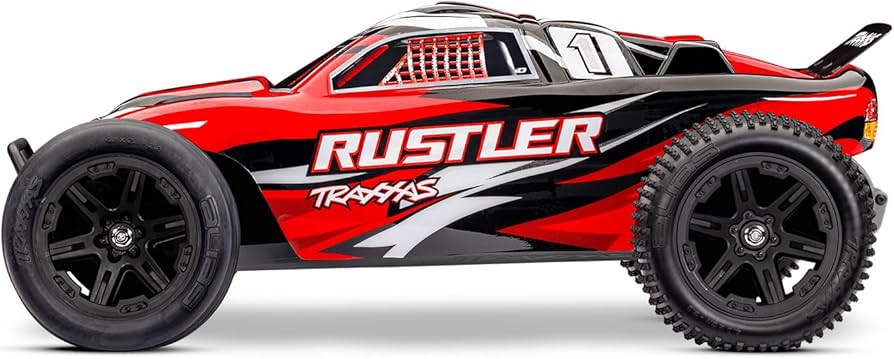
Traxxas Rustler 2WD XL-5 1/10 Scale Stadium Truck

Learning Curve: Moderate

$229.99
Difficulty: 3/5
Traxxas Rustler 2WD XL-5 1/10 Scale Stadium Truck

Why Great for Beginners:

The Traxxas Rustler is a legendary beginner-to-intermediate truck. It's not waterproof, but it is extremely tough and backed by Traxxas's huge parts network. Best of all, it has a training mode that limits top speed to 50%, letting you learn gradually before unlocking full speed.

πŸ”— Search on Amazon: https://www.amazon.com/s?k=Traxxas+Rustler+2WD&linkCode=gg3&tag=ra075-20

βœ“ Beginner Pros

  • +Training mode reduces speed for safer learning
  • +Extremely durable and easy to repair
  • +Huge dealer and parts network
  • +Familiar truck design that's great on grass, dirt, and pavement
  • +Room to grow with many upgrades from the same brand

βœ— Beginner Cons

  • -Higher price than other beginner trucks
  • -2WD can be trickier in loose dirt and grass than 4WD
  • -Battery and charger included, but upgrading to LiPo costs extra
  • -You may feel the premium price isn't necessary before you know you'll stick with the hobby
πŸ‘ Best for: Beginners who are fairly confident they'll stay in the hobby and want a premium truck they won't outgrow in a year.
πŸ‘Ž Not for: Casual or budget-focused beginners just trying the hobby, or anyone who wants 4WD from the start.

πŸ“– Complete Beginner's Guide to RC Truck

An RC truck works much like a real car, but instead of a driver, it receives signals from a hand-held transmitter. The transmitter's joystick or wheel controls the throttle and steering. The receiver in the truck tells a small electric motor to spin the wheels. That's really all there is to the basic concept. The differences between models come down to size, power, suspension, and intended use.

There are four main types of RC trucks beginners will see: monster trucks, stadium trucks, buggies, and crawlers. Monster trucks have big wheels and high ground clearance, making them great for grass and rough ground. Stadium trucks are similar but lower and more nimble, designed for dirt tracks and jumps. Buggies are smaller and lighter, good for hard surfaces and packed dirt. Crawlers are slow and incredibly precise; they're designed to climb over rocks and logs without rolling over.

For a complete beginner, the best choice is usually a monster truck, a stadium truck, or a small crawler. Monster trucks and stadium trucks are easy to drive fast and feel exciting. Crawlers teach you throttle control and are very forgiving because they don't go fast enough to crash hard. All three give you an excellent first experience in the hobby.

When people say "beginner-friendly," they mean a truck that forgives mistakes. It should not break when you run into a curb. It should be easy to see at a distance. It should not flip over at the slightest touch. And it should have parts available in case something does break. A beginner-friendly truck is also simple to charge and doesn't require a pile of tools to maintain.

A common marketing term is "hobby-grade," which usually means you can repair and upgrade it. Another term you'll see is "brushless motor." Brushless motors are faster, more powerful, and require less maintenance, but they are usually found on more expensive trucks and can be too fast for a beginner. "Brushed motor" trucks are cheaper and a little slower, but still plenty fast for a first truck, and they're easier to control.

Your first RC truck doesn't need to be the fastest one on the market. A top speed of around 20 to 35 mph is more than enough to have fun and learn. A truck that can do 50 mph out of the box is almost always a bad idea for a beginner, because crashes at that speed cause expensive breakage and can be dangerous.

πŸ”§ Essential Accessories for Beginners

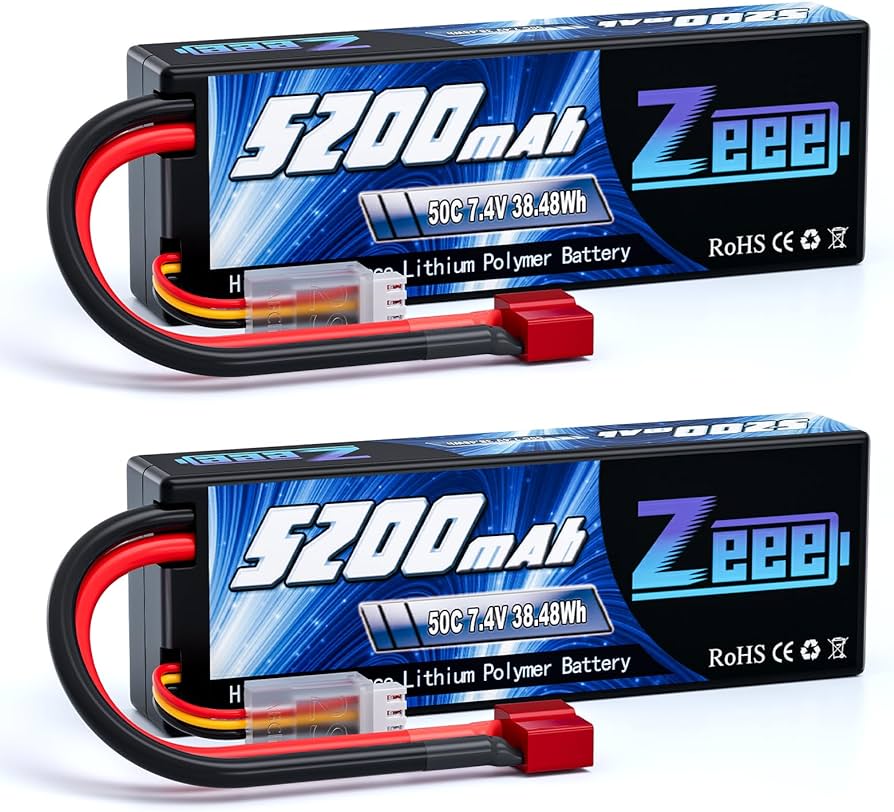
Zeee 2S 5200mAh Li-Po Battery Pack

⚠️ Essential

$32.99

When to buy:
Day one

Almost every beginner RC truck comes with a low-capacity battery that only gives 10-15 minutes of driving. A bigger battery doubles your fun time and is the cheapest "upgrade" you can buy. Search Amazon for a battery compatible with your truck's connector.

πŸ”— Search on Amazon: https://www.amazon.com/s?k=Zeee+2S+5200mAh+LiPo&linkCode=gg3&tag=ra075-20

Beginner Benefits:

  • β€’ Doubles or triples your total driving time
  • β€’ Ensures you're never disappointed by a short session
  • β€’ Saves money over buying multiple cheap packs
  • β€’ Teaches you how to handle LiPo batteries safely

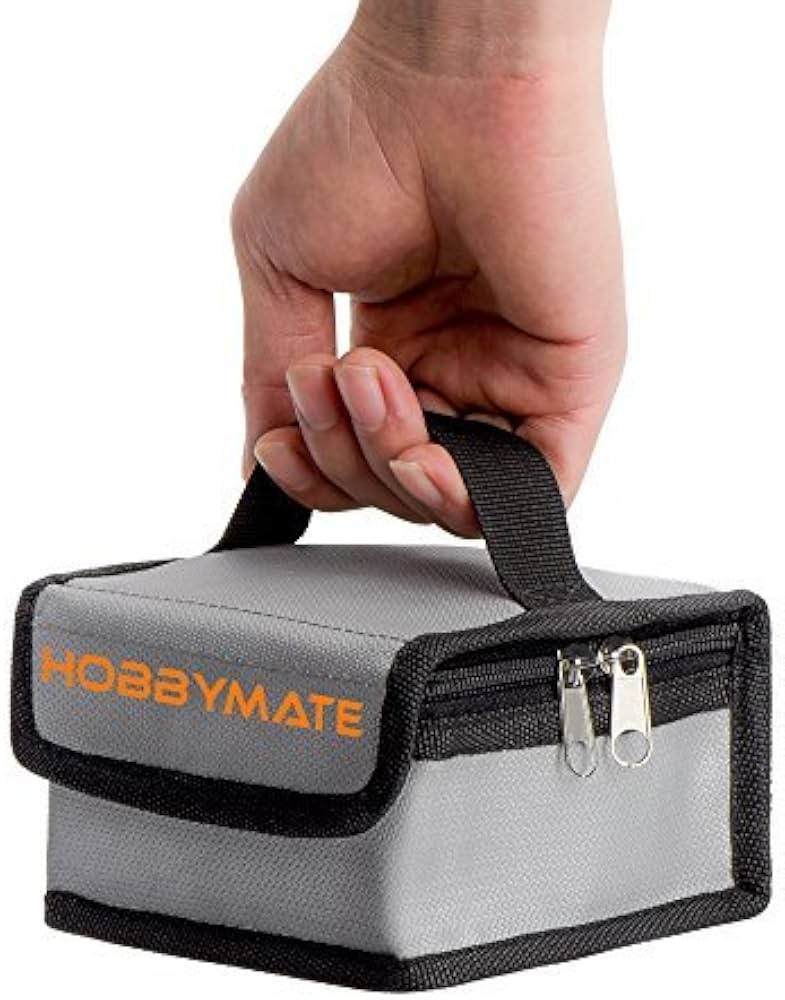
LiPo Battery Safety Charging Bag

⚠️ Essential

$12.99

When to buy:
Day one

LiPo batteries are powerful and need to be stored and charged safely. A safety charging bag catches and contains flames in the rare case of a battery failure. It's a small investment that gives you real peace of mind.

πŸ”— Search on Amazon: https://www.amazon.com/s?k=LiPo+battery+safety+bag&linkCode=gg3&tag=ra075-20

Beginner Benefits:

  • β€’ Prevents fire hazards from lithium batteries
  • β€’ Inexpensive insurance for a new hobby
  • β€’ Encourages safe charging habits from day one
  • β€’ Also useful for storage between uses

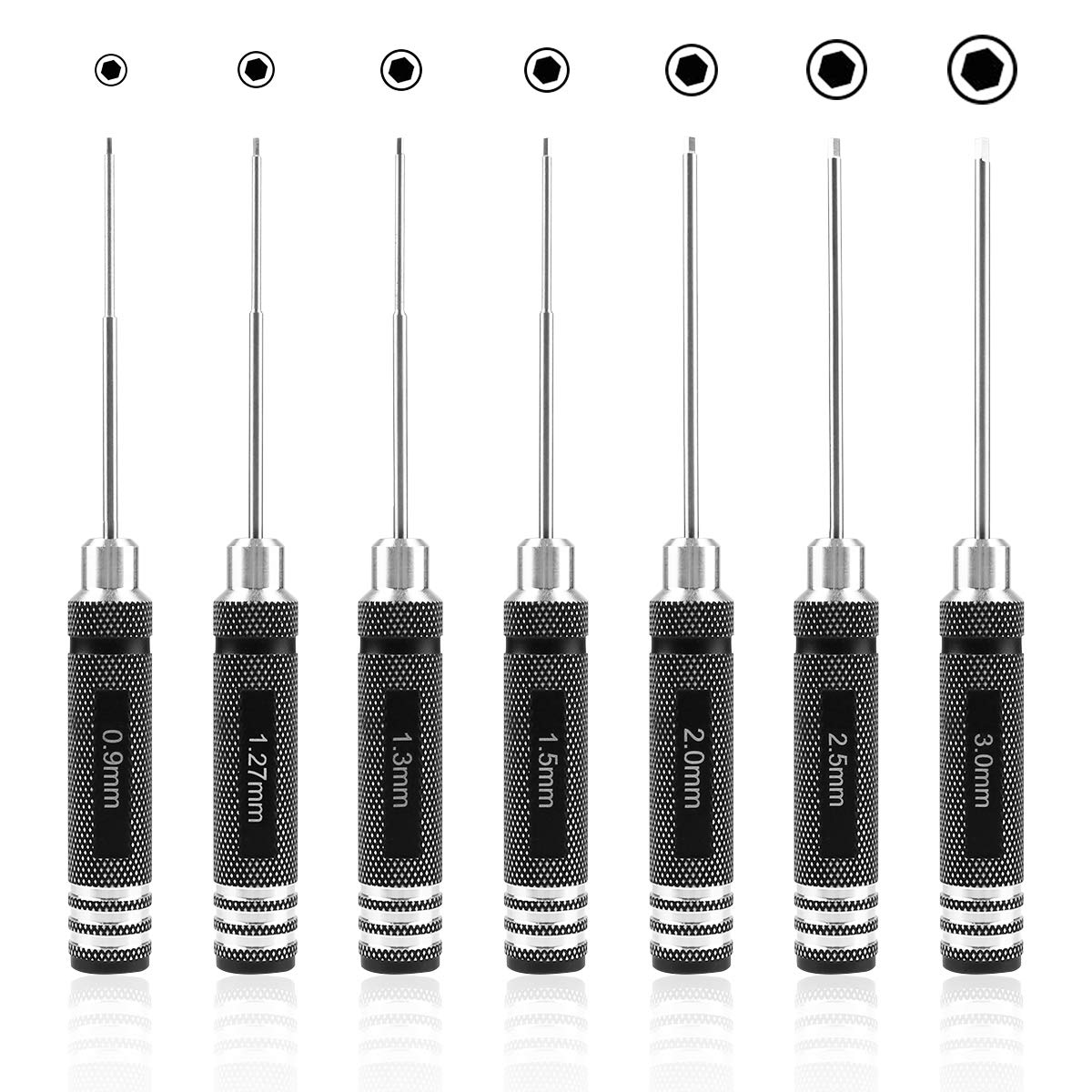
Precision Hex Screwdriver Set for RC Cars

⚠️ Essential

$15.99

When to buy:
First month

RC trucks use hex screws, not regular Phillips screws. A precision hex driver set makes repairs and upgrades much easier and prevents stripping screw heads. It's a tool every RC beginner needs in their kit.

πŸ”— Search on Amazon: https://www.amazon.com/s?k=RC+hex+screwdriver+set&linkCode=gg3&tag=ra075-20

Beginner Benefits:

  • β€’ Makes removing and replacing screws easy
  • β€’ Prevents stripped and damaged screws
  • β€’ Essential for installing hop-ups and repairs
  • β€’ Fits almost all hobby-grade RC trucks

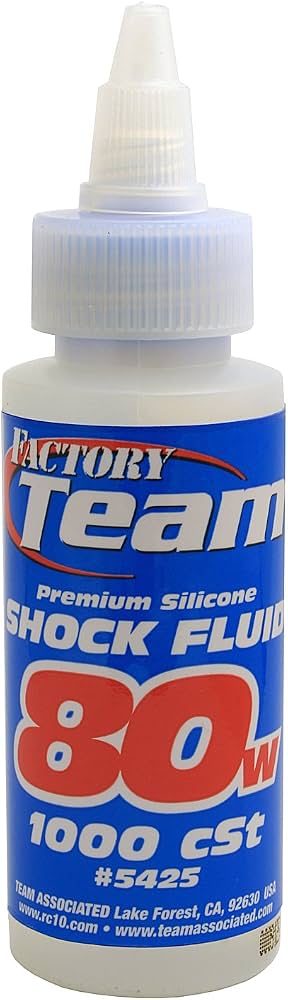
Team Associated RC Shock Oil

πŸ‘ Recommended

$9.99

When to buy:
After you're comfortable

RC shocks need the right oil to work properly. Having a small bottle of shock oil lets you tune your handling and maintain your suspension, which keeps the truck feeling sharp as you learn.

πŸ”— Search on Amazon: https://www.amazon.com/s?k=RC+shock+oil&linkCode=gg3&tag=ra075-20

Beginner Benefits:

  • β€’ Lets you tune your truck for different surfaces
  • β€’ Extends the life of your shocks
  • β€’ Cheap and useful for any future RC hobby
  • β€’ Teaches you a core RC maintenance skill

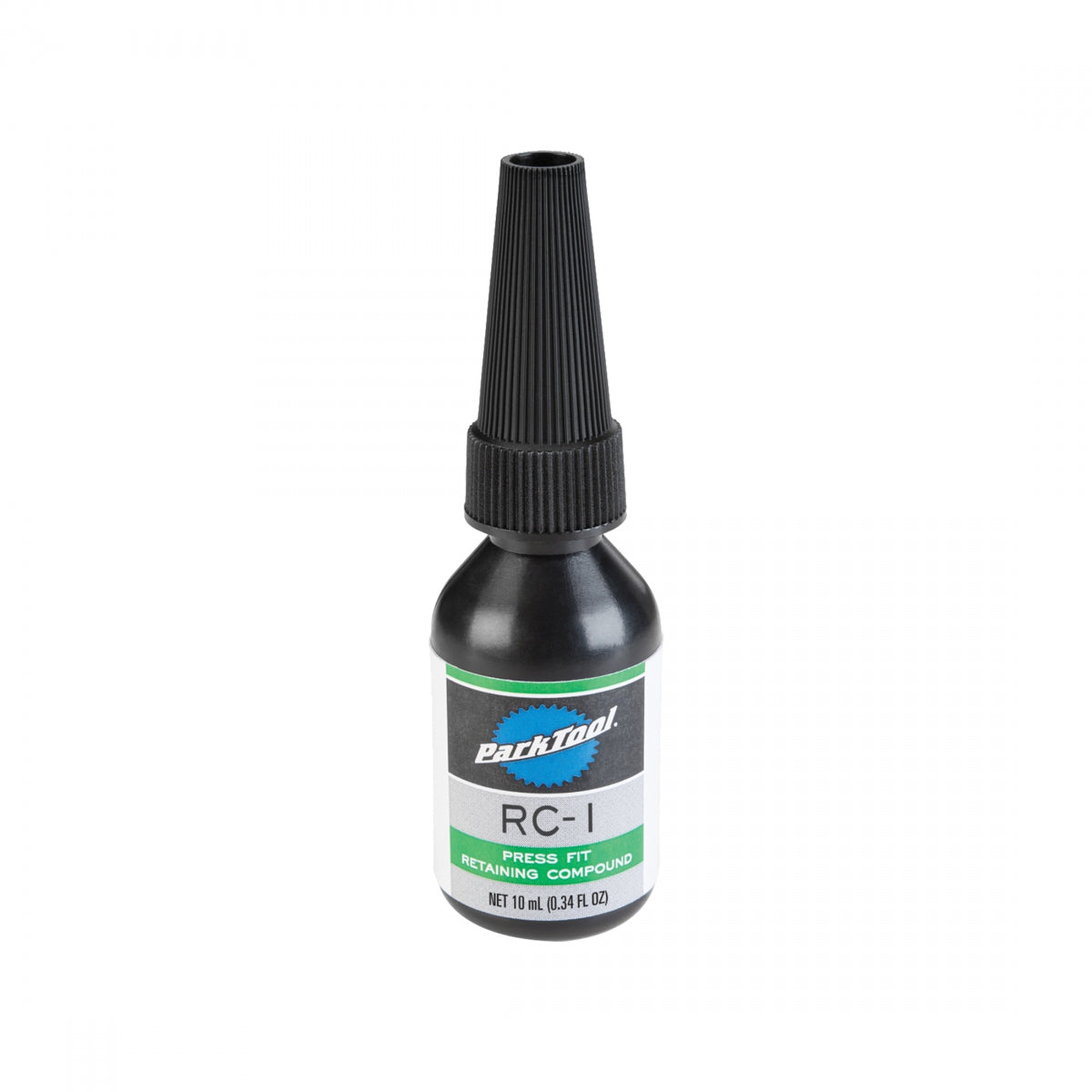
RC Thread Lock Compound

πŸ‘ Recommended

$7.99

When to buy:
First month

Vibration from a fast RC truck can loosen the screws that hold the suspension and drivetrain together. Thread lock keeps those screws tight and prevents breakage while you drive. It's a tiny tube that saves beginners a massive headache.

πŸ”— Search on Amazon: https://www.amazon.com/s?k=RC+thread+lock&linkCode=gg3&tag=ra075-20

Beginner Benefits:

  • β€’ Prevents screws from falling out during runs
  • β€’ Reduces frustration from unexpected breakage
  • β€’ Keeps suspension and driveshafts secure
  • β€’ Helps new owners do proper pre-flight checks

πŸ€” How to Choose Your First RC Truck

A simple way to choose your first RC truck is to ask yourself three questions. Where will I drive? Go to a nearby park with grass, dirt paths, or a parking lot. If you'll be on grass and gravel most of the time, pick a 4WD monster truck or stadium truck. If you have a garden, deck, or indoor space, a small 1/24-scale crawler like the Axial SCX24 can be a perfect first truck.

Second, how much do you want to spend? For most beginners, $80 to $250 is the sweet spot. Under $50, you're mostly in toy territory and you'll probably outgrow it quickly. Around $80 to $120, you can find solid, repairable hobby-grade trucks. From $150 to $250, you get better durability, more speed, and the ability to grow with the hobby.

Third, how much patience do you have for repairs and maintenance? If you want a truck that just works, choose a ready-to-run model from a known brand with good parts support, like Wltoys, Redcat, Arrma, Traxxas, or Axial. If you enjoy tinkering, some hobby-grade trucks also come as kits, but I don't recommend a kit for your first truck. A ready-to-run truck is the smartest, least frustrating path for a beginner.

πŸ’° Budget Guide for Beginners

100 - $200

Sweet spot. Most beginners will find a great 4WD RTR monster truck, buggy, or crawler in this range. This is the best value for learning without breaking the bank.

200 - $350

Premium beginner. Trucks in this range are more durable, often include brushless motors, and have better suspension. You won't outgrow them as quickly, and they handle more terrain types.

350 - $plus

Advanced entry. This range is for serious beginners who already know they want to race or bash hard. It includes premium trucks with huge parts support, but it's overkill for most first-time buyers.

Under $ - $100

Entry level. You can find genuine hobby-grade trucks here, but they're often smaller or have brushed motors. Good for trying the hobby, though you may want a bigger, faster truck soon.

⚠️ Common Beginner Mistakes to Avoid

One of the most common beginner mistakes is buying the absolute cheapest RC truck they can find. A $30 toy-grade truck may look good in the product photos, but it will likely break within the first few runs, parts won't be available, and the driving experience will leave you disappointed. Rather than saving money, you'll end up spending more to buy the right truck later.

Another mistake is buying a high-speed truck because it's exciting, without understanding the learning curve. A truck that goes 45 to 60 mph might be fun for an expert, but for a beginner it's a crash machine. You'll spend more time repairing than driving. Same thing with buying a truck with features you don't need. If you don't plan on rock crawling, a $600 crawler is overkill.

People also forget to buy essential accessories like extra batteries, a proper charger, and simple tools. The battery that comes in the box often lasts only 15 to 20 minutes, and then you're done for the day. Without a second battery and a spare part or two, you'll have a lot less fun. Beginners also tend to ignore maintenance until something breaks. A quick wipe-down after driving on wet grass, checking for loose screws, and applying thread lock to a few key screws goes a long way.

  • Γ—Buying a toy-grade truck and expecting hobby-grade quality.
  • Γ—Spending too much on features you don't need yet.
  • Γ—Choosing a truck with too much speed for your skill level.
  • Γ—Forgetting to buy extra batteries and a proper charger.
  • Γ—Not buying replacement and maintenance parts like extra wheels or bumpers.
  • Γ—Ignoring maintenance until something breaks.
  • Γ—Buying a kit that requires assembly and tuning as a first truck.
  • Γ—Underestimating how important local spare parts support is.

πŸ“ˆ Your Progression Path: Beginner to Intermediate

As a beginner, your first goal should be learning basic throttle and steering control. Start on flat, open ground and practice starting and stopping gently. Then make wide turns and gradually get used to the truck's turning radius. Once you can steer around obstacles without panicking, try small jumps and different terrain. You can also try simple training drills, like driving around cones or following a path. These help you build the muscle memory you'll need for more advanced driving.

Most beginners stay with their first truck for several months before feeling the need to upgrade. Signs you're ready to move to the next level include: you can drive around obstacles easily without crashing, you're comfortable hitting small jumps and landing them, and you want more speed or better handling than your current truck can provide. That's when you can look at a brushless upgrade, a bigger 1/10-scale truck, or a specialized truck for racing or bashing.

When you're ready to grow, you don't have to buy a whole new truck right away. Start with cheap, beginner-friendly upgrades: better tires, a stronger steering servo, an aluminum shock cap set, or a faster motor if your truck supports it. Learning to repair and upgrade your first truck on your own is one of the most satisfying parts of the hobby, and it prepares you for a more advanced truck later.

πŸ“š Learning Resources for Beginners

  • πŸ“–RC Hobbies & Remote Control Vehicle Maintenance Kit on Amazon
  • πŸ“–Precision Metric Hex Driver Tool Set (available on Amazon)
  • πŸ“–Xtar battery charger and LiPo safety bag (available on Amazon)
  • πŸ“–RC Car Setup and Tuning Guide book (search on Amazon)
  • πŸ“–Digital caliper for checking wear and fitting upgrades (available on Amazon)

🎯 Bottom Line: Our Recommendations

If you're looking for the best all-around RC truck for beginners, the Wltoys 144001 is the top pick. It's a 4WD 1/14-scale buggy that's ready to run, fast enough to be fun but not so fast that it scares you, and it has a huge amount of available spare parts. It's also affordable, usually around $90, making it the sweet spot for most newcomers.

If you're on a really tight budget, the HOSIM 9125 offers a great first experience for under $100. And if you think you'd enjoy slow, technical crawling more than speed, the Axial SCX24 Deadbolt is a fantastic little crawler that you can drive indoors and outdoors. For people who know they'll stick with the hobby and want a premium first truck, the Traxxas Rustler 2WD is tough, has excellent parts support, and includes a training mode that lets you start with reduced speed and work your way up.

No matter which you choose, remember that your first RC truck is about learning, having fun, and building your confidence. You don't need the most expensive truck. You need a good, dependable, ready-to-run model that fits your budget and your local terrain. Start there, get a second battery, buy a basic tool kit, and you'll be ready for an awesome first season.

❓ Frequently Asked Questions

For most beginners, the Wltoys 144001 is the best overall pick. It's a cheap, 4WD, hobby-grade buggy with huge spare parts availability and a learning curve that's manageable. If you prefer crawling, the Axial SCX24 is also an excellent beginner choice.
Most beginners should spend between $80 and $250. Under $80 you're often in toy-grade territory, and over $250 you're paying for features you don't yet need. The $80-150 range gives you a quality ready-to-run truck with room to grow.
Beginners should look for ready-to-run (RTR), 4WD, durable construction, available spare parts, adjustable speed options, and a simple battery system. Fancy features like brushless motors and advanced tuning are not needed at first.
The easiest RC trucks are small crawlers like the Axial SCX24, because they travel at walking speed, don't crash hard, and can be driven indoors. For a fast truck, a 4WD monster truck like the HOSIM 9125 is also easy to drive.
At minimum, you need a second battery, a safe charger, a precision hex screwdriver set, and some basic spare parts like extra wheels or shock oil. These ensure more driving time and prevent the hobby from feeling frustrating.
Decide where you'll drive, how much you want to spend, and whether you like speed or crawling. Then look for a ready-to-run, hobby-grade, 4WD truck in your budget. Search Amazon for that type, read recent customer reviews, and avoid toy-grade products.
No, it's not hard to get started. Driving a modern RC truck is as simple as pulling a trigger to go and turning a wheel to steer. The challenge is learning control, judgment for jumps, and how to do simple maintenance, but that comes with practice.
The most common mistakes are buying too cheap, buying too much speed, forgetting spare batteries, and skipping basic tools. Beginners also often ignore the need for spare parts and maintenance, which leads to more downtime and disappointment.
Start with a brushed motor. Brushed motors are cheaper, slower, and easier to control. They still reach speeds around 20-30 mph, which is plenty for learning. Brushless is faster, more efficient, and more expensive, so save it for your second truck.
4WD is almost always better for a beginner. It gives you better traction, more stability, and makes it much easier to drive in grass and dirt. 2WD trucks can be fun and lighter, but they have a steeper learning curve.
Ready-to-run means the truck comes fully assembled and includes the radio, battery, and charger. You just unpack, charge, and drive. For a beginner, RTR is the right choice.
A beginner truck should have a top speed between 20 and 35 mph. At that speed it's thrilling but still controllable. Trucks that go 50 mph or more are dangerous for first-timers and break much more easily in crashes.

Related Articles