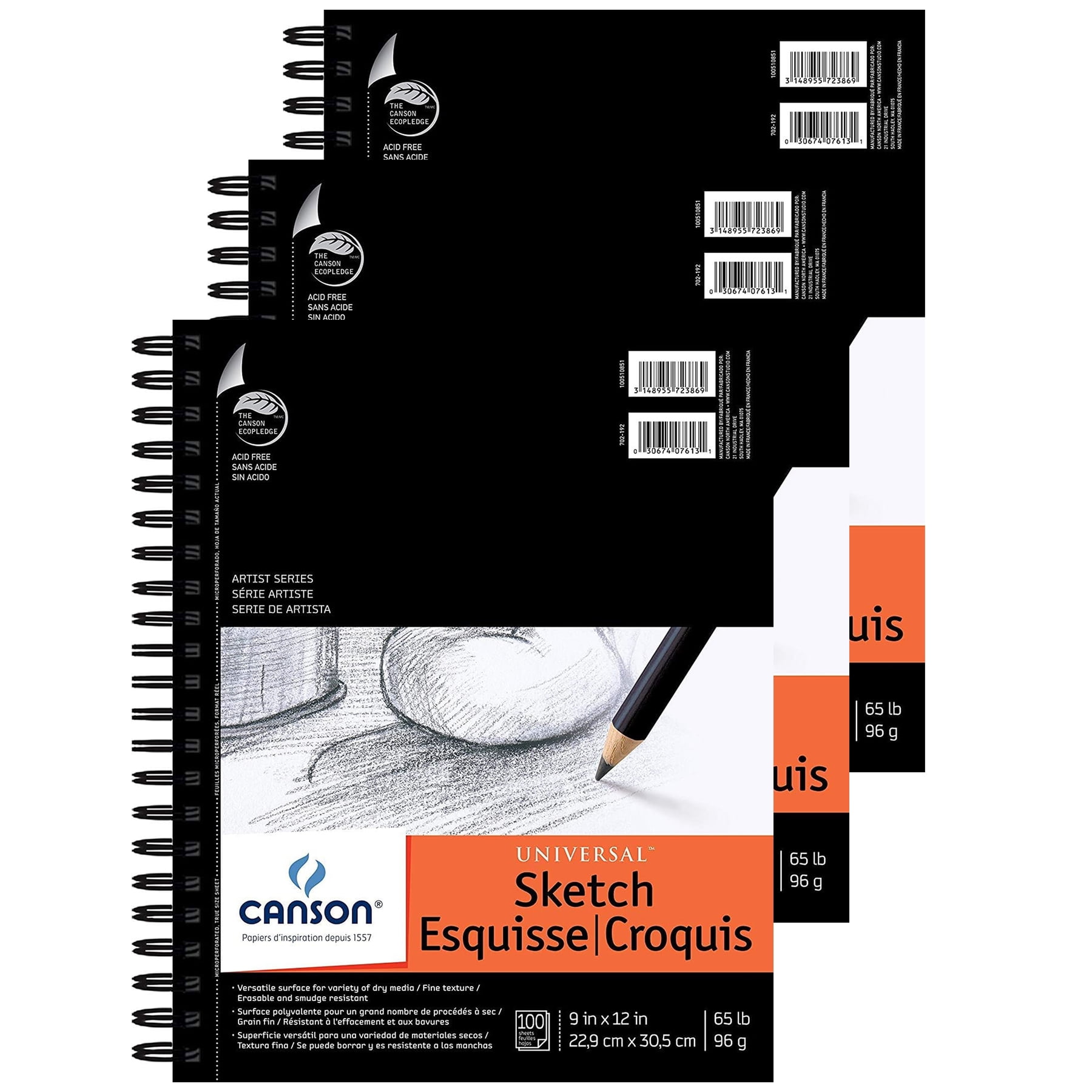
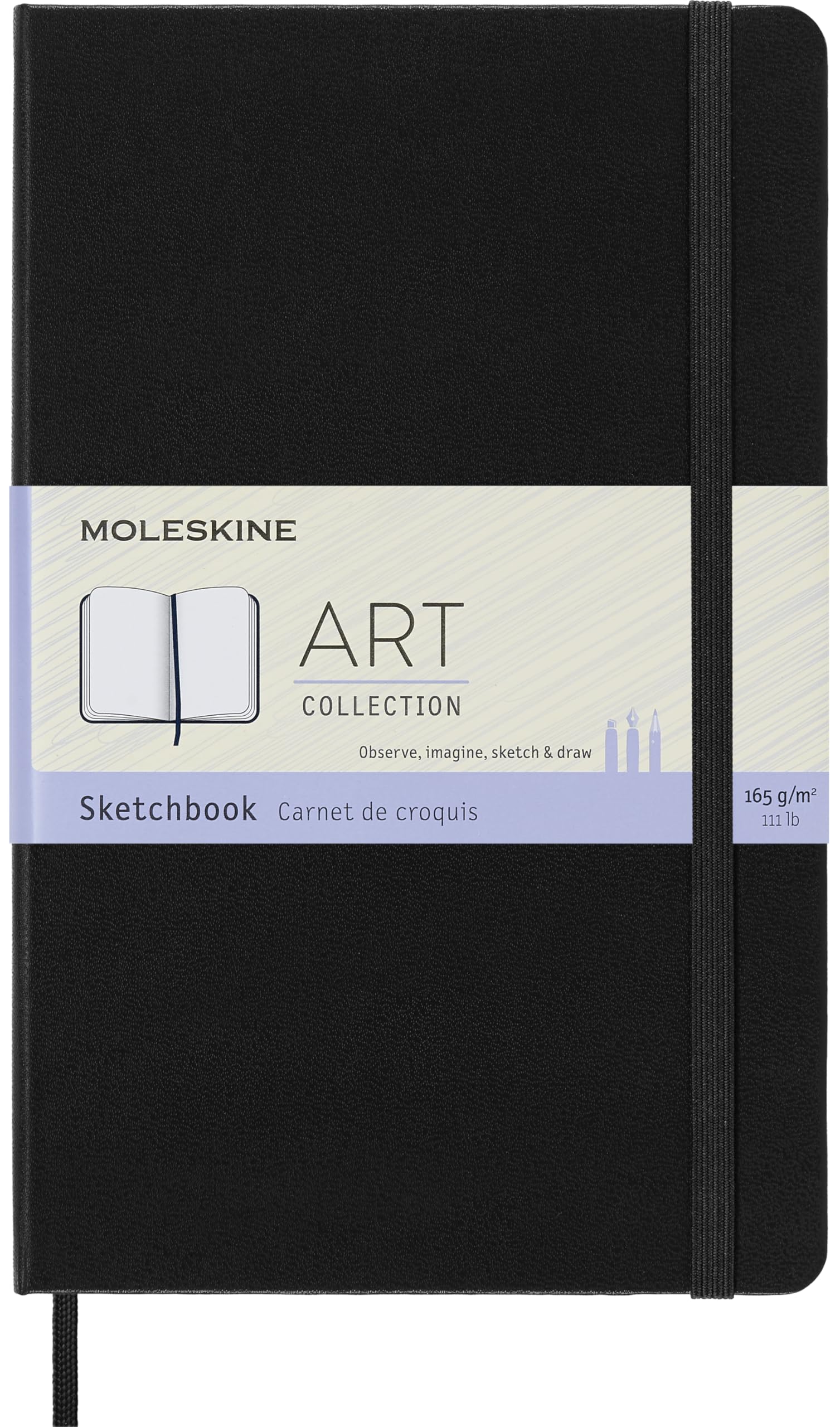
A sketchbook is simply a bound pad of paper designed for drawing. What makes one different from another comes down to paper weight, texture, binding, and size. Paper weight is the thickness; heavy paper (140 lb) is meant for wet media like watercolor, while lighter paper (60–80 lb) is for pencil and pen. 'Tooth' is the surface texture; medium tooth is the beginner's best friend because it grips pencil without being so rough that small details get lost. Binding options are roughly hardcover/softcover, spiral/wire, or stapled/glued. For beginners, spiral or wire binding is usually easiest because it lays flat and lets you work near the edge. Hardcover is nice to protect pages but can be heavier and pricier. Softcover pads are lightweight and budget-friendly. The most important thing is that the paper performs well for the materials you want to use. For most beginners, a 9x12 or 8.5x11 size is ideal — large enough to practice but small enough to carry anywhere. Smaller 5.5x8.5 pads are great for quick sketching but can feel cramped when you're learning to control your line. Big 14x17 pads are wonderful for gesture drawing but harder to fill and less portable.
There are also different categories of sketchbook: drawing pads, sketching pads, mixed-media pads, and notebooks. Drawing pads usually have smooth to medium tooth and are designed for dry media. Sketching pads are often a bit rougher with a slightly heavier paper for both pencil and charcoal. Mixed-media pads can handle some wet media like light watercolor or marker, but the paper is usually not as heavy as a dedicated watercolor block. For a beginner, a standard drawing or universal sketch pad is the best starting point. It's forgiving, inexpensive, and works with the majority of learning exercises. If you plan to only do pencil drawing, you don't need a mixed-media pad. If you think you might try ink or light marker later, a universal pad is enough. Avoid very cheap writing paper or 'copy' paper — it tears, smudges, and makes pencils feel slippery. Also avoid expensive archival watercolor paper unless you know you need it.
'Beginner-friendly' really means three things: forgiving, intuitive, and affordable. Forgiving paper lets you erase mistakes without ripping or scuffing. Intuitive design means the sketchbook lays flat on the table, feels comfortable in your hands, and doesn't fight you while you work. Affordable means you're not terrified to fill the pages. Many beginners never complete a sketchbook because they feel they're wasting expensive paper. That's a huge barrier. So don't overbuy. A $10–$15 sketchbook is genuinely enough for a first pad. It will let you practice, make mistakes, and build confidence.
When comparing options, learn to ignore flashy marketing. Terms like 'artist-grade' and 'studio quality' are not standardized. Look at the specs and read beginner-focused customer reviews. Search for words like 'erasable' and 'no bleed through' to understand how the paper behaves. Focus on what you can feel: is the paper thick enough? Does it lay flat? Does the surface feel good when you move a pencil across it? You don't need the fanciest sketchbook; you need one that works with you.