Review Atlas
Review AtlasYour guide to a better purchase

Menu

Shop by Category

Get the App

Better experience on mobile

Beginners GuideFishkeeping

Is Best Aquarium Kit for beginners Worth It? Honest Review (2026)

Everything beginners need to know to choose their first Aquarium Kit with confidence

Starting your first aquarium is exciting, but choosing the right aquarium kit can feel overwhelming. With dozens of brands, sizes, and feature lists, it's easy to get lost in technical jargon like 'GPH flow rates,' 'biological filtration,' and 'photosynthetic lighting.' Here's the good news: once you know what actually matters, picking a beginner-friendly kit becomes simple.

This guide strips away the marketing hype and walks you through everything you need to feel confident about your first purchase. We'll cover the exact features that help beginners succeed, the products that give you the best chance of keeping fish healthy, and the common mistakes that trip up new owners. By the end, you'll know exactly which aquarium kit fits your space, budget, and lifestyle — and which ones you should skip.

📋 In This Guide

  • • Why Beginners Struggle with Aquarium Kit
  • • What to Look For (Key Features)
  • • Top 5 Beginner-Friendly Aquarium Kit
  • • Essential Accessories for Beginners
  • • Common Beginner Mistakes to Avoid
  • • Your Progression Path
  • • FAQ & Learning Resources

😰 Why Beginners Struggle with Aquarium Kit

Many beginners struggle because they fall for marketing hype and overcomplicate their decision. Advertisements highlight fancy features like smartphone-controlled lighting, automatic fish feeders, and multi-stage CO2 systems — none of which help a newcomer keep fish alive. Technical terms like 'nitrogen cycle,' 'bioload,' and 'beneficial bacteria' make fishkeeping seem like advanced chemistry, when really the core concepts are simple once someone explains them plainly.

Another common struggle is the fear of buying the wrong product. Reading Amazon reviews, you'll see complaints about missing heaters, weak filters, and tiny tanks that need constant maintenance. Beginners often don't know that tank size is the most forgiving quality and that a kit's accessories matter as much as the tank itself. This anxiety leads to endless comparison-shopping and, too often, a decision based on a pretty picture rather than what the beginner actually needs to succeed.

🔍 What to Look For: Key Beginner-Friendly Features

Beginners need a kit that is stable, forgiving, and complete. Look for 'all-in-one' kits that include the tank, a hood, a filter, and LED lighting — that way you aren't chasing down separate components on day one. Size matters more than most beginners realize: a 10 or 20-gallon tank is far more forgiving than a tiny 2.5-gallon tank because water chemistry changes much more slowly in a larger volume. A slightly bigger tank gives you time to learn and fix mistakes before fish are in danger.

The most beginner-friendly features are a simple hang-on-back filter with inexpensive replacement cartridges, an LED light with a single on/off switch, and a lid that keeps fish from jumping. Stay away from kits that require complicated setup, use unknown filter sizes that are hard to find, or claim to be 'self-cleaning' — those are red flags. You do not need programmable timers, WiFi, or built-in CO2 yet. Those are upgrades for later, once you've mastered the basics.

✅ Essential Features for Beginners

  • Simple filter with cheap cartridges — a hang-on-back filter you can rinse and replace in minutes keeps ammonia low without fuss
  • Hood with LED light — prevents fish from jumping and lights your tank with the flip of one switch, no assembly required
  • Heater-ready design — a slot in the hood and open back area where you can install a simple submersible heater
  • Clear instructions inside the box — beginner kits include a quick-start guide that explains cycling, not just reading about it
  • Stable footprint — a glass tank with a flat, straight rim that sits firmly on a table or stand without wobbling
  • Moderate size between 10 and 20 gallons — large enough that water chemistry doesn't swing wildly with small doses of food
  • Easy cleaning access — a lid that lifts off completely and a filter that slides out so you can wipe glass and gravel easily
  • Gravel and substrate included — some kits include a little bag of gravel, which saves a shopping trip

🏆 Top 5 Best Aquarium Kit for Beginners

#1
💰 Budget

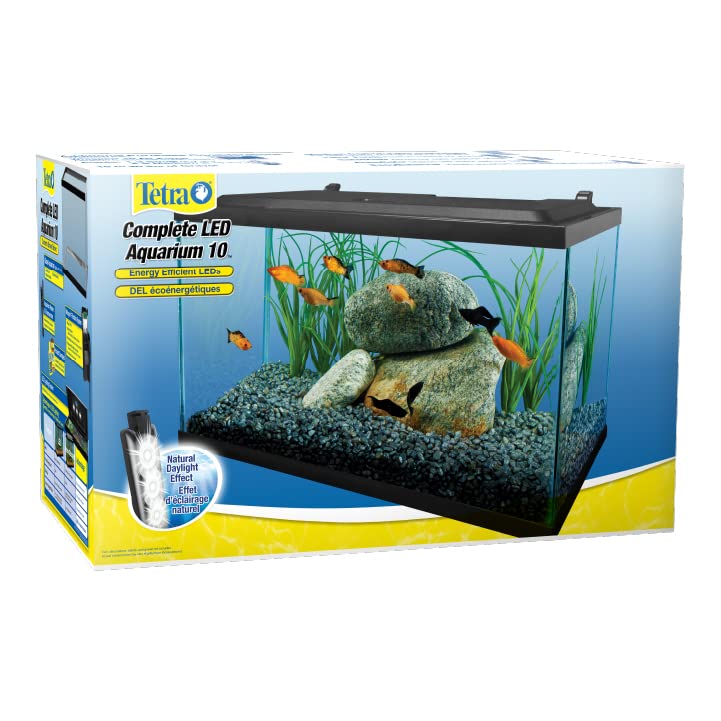
Tetra 10 Gallon Complete LED Aquarium Kit

Learning Curve: Easy

$54.99
Difficulty: 2/5
Tetra 10 Gallon Complete LED Aquarium Kit

Why Great for Beginners:

This is the best no-frills starter on the market. It comes with a glass tank, LED hood, and a simple filter, so you only need to add a heater and a test kit. It's easy to assemble and forgiving enough for a first-time fishkeeper.

Beginner Pros

  • +Includes LED hood and filter
  • +Simple 20-minute assembly
  • +Clear glass with good viewing angles
  • +Very budget-friendly price
  • +Cheap and easy to find replacement filter cartridges

Beginner Cons

  • -Filter is basic and cartridges need monthly replacement
  • -No heater included
  • -10 gallons is on the smaller side, so water changes are more important
👍 Best for: The budget-conscious beginner who wants to try fishkeeping without a big upfront investment.
👎 Not for: Anyone who wants a larger, stable community tank or plans to keep goldfish (which need 20+ gallons).
#2
👍 Recommended

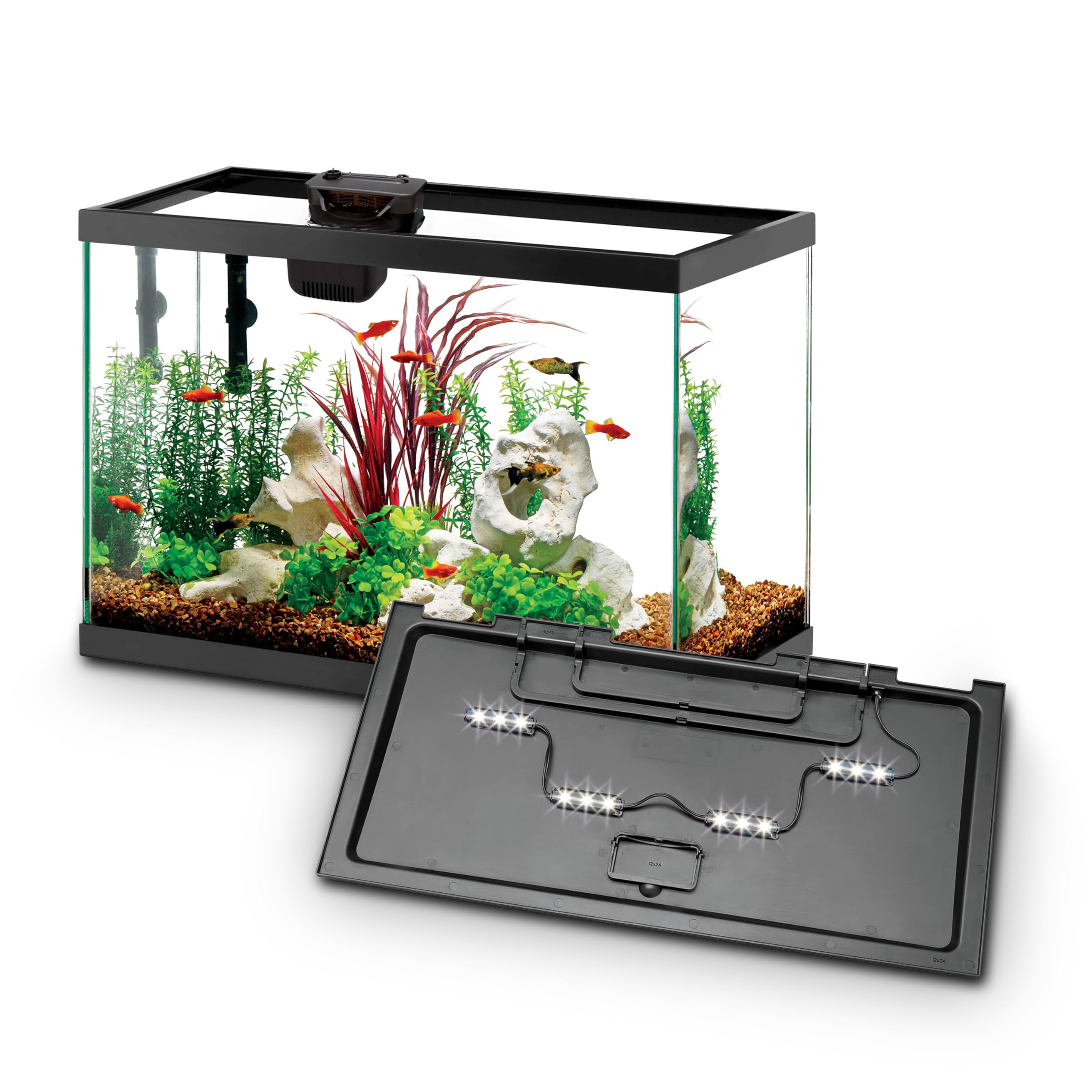
Aqueon LED 20 Gallon Aquarium Kit

Learning Curve: Easy

$109.99
Difficulty: 2/5
Aqueon LED 20 Gallon Aquarium Kit

Why Great for Beginners:

This is the sweet spot for most beginners. The 20-gallon volume is stable, forgiving, and fits a classic community fish collection. The included LED hood and filter are solid quality, and the large opening makes cleaning and feeding easy.

Beginner Pros

  • +20 gallons gives stable water chemistry
  • +LED hood is bright and efficient
  • +Strong enough filter for the tank size
  • +Roomy enough for 6–10 small community fish
  • +Lots of upgrade possibilities (plants, aquascaping)

Beginner Cons

  • -Heavy — needs a sturdy, level stand or table
  • -Heater not included
  • -Slightly more weekly maintenance time
👍 Best for: The average beginner with a stable surface who wants a forgiving, roomy first tank that they won't outgrow quickly.
👎 Not for: Someone with very limited space or who cannot lift a 20-gallon tank into place safely.
#3
Alternative

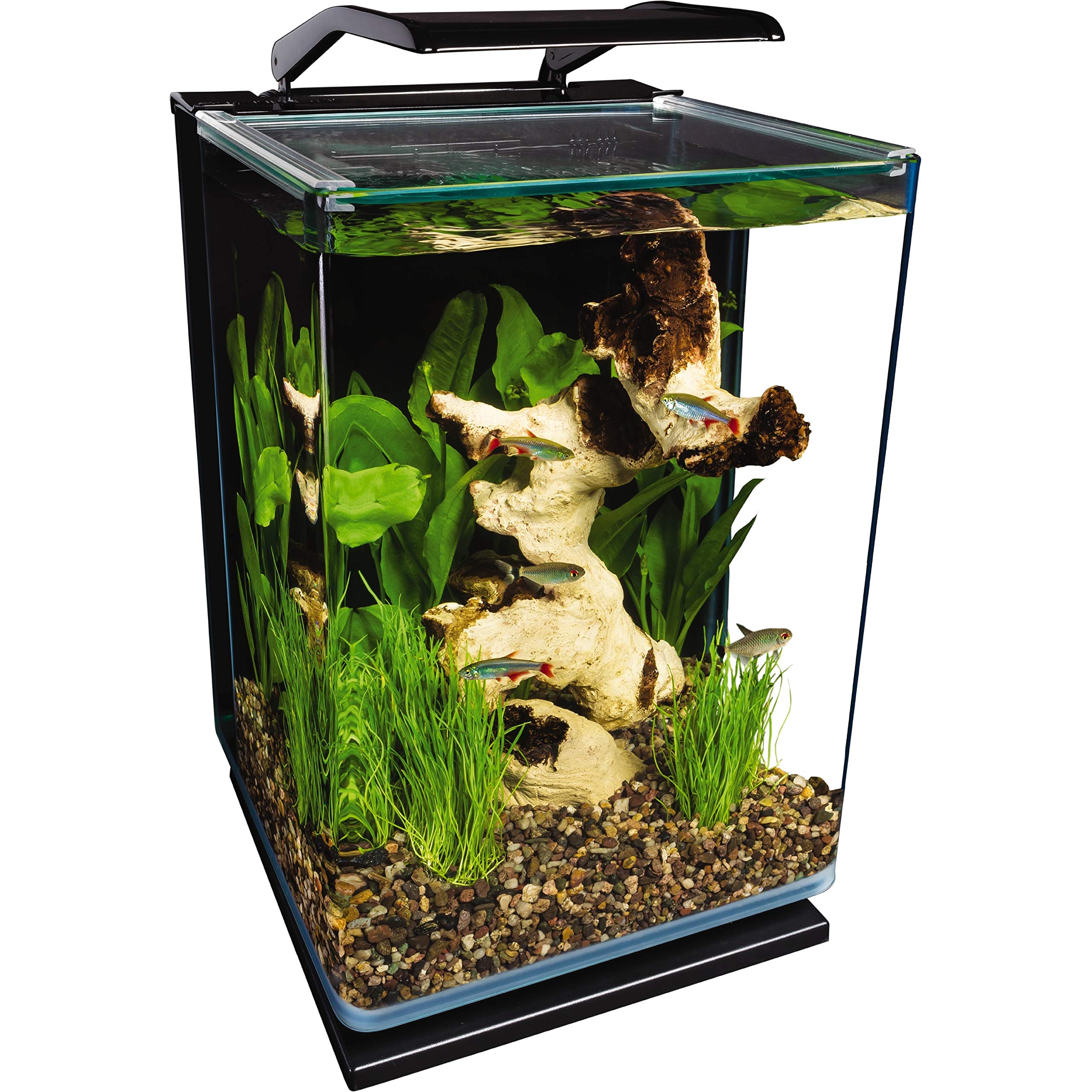
Marineland Portrait Glass LED Aquarium Kit (5 Gallon)

Learning Curve: Moderate

$89.99
Difficulty: 3/5
Marineland Portrait Glass LED Aquarium Kit (5 Gallon)

Why Great for Beginners:

The Portrait is one of the most beautiful nano tanks on the market. Its hidden filtration makes it look clean and modern, and it's a perfect home for a single betta or a small shrimp colony. If you want something pretty on a desk rather than a big fish room centerpiece, this is it.

Beginner Pros

  • +Gorgeous, modern look
  • +Built-in filter hides all equipment
  • +Gentle water flow is ideal for bettas and shrimp
  • +LED light included
  • +Glass tank doesn't scratch easily

Beginner Cons

  • -5 gallons is hard to keep stable for beginners
  • -Limited fish choices (betta or small nano fish only)
  • -Filter media is a bit fiddly to access
  • -Needs more frequent water changes
👍 Best for: The beginner who wants a stylish desktop tank and is committed to caring for a single betta or shrimp.
👎 Not for: Beginner who dreams of a community tank with multiple fish types — go with 10 or 20 gallons.
#4
✨ Premium

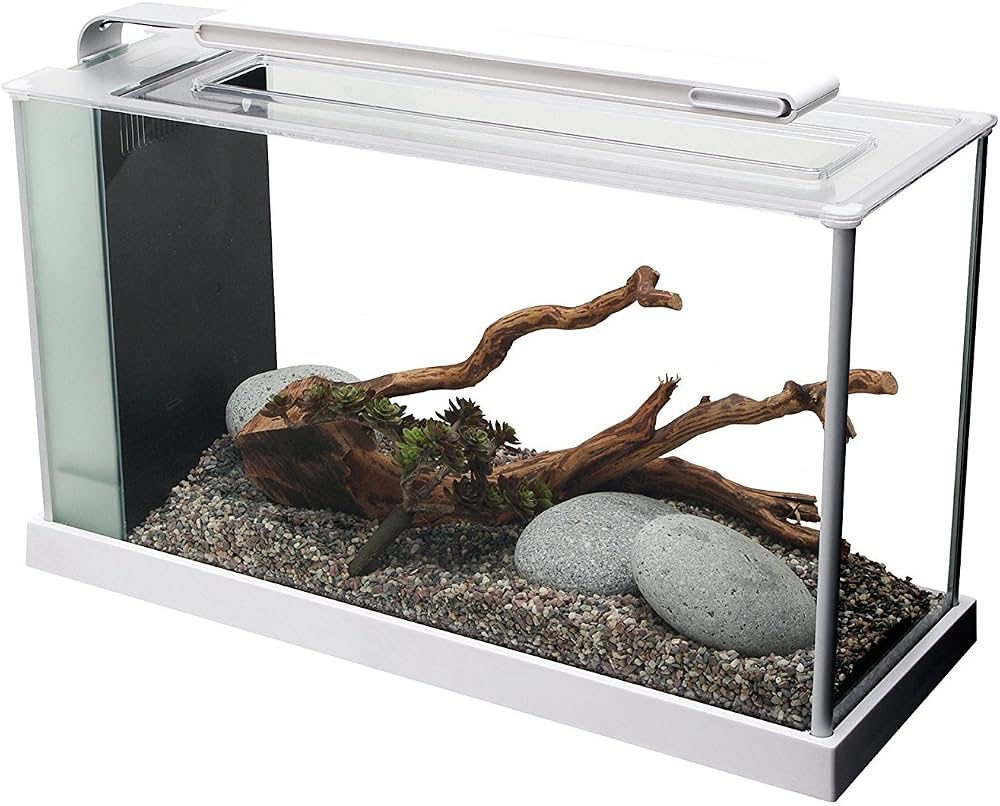
Fluval SPEC 5-Gallon Aquarium Kit

Learning Curve: Moderate

$119.99
Difficulty: 3/5
Fluval SPEC 5-Gallon Aquarium Kit

Why Great for Beginners:

The Fluval SPEC looks and feels like a high-end aquarium, but it's still easy to set up and maintain. Its three-stage filtration keeps water crystal clear, and the adjustable LED light lets you grow low-light plants. This is a premium pick for someone who loves design and is willing to pay a little extra for quality in a small tank.

Beginner Pros

  • +Excellent 3-stage filtration in a small package
  • +Clean, modern look with hidden equipment
  • +Includes a water pump
  • +Adjustable LED light for live plants
  • +Durable glass tank with polished edges

Beginner Cons

  • -Premium price for a small tank
  • -5-gallon volume still requires careful maintenance
  • -Heater not included (and it needs a small model)
  • -Filter sponge changes are more frequent
👍 Best for: The design-conscious beginner who wants a small, beautiful, high-quality tank and plans to keep a betta or nano fish.
👎 Not for: Budget-focused beginners or anyone who wants a larger community tank.
#5
✨ Premium

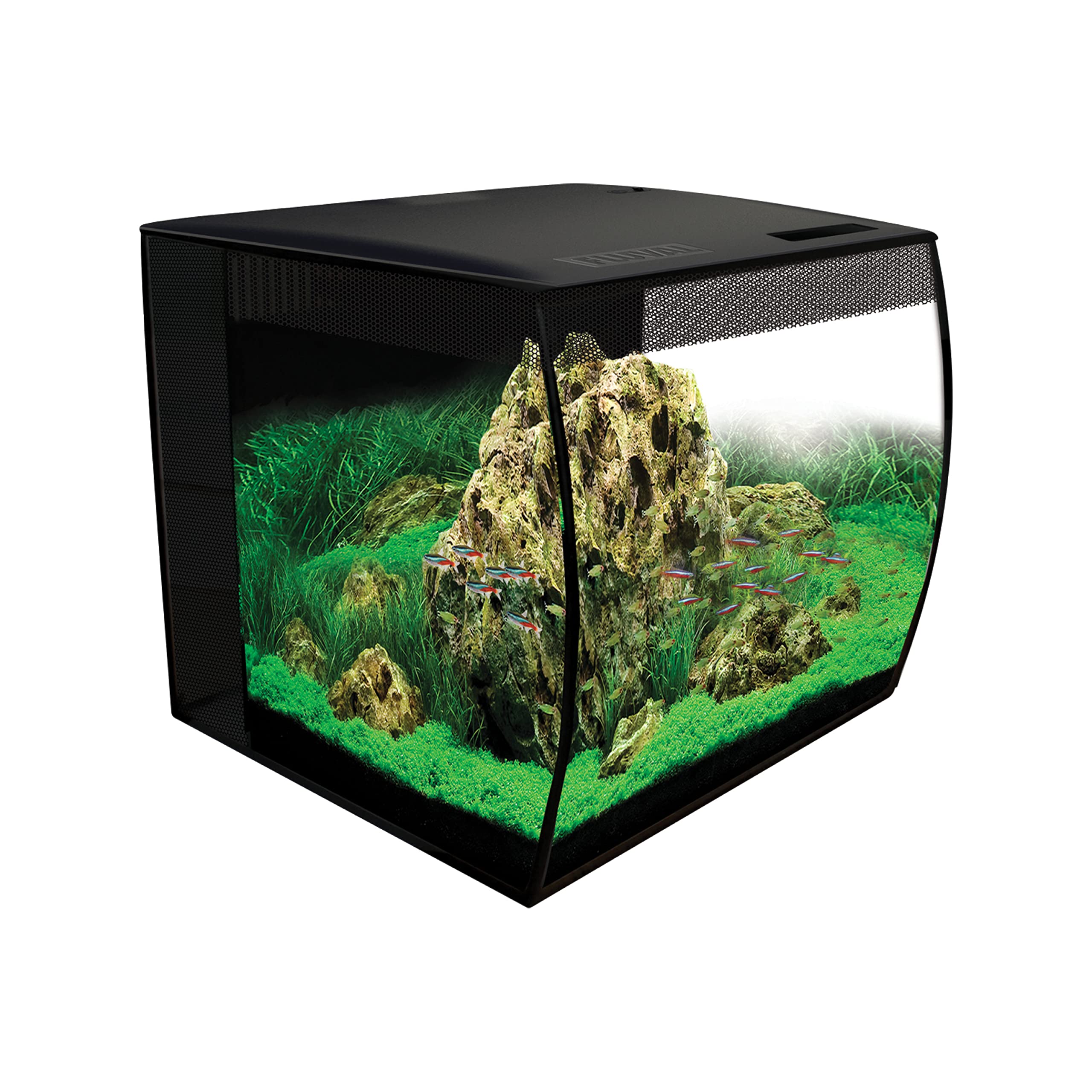
Fluval Flex 15-Gallon Aquarium Kit

Learning Curve: Easy

$179.99
Difficulty: 2/5
Fluval Flex 15-Gallon Aquarium Kit

Why Great for Beginners:

The Fluval Flex is a showpiece that remains surprisingly beginner-friendly. Its curved front panel looks stunning, the hidden filtration is quiet, and the 15-gallon volume is big enough to be stable without being a chore to maintain. The remote-controlled LED even has built-in modes for dawn and moonlight, which is great for someone who wants beauty and simplicity.

Beginner Pros

  • +15-gallon volume is stable and forgiving
  • +Hidden filtration is very quiet
  • +Curved front gives a panoramic view
  • +Remote-controlled LED with color modes
  • +Easy-access feeding lid with two openings

Beginner Cons

  • -High price
  • -Heavier and larger footprint
  • -Filter media changes take a few tries to get the hang of
👍 Best for: The enthusiastic beginner with a larger budget who wants a conversation-piece tank that's still genuinely easy to care for.
👎 Not for: Beginners on a budget, or those who need a small tank for a desk.

📖 Complete Beginner's Guide to Aquarium Kit

An aquarium kit is a complete package that includes the glass (or acrylic) tank, a hood or lid, a filter, and lighting. Some kits go further and add a net, fish food, a water conditioner, or a basic thermometer. The three most common types of aquarium kits are: glass tank kits (10–20 gallons), nano/betta kits (2.5–5 gallons), and all-in-one style kits like the Fluval or Marineland, which hide filtration behind a sleek panel.

For complete beginners, a simple glass tank kit between 10 and 20 gallons is the best choice. Glass is scratch-resistant and inexpensive, the larger size gives you a safety margin for water-quality mistakes, and the equipment is easy to access and replace. A hang-on-back filter is forgiving because it's easy to clean and you can find cheap cartridges at any pet store or on Amazon. LED hoods last for years and make the tank look great without the heat of old-fashioned fluorescent bulbs.

Now for realistic expectations: fishkeeping requires about 30 to 60 minutes of maintenance per week. You'll need to feed your fish daily, do a 20–25% water change weekly, and wipe algae from the glass. The first month is the most important: you have to 'cycle' the tank, which means growing beneficial bacteria that convert toxic fish waste into safe compounds. This takes 4 to 6 weeks, and during that time you should not add all your fish at once. A truly beginner-friendly kit supports that process — it has a filter that runs quietly, a hood you can open easily, and enough water volume to forgive a beginner's occasional overfeeding.

When comparing kits, look at the total cost, not just the sticker price. A kit with a cheap filter might save you $10 now but cost you twice that in replacement cartridges over the first year. Check whether the kits includes a heater. Heated water is essential for tropical fish, and almost no kits under $100 include one, so plan for that separate purchase. Finally, read a few recent Amazon reviews from beginners specifically. They will tell you if the filter is too loud, if the lid gaps let fish jump out, or if the light is too dim for live plants — things a spec sheet won't tell you.

🔧 Essential Accessories for Beginners

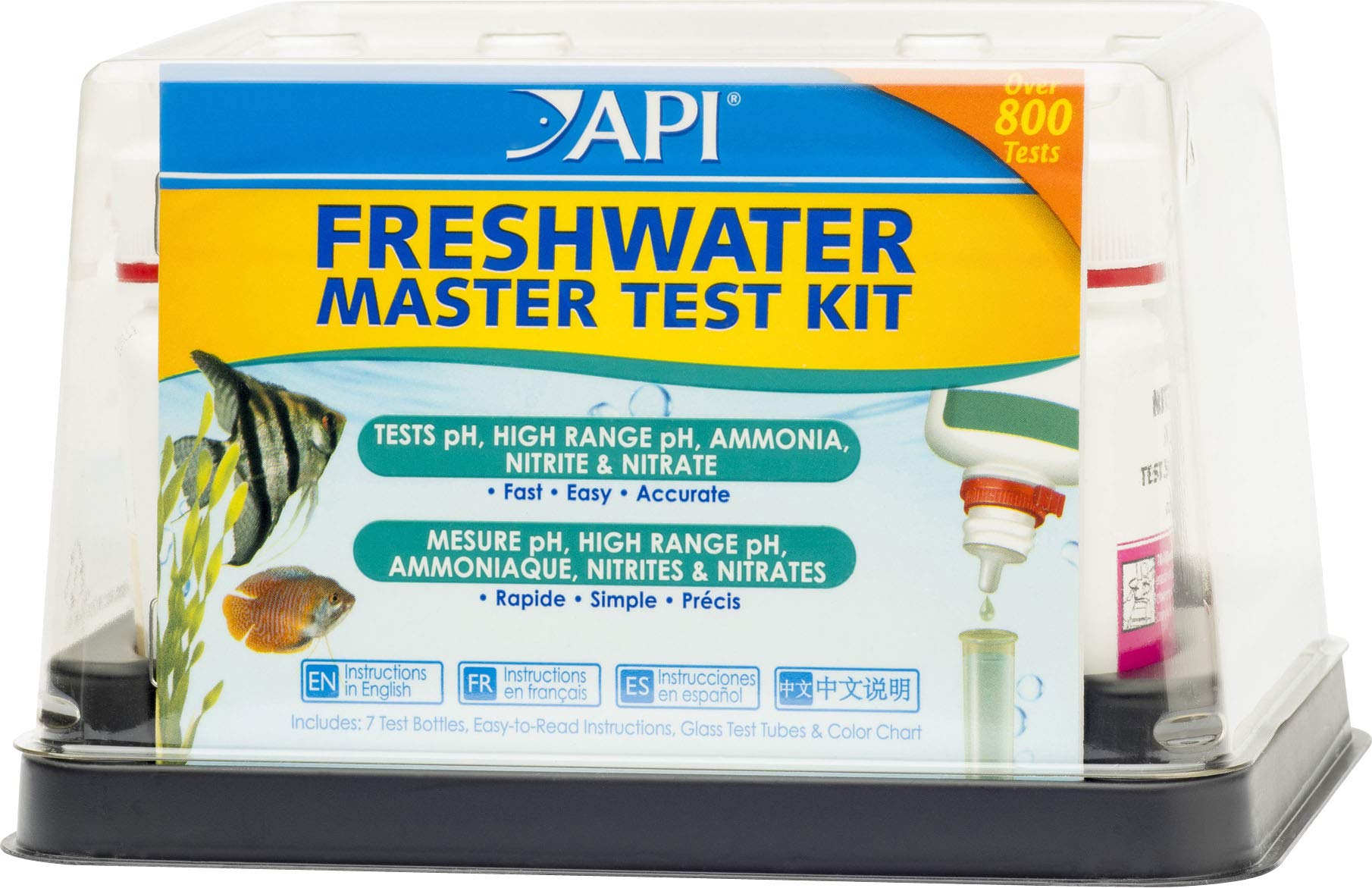
API Freshwater Master Test Kit

API Freshwater Master Test Kit

⚠️ Essential

$31.99

When to buy:
Day one

The API Master Test Kit is the single most important tool for a new fishkeeper. It measures ammonia, nitrite, nitrate, and pH — exactly the four numbers you need to monitor during the tank cycling process. Without it, you're flying blind and will likely lose fish to hidden toxin spikes.

Beginner Benefits:

  • Tells you when the tank has finished cycling and is safe for fish
  • Prevents the most common beginner cause of fish loss: ammonia poisoning
  • Color chart makes results easy to read without any chemistry knowledge
Seachem Prime - Image 1 of 5

Seachem Prime

⚠️ Essential

$12.99

When to buy:
Day one

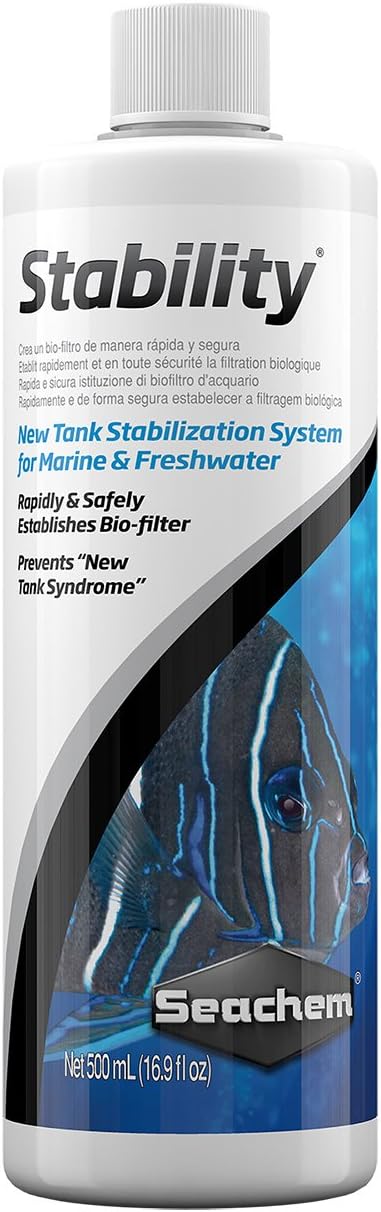
Prime removes chlorine, chloramine, and heavy metals from tap water in seconds, making it safe for fish. It also detoxifies toxic ammonia and nitrite during cycling, which gives beginners a crucial safety net on bad days.

Beginner Benefits:

  • Makes tap water safe in about two minutes
  • Detoxifies ammonia spikes during cycling
  • Easy to measure — a tiny capful goes a long way
Aqueon 50W Submersible Aquarium Heater - Image 1 of 7

Aqueon 50W Submersible Aquarium Heater

⚠️ Essential

$13.99

When to buy:
Day one

Most aquarium kits do not include a heater, but tropical fish need a steady water temperature between 76 and 82°F. This compact 50W heater is perfect for 5 to 10-gallon tanks and keeps the water at a constant, fish-safe temperature.

Beginner Benefits:

  • No setup beyond suction-cup placement
  • Set-and-forget convenience — automatically holds the right temperature
  • Prevents stress and disease caused by cold water
Python No-Spill Clean and Fill (25 ft)

Python No-Spill Clean and Fill (25 ft)

👍 Recommended

$44.99

When to buy:
First month — once you've confirmed you're sticking with the hobby

Water changes are the most dreaded chore for new fishkeepers. This gravel vacuum attaches directly to your sink tap and drains and fills the tank without carrying a single bucket. That simplicity will keep you consistent with your weekly maintenance, which is the key to a healthy tank.

Beginner Benefits:

  • Makes 20% water changes take just 10 minutes
  • Cleans the gravel at the same time it drains water
  • No bucket carrying — perfect for tanks that aren't near a sink
TetraMin Tropical Flakes

TetraMin Tropical Flakes

⚠️ Essential

$8.99

When to buy:
Day one

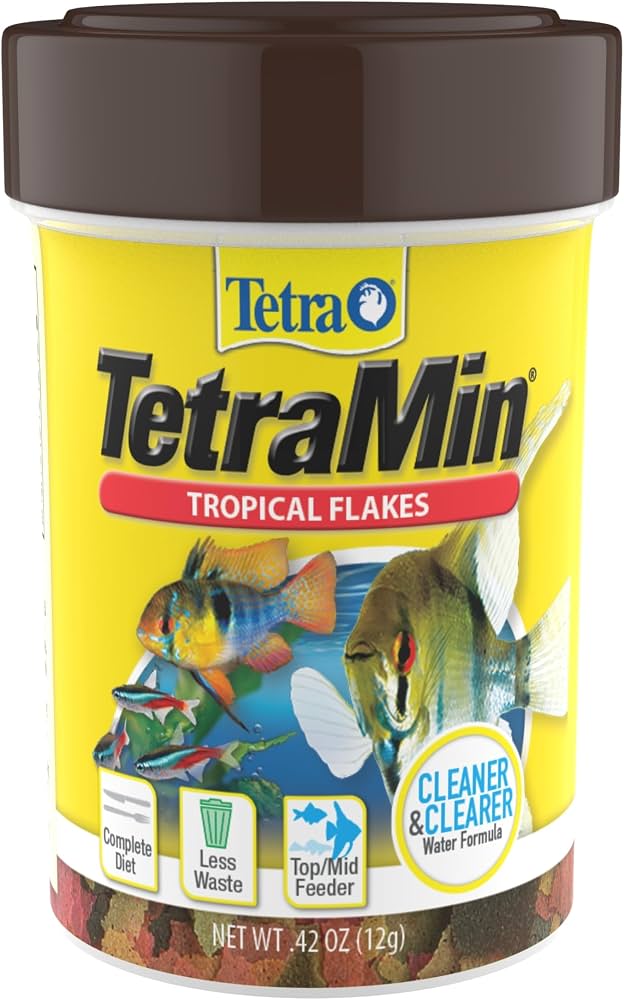
A nutritious staple food is essential for fish health and color. TetraMin Tropical Flakes are the classic beginner food because they're balanced, well-accepted by most community fish, and sold in a range of sizes so you don't overbuy.

Beginner Benefits:

  • Scientifically balanced nutrition
  • Fish readily accept it, so you know they're eating
  • Jar design keeps the food fresh and easy to measure

🤔 How to Choose Your First Aquarium Kit

Start by asking yourself four questions. First: where will the tank go? A 20-gallon tank full of water weighs about 225 pounds, so you need a stable surface. Second: how much time can you spend each week? If you're busy, a 20-gallon tank is actually easier than a 5-gallon because water changes can be less frequent and small mistakes don't become emergencies. Third: what fish do you want? Goldfish need 20 gallons or more, a betta can be happy in 5 gallons, and a community of tetras or guppies does well in a 10–20-gallon tank. Fourth: what's your overall budget? Remember that the kit is only half the story — a heater, water conditioner, fish food, and a test kit add $50 to $100.

Use this decision framework: if your total budget is under $150, get the Tetra 10-gallon kit and spend the savings on the essential accessories. If you can spend a bit more, the Aqueon 20-gallon kit is the sweet spot for most beginners because the larger volume is far more forgiving. If you want a stylish tank on a desk or want a single betta, the Marineland Portrait looks gorgeous. If you're a design lover with a bigger budget, the Fluval Flex is a showpiece that still behaves like a beginner-friendly tank. Avoid any kit that has fewer than about 30% positive reviews or missing crucial parts. And always read the product description carefully — many kits are sold 'tank only' despite having a photo with fish and plants in it.

💰 Budget Guide for Beginners

200+

Enthusiast - large showpiece tanks or single-brand ecosystems. Best for someone who already knows they love this hobby and wants to skip the 'starter' stage.

60 - $120

Sweet spot - 10 to 20-gallon kits with LED lighting and decent filters. Best value for most beginners and room to grow into the hobby.

120 - $200

Premium beginner - all-in-one kits or larger tanks with better lighting, quieter filters, and a more polished look. You won't outgrow it quickly.

Under $ - $60

Entry level - a basic 5 to 10-gallon kit. Works for a betta or very small setup, but you'll need to add a heater and avoid overstocking. Plan to upgrade in 6–12 months.

⚠️ Common Beginner Mistakes to Avoid

Several common mistakes sink new fishkeepers before they even get started. The biggest is buying a tank that's too small because it's cheap. A 2.5-gallon bowl might cost $20, but algae, ammonia spikes, and temperature swings will frustrate you within a month. The second is adding fish too soon — sometimes on the very first day. The water needs time to build beneficial bacteria, and putting fish in right away usually leads to illness and death. Another common mistake is overfeeding. Beginners tend to pour in food that then decays and poisons the water. A tiny pinch is all it takes.

Other errors include skipping the water test kit, buying a kit without a heater in the mistaken belief that all kits are complete, and over-cleaning the filter by washing it in tap water, which kills the good bacteria. Finally, many beginners forget to budget for accessories. They buy a $60 kit and then panic when they realize they still need a heater, gravel, and food. Avoiding these pitfalls is simple: buy the right-sized kit, get the essentials we list below, and be patient.

  • ×Buying too small a tank because it's cheap, then fighting water quality issues constantly
  • ×Adding fish on the very first day before the tank has cycled, leading to ammonia poisoning
  • ×Overfeeding fish — most beginners give them far more food than they need, polluting the water
  • ×Skipping the water test kit, so they never know about toxic ammonia/ nitrite spikes until fish get sick
  • ×Buying a kit without a heater, assuming all kits are fully complete for tropical fish
  • ×Washing the filter cartridge in tap water, killing the beneficial bacteria and crashing the nitrogen cycle
  • ×Forgetting to budget for accessories — heater, test kit, conditioner, food — that add $50–$100 to the true cost
  • ×Stocking too many fish at once, overwhelming the young biological filter

📈 Your Progression Path: Beginner to Intermediate

The best place for a beginner to start is learning the nitrogen cycle — understanding why a new tank is toxic to fish until beneficial bacteria grow. Practice it for the first few weeks by testing your water daily and doing small water changes as directed. Once your tank is cycled, focus on building good habits: feed a pinch once or twice a day, do a 20% water change each week, and clean the glass when you see the first hint of algae. After about three months, you'll be able to predict how your tank behaves, and you can start adding more or different fish.

Most beginners stay at this stage for 6 to 12 months. You'll know you've outgrown your beginner kit when you find yourself wanting brighter lighting to grow live plants, a quieter or more powerful filter, or a larger tank to keep more interesting species. Those are healthy signs, not frustrations. When that time comes, your first upgrades should be a high-quality LED light and a canister-style filter if you've been using a hang-on-back. The tank itself can often stay the same — many plant-filled aquascapes live in standard 20-gallon aquariums. The skills you learned in your first year — water testing, maintenance, patience — will carry you into more advanced fishkeeping smoothly.

📚 Learning Resources for Beginners

  • 📖"Freshwater Aquariums For Dummies" by Maddy Hargrove — a friendly, comprehensive guide that explains cycling, fish health, and tank care in plain English.
  • 📖"The Simple Guide to Freshwater Aquariums" by David E. Boruchowitz — a concise, beginner-focused book that covers the essentials without overwhelming detail.
  • 📖"Encyclopedia of Aquarium & Pond Fish" by David Alderton — a visual reference that helps you pick community fish that will get along in your new tank.
  • 📖"Aquascaping: A Step-by-Step Guide to Planting, Styling, and Maintaining Beautiful Aquariums" — a beautiful book for when you're ready to take your first tank to the next level.

🎯 Bottom Line: Our Recommendations

For most beginners, the Aqueon 20-gallon LED Aquarium Kit is the best overall choice. It offers the stability of a larger tank, a decent filter, and simple LED lighting at a price that leaves room to buy the heater and test kit you'll need. If your budget is tighter, the Tetra 10-gallon kit is a perfectly good starting point. And if you're looking for something beautiful on a desk, the Marineland Portrait is hard to beat. Whichever you choose, the essential accessories — a water test kit, a conditioner like Seachem Prime, and a heater — are absolute musts.

Remember that fishkeeping is a journey, and your first tank is just the beginning. The best preparation is patience: cycle the tank before adding fish, test your water often, and don't overfeed. You're going to make mistakes — everyone does. What matters is that you chose a kit that makes those mistakes forgiving. Take your time, read the simple product instructions, and enjoy the calming, rewarding world of fishkeeping. Your first tank is the start of a wonderful hobby.

❓ Frequently Asked Questions

For most beginners, the Aqueon 20-Gallon LED Aquarium Kit is the best choice because the 20-gallon volume is stable, forgiving, and can support a variety of community fish. If you're on a budget, the Tetra 10-Gallon Complete LED Kit is a great place to start.
Plan to spend between $60 and $120 on the kit itself. That range gets you a good 10 to 20-gallon tank with LED lighting and a decent filter. Remember you'll also need about $50 to $75 for a heater, test kit, conditioner, and food, so your real total will be closer to $130–$200.
The essentials are a hood/cover (to stop fish jumping), an LED light, a reliable filter, and a tank size of at least 10 gallons. A heater or heater-ready design is also important for tropical fish. Fancy features like WiFi or automatic feeders are unnecessary for beginners.
Kits with a hang-on-back filter and a simple LED hood, in sizes 10 to 20 gallons, are the easiest. The Aqueon 20-gallon and Tetra 10-gallon kits are both simple to set up, maintain, and find replacement parts for. All-in-one kits like the Fluval Flex are also very easy to clean.
You absolutely need a water test kit (like the API Master Test Kit), a water conditioner (like Seachem Prime), a heater, and fish food. A gravel vacuum like the Python no-spill system is highly recommended for easy water changes.
Decide where the tank will go, what fish you want, and how much time you have for maintenance. Choose a 10 to 20-gallon glass kit from a trusted brand like Tetra, Aqueon, Marineland, or Fluval. Make sure it includes a hood, LED light, and filter, and then budget for the essential accessories.
No, but it requires patience, especially in the first month while the tank cycles. Once your tank has grown beneficial bacteria and you've established a weekly water-change routine, maintenance is just 30–60 minutes a week. The key is starting with a bigger tank and not overfeeding.
The biggest mistakes are adding fish on day one, buying a tank that is too small, overfeeding, skipping the water test kit, washing filter cartridges in tap water, and forgetting to budget for a heater. All of these are avoidable with the right planning.
Yes, a 5-gallon tank like the Marineland Portrait or Fluval SPEC is a great home for a single betta. Just be sure to add a small heater (bettas need warm water) and perform regular water changes. 5 gallons are less forgiving, so test your water often.
Very few kits include gravel or plants. Most include only the tank, hood, light, and filter. You'll need to buy aquarium gravel (or sand) separately, and any decorations or live plants add to the cost. Plan for about $20–$40 extra for substrate and a simple decoration.
It takes about 4 to 6 weeks for a new tank to cycle and establish the beneficial bacteria that keep fish healthy. You'll know it's ready when your water tests show zero ammonia and zero nitrite. Use an ammonia source (like fish food or pure ammonia) to feed the bacteria during that time.
The nitrogen cycle is the natural process in which beneficial bacteria convert toxic ammonia (from fish waste) into nitrite, then into less harmful nitrate. Fish produce ammonia, so if the cycle hasn't established yet, ammonia can build up and kill them. A water test kit shows you where your tank is in that cycle.

Related Articles