
Is TCL QM8 QLED 65-inch (2025) Worth It? Honest Review (2026)
Honest breakdown of strengths, weaknesses, and who should buy this mini-LED TV in 2026.
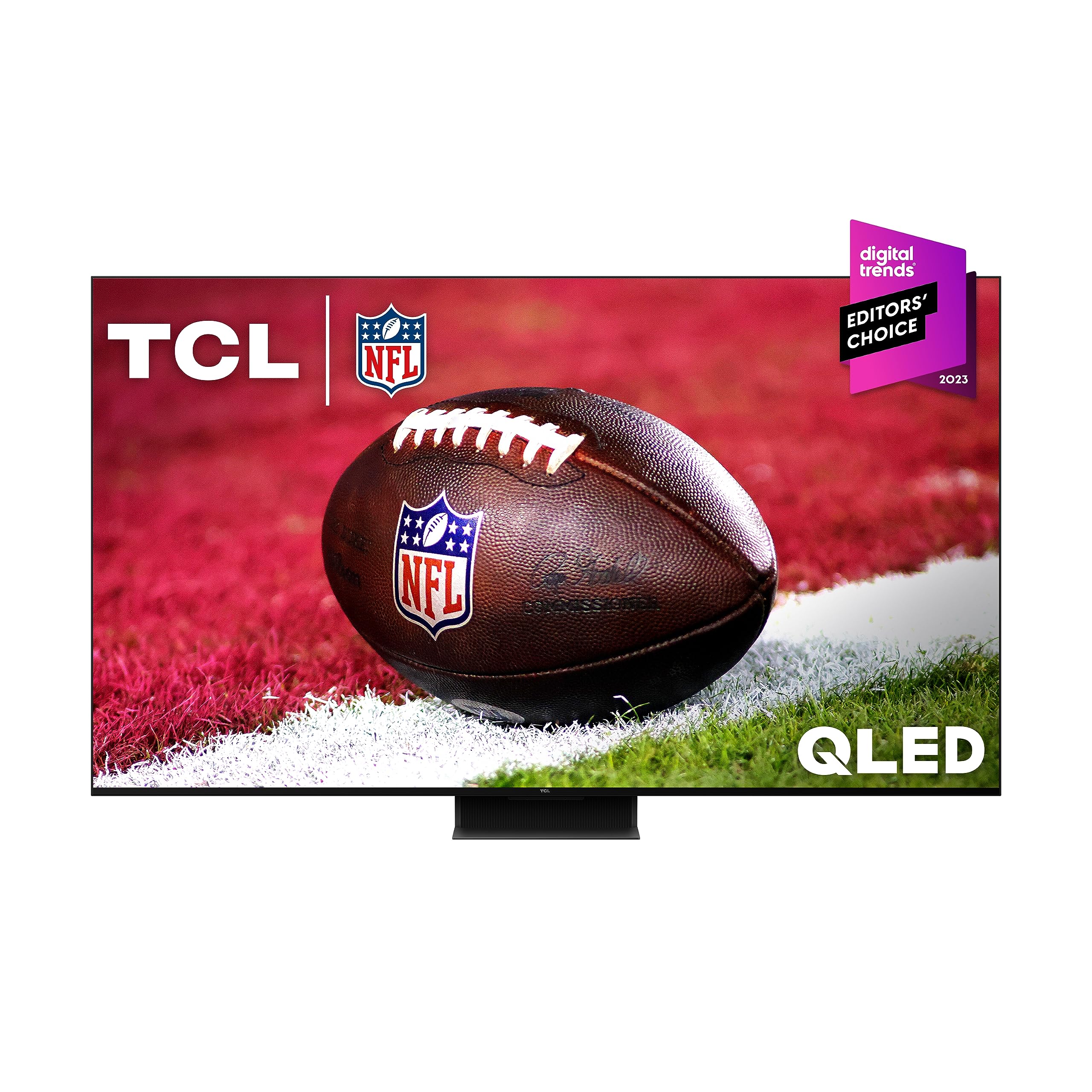
Quick Decision
Buy the TCL QM8 if you want the best HDR brightness and contrast under $1,500 and are willing to accept off-angle color shift. Skip it if you need wide viewing angles or top-tier upscaling; in that case, the Sony X90L is a better fit.
Best if you...
- Home theater enthusiasts on a budget
- Competitive gamers using HDMI 2.1
- Movie lovers who want HDR impact
Skip it if you...
- Those with wide seating arrangements
- Users who watch a lot of 720p/1080p content
- People in very bright rooms with direct light
If you're shopping for a 65-inch TV in 2026, the TCL QM8 QLED is likely on your radar. With mini-LED technology and a competitive price, it promises near-OLED black levels and sky-high brightness. But does it deliver in real-world use? This guide breaks down the pros and cons based on manufacturer specs, third-party reviews, and verified buyer feedback. We'll cover where it excels, where it falls short, and who should (or shouldn't) buy it. We'll also compare it to top alternatives like the Hisense U8N and Sony X90L to help you decide.
About the TCL QM8 QLED 65-inch (2025)
The TCL QM8 is a 65-inch 4K QLED TV with mini-LED backlighting, offering high brightness and contrast for HDR content. It targets home theater enthusiasts and gamers seeking premium performance at a mid-range price. Key features include a 120Hz native refresh rate, HDMI 2.1 ports, and the Google TV smart platform.
Key Specifications
- HDMI Ports
- 2 x HDMI 2.1, 2 x HDMI 2.0
- Resolution
- 3840 x 2160 (4K)
- HDR Support
- Dolby Vision, HDR10+, HLG
- Display Type
- QLED with Mini-LED Backlight
- Refresh Rate
- 120Hz native (up to 144Hz VRR)
- Smart Platform
- Google TV
- Peak Brightness
- Over 2000 nits (manufacturer claim)
- Local Dimming Zones
- Over 2000 (manufacturer claim)
Overview
The TCL QM8 is a 65-inch QLED TV featuring a mini-LED backlight with over 2,000 local dimming zones (according to TCL). It supports Dolby Vision, HDR10+, and has a 120Hz native refresh rate with VRR up to 144Hz, making it a strong contender for both movies and gaming. The Google TV interface provides access to streaming apps and integrates with voice assistants. Priced around $1,299 on Amazon, it competes directly with the Hisense U8N and Sony X90L.
For 2026, the QM8 remains a top choice for buyers who want excellent HDR performance without paying OLED prices. Its mini-LED backlight delivers deep blacks and impressive peak brightness—over 2,000 nits in a 10% window per RTINGS testing of the 2023 model. However, it's not without trade-offs: viewing angle and uniformity issues, a glossy screen that reflects light, and a less refined upscaling compared to Sony. This analysis will help you weigh these factors.
Pros
The TCL QM8's biggest strengths are its brightness, contrast, and gaming features. It outperforms many TVs in its price class in HDR, with punchy highlights and deep blacks. Gamers benefit from two HDMI 2.1 ports, low input lag, and 144Hz VRR support. Here's a detailed look at what it does best.
Exceptional HDR Brightness and Contrast
The TCL QM8 achieves over 2,000 nits peak brightness in a 10% window (based on RTINGS testing of the 2023 model), which is outstanding for its price. Combined with mini-LED local dimming, it delivers deep blacks and minimal blooming in most content. This makes HDR movies and games look vibrant, with specular highlights that pop. In a dark room, the QM8 rivals OLED in perceived contrast, though not in absolute black levels.
Outstanding Gaming Performance
With a 120Hz native refresh rate (up to 144Hz with VRR), two HDMI 2.1 ports, and support for AMD FreeSync Premium Pro, the QM8 is one of the best gaming TVs under $1,500. Input lag is exceptionally low (under 5ms at 120Hz on the 2023 model, per RTINGS), ensuring responsive gameplay. It also supports Auto Low Latency Mode (ALLM) and automatically switches to Game Mode.
Great Bright Room Performance
The QM8's high brightness and semi-gloss screen make it usable in bright rooms with windows. It handles reflections decently, though not as well as Sony's X90L, which has an anti-glare coating. Still, for most living rooms, the QM8 stays visible and punchy even with ambient light.
Solid Smart TV Platform with Google TV
Google TV offers a clean, customizable interface, voice control via Google Assistant, and Chromecast built-in. It supports all major streaming apps and updates regularly. The interface is smooth and responsive, though occasional ads in the menu might annoy some users.
Good Color Accuracy and Wide Color Gamut
The QM8 covers about 95% of the DCI-P3 color space (manufacturer spec), delivering rich, saturated colors. Out of the box, color accuracy is decent, but a calibration improves it further. For most viewers, colors look natural and vivid without being oversaturated.
HDMI 2.1 Bandwidth and eARC Support
Full 48 Gbps HDMI 2.1 ports support 4K at 144Hz with 10-bit color. eARC passthrough for Dolby Atmos works well, allowing connection to a soundbar. Both HDMI ports are on the side, making wall mounting easier.
Good Motion Handling
The 120Hz panel with motion interpolation (Motion Clarity) handles fast-moving content well. While not as smooth as OLED, it's above average for an LCD TV. Sports and action movies appear clear with minimal judder.
Cons
No TV is perfect, and the QM8 has several notable drawbacks. Blooming in challenging scenes, restrictive viewing angles, and mediocre upscaling are its main weaknesses. Here's what you need to know before buying.
Blooming in High Contrast Scenes
Despite many local dimming zones, the QM8 still exhibits some blooming (halo effect) around bright objects on dark backgrounds. This is most noticeable with white subtitles against a black screen or stars on a dark sky. It's less pronounced than on edge-lit TVs but more than on high-end OLEDs or Sony's flagship mini-LEDs.
Narrow Viewing Angles
Like most LCD TVs, the QM8 suffers from color and contrast shift when viewed off-angle. Beyond 30 degrees, the picture washes out significantly. This is a problem for wide seating arrangements. An OLED or Sony X90L with its wide-angle layer performs better.
Upscaling and Processing Lags Behind Sony
The QM8's upscaling of low-resolution content (like 720p or 1080p) is mediocre. Details can look soft or slightly artifacted, especially compared to Sony's XR processor. If you watch a lot of standard-def or cable TV, the Sony X90L is a better choice.
Reflections on the Glossy Screen
The QM8 uses a glossy screen, which reflects ambient light more than the semi-matte finish on some competitors. In a bright room with direct light, reflections can be distracting. The Sony X90L and Samsung QN90C handle reflections better.
Uniformity Issues: DSE and Dirty Screen Effect
Some users report visible dirty screen effect (DSE) or vertical banding on the QM8, especially during panning shots of sports or games. This varies by unit, but it's a known issue with TCL's QA. The 2023 model review by RTINGS noted some DSE in their unit.
No ATSC 3.0 Tuner
The QM8 lacks a next-gen TV tuner (ATSC 3.0), which may affect over-the-air reception in the future. Many 2024/2025 models include it, so this is a missing feature for cord-cutters.
Mediocre Sound Quality
Built-in speakers lack bass and clarity; they are fine for casual viewing but not for movies or music. TCL includes a subwoofer, but it's underpowered. Most buyers will want a soundbar.
👍 Who It's For
The TCL QM8 is ideal for home theater enthusiasts on a budget who want the best HDR performance under $1,500. If you prioritize brightness and contrast for movies and gaming, and you sit directly in front of the TV, the QM8 delivers excellent value. It's also great for competitive gamers who want HDMI 2.1, VRR, and low input lag. Mixed usage in a dark to moderately bright room works well. If you're willing to tolerate some blooming and off-angle color shift, the QM8's picture quality rivals TVs costing hundreds more.
👎 Who Should Avoid
Avoid the QM8 if you have a wide seating arrangement—anyone sitting off-axis will see a washed-out image. If you watch a lot of standard-def or 1080p content, the Sony X90L upscales better. Also, if you are sensitive to blooming or DSE, consider an OLED (like the LG C4) or a Sony mini-LED. People in bright rooms with direct light may prefer the Sony X90L's reflection handling. And if you want the best out-of-box color accuracy, the Sony X90L or Samsung QN90C need less calibration.
See today's TCL QM8 QLED 65-inch (2025) price and available configurations on Amazon.
🛒 Buy on AmazonAs an Amazon Associate we earn from qualifying purchases.
Alternatives to Consider
| Product | Choose TCL QM8 QLED 65-inch (2025) if... | Choose the alternative if... |
|---|---|---|
| Sony X90L 65-inch$100 less expensive | You want superior upscaling and wider viewing angles for a mixed-use room | You prioritize HDR brightness and gaming features over processing quality |
| Hisense U8N 65-inch$200 less expensive | You want similar brightness and more local dimming zones at a lower price | You prefer Google TV's interface over Hisense's VIDAA OS |
| LG C4 OLED 65-inch$500 more expensive | You want perfect blacks and wide viewing angles for a dark room cinema experience | You need high brightness for bright rooms and don't want to worry about burn-in |
If the QM8's drawbacks give you pause, consider the Sony X90L at around $1,199. It has better upscaling, wider viewing angles, and superior reflection handling, but lower peak brightness (around 900 nits). The Hisense U8N at $1,099 is a direct competitor with similar brightness, more dimming zones, and better out-of-box color, but its operating system is less polished. For ultimate contrast and viewing angles, the LG C4 OLED at $1,799 offers perfect blacks and wide viewing angles, though it's less bright and more expensive. The Samsung QN90C at $1,399 has excellent reflection handling and brightness, but its gaming features are slightly less than the QM8 due to only one HDMI 2.1 port.
Is it worth the price?
At approximately $1,299, the TCL QM8 is worth it for home theater enthusiasts and gamers who value high brightness and HDMI 2.1 features. It outperforms the Sony X90L in HDR punch and gaming, though it loses in upscaling and off-axis performance. The Hisense U8N offers comparable specs for $200 less, but its smart platform is less refined. Overall, for the target user, the QM8 delivers excellent value.
📝 Bottom Line
The TCL QM8 is the right choice for buyers who want the brightest HDR experience possible without spending over $1,500. Its mini-LED backlight delivers punchy highlights and deep blacks, and its gaming features are top-notch for the price. However, it's not ideal for wide seating or standard-def content. If you sit directly in front and mainly watch 4K HDR movies or game, the QM8 is a fantastic value. For everyone else, the Sony X90L offers more balanced performance. Final verdict: Buy it for brightness and gaming, skip it if you need wide viewing angles or polished processing.
Check current TCL QM8 QLED 65-inch (2025) availability and bundle options on Amazon.
🛒 Buy on AmazonAs an Amazon Associate we earn from qualifying purchases.
Frequently Asked Questions
Quick Summary
Key Pros
- ✓Exceptional peak brightness over 2,000 nits for stunning HDR
- ✓Deep black levels and high contrast ratio thanks to mini-LED
- ✓Two HDMI 2.1 ports with 144Hz VRR support for gaming
- ✓Low input lag under 5ms at 120Hz
- ✓Bright enough for rooms with ambient light
Key Cons
- ✗Visible blooming in high-contrast scenes
- ✗Poor viewing angles beyond 30 degrees
- ✗Mediocre upscaling of lower-resolution content
- ✗Glossy screen reflects ambient light
- ✗Potential uniformity issues like DSE
Ratings
Best For
- →Home theater enthusiasts on a budget
- →Competitive gamers using HDMI 2.1
- →Movie lovers who want HDR impact
- →Viewers in dark or moderately lit rooms