
Is Sony 85-inch X90L TV Worth It? Honest Review (2026)
Honest breakdown of strengths, weaknesses, and who should buy this premium LED TV.
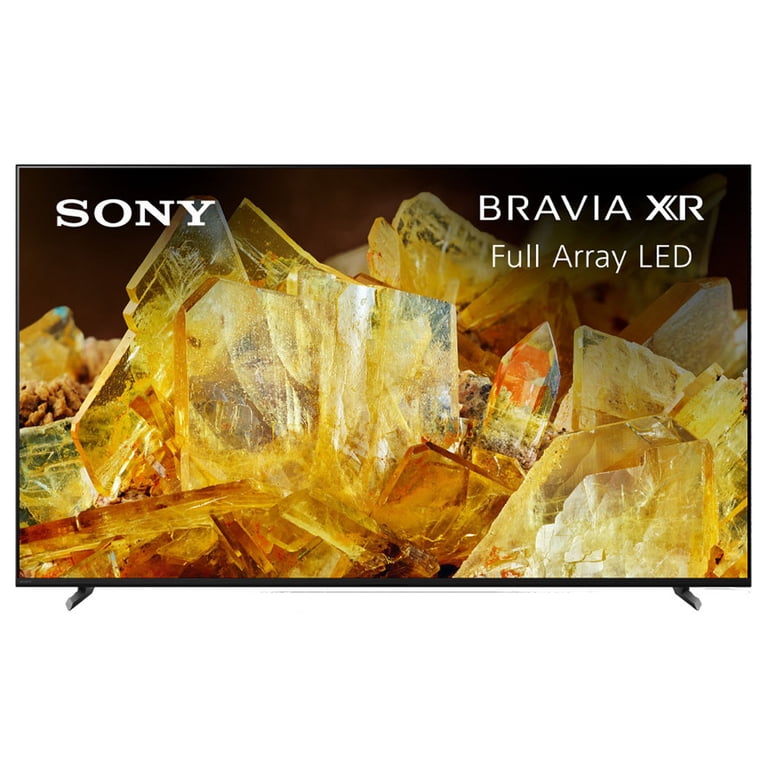
Quick Decision
Buy the Sony 85-inch X90L if you watch a lot of sports or movies in a bright room and prioritize motion clarity and upscaling. Skip it if you need perfect black levels in a dark theater room or have wide seating.
Best if you...
- Sports fans who need smooth motion with minimal blur
- Gamers using PS5 or Xbox Series X with HDMI 2.1 features
- Bright room viewers where ambient light requires high brightness
Skip it if you...
- Home theater enthusiasts seeking perfect black levels in a dark room
- Viewers with wide seating areas (off-angle >30°)
- Cord-cutters who rely on over-the-air broadcasts with ATSC 3.0
If you're shopping for an 85-inch TV in 2026, the Sony X90L likely appears on your shortlist. It promises the picture quality pedigree of Sony with the brightness of LED, but at a price that competes with premium OLEDs. This analysis will help you decide if its strengths outweigh its compromises for your specific use case. We'll cover picture quality, gaming performance, smart TV experience, and compare it to key alternatives like the TCL QM8 and Hisense U8. By the end, you'll know whether the X90L is worth your investment or if another TV better fits your needs.
About the Sony 85-inch X90L TV
The Sony 85-inch X90L is a full-array LED 4K TV with Sony's XR Cognitive Processor, designed for bright rooms and mixed content. It offers excellent motion handling, gaming features like HDMI 2.1, and runs Google TV. Positioned as a high-end LED option below Sony's OLED lineup.
Key Specifications
- Display
- 85-inch LED LCD, Full Array Local Dimming
- Processor
- XR Cognitive Processor
- HDMI Ports
- 4 (2x HDMI 2.1, 2x HDMI 2.0)
- Resolution
- 4K UHD (3840 x 2160)
- HDR Support
- Dolby Vision, HDR10, HLG
- Refresh Rate
- 120Hz native
- Smart Platform
- Google TV
- Peak Brightness
- ~1000 nits (HDR, 10% window)
- Input Lag (4K 120Hz)
- ~10ms
Overview
The Sony 85-inch X90L (released in 2023) remains a strong contender in the large-screen LED market. It uses a full-array local dimming panel with over 60 dimming zones and Sony's XR Cognitive Processor to deliver high brightness, accurate colors, and smooth motion. It's built for mixed usage—movies, sports, gaming—with support for Dolby Vision, HDR10, HLG, and HDMI 2.1 features for next-gen consoles. The Google TV interface provides a wide range of streaming apps and integrates well with smart home devices.
Where it fits: above entry-level LEDs but below Sony's OLED and Mini-LED models (like the X95L). It's a direct competitor to Samsung's QN90C and TCL's QM8. Available on Amazon for roughly $2,500, it often goes on sale during Prime events. If you prioritize brightness and motion handling over perfect blacks, the X90L is worth serious consideration.
Pros
The Sony X90L excels in several key areas that matter to home theater enthusiasts and gamers. Here's what it does best:
Excellent Brightness and HDR Peak
The X90L delivers impressive brightness for an LED TV. In standard dynamic range, it can sustain around 600 nits, while HDR highlights can peak over 1000 nits on a 10% window (per RTINGS testing). This makes it ideal for bright living rooms or daytime viewing. HDR content like "The Batman" or "Dune" looks punchy with specular highlights that stand out. Compared to cheaper LEDs like the TCL S555, the X90L offers noticeably more pop and highlight detail.
Outstanding Motion Handling
Sony's XR Motion is among the best in the business. The 120Hz native panel with backlight scanning reduces blur significantly. Sports fans will appreciate smooth panning during football or hockey. Movies in 24p look judder-free without needing excessive smoothing. Black Frame Insertion (BFI) is available for those who want to reduce persistence blur, though it dims the image. This makes the X90L a top choice for fast-paced content.
Superb Upscaling and Processing
The XR Cognitive Processor analyzes content like human vision, enhancing textures and colors. Low-resolution streams from YouTube or cable TV are upscaled convincingly, with less noise than competitors like TCL or Hisense. 1080p content appears near-4K in sharpness. This is a major advantage if you watch a lot of non-native 4K material.
Robust Gaming Features
The X90L supports HDMI 2.1 bandwidth (48Gbps) on two of its four HDMI ports, enabling 4K 120Hz, VRR, and Auto Low Latency Mode (ALLM). Input lag is around 10ms at 4K 120Hz. It's fully compatible with PS5 (including Auto HDR Tone Mapping) and Xbox Series X. The 120Hz panel also reduces motion blur in games. For gamers, this is a well-equipped TV.
Accurate Colors Out of the Box
Sony's color science is excellent. In the Cinema or Custom picture mode, the X90L covers about 96% of DCI-P3 (after calibration, per RTINGS) and delivers lifelike skin tones. You don't need professional calibration to enjoy accurate images. This makes it a strong choice for film enthusiasts.
Google TV Smart Platform
Google TV is intuitive, fast, and supports all major streaming apps. The Google Assistant voice remote works well for search and device control. The interface is customizable and regularly updated. It also integrates with Alexa and Apple AirPlay 2, offering broad smart home compatibility.
Solid Sound Quality
The X90L features Acoustic Multi-Audio, with speakers positioned on the sides and bottom. It delivers clear dialogue and decent bass for a TV. While not a substitute for a soundbar, it's better than many competitors. The built-in upmixer creates a sense of height, enhancing immersion.
Cons
Despite its strengths, the X90L has clear weaknesses that may be dealbreakers for some buyers. Here's what to consider:
Limited Local Dimming Zones and Blooming
With around 60 local dimming zones on the 85-inch model (varies by size), the X90L cannot match the contrast of Mini-LED or OLED TVs. In dark scenes with bright subtitles or stars, noticeable blooming appears. For example, watching "The Mandalorian" in a dark room, you'll see halos around bright objects. This is the biggest compromise vs. Sony's X95L or LG OLEDs.
Narrow Viewing Angles
The VA panel on the X90L suffers from significant color washout and contrast loss when viewed off-center beyond about 30 degrees. If you have wide seating, the picture quality degrades quickly. In comparison, IPS or OLED panels maintain better uniformity. This is a key reason to consider it only for direct-facing seating.
No ATSC 3.0 Tuner
The X90L lacks the next-gen ATSC 3.0 tuner (NextGen TV). If you rely on over-the-air broadcasts, you won't be able to receive 4K broadcasts or improved audio formats. Competitors like the Samsung QN90C do include it. This omission may matter to cord-cutters.
Older Model with No Major Improvements
Released in 2023, the X90L is essentially a refined version of the X90K with the same processor. It lacks the Mini-LED backlight of newer Sony models (like the X95L). In 2026, it faces stiff competition from cheaper Mini-LED TVs like the TCL QM8 (2024) which offer more dimming zones at lower prices. The X90L's picture quality hasn't significantly evolved.
Glossy Screen Can Be Reflective
The X90L uses a glossy screen finish, which reflects overhead lights and windows. In a room with many light sources, reflections can be distracting. A matte screen would be better for bright, uncontrolled environments. This is a minor annoyance for some.
No Dolby Vision Gaming at 120Hz
While the X90L supports Dolby Vision and 120Hz, it cannot do both simultaneously. When using Dolby Vision in Game mode, the refresh rate drops to 60Hz. This limits the HDR gaming experience for those who want both high frame rates and dynamic metadata. LG or Samsung TVs handle this better.
Price Premium Over Comparable Brands
At around $2,500, the 85-inch X90L costs $300-500 more than the TCL QM8 or Hisense U8, which offer Mini-LED backlights with more zones and similar brightness. While the X90L has better processing and motion, the value argument favors competitors. Sony's brand premium is real.
👍 Who It's For
The Sony 85-inch X90L is ideal for buyers who prioritize motion handling, upscaling, and out-of-box color accuracy. If you watch a lot of sports, fast-paced action movies, or play console games, the X90L's processing and low input lag make it a joy. It's also a great fit if you have a bright living room and need a TV that combats glare (with careful placement) and delivers punchy HDR. Those who want a reliable smart TV platform with Google TV will appreciate the interface. Additionally, if you value Sony's brand reputation and build quality, the X90L is a solid choice.
For home theater enthusiasts on a budget, the X90L offers flagship processing at a mid-range price. It works well with a soundbar and in a dedicated media room where seating is directly in front. Overall, it's a great all-rounder for mixed content viewing.
👎 Who Should Avoid
Avoid the X90L if you must have perfect black levels in a dark room. OLED fans will be bothered by blooming. If your seating is wide (sofa extends beyond 30 degrees off-center), the viewing angle degradation is a dealbreaker. Cord-cutters who rely on OTA broadcasts should look for a TV with ATSC 3.0. Also, if you want the latest Mini-LED technology for maximum contrast, the TCL QM8 or Hisense U8 offer better value. Budget-conscious shoppers will get similar performance for less with competitors. Finally, if you need Dolby Vision at 4K 120Hz for gaming, consider an LG OLED or Sony's higher-end models.
See today's Sony 85-inch X90L TV price and available configurations on Amazon.
🛒 Buy on AmazonAs an Amazon Associate we earn from qualifying purchases.
Alternatives to Consider
| Product | Choose Sony 85-inch X90L TV if... | Choose the alternative if... |
|---|---|---|
| TCL 85QM8 Mini-LED TV$300 more expensive | You prioritize processing quality, motion handling, and out-of-box accuracy over raw contrast and dimming zone count. | You want deeper blacks and less blooming for dark room viewing, and don't mind slightly worse upscaling. |
| Hisense 85U8N Mini-LED TV$200 more expensive | You want built-in ATSC 3.0 tuner and prefer Google TV with a slightly lower price. | You need the best contrast for HDR movies and are willing to accept more aggressive blooming in bright highlights. |
| LG 77-inch C4 OLED$1,000 more expensive (smaller screen) | You need a very large screen with excellent motion handling and are willing to compromise on brightness and price. | Perfect blacks and infinite contrast are your top priority, even in a brighter room. |
If the X90L's blooming or viewing angles are concerns, consider the TCL 85-inch QM8 (Mini-LED) which offers over 1000 dimming zones for better black levels, or the Hisense 85U8N with similar Mini-LED prowess and a lower price. For gamers wanting perfect blacks, the LG C4 OLED (77-inch) is a step up in contrast, though smaller and pricier. If a bright room is your main priority, the Samsung QN90D uses a VA panel with anti-reflection coating and higher brightness, but its processing isn't as good as Sony's.
Ultimately, the X90L holds its own with superior motion and upscaling. Choose it if you value those traits over raw black levels. The alternatives excel in specific areas but compromise elsewhere.
Is it worth the price?
At approximately $2,500, the X90L is worth it for users who value Sony's processing and motion handling above all else. The main alternative is the TCL 85QM8 at $2,200, which offers better contrast with Mini-LED but inferior upscaling. For mixed content in a moderately lit room, the X90L delivers a more refined experience. However, if you can stretch to an 83-inch LG C4 OLED at $3,500, the contrast improvement is dramatic for dark-room viewing.
📝 Bottom Line
The Sony 85-inch X90L is the right choice for viewers who prioritize motion handling, upscaling, and accurate color reproduction in a bright to moderately lit room. Its strengths—excellent processing, smooth motion, and good gaming features—make it a versatile performer for mixed content. The notable drawbacks are blooming from limited dimming zones and narrow viewing angles, which limit its appeal for dark-room home theater enthusiasts or wide seating arrangements.
For most buyers, the X90L strikes a great balance between price and performance, especially if you watch a lot of sports or play fast-paced games. However, if you demand OLED-like blacks or have a budget that stretches to Mini-LED alternatives, you may get better contrast for less money. Ultimately, this TV rewards those who value Sony's picture science over raw specs. If that sounds like you, the X90L is a worthy investment. If not, the TCL QM8 or LG C4 are compelling alternatives.
Check current Sony 85-inch X90L TV availability and bundle options on Amazon.
🛒 Buy on AmazonAs an Amazon Associate we earn from qualifying purchases.
Frequently Asked Questions
Quick Summary
Key Pros
- ✓Excellent brightness over 1000 nits for HDR, great for bright rooms
- ✓Superb motion handling with 120Hz panel and BFI option
- ✓Best-in-class upscaling for low-resolution content
- ✓Full HDMI 2.1 support for 4K 120Hz gaming with low input lag
- ✓Accurate colors out of the box, nearly 96% DCI-P3 coverage
Key Cons
- ✗Noticeable blooming with only ~60 local dimming zones
- ✗Narrow viewing angles that wash out off-axis
- ✗No ATSC 3.0 tuner for NextGen TV
- ✗Design is dated compared to newer Mini-LED models
- ✗Reflective glossy screen in bright rooms
Ratings
Best For
- →Sports fans who need smooth motion with minimal blur
- →Gamers using PS5 or Xbox Series X with HDMI 2.1 features
- →Bright room viewers where ambient light requires high brightness
- →Movie watchers who prefer accurate colors and good upscaling