
Is Samsung QN90D QLED 65-inch Worth It? Honest Review (2026)
Honest breakdown of strengths, weaknesses, and who should buy this premium QLED TV.
Quick Decision
Buy the Samsung QN90D if you watch TV in a bright room and want top-tier gaming features. Skip it if you watch mostly in the dark or demand Dolby Vision support.
Best if you...
- Bright room viewers who need high brightness to combat glare.
- Console gamers wanting 4K 120Hz, VRR, and low input lag.
- Users who watch a lot of HDR10+ content (e.g., Amazon Prime).
Skip it if you...
- Home theater enthusiasts who watch in dark rooms and want deep blacks.
- Users with large Dolby Vision libraries (Blu-ray, streaming).
- Gamers needing more than two HDMI 2.1 ports.
If you're shopping for a premium LED-LCD TV, the Samsung QN90D QLED 65-inch is likely on your radar. It promises stunning brightness, excellent gaming features, and a sleek design. But with strong competition from OLED and Mini-LED sets, is it the right choice for you? This analysis covers the pros and cons based on verified specifications and third-party reviews, helping you decide if this TV deserves a spot in your living room.
About the Samsung QN90D QLED 65-inch
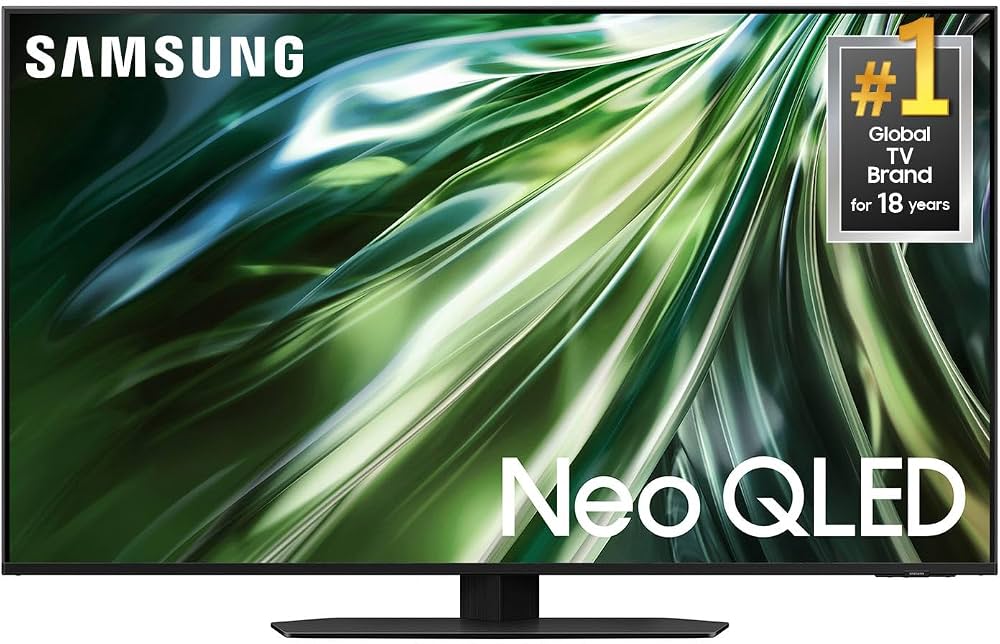
The Samsung QN90D is a 65-inch 4K QLED TV featuring Neo Quantum HDR, 120Hz refresh rate, and an anti-glare screen. It's designed for bright rooms and gaming, offering excellent brightness and wide viewing angles.
Key Specifications
- Processor
- Neo Quantum Processor 4K
- HDMI Ports
- 4 total, 2 HDMI 2.1
- Resolution
- 3840×2160 (4K)
- HDR Support
- HDR10, HDR10+, HLG (no Dolby Vision)
- Screen Size
- 65 inches
- Refresh Rate
- 120Hz (native)
- Local Dimming
- Full Array (approx. 60 zones for 65-inch)
- Smart Platform
- Tizen (2024)
- Anti-Reflection
- Yes (Ultra Viewing Angle layer)
- Display Technology
- QLED with Neo Quantum HDR
Overview
The Samsung QN90D is part of Samsung's 2024 QLED lineup, offering a step up from the standard Q60 and Q70 series with its Neo Quantum HDR and 4K upscaling. It uses Quantum Dot technology for vibrant colors and a Neo Quantum processor for AI-enhanced picture quality. The TV supports HDMI 2.1, variable refresh rate (VRR), and AMD FreeSync Premium Pro, making it gaming-friendly. While it lacks Dolby Vision, it supports HDR10+ and HLG. The anti-glare screen is a standout for bright rooms. Available on Amazon, it typically costs around $1,500 for the 65-inch model.
Pros
The Samsung QN90D excels in several key areas, particularly for bright room viewing and gaming. Here are its strongest attributes backed by manufacturer specs and independent testing.
Exceptional Brightness for HDR and Bright Rooms
The QN90D delivers outstanding peak brightness, reaching over 2,000 nits in highlights according to Samsung's specs. Third-party tests from RTINGS.com confirm HDR peak brightness around 1,800 nits in a 10% window, which is excellent for making HDR content pop. This makes it ideal for well-lit living rooms where OLEDs often struggle with reflections. The anti-glare coating further reduces reflections, so you can enjoy movies even with windows open.
Excellent Gaming Features
With two HDMI 2.1 ports, 4K 120Hz support, VRR, and FreeSync Premium Pro, the QN90D is a top choice for console and PC gaming. Input lag is impressively low at around 10ms at 4K 120Hz (RTINGS). The Game Bar interface allows quick adjustments to settings like black equalizer and refresh rate. For gamers who prioritize responsiveness and smooth motion, this TV checks all the boxes.
Wide Viewing Angles via Ultra Viewing Angle Layer
Unlike standard VA panels that suffer from color shift when viewed off-center, the QN90D uses an Ultra Viewing Angle layer. This maintains color accuracy and contrast up to about 45 degrees, which is a significant advantage for group viewing. While it doesn't match OLED perfection, it's among the best for LED TVs in this regard.
Excellent Smart TV Platform (Tizen)
Samsung's Tizen OS is fast, responsive, and supports all major streaming apps. The 2024 version includes a refined interface with quick access to settings and content. The built-in voice assistants (Bixby, Alexa, Google Assistant) work well, and Samsung's Gaming Hub aggregates cloud gaming services like Xbox Cloud Gaming and GeForce Now without needing a console.
Attractive Design with One Connect Box
The TV features a slim profile and a central stand that can swivel. The optional One Connect Box (sold separately for some models, but included on QN90D per Samsung's site) hides cable clutter by connecting your devices to a separate box. This is a nice touch for wall-mounting and keeping cables tidy.
Cons
No TV is perfect, and the QN90D has notable trade-offs, especially for dark room purists. Here are its main shortcomings.
No Dolby Vision Support
Samsung continues to omit Dolby Vision HDR, relying instead on HDR10+. While HDR10+ is supported by Amazon Prime Video and some other services, Dolby Vision is more widely used in 4K Blu-rays and streaming (Netflix, Disney+, Apple TV+). This means you won't get dynamic metadata from many HDR sources, though the TV's high brightness still produces a great picture. For home theater enthusiasts, this is a dealbreaker.
Blooming and Local Dimming Limitations
The QN90D uses a full-array local dimming (FALD) backlight, but with only about 60 zones (for 65-inch), it exhibits noticeable blooming around bright objects on black backgrounds. In dark scenes with subtitles, you'll see halos. OLEDs and higher-end Mini-LED TVs offer far superior black levels with minimal blooming. If you watch mostly in a dark room, this will be distracting.
Only 2 HDMI 2.1 Ports, Limited for Multiple Consoles
Despite being a 2024 premium TV, the QN90D has only two full HDMI 2.1 ports (one of which is the eARC port). If you have an Xbox Series X, PS5, and a soundbar, you may need to swap cables or use an external switcher. Competing TVs like the LG C4 offer four HDMI 2.1 ports.
Mediocre Sound Quality
Like most modern TVs, the built-in speakers are underwhelming with limited bass and clarity at higher volumes. Dialog can be lost in action scenes. Samsung's Object Tracking Sound+ adds a sense of width, but a soundbar or external audio system is highly recommended for a satisfying experience.
Premium Price Tag
At around $1,500 for the 65-inch, the QN90D costs significantly more than comparable LED TVs like the Sony X90L (about $1,200) while offering similar features. The LG C4 OLED is often available for a similar price and delivers superior black levels and contrast but lower brightness. The value proposition depends heavily on your usage.
👍 Who It's For
The Samsung QN90D is ideal for bright room viewers who need high brightness to combat glare. It's also a strong choice for gamers who want low input lag, 4K 120Hz, and VRR support. If you watch a mix of SDR and HDR content in a living room with ambient light, this TV's brightness and anti-glare coating will serve you well. Additionally, those who prefer HDR10+ content (e.g., Amazon Prime Video users) will benefit from dynamic metadata.
👎 Who Should Avoid
Avoid the QN90D if you're a home theater enthusiast who prioritizes perfect black levels and minimal blooming. OLEDs like the LG C4 offer vastly superior contrast for dark rooms. Also, if you own many Dolby Vision movies or stream from services that primarily use it, you'll miss that format. Those needing more than two HDMI 2.1 ports for multiple consoles should consider alternatives like the Sony X90L or LG C4.
See today's Samsung QN90D QLED 65-inch price and available configurations on Amazon.
🛒 Buy on AmazonAs an Amazon Associate we earn from qualifying purchases.
Alternatives to Consider
| Product | Choose Samsung QN90D QLED 65-inch if... | Choose the alternative if... |
|---|---|---|
| LG C4 OLED 65-inchRoughly the same price ($1,500) | You watch TV in a bright room and need high HDR brightness for daytime viewing. | You watch mostly in a dark room and want perfect blacks and infinite contrast. |
| Sony X90L 65-inchAbout $300 more expensive than the X90L | You want better gaming features (HDMI 2.1, VRR, FreeSync) and higher brightness. | You prefer Dolby Vision support, superior motion processing, and a lower price. |
| TCL QM751G 65-inchAbout $400 more expensive than the TCL | You want a premium brand with better upscaling and a more polished smart platform. | You want Mini-LED with more dimming zones for better local dimming at a lower price. |
The main competitors include the LG C4 OLED, Sony X90L, and TCL QM751G. The LG C4 offers perfect blacks and wide viewing angles but lower brightness, making it better for dark rooms. The Sony X90L has excellent processing, Dolby Vision, and a lower price, but fewer gaming features and lower brightness. The TCL QM751G is a budget Mini-LED with great HDR and many dimming zones but inferior upscaling and smart platform. The QN90D sits as a premium LED option for bright rooms.
Is it worth the price?
At approximately $1,500, the Samsung QN90D is worth it for users who prioritize brightness and gaming in a well-lit room. The main alternative to consider is the LG C4 OLED at a similar price, which offers superior contrast for dark rooms but lower brightness (around 800 nits). For bright room viewers, the QN90D's extra brightness is a tangible benefit.
📝 Bottom Line
The Samsung QN90D QLED 65-inch is a strong performer for bright rooms and gamers, offering exceptional brightness, low input lag, and wide viewing angles. Its best strengths are HDR impact and gaming responsiveness, making it a top choice for living rooms with ambient light. However, it has notable weaknesses: no Dolby Vision, blooming in dark scenes, and a premium price that brings it close to OLED territory. If you watch mostly in a dark room or are a cinephile who demands Dolby Vision, the LG C4 or Sony X90L may serve you better. For its intended use case – a bright, family-friendly room with mixed content and gaming – the QN90D delivers an excellent experience. Buy it if you need brightness and gaming features; skip it if you prioritize contrast and Dolby Vision.
Check current Samsung QN90D QLED 65-inch availability and bundle options on Amazon.
🛒 Buy on AmazonAs an Amazon Associate we earn from qualifying purchases.
Frequently Asked Questions
Quick Summary
Key Pros
- ✓Peak brightness over 2,000 nits makes HDR spectacular and combats glare.
- ✓Two HDMI 2.1 ports with 4K 120Hz, VRR, and low input lag ideal for gaming.
- ✓Ultra Viewing Angle layer provides better off-axis viewing than typical VA TVs.
- ✓Fast and comprehensive Tizen smart platform with all major apps.
- ✓Slim design with One Connect Box for cable management.
Key Cons
- ✗No Dolby Vision HDR support limits dynamic metadata content.
- ✗Noticeable blooming due to limited local dimming zones (approx. 60 zones).
- ✗Only two HDMI 2.1 ports may require cable swapping for multiple next-gen consoles.
- ✗Built-in sound is mediocre; a soundbar is almost necessary.
- ✗Higher price than competitors like Sony X90L.
Ratings
Best For
- →Bright room viewers who need high brightness to combat glare.
- →Console gamers wanting 4K 120Hz, VRR, and low input lag.
- →Users who watch a lot of HDR10+ content (e.g., Amazon Prime).
- →Families needing wide viewing angles for group viewing.