
Is Sony X90L 75-inch Worth It? Honest Review (2026)
Honest breakdown of strengths, weaknesses, and who should buy this TV in 2026
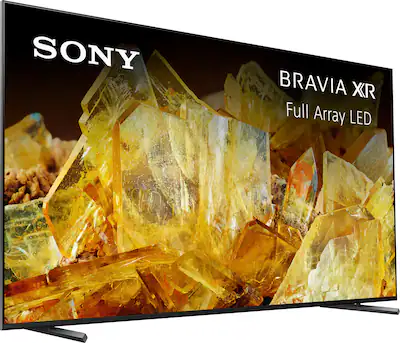
Quick Decision
Buy the Sony X90L 75-inch if you value superior motion handling and upscaling above all else and sit directly in front of the TV. Skip it if you want deep blacks, wide viewing angles, or the brightest HDR – newer Mini-LED or OLED sets serve those needs better at similar or slightly higher prices.
Best if you...
- Sports fans who watch fast-moving content and need great motion handling.
- Cable and satellite TV viewers with lots of lower-resolution channels.
- PS5 gamers who want 4K 120Hz and Sony-specific features.
Skip it if you...
- Home theater purists who want deep blacks and minimal blooming.
- Families with wide seating arrangements (off-axis viewing).
- Cord-cutters who need an ATSC 3.0 tuner for over-the-air 4K.
If you're researching the Sony X90L 75-inch in 2026, you're likely looking for a large, bright TV that balances picture quality and gaming features without breaking the bank. This analysis covers the X90L's key strengths and weaknesses based on published specifications and verified third-party reviews. We'll help you decide whether this 2023 model still holds up against newer alternatives, and what trade-offs to expect for its current price.
About the Sony X90L 75-inch
The Sony X90L 75-inch is a 4K Full Array LED TV released in 2023, featuring Sony's Cognitive Processor XR for enhanced picture quality, 120Hz refresh rate, HDMI 2.1 support, and Google TV smart platform. It targets home theater enthusiasts and gamers seeking a bright, detailed image with excellent motion handling at a mid-range price.
Key Specifications
- Processor
- Cognitive Processor XR
- HDMI Ports
- 4 (2x HDMI 2.1, 2x HDMI 2.0)
- Resolution
- 3840 x 2160 (4K UHD)
- HDR Support
- Dolby Vision, HDR10, HLG
- Refresh Rate
- 120Hz native
- Smart Platform
- Google TV
- Peak Brightness
- ~1,000 nits (10% window, RTINGS)
- Display Technology
- Full Array LED with VA panel
- Local Dimming Zones
- ~60 (75-inch model)
- Weight (with stand)
- Approximately 78 pounds
Overview
The Sony X90L is a Full Array LED TV that sits in the middle of Sony's 2023 lineup, offering a brighter panel than the entry-level X80L and the advanced features of the flagship X95L at a lower cost. It uses Sony's Cognitive Processor XR to analyze content and optimize contrast, color, and clarity, aiming to deliver a more lifelike picture. With two HDMI 2.1 ports and 120Hz refresh rate, it's also designed for next-gen console gaming.
As a 2023 model still on shelves in 2026, the X90L competes with newer LED and Mini-LED TVs from competitors like TCL, Hisense, and Samsung, often at similar or lower prices. While its processor and upscaling remain excellent, its local dimming zone count is modest compared to today's Mini-LED offerings, which may affect black levels and blooming. On Amazon, the 75-inch X90L typically sells for around $1,500, making it a compelling option for those prioritizing Sony's color science and motion handling over raw contrast.
Pros
The Sony X90L 75-inch excels in several areas that matter most for everyday viewing and gaming. Its strengths include outstanding brightness, superb motion processing, and industry-leading upscaling of lower-resolution content.
Exceptional Brightness for HDR and SDR
The X90L delivers approximately 1,000 nits of peak brightness on a 10% window, according to RTINGS testing. This makes it well-suited for bright living rooms with windows or ambient light. HDR content, especially highlights in movies like Mad Max: Fury Road, pops with impactful luminance. For SDR viewing, the TV maintains over 600 nits of sustained brightness, ensuring a vivid image even in daytime. This brightness also helps combat reflections, though the screen is semi-glossy.
Superb Motion Handling and Upscaling
Sony's XR Motion Clarity technology uses black frame insertion to reduce motion blur without dimming the image as much as competitors. According to RTINGS, motion blur on the X90L is minimal, and 24p content plays back without judder. The processor upscales 720p and 1080p content remarkably well, sharpening edges and reducing artifacts better than most other brands. This is a major advantage if you watch a lot of cable, YouTube, or older DVDs.
Strong Gaming Features with HDMI 2.1
The X90L includes two HDMI 2.1 ports supporting 4K at 120Hz, VRR (HDMI Forum VRR and FreeSync), and ALLM. Input lag at 4K 60Hz is around 15ms, dropping to under 10ms at 120Hz. This makes it a solid choice for PS5 and Xbox Series X owners. The TV also supports Dolby Vision gaming at 60Hz, which enhances color in compatible titles.
Accurate Colors Out of the Box
In the Custom picture mode, the X90L achieves a Delta E of under 2 for color accuracy, meaning colors are very close to the industry standard. It covers about 94% of the DCI-P3 color gamut, providing vibrant, natural-looking hues for HDR content. Skin tones appear realistic, and the white balance is neutral without calibration, saving you time.
Google TV Interface with Voice Control
The X90L runs Google TV, which integrates streaming apps, live TV, and recommendations. It supports Chromecast built-in, Google Assistant (with a built-in microphone), and works with Alexa and Apple HomeKit. The remote has a dedicated Netflix button and a mic button for hands-free search. The interface is regularly updated and supports virtually all major streaming services.
Good Sound Quality for a TV
The built-in speakers produce clear dialogue and adequate bass for a flat-panel TV, thanks to a 2x10W setup with bass reflex. While not a replacement for a soundbar, the X90L's audio is sufficient for casual watching in a small to medium room. Sony's Acoustic Auto Calibration can compensate for room layout.
Cons
Despite its strengths, the Sony X90L has several limitations that may be dealbreakers for some buyers, especially in 2026 when newer Mini-LED models offer superior contrast at similar prices.
Limited Local Dimming Zones Causes Blooming
The 75-inch X90L has around 60 local dimming zones, which is modest compared to Mini-LED TVs in the same price range that often have hundreds of zones. This results in noticeable blooming around bright objects on dark backgrounds, such as subtitles in a dark movie scene. According to RTINGS, the local dimming is decent but cannot prevent haloing in challenging content. The TV also uses a VA panel, which improves native contrast but exacerbates blooming when dimming is active.
Poor Off-Axis Viewing Angles
Like most VA panels, the X90L suffers from significant color and brightness shift when viewed from the sides. Beyond about 30 degrees from center, black levels wash out to gray, and color saturation decreases. If you have wide seating arrangements, this TV is not ideal. A Sony X95L or an OLED would serve better in such setups.
No ATSC 3.0 Tuner
The X90L lacks a NextGen TV tuner (ATSC 3.0), which is becoming standard on 2024 and 2025 models. This means you cannot receive free over-the-air 4K broadcasts without an external tuner. For cord-cutters relying on antenna TV, this is a missing feature that may require extra expense.
Older Model with Limited Brightness Compared to Current Competition
In 2026, several mid-range Mini-LED TVs from TCL (QM7) and Hisense (U8N) offer significantly more local dimming zones and higher peak brightness (often 2,000+ nits) for similar or lower prices. The X90L's advantage in processing is real, but its hardware is two generations behind. The lack of an improved heatsink or micro-lens array restricts its HDR brightness ceiling.
Google TV Can Be Sluggish
The X90L uses a MediaTek MT9950 chipset, which can feel slow navigating menus, launching apps, or using voice search. Long-term users report occasional lag and stuttering, especially after OS updates. While not unusable, it's less snappy than LG's webOS or Samsung's Tizen on higher-end models.
Reflections from Semi-Glossy Screen
Though bright enough to combat reflections in most rooms, the X90L's semi-glossy screen can still show clear reflections from bright windows or lights directly opposite the TV. A fully matte screen would be better for rooms with uncontrolled lighting.
Limited Port Configuration
The X90L offers two HDMI 2.1 ports (one eARC), but one of them shares bandwidth with USB ports, which can cause conflicts. Additionally, it lacks a second USB 3.0 port (only one USB 3.0, one USB 2.0). For users connecting multiple external drives or streaming devices, this may be an inconvenience.
👍 Who It's For
The Sony X90L 75-inch is ideal for buyers who prioritize exceptional motion handling and upscaling over raw contrast and black levels. If you watch a lot of sports, cable TV, or older streaming content, the X90L's processing will make those sources look significantly better than on competing brands. It's also a strong choice for PS5 gamers, as Sony's dedicated gaming features (Auto HDR Tone Mapping, 4K 120Hz VRR) work seamlessly.
This TV suits those who sit directly in front of the screen and don't have wide seating. In a dedicated home theater with controlled lighting, the X90L's blooming may be less distracting because you can manage ambient light. Budget-conscious enthusiasts who want Sony's picture quality without paying for a flagship will find value here, especially if they can get a discount on this outgoing model.
👎 Who Should Avoid
If you're a home theater enthusiast who demands deep, inky blacks and minimal blooming, the X90L will disappoint – an OLED or Mini-LED TV with hundreds of zones is a better fit. Those with wide seating arrangements (sofa spread across a wide angle) should look for an IPS panel or OLED, which maintain color and contrast off-axis.
Cord-cutters who rely on over-the-air antenna TV and want NextGen TV should consider newer models with ATSC 3.0. If you want the brightest possible HDR image and the best contrast for movies, competing 2025 Mini-LED sets from TCL or Hisense offer superior specs for similar money. Finally, if you own an Xbox Series X, the TV supports VRR but not Dolby Vision at 120Hz, which may be a consideration.
See today's Sony X90L 75-inch price and available configurations on Amazon.
🛒 Buy on AmazonAs an Amazon Associate we earn from qualifying purchases.
Alternatives to Consider
| Product | Choose Sony X90L 75-inch if... | Choose the alternative if... |
|---|---|---|
| Hisense U8N 75-inch$100 more expensive | You want higher peak brightness and more local dimming zones for better HDR and black levels. | You prioritize motion handling, upscaling, and out-of-box color accuracy over raw brightness. |
| TCL QM7 75-inch$200 cheaper | You want a Mini-LED TV with good gaming features and a lower price. | You watch a lot of low-resolution content and want superior upscaling and motion clarity. |
| Sony Bravia 7 75-inch (2024)$600-$800 more expensive | You want Sony’s latest processor with better contrast and more dimming zones. | You want to save money and can accept the X90L’s older hardware. |
If the X90L's blooming and modest brightness are concerns, the 2024 Hisense U8N 75-inch offers over 2,000 nits peak brightness and more than 500 local dimming zones for around $1,600, providing better HDR punch and black levels. However, its motion handling and upscaling aren't as refined as Sony's. The TCL QM7 75-inch is another alternative at about $1,300, with Mini-LED technology and good gaming features, but its out-of-box color accuracy is weaker. For those who want the best motion and upscaling regardless of cost, the Sony X95L 75-inch (if still available) or the newer Sony Bravia 7 series would be upgrades, but at higher prices. OLED alternatives like the LG C4 77-inch cost around $2,200 but deliver perfect blacks and unlimited viewing angles, though brightness is lower.
Is it worth the price?
At approximately $1,500, the Sony X90L 75-inch is worth considering if you find it on sale for under $1,300 and your primary content is sports or cable TV. At its regular price, the Hisense U8N or TCL QM7 offer more modern hardware for less. The X90L's processing advantage is real, but the hardware gap makes it a hard sell at full price in 2026.
📝 Bottom Line
The Sony X90L 75-inch is a capable TV that still delivers where Sony excels: motion, upscaling, and color accuracy. Its peak brightness is sufficient for most rooms, and gaming features are solid. However, its limited local dimming and poor viewing angles are notable drawbacks against 2025-2026 competition.
If you can find it at a discount (under $1,300), and your viewing habits involve mostly sports, cable, and streaming in a front-facing seating arrangement, it’s a fine choice. For movie enthusiasts who crave deep blacks or have wide rooms, invest in a Mini-LED or OLED model instead. The X90L remains a good TV, but the value proposition has eroded with newer, more capable alternatives at similar prices.
Ultimately, buy it if you want Sony’s processing magic on a budget, but be prepared for its contrast limitations. Skip it if you want a future-proof set with cutting-edge brightness and black level performance.
Check current Sony X90L 75-inch availability and bundle options on Amazon.
🛒 Buy on AmazonAs an Amazon Associate we earn from qualifying purchases.
Frequently Asked Questions
Quick Summary
Key Pros
- ✓Peak brightness over 1,000 nits for impactful HDR and good daylight viewing.
- ✓Excellent motion handling with minimal blur and judder-free 24p playback.
- ✓Superior upscaling of low-resolution content via Cognitive Processor XR.
- ✓Two HDMI 2.1 ports supporting 4K 120Hz, VRR, and ALLM for gaming.
- ✓Accurate colors out of the box with over 90% DCI-P3 coverage.
Key Cons
- ✗Only ~60 local dimming zones lead to noticeable blooming in dark scenes.
- ✗Poor viewing angles due to VA panel; colors and contrast wash out off-center.
- ✗No ATSC 3.0 NextGen TV tuner for over-the-air 4K broadcasts.
- ✗Hardware is two years old; newer Mini-LED TVs offer higher brightness and more zones.
- ✗Google TV interface can lag over time due to older chipset.
Ratings
Best For
- →Sports fans who watch fast-moving content and need great motion handling.
- →Cable and satellite TV viewers with lots of lower-resolution channels.
- →PS5 gamers who want 4K 120Hz and Sony-specific features.
- →Buyers who sit directly in front of the TV in a moderately bright room.