
Is Sony A95L 65-Inch QD-OLED Worth It? Honest Review (2026)
Honest breakdown of strengths, weaknesses, and who should buy Sony's flagship QD-OLED TV in 2026.
Quick Decision
Buy the Sony A95L if you want the best possible picture quality for movies and gaming in a dark room and can afford the premium. Skip it if you need higher brightness for bright rooms or Dolby Vision gaming at 120Hz, where the LG G4 is a better choice.
Best if you...
- Home theater enthusiasts with dedicated dark rooms
- Movie lovers who want reference-level HDR color and contrast
- Gamers who play a mix of console titles at 4K120
Skip it if you...
- Budget-conscious shoppers seeking the best value
- People in very bright rooms with lots of windows
- Users who watch static news tickers, sports scores, or use as a PC monitor
The Sony A95L 65-inch QD-OLED has been widely praised as one of the best TVs money can buy, but is it still worth the premium in 2026? With newer models on the market and price drops, the A95L remains a compelling choice for those who prioritize picture quality above all else. This analysis covers its strengths and weaknesses, compares it to top alternatives, and helps you decide if it's the right TV for your setup.
We'll explore real-world performance, including brightness, color accuracy, gaming features, and potential drawbacks like burn-in risk. By the end, you'll have a clear understanding of who should buy the A95L and who should consider other options.
About the Sony A95L 65-Inch QD-OLED
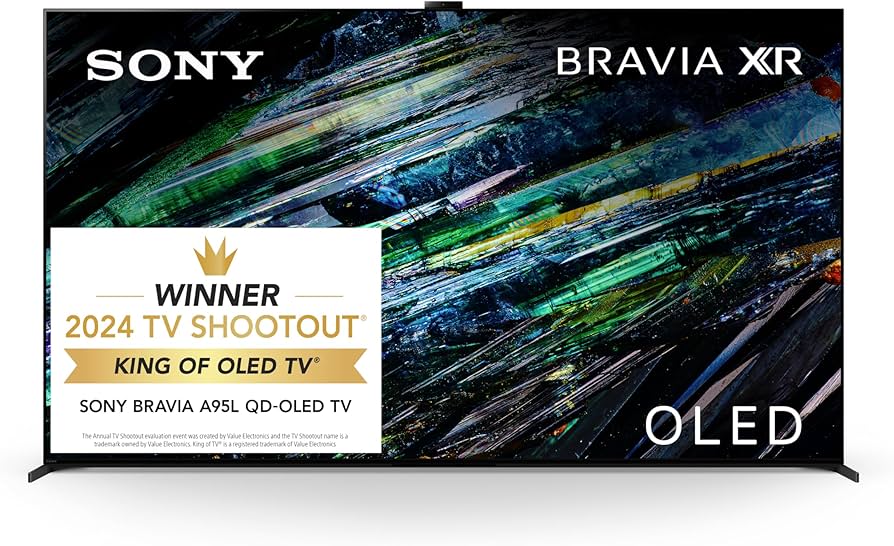
The Sony A95L is a 65-inch QD-OLED TV that combines Quantum Dot technology with OLED for exceptional color volume and brightness. It targets home theater enthusiasts and gamers seeking the best possible picture quality, featuring a Cognitive Processor XR, four HDMI 2.1 ports, and Google TV. As of 2026, it remains a top contender in the premium TV market, with a current price around $2,800.
Key Specifications
- Audio
- Acoustic Surface Audio+ (2.2.2 ch, Dolby Atmos)
- Processor
- Cognitive Processor XR
- HDMI Ports
- 4 x HDMI 2.1 (4K120, VRR, ALLM)
- Panel Type
- 65-inch QD-OLED (3rd Gen)
- Resolution
- 3840 x 2160 (4K)
- Color Gamut
- ~90% Rec.2020
- HDR Support
- Dolby Vision, HDR10, HLG
- Smart Platform
- Google TV with Chromecast built-in
- Peak Brightness
- ~1,000 nits (10% window, HDR)
- Weight (with stand)
- About 35.5 kg (78.3 lbs)
Overview
The Sony A95L uses a third-generation QD-OLED panel from Samsung Display, which Sony has tuned with its Cognitive Processor XR for superior image processing. It delivers excellent peak brightness for an OLED—around 1,000 nits in a 10% window according to RTINGS—and covers over 90% of the Rec.2020 color gamut. This makes it ideal for HDR content, with vibrant colors and deep inky blacks.
The TV runs on Google TV, providing access to streaming apps and voice control via Google Assistant. It also supports Dolby Vision, HDR10, and HLG, along with HDMI 2.1 features for gaming including 4K at 120Hz, variable refresh rate (VRR), and auto low latency mode (ALLM). The built-in Acoustic Surface Audio+ system uses actuators behind the screen to produce sound, creating a wide soundstage. For buyers considering this TV, it's available on Amazon with various warranty options.
Pros
The Sony A95L excels in several key areas that make it a standout choice for enthusiasts. Its QD-OLED panel delivers unparalleled color and contrast, while smart features and gaming support add versatility. Here are the most compelling advantages.
Exceptional Picture Quality with QD-OLED
The A95L’s QD-OLED panel produces stunning images with perfect blacks and vibrant colors. According to RTINGS, it achieves a peak brightness of around 1,000 nits in HDR highlights—significantly brighter than standard OLEDs like the LG C3—while maintaining deep black levels. Color volume is outstanding, covering 90% of the Rec.2020 gamut, which means HDR content looks punchy and lifelike. In real-world viewing, this translates to specular highlights that pop without washing out near-blacks.
Superior Motion Processing and Upscaling
Sony’s Cognitive Processor XR excels at motion handling and upscaling lower-resolution content. The TV uses XR Motion Clarity to keep motion smooth without black frame insertion artifacts, making it ideal for sports and action movies. Upscaling of 1080p and even 720p content is remarkably clean, thanks to the XR 4K Upscaling engine, which reduces noise and sharpens edges without introducing halos. This makes the A95L a great choice for viewers who watch a mix of HD and 4K content.
Excellent Gaming Features
With four HDMI 2.1 ports, the A95L supports 4K at 120Hz, VRR (up to 48-120Hz), and ALLM. Input lag at 4K120 is around 8ms (1080p120 is similar), making it responsive for competitive gaming. The TV also supports PS5-specific features like Auto HDR Tone Mapping and 4K 120Hz with Dolby Vision (though Dolby Vision gaming at 120Hz is not supported). For Xbox Series X|S, VRR works well, and the TV passes all HDMI 2.1 bandwidth tests.
Great Built-in Sound
The Acoustic Surface Audio+ system uses actuators behind the screen to produce sound that seems to come from the picture itself. The 2.2.2-channel setup (including two subwoofers) delivers clear dialogue and decent bass, outperforming most built-in TV speakers. It also supports Dolby Atmos decoding, creating a convincing virtual surround effect. For those who don't want a separate soundbar, the A95L’s audio is good enough for everyday viewing.
Premium Design and Build Quality
The A95L has a sleek, minimalist design with an aluminum frame and a unique stand that offers three height positions to accommodate soundbars. The panel is very thin (less than 1 inch at its thickest), and the cable management system keeps wires hidden. Build quality is excellent, with tight tolerances and a premium feel that matches its flagship status.
Wide Viewing Angles
QD-OLED technology maintains color accuracy and contrast even from extreme angles. Unlike many LCD TVs, the A95L shows minimal color shift or brightness drop when viewed from the side—less than 10% reduction in brightness at 45 degrees according to RTINGS. This makes it ideal for wide living rooms or families where not everyone sits directly in front of the screen.
Cons
While the A95L is exceptional, it has some notable drawbacks that may affect certain buyers. These include burn-in risk, high price, and a few feature limitations compared to 2025/2026 competitors.
Burn-In Risk (Though Reduced)
Like all OLEDs, the A95L is susceptible to permanent image retention if static elements are displayed for many hours. Sony has implemented pixel shifting and other mitigations, but the risk remains, especially for heavy news or gaming with static HUDs. QD-OLED panels historically have shown more uniform wear than traditional WOLED, but long-term tests are still ongoing. Users who watch varied content are likely fine, but those who use their TV as a PC monitor or watch 12+ hours of static content daily should consider an LED alternative.
High Price Compared to Mini-LED
At around $2,800, the A95L is significantly more expensive than high-end mini-LED TVs of similar size, such as the TCL QM8 or Sony X90L. While it offers superior black levels and color volume, the brightness difference is noticeable—mini-LEDs can exceed 2,000 nits, which benefits HDR in bright rooms. The A95L is a premium product, and budget-conscious buyers will find better value in LED options.
No Dolby Vision Gaming at 4K120
Despite supporting Dolby Vision and HDMI 2.1, the A95L cannot deliver Dolby Vision at 4K 120Hz. When you enable Dolby Vision, the TV defaults to 4K60. This is a limitation of the MediaTek chipset used in many Sony TVs. For PC gamers or Xbox owners who want Dolby Vision gaming at 120Hz, this is a disappointment. LG’s G4 OLED now supports 4K120 Dolby Vision gaming, making it a better choice for that specific use case.
Brightness Still Less Than High-End Mini-LED
In a dark room, the A95L’s brightness is excellent, but in a bright living room with windows, its peak brightness (~1,000 nits) is outshined by mini-LED TVs that can reach 2,000-3,000 nits. The A95L handles reflections well with an anti-glare coating, but it cannot match the punch of a mini-LED in direct sunlight. For bright rooms, a high-end LED may be more suitable.
Google TV Interface Can Be Slow with Ads
The Google TV platform, while rich in apps, can feel sluggish at times, especially after long periods of use. The remote control is good, but the interface includes ads and recommendations on the home screen, which some users find intrusive. Sony has not been as prompt with software updates as some competitors, and occasional bugs (e.g., HDMI handshake issues) have been reported in user forums.
Gradient Banding in Dark Scenes
Some users and reviewers have noted posterization or color banding in very dark gradients, particularly near black. This is partly due to the QD-OLED panel’s lower bit depth in some processing steps. While not a deal-breaker for most, videophiles may notice it in low-bitrate streams or difficult HDR scenes. The issue is less pronounced than on earlier QD-OLEDs but still present.
👍 Who It's For
The Sony A95L is ideal for home theater enthusiasts who demand reference-level picture quality in a controlled environment. Movie lovers will appreciate its deep blacks, vibrant colors, and excellent HDR performance. Gamers who prioritize image quality and have both consoles will benefit from the HDMI 2.1 features, especially if they don't need Dolby Vision at 120Hz. It's also a great choice for those who want a TV that doubles as a statement piece, with its premium design and slim profile. If you watch a variety of content and can afford the premium, the A95L will reward you with stunning visuals for years.
👎 Who Should Avoid
Budget-conscious shoppers should avoid the A95L, as many mini-LED TVs offer similar brightness and features for hundreds less. People who watch a lot of static content (news, sports tickers, or use as a PC monitor) may want an LED to avoid burn-in risk. Those with very bright rooms who prioritize peak brightness for HDR should consider a high-end mini-LED like the TCL QM8 or Samsung QN90C. Additionally, if you need Dolby Vision gaming at 4K120, the LG G4 is a better fit. Finally, users who dislike smart TV ads or prefer a simpler interface may find Google TV frustrating.
See today's Sony A95L 65-Inch QD-OLED price and available configurations on Amazon.
🛒 Buy on AmazonAs an Amazon Associate we earn from qualifying purchases.
Alternatives to Consider
| Product | Choose Sony A95L 65-Inch QD-OLED if... | Choose the alternative if... |
|---|---|---|
| LG G4 65-inch OLED$200 more expensive (A95L is $200 cheaper than G4 at typical pricing) | You want a brighter OLED with Dolby Vision gaming at 4K120 and a more responsive smart platform. | You prioritize Sony's superior motion processing, upscaling, and out-of-box color accuracy. |
| Samsung S95D 65-inch QD-OLEDAbout $100 more expensive (S95D is typically $2,900) | You want a similar QD-OLED picture but with a matte screen that reduces glare in bright rooms. | You need Dolby Vision support and prefer Sony's processing for mixed content. |
| Sony X90L 65-inch Mini-LED$1,200 less expensive (X90L around $1,600) | You want a much cheaper alternative that still has great Sony processing and higher brightness. | You can't accept the burn-in risk of OLED and need the extra brightness for a very bright room. |
For buyers considering the A95L, the main alternatives are the LG G4 OLED and the Samsung S95D QD-OLED. The LG G4 offers similar black levels but higher brightness (around 1,400 nits peak) and supports Dolby Vision gaming at 4K120. It also uses the faster WebOS interface. The Samsung S95D is also a QD-OLED with a matte screen that reduces reflections, but it lacks Dolby Vision support. A more budget-friendly option is the Sony X90L, a mini-LED that sacrifices some black levels but provides excellent brightness and similar processing at a lower price. For those determined to buy on Amazon, the A95L is available, but you can also find the LG G4 and Sony X90L there.
Is it worth the price?
At approximately $2,800, the A95L is worth it for dedicated home theater enthusiasts who will use it in a controlled light environment and value absolute color accuracy and contrast. The main alternative is the LG G4 at $2,600, which offers higher brightness and Dolby Vision gaming support but slightly less refined processing. For most buyers, the A95L's picture quality justifies its premium over mini-LED options, but those on a tighter budget will find better value in the $1,500-$2,000 range.
📝 Bottom Line
The Sony A95L 65-inch QD-OLED remains one of the most impressive TVs you can buy in 2026, offering reference-level picture quality that excels in dark rooms. Its QD-OLED panel delivers outstanding color volume and deep blacks, while Sony's Cognitive Processor XR ensures superb motion handling and upscaling. The inclusion of four HDMI 2.1 ports makes it a strong choice for gamers, and the built-in sound system is better than most.
However, the A95L is not without compromises. Its peak brightness lags behind high-end mini-LEDs, making it less ideal for bright rooms. The lack of Dolby Vision gaming at 120Hz may disappoint some console gamers, and the Google TV interface has its quirks. Additionally, the burn-in risk, while mitigated, is still a consideration for heavy static content users.
For those who prioritize ultimate picture quality and can manage the lighting environment, the A95L is a worthy investment. If you need higher brightness or specific gaming features, consider the LG G4 or a premium mini-LED. Overall, the Sony A95L is a top-tier TV that continues to justify its premium price for the right buyer.
Check current Sony A95L 65-Inch QD-OLED availability and bundle options on Amazon.
🛒 Buy on AmazonAs an Amazon Associate we earn from qualifying purchases.
Frequently Asked Questions
Quick Summary
Key Pros
- ✓Stunning QD-OLED picture with deep blacks and vibrant colors.
- ✓Excellent brightness for an OLED, reaching ~1,000 nits peak.
- ✓Superior motion processing and upscaling from Sony's Cognitive Processor XR.
- ✓Four HDMI 2.1 ports for 4K120 gaming with VRR and ALLM.
- ✓Great built-in sound with Acoustic Surface Audio+ and Dolby Atmos.
Key Cons
- ✗Risk of burn-in with static content.
- ✗High price compared to mini-LED alternatives.
- ✗No Dolby Vision gaming at 4K120Hz.
- ✗Lower peak brightness than high-end mini-LEDs.
- ✗Google TV interface can be sluggish and includes ads.
Ratings
Best For
- →Home theater enthusiasts with dedicated dark rooms
- →Movie lovers who want reference-level HDR color and contrast
- →Gamers who play a mix of console titles at 4K120
- →Users who watch a variety of content and value motion processing