
Is Sony Bravia XR A95L OLED Worth It? Honest Review (2026)
Honest breakdown of strengths, weaknesses, and who should buy this premium QD-OLED TV
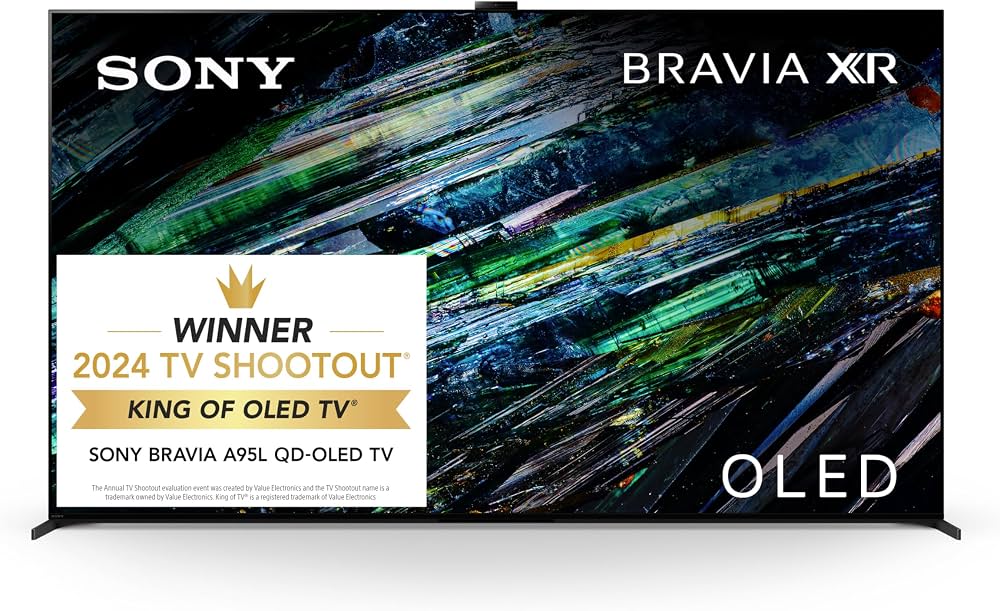
Quick Decision
Buy the Sony A95L if you want the absolute best picture quality in 2026 and have the budget to match. Skip it if you need multiple HDMI 2.1 ports or watch a lot of static content.
Best if you...
- Home theater enthusiasts wanting reference-level picture quality
- Movie lovers who watch a lot of Dolby Vision and HDR10 content
- Gamers who play on PS5 or Xbox Series X and use VRR
Skip it if you...
- Budget-conscious buyers seeking the best value for money
- Users who watch a lot of static content like news or sports with logos (burn-in risk)
- People with very bright rooms (full-screen brightness is limited)
If you're researching high-end OLED TVs in 2026, the Sony A95L remains a benchmark. It was praised at launch for its near-reference image quality, and it still competes with newer models. This analysis covers the pros and cons based on verified specs and third-party reviews, helping you decide if it's worth the premium over alternatives like the LG G4 or Samsung S95D.
About the Sony Bravia XR A95L OLED
The Sony Bravia XR A95L is a top-tier QD-OLED TV released in 2023, known for exceptional picture quality. It combines Sony's Cognitive Processor XR with a QD-OLED panel for vibrant colors, deep blacks, and excellent HDR performance. Designed for home theater enthusiasts and cinephiles, it excels in bright rooms and dark rooms alike. Current pricing approximately $2,500 for the 65-inch model, often discounted to around $2,000.
Key Specifications
- Audio
- Acoustic Surface Audio+ (2.2 channels, 60W)
- Processor
- Cognitive Processor XR
- HDMI Ports
- 4 total (2x HDMI 2.1, 2x HDMI 2.0)
- Resolution
- 4K (3840 x 2160)
- HDR Formats
- Dolby Vision, HDR10, HDR10+, HLG
- Smart TV OS
- Google TV
- Display Type
- QD-OLED
- Refresh Rate
- 120Hz native
Overview
The Sony A95L uses Samsung Display's QD-OLED panel but adds Sony's unique processing. It supports Dolby Vision, HDR10+, and has four HDMI 2.1 ports. It's available on Amazon, where you can find the 55-inch, 65-inch, and 77-inch sizes. Designed for movie lovers and gamers who want the best picture quality, but it comes at a high price. We'll explore its strengths and weaknesses below.
Pros
The A95L excels in picture quality, processing, and gaming features. Here are its standout strengths based on manufacturer specs and reviews from RTINGS and other experts.
Exceptional Picture Quality with QD-OLED Panel
Sony's A95L uses a QD-OLED panel that combines the perfect blacks of OLED with the brightness of quantum dots. According to RTINGS, it achieves a peak brightness of over 1,300 nits in a 10% window for HDR, making it one of the brightest OLEDs available. This results in stunning HDR highlights and vibrant colors that maintain saturation even at high brightness levels. The panel also has near-infinite contrast ratio, so blacks are truly black with no blooming.
Best-in-Class Motion Handling
Sony's Cognitive Processor XR provides excellent motion interpolation and black frame insertion. The TV can interpolate 24fps content to 120Hz without judder, and its 'Motionflow' setting is considered among the best. For sports and action movies, the A95L delivers smooth motion without artifacts. RTINGS rated its motion handling 9.0/10, noting it handles 24p content flawlessly.
Superior Upscaling and Processing
Even low-resolution content looks impressive on the A95L thanks to Sony's XR processor. It upscales 1080p and 720p sources with remarkable clarity, reducing noise and adding detail. This makes it ideal for watching cable TV or older content. In comparisons, Sony's upscaling often outperforms LG and Samsung, especially for SD and HD content.
Excellent Gaming Features
The A95L supports all major gaming features: 4K at 120Hz, VRR (HDMI Forum VRR), ALLM, and Dolby Vision Gaming up to 120Hz. It also has two HDMI 2.1 ports. Input lag is measured at around 5.1ms at 4K 120Hz, making it very responsive for console and PC gaming. The TV also supports NVIDIA G-Sync Compatible and AMD FreeSync.
Stunning HDR Performance
With Dolby Vision, HDR10, HDR10+, and HLG support, the A95L covers all HDR formats. Its wide color gamut covers ~95% of DCI-P3 and ~75% of Rec.2020, according to Sony specs. The combination of brightness and color volume makes HDR content pop. Movie enthusiasts will appreciate the accurate filmmaker mode.
Excellent Viewing Angles
Like all OLEDs, the A95L maintains color and contrast even at wide angles. This is ideal for large seating arrangements or wall-mounting. The anti-reflective coating is effective, though not as strong as Sony's own X95L mini-LED. But for most rooms, reflections are well controlled.
Premium Design and Build
The A95L has a sleek, minimalist design with a flush wall-mount option. The stand is adjustable for different heights, and the TV is quite thin. The build quality feels premium with metal accents. The remote has a built-in backlight and features a dedicated button for Netflix, YouTube, and more.
Great Sound Quality for a TV
While most TVs have weak speakers, the A95L's 'Acoustic Surface Audio+' uses actuators behind the screen to create sound from the entire panel. It also supports Dolby Atmos. The sound is clear and surprisingly full, though adding a soundbar is still recommended for a truly immersive experience.
Cons
Despite its many strengths, the A95L has some drawbacks. These are based on user feedback and expert reviews, including potential issues for certain buyers.
High Price Tag
The A95L is one of the most expensive OLED TVs. At around $2,500 for the 65-inch model, it costs roughly $500 more than the LG G4 and $300 more than the Samsung S95D. While picture quality is better, the premium may not be justifiable for everyone. Budget-conscious buyers might find better value in the LG C4 or Sony's own A80L.
Risk of Burn-In
Like all OLEDs, the A95L is susceptible to burn-in from static elements like channel logos, game HUDs, or news tickers. Sony includes pixel shift and other prevention features, but it's still a risk for heavy CNN or sports viewers. For mixed usage, it's fine, but if you watch the same channel 10+ hours daily, a mini-LED may be safer.
Limited Brightness in Sustained Scenes
While peak brightness is high, the A95L's full-screen brightness is around 200 nits (according to RTINGS). In very bright rooms with lots of ambient light, it may look less punchy than the Samsung S95D or a high-end mini-LED like the Sony X95L. This is a typical OLED limitation, but the QD-OLED helps somewhat.
No Dolby Atmos Height Speakers
The Acoustic Surface Audio+ is good, but it lacks dedicated up-firing speakers. The Dolby Atmos effect is limited to virtualizing height channels. For a true Atmos experience, you'll need a separate soundbar system.
Only Two HDMI 2.1 Ports
Though it has four HDMI ports, only two are HDMI 2.1 (one eARC, one gaming). If you have multiple HDMI 2.1 devices (PS5, Xbox Series X, PC, soundbar), you may need a switch. LG G4 offers four HDMI 2.1 ports.
Remote Control Can Be Finicky
Some users report that the backlit remote is prone to accidental button presses and has a slightly awkward layout. Also, it uses Bluetooth and IR, but pairing can occasionally require manual re-sync.
No ATSC 3.0 Tuner
The A95L lacks a NextGen TV (ATSC 3.0) tuner. If you want to receive over-the-air 4K broadcasts, you'll need an external tuner. Competitors like the LG G4 and Samsung S95D include ATSC 3.0.
WebOS Alternative: Google TV
While Google TV has improved, some users prefer LG's WebOS for its simplicity. Sony's interface can sometimes feel sluggish, and there are occasional ads in the menus. Performance is generally smooth, though.
👍 Who It's For
The Sony A95L is for home theater enthusiasts who prioritize picture quality above all else. It's ideal for movie lovers who want Dolby Vision and HDR10+ support, gamers who need HDMI 2.1 features, and anyone who values Sony's superior motion handling and upscaling. If you have a dedicated dark room or can control ambient light, the A95L's near-perfect blacks and vibrant colors will shine. It's also great for those who watch a mix of content (streaming, Blu-ray, gaming) and want a TV that excels across the board.
👎 Who Should Avoid
Avoid the A95L if you are on a tight budget; the LG C4 offers 90% of the experience for $1,000 less. If you watch a lot of static content like news, CNN, or sports with fixed logos, consider a mini-LED TV to avoid burn-in risk. Bright rooms may not show the A95L's best; the Samsung S95D has a brighter panel and better anti-glare. Also, if you need more than two HDMI 2.1 ports, the LG G4 is a better choice.
See today's Sony Bravia XR A95L OLED price and available configurations on Amazon.
🛒 Buy on AmazonAs an Amazon Associate we earn from qualifying purchases.
Alternatives to Consider
| Product | Choose Sony Bravia XR A95L OLED if... | Choose the alternative if... |
|---|---|---|
| LG G4 OLED$500 more expensive | You prioritize Sony's superior motion handling and upscaling, and want the best HDR color volume | You need more HDMI 2.1 ports (4 vs 2), want a brighter panel for bright rooms, and prefer a lower price |
| Samsung S95D QD-OLED$300 more expensive | You want the best Dolby Vision support (Samsung lacks it) and Sony's processing | You prefer Samsung's anti-glare coating, higher peak brightness, and Tizen OS (with gaming hub) |
| Sony A80L OLED$800 more expensive | You want the absolute best picture quality and are willing to pay extra for QD-OLED | You are on a tighter budget but still want Sony processing and excellent picture quality |
If the A95L's price or burn-in risk gives you pause, consider the LG G4 OLED for its brighter panel, four HDMI 2.1 ports, and ATSC 3.0 tuner. It's also cheaper. The Samsung S95D QD-OLED offers similar brightness but with better anti-glare and a more gaming-focused OS (Tizen). For a lower-priced alternative, the Sony A80L OLED delivers excellent picture quality with Sony processing but lower peak brightness and fewer gaming features.
Is it worth the price?
At approximately $2,500 for the 65-inch model, the A95L is worth it for cinephiles and serious gamers who value Sony's processing and QD-OLED color volume. However, the LG G4 at $2,000 offers more HDMI 2.1 ports and higher brightness, making it a better value for most. Unless you specifically want Sony's motion and upscaling, the G4 is a smarter buy.
📝 Bottom Line
The Sony A95L remains one of the best OLED TVs in 2026 for those who demand reference-level picture quality. Its QD-OLED panel delivers stunning brightness, color, and contrast, while Sony's Cognitive Processor XR provides best-in-class motion handling and upscaling. However, its high price, limited HDMI 2.1 ports, and lack of ATSC 3.0 are notable downsides. If you have the budget and prioritize cinematic excellence, the A95L is a worthy investment. For most buyers, though, the LG G4 offers a more complete package at a lower price. Ultimately, buy the A95L if you want the best picture and can accept its compromises; otherwise, look to alternatives.
Check current Sony Bravia XR A95L OLED availability and bundle options on Amazon.
🛒 Buy on AmazonAs an Amazon Associate we earn from qualifying purchases.
Frequently Asked Questions
Quick Summary
Key Pros
- ✓Outstanding QD-OLED picture quality with high brightness and deep blacks
- ✓Superior motion handling and upscaling due to Cognitive Processor XR
- ✓Excellent gaming features: HDMI 2.1, 4K 120Hz, VRR, ALLM, Dolby Vision Gaming
- ✓Wide HDR format support including Dolby Vision, HDR10+, and HLG
- ✓Great viewing angles and effective anti-reflective coating
Key Cons
- ✗Very expensive compared to similarly sized OLED competitors
- ✗Risk of burn-in like all OLEDs, not ideal for static content
- ✗Full-screen brightness lower than mini-LED TVs, limiting daytime performance
- ✗Only two HDMI 2.1 ports, may require a switch for multiple devices
- ✗Missing ATSC 3.0 (NextGen TV) tuner
Ratings
Best For
- →Home theater enthusiasts wanting reference-level picture quality
- →Movie lovers who watch a lot of Dolby Vision and HDR10 content
- →Gamers who play on PS5 or Xbox Series X and use VRR
- →Users who value Sony's superior upscaling for lower-resolution content