
Is Sony A80J OLED 65-inch Worth It? Honest Review (2026)
Balanced look at strengths, weaknesses, and who should buy this OLED in 2026.
Quick Decision
Buy the A80J if you can get the 65-inch near $900 and you mainly watch HDR movies in a dim room. Skip it if you need high brightness for daytime use, Dolby Vision at 120Hz, or more than two HDMI 2.1 ports.
Best if you...
- Dark-room movie and TV enthusiasts
- PS5 gamers using 4K/120Hz
- Budget-conscious OLED shoppers
Skip it if you...
- Bright-room daytime TV viewers
- Multi-console gamers with soundbars
- Xbox Series X users relying on Dolby Vision at 120Hz
If you're shopping for an OLED TV in 2026, you've likely noticed the Sony A80J in clearance listings and open-box sections. It's a 2021 model, but it still offers the core OLED benefits that originally drew people to it: inky blacks, wide viewing angles, and strong picture processing. This guide takes a detailed look at the A80J 65-inch through the lens of the current market, asking whether it's still worth buying years after launch. We'll cover its strengths and weaknesses, who should buy it, who should avoid it, and relevant alternatives, plus the accessories most buyers add. The A80J is available on Amazon through various third-party sellers, so the actual price depends on stock and condition.
About the Sony A80J OLED 65-inch
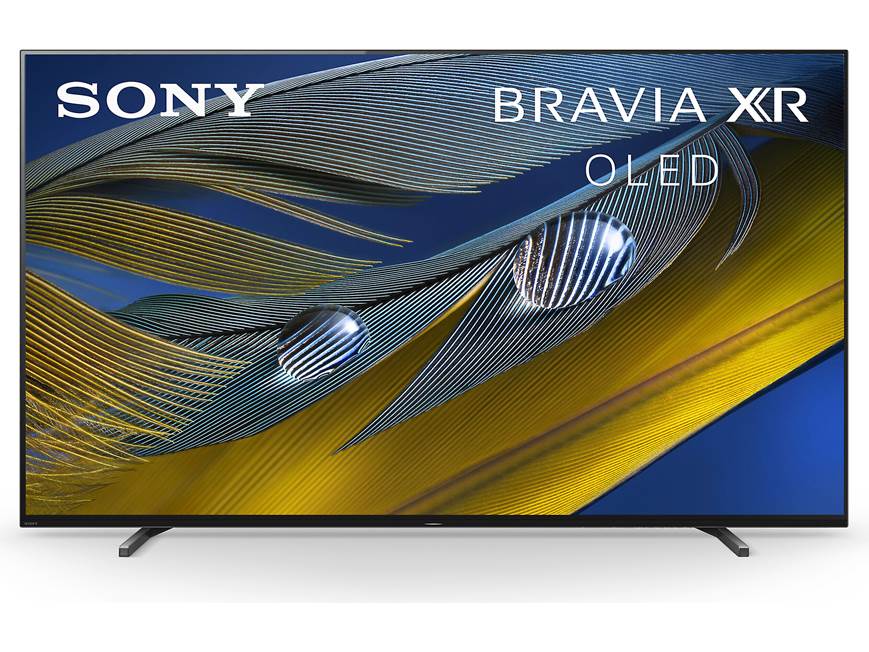
The Sony A80J 65-inch is a 2021 OLED television that combines a WRGB OLED panel with Sony's XR Cognitive Processor. It delivers 4K resolution, a native 120Hz refresh rate, HDMI 2.1 features such as VRR and ALLM, and runs Google TV. Its Acoustic Surface Audio+ system turns the screen into a speaker for built-in audio.
Key Specifications
- Audio
- 3.1ch Acoustic Surface Audio+
- Tuner
- ATSC 3.0 NextGen TV
- Display
- 65-inch OLED
- Processor
- XR Cognitive Processor
- Resolution
- 3840 x 2160
- HDMI Inputs
- 4 (2x HDMI 2.1, 1 with eARC)
- HDR Support
- HDR10, HLG, Dolby Vision
- Refresh Rate
- 120Hz native
- Smart Platform
- Google TV
Overview
The Sony A80J sits in the middle of Sony's 2021 OLED lineup, above the B-series and below the master-series A90J. Sony positioned it as a premium set for movie lovers and PS5 gamers, with the XR Cognitive Processor designed to cross-analyze objects in the picture for more natural color and contrast. For its time, it was widely praised for out-of-the-box accuracy and motion handling. In 2026, it competes not with the newest LG C4 or Samsung QD-OLED models, but as a value-priced alternative that prioritizes contrast over raw brightness.
The TV ships with Google TV, built-in Chromecast, AirPlay 2, and works with both Alexa and Google Assistant. It has two HDMI 2.1 ports, one of which is also the eARC connection, and an ATSC 3.0 tuner for NextGen TV broadcasts. The glossy OLED panel delivers the perfect black levels the technology is known for, but it also means the set performs best in a dark room. You can find the A80J on Amazon from resellers and clearance houses, with prices well below its original $1,799 launch MSRP.
Pros
The A80J still holds up well in 2026 if you want a high-contrast display for movies and gaming. Here are the specific strengths that make it worth considering despite its age.
OLED Contrast and Perfect Blacks
Because each pixel produces its own light, the A80J can turn off individual pixels to produce true black. That gives it essentially infinite contrast ratio, which makes dark movie scenes look far more convincing than on an LCD. According to RTINGS, the A80J covers about 100% of the DCI-P3 color space, so HDR colors look rich and accurate. If you watch most content in a darkened room, this is the main reason to choose an OLED.
The impact of these perfect blacks is especially obvious in letterboxed movies, horror films, and space documentaries. The skyline of a city at night, for example, has no milky glow behind the lights, because each star or streetlight is rendered as a distinct point. This is what separates a premium OLED from an entry-level mini-LED LCD, even when the measured HDR brightness is lower.
XR Cognitive Processor Delivers Exceptional Upscaling
Sony's XR Cognitive Processor cross-analyzes the entire frame rather than treating the picture as a grid of fixed blocks. That means lower-resolution content like 720p cable and 1080p Blu-rays get cleaned up with good detail and natural edges. In 2026, when many streaming services still deliver 1080p or a soft 4K stream, this upscaling advantage is more useful than ever.
This processor also drives the A80J's motion handling. XR OLED Motion selectively inserts frames to reduce judder without the soap opera effect, and sports and local news broadcasts look smooth. For a 2021 set, the A80J still out-processes most budget TVs sold today, especially in the way it preserves skin tones and sharpens fine patterns.
Low Input Lag and 4K/120Hz Gaming Capability
RTINGS measured the A80J's input lag well under 10ms in Game Mode, which makes it responsive for console and PC gaming. The set natively supports 4K at 120Hz on its two HDMI 2.1 inputs, plus VRR (including both HDMI Forum VRR and FreeSync) and ALLM. For PS5 owners, the A80J was one of the best-matched TVs at launch because it specifically supports Sony's HDR tone mapping for the console.
The practical result is a fast-feeling gaming display with no noticeable delay. If you're playing a single-player action game on a PS5, the 120Hz mode and near-instant response make a tangible difference. However, the limited port count is a real drawback for multi-console households, which we cover in the cons section.
Great Out-of-the-Box Color Accuracy
According to RTINGS, the A80J out-of-the-box delivers excellent color accuracy in both SDR and HDR, with a very low delta-E error rate before calibration. The white point is close to D65 and color temperatures are neutral, so films look the way their directors intended. For movie fans who don't want to hire a professional calibrator, this is a major plus.
Even after years of use, the panel holds its color stability well, and Sony's firmware updates improved the ABL (automatic brightness limiting) behavior. The result is a TV that doesn't need tweaking beyond your personal preferences to look great with almost any content.
Acoustic Surface Audio+ in a Compact Form
The A80J's screen acts as a speaker, using actuators behind the panel to generate sound from the surface of the screen. On the 65-inch model, it's a 3.1-channel system with a built-in subwoofer, producing dialogue that is noticeably clearer and more direct than the bass-weak speakers on most flat TVs. This is actually a practical benefit if you place the TV on a stand or table, because the sound aims forward at the listener.
For a TV this thin, the A80J's built-in audio is better than average, but it's still not a replacement for a dedicated soundbar. It handles uncomplicated podcasts and regular TV shows well, and for those who never want another box under the TV, it will be more than acceptable.
Built-in ATSC 3.0 NextGen TV Tuner
The A80J includes a NextGen TV (ATSC 3.0) tuner, which receives free over-the-air 4K HDR broadcasts in the growing list of US markets. That's a future-proofing perk rarely found on budget models, and it costs nothing extra. If you rely on an antenna for local channels, you can get 4K resolution and HDR on supported stations without a separate box.
One caveat: ATSC 3.0 doesn't automatically mean a better picture if the broadcaster only sends 720p or 1080p, but the A80J's upscaler will clean that up well. Still, it's a feature that many newer mid-range OLEDs have, though not all do, and it adds value for cord-cutters.
Cons
No TV is perfect, and the A80J's age shows in a few specific ways. The following weaknesses are important to understand before you spend your money, even if some may not matter for your viewing habits.
Moderate HDR Brightness (Around 800 Nits)
RTINGS measured the A80J's peak HDR brightness at approximately 800 nits on a 10% white window. That's excellent for real OLED contrast in a dark room but it's noticeably dimmer than 2024-era QD-OLED panels like the Samsung S90D, which can exceed 1,200 nits on a similar window. Mini-LED TVs at the same price, such as the TCL QM8, can also hit higher brightness with cleaner peak highlights.
In practice, this means HDR movies in a controlled viewing environment still look rich because black level is what dominates our perception of impact. But if you watch daytime sports or brightly lit sitcoms, the A80J will not deliver the same pop and specular highlight brightness as a newer model. This is the most significant compromise of buying a 2021 display in 2026.
Only Two HDMI 2.1 Ports, and One Is eARC
You get only two HDMI 2.1 inputs on the A80J, and one of those is the same port used for eARC. If you connect a soundbar or AV receiver to that eARC port, you are left with a single HDMI 2.1 port. That means a PS5 and Xbox Series X cannot both be connected at 4K/120Hz while also using a modern soundbar, without a switcher.
This is a dealbreaker for multi-console gamers or anyone with a 4K Blu-ray player, game console, and soundbar. A simple HDMI 2.1 switch can solve the problem, but it adds cost and another box to manage. The LG C4, with four full HDMI 2.1 ports, is clearly more flexible for a media-heavy setup.
No Dolby Vision at 4K/120Hz
The A80J supports Dolby Vision playback, and it supports 4K/120Hz gaming, but not at the same time. When gaming at 4K/120Hz, the TV accepts HDR10 or HLG but drops Dolby Vision signals to 4K/60Hz. That limitation is common on 2021 Sony OLEDs and remains a gap versus LG's 2024 and newer sets, which can handle Dolby Vision gaming at 120Hz.
For Xbox Series X owners who specifically want Dolby Vision in their 120-range games, the A80J will cap them at 60Hz. If you are primarily a PS5 player, this matters less because the PS5 doesn't use Dolby Vision for games. Still, if you expect the latest gaming HDR format, this is not the TV for you.
Permanent Burn-In Risk
All OLED TVs, including the A80J, carry some risk of permanent image retention if you display static content on screen for many hours every day. CNN logos, sports score bugs, or a Windows taskbar can leave ghost images behind after months of heavy use. Sony includes pixel shift, screen saver, and a panel refresh utility to reduce the chance, but these features don't eliminate the risk.
The practical workaround is varied content and keeping your OLED at a moderate brightness for mixed viewing. However, if you plan to use the TV as a computer monitor or as a 24/7 news channel, an LCD mini-LED set is a safer choice. Standard warranties also exclude burn-in, so you could be stuck with a damaged panel years down the road.
Discontinued 2021 Model with Uncertain Future Updates
The A80J is no longer in Sony's current lineup, having been succeeded by the A80K, A80L, and later the Bravia 8 series. Buying a discontinued set in 2026 means you won't get major new software features or app updates after a certain point, and Google TV's operating system will eventually stop receiving security patches. If a bug appears on your unit or a streaming service drops support, you may be out of options.
The TV still works fine today and most apps are current, but manufacturers prioritize newer models for firmware fixes. You're also buying without a fresh manufacturer warranty unless you purchase from an authorized dealer with a separate extended plan. If you expect long-term support, a newer model is worth the extra money.
Glossy Glass Panel Reflects Bright Room Light
Like many OLEDs, the A80J's glossy screen is susceptible to reflections. In a dark home theater it's virtually perfect, but if you have a window behind your seating area or bright lamps nearby, you'll see distracting reflections during dark scenes. The EVO panel on some later Sony models uses a more aggressive anti-reflective filter; the A80J's is not as good.
This is not a fatal flaw, and it can be mitigated with curtains or proper lamp placement, but it's a real annoyance for anyone with a non-dark living room. If your space is hard to control, a matte-screened or brighter QLED could be less frustrating.
👍 Who It's For
The Sony A80J is for the movie lover who primarily watches in a dim or blacked-out room. If you want the contrast that makes film grain look natural, and if you don't obsess over peak brightness numbers, this TV can still deliver one of the most cinematic images you can buy in 2026. It's also a strong match for PS5 owners who take advantage of the 4K/120Hz and VRR features on a single console, and who don't need a second HDMI 2.1 slot for another external device.
This TV is also a good fit for budget-conscious shoppers who value Sony's processing over the absolute latest panel technology. If you're coming from an old 1080p TV, the A80J's 4K upscaling will make even your old DVDs and cable channels look better than you expect. And because it's an OLED, you get the black-level advantage that no LCD at its clearance price can match.
👎 Who Should Avoid
If you watch television in a normally lit living room, especially during the day, the A80J's moderate brightness and glossy screen will frustrate you. You'll be constantly aware that you're not getting the punch of a brighter LED or QD-OLED, and reflections will wash out dim scenes. A 2024 or 2025 mini-LED TV, or a current-generation QD-OLED, is a better choice for bright conditions.
You should also skip the A80J if you're a multi-console gamer with a soundbar, an Xbox Series X that uses Dolby Vision heavily, or a PC user who leaves static windows up for hours. The HDMI 2.1 port limitation, the lack of Dolby Vision at 120Hz, and the burn-in risk each create obstacles that are hard to live with. In those cases, the LG C4 or a good mini-LED TV will serve you better.
See today's Sony A80J OLED 65-inch price and available configurations on Amazon.
🛒 Buy on AmazonAs an Amazon Associate we earn from qualifying purchases.
Alternatives to Consider
| Product | Choose Sony A80J OLED 65-inch if... | Choose the alternative if... |
|---|---|---|
| LG C4 65-inch OLED$400-$600 more expensive | You want brighter HDR, Dolby Vision at 120Hz, and four HDMI 2.1 ports for a multi-console setup. | You're willing to save money and don't need >1,000-nit brightness or a full HDMI 2.1 array. |
| Samsung S90D 65-inch QD-OLEDRoughly $200-$400 more expensive | You want Sony's superior upscaling, Dolby Vision support, and lower input lag for PS5. | You want a brighter, more saturated HDR image for daytime viewing and can accept no Dolby Vision. |
| Sony A80L 65-inch OLEDAbout $300-$500 more expensive | You want a similar Sony picture with newer firmware, better factory calibration, and a fresh warranty. | You want to spend as little as possible on an OLED and can accept a shorter update window. |
If you want the closest current model to the A80J, look at Sony's A80L, which uses the same core OLED panel but adds improved firmware, better factory calibration, and a longer support window. It's usually $200–$400 more, but for many buyers the peace of mind of a new model justifies it. For brighter HDR and a more gaming-friendly port layout, the LG C4 is the strongest do-everything OLED, offering roughly 1,000–1,300 nits peak brightness and four HDMI 2.1 ports.
The Samsung S90D is the QD-OLED rival with superior color volume and peak brightness, but it lacks Dolby Vision entirely. If you care about Dolby Vision, stick with Sony or LG. And if you absolutely want to avoid burn-in or need more brightness for daytime use, a premium mini-LED like the TCL QM8 series is a sensible alternative, often at a lower price than the A80J's launch MSRP.
Is it worth the price?
At a typical clearance price of $800–$1,000, the A80J is worth it for someone who wants OLED contrast and can tolerate the older feature set. Compared to the LG C4 at roughly $1,500, you save $500–$700 but give up brightness, a full HDMI 2.1 allocation, and 120Hz Dolby Vision. If your budget stretches past $1,300, the newer Sony A80L or LG C4 are more future-proof; if it doesn't, the A80J remains a smart buy.
📝 Bottom Line
The Sony A80J is the right choice for cost-conscious cinephiles and console gamers who want genuine OLED contrast without paying 2026 flagship prices. Its strengths are still visible in 2026: deep blacks, accurate colors, low input lag, and excellent 1080p upscaling. The trade-offs are equally clear: brightness around 800 nits, only two HDMI 2.1 ports, and no Dolby Vision at 120Hz.
If you spend most of your time in a dark living room watching movies or playing a PS5, the A80J's weaknesses won't bother you as much as they would someone watching daytime sports in a bright room. Burn-in remains a possible concern for the OLED category, but with normal varied content and pixel shift enabled, most panel technologies last several years. The real danger is buying this TV expecting modern brightness; if you do, you'll be underwhelmed.
For a clearance price under $1,000, the A80J is worth buying, provided you can accept no future feature upgrades and the standard OLED burn-in caveat. If your budget is higher, the LG C4 is the better all-around pick for its brightness and full HDMI 2.1 implementation. If your budget is lower and you can tolerate LCD, a 65-inch TCL QM8 mini-LED gives you more brightness with no burn-in risk at a similar price.
Check current Sony A80J OLED 65-inch availability and bundle options on Amazon.
🛒 Buy on AmazonAs an Amazon Associate we earn from qualifying purchases.
Frequently Asked Questions
Quick Summary
Key Pros
- ✓Perfect black levels and near-infinite contrast for dark-room viewing
- ✓Excellent DCI-P3 color coverage (about 100% per RTINGS)
- ✓Strong 1080p and 720p upscaling thanks to XR Cognitive Processor
- ✓Low input lag in Game Mode (under 10ms per RTINGS)
- ✓4K/120Hz, VRR, and ALLM support on two HDMI 2.1 ports
Key Cons
- ✗Only ~800-nit peak HDR brightness — dimmer than 2024 QD-OLEDs
- ✗Two HDMI 2.1 ports, and one is shared with eARC
- ✗No Dolby Vision at 4K/120Hz
- ✗Burn-in risk inherent to OLED
- ✗Discontinued 2021 model with uncertain future firmware support
Ratings
Best For
- →Dark-room movie and TV enthusiasts
- →PS5 gamers using 4K/120Hz
- →Budget-conscious OLED shoppers
- →Viewers upgrading from old 1080p TVs