
Is Samsung Frame TV 2026 55-inch Worth It? Honest Review (2026)
Honest breakdown of strengths, weaknesses, and who should buy the art-inspired TV
Quick Decision
Buy the Samsung Frame TV 2026 (55-inch) if your primary concern is how your TV looks when it's off and you watch a lot of content in bright rooms. Skip it if deep blacks, movie HDR, or 120Hz gaming matter more than design. It's a niche product that excels at its intended use—aesthetic integration—but lags behind most TVs in pure picture quality.
Best if you...
- Design-minded homeowners wanting a TV that looks like framed art
- Those who watch mostly daytime TV, news, or sitcoms in bright rooms
- People who want to display personal photos or art as a decorative element
Skip it if you...
- Home theater enthusiasts seeking deep blacks and cinematic HDR
- Serious console gamers needing 120Hz input and VRR
- Users who watch a lot of HDR content with Dolby Vision
If you're torn between buying a traditional TV and maintaining a clean, gallery-like living room, the Samsung Frame TV promises the best of both worlds. But does the 2026 55-inch model deliver on that promise, or are you paying a premium for a gimmick? This analysis cuts through the marketing to examine real pros and cons based on verified specs and third-party testing, helping you decide if this art TV is worth your investment.
About the Samsung Frame TV 2026 55-inch
The Samsung Frame TV (2026 model) is a 55-inch 4K QLED television designed to double as a piece of art when not in use. It features an art mode that displays curated artworks or personal photos, with a customizable bezel to match decor. Targeted at design-conscious consumers who want a TV that blends into their living space.
Key Specifications
- HDR
- HDR10+, HLG (no Dolby Vision)
- Audio
- 2.2CH 60W (Dolby Atmos compatible)
- Mount
- Flush No-Gap Wall Mount included
- Weight
- 38.6 lbs (without stand)
- Display
- 55-inch 4K QLED (3,840 x 2,160)
- Smart TV
- Tizen 7.0
- Processor
- Quantum Processor 4K (2026)
- Panel Type
- VA with matte anti-glare finish
- Connectivity
- 4x HDMI 2.0, 2x USB-A, Bluetooth 5.2, Wi-Fi 6
- Refresh Rate
- 60Hz native
- Dimensions (without stand)
- 48.3 x 27.8 x 1.4 inches
Overview
The Samsung Frame TV has carved out a niche as the go-to television for homeowners who dislike the look of a black screen dominating their wall. The 2026 model continues that tradition with a 4K QLED display, anti-glare matte screen (a first for the line), and an improved Art Mode that includes a wider range of free artworks. It's available in multiple sizes, with the 55-inch version hitting a sweet spot for medium to large rooms.
Designed to be mounted flush to the wall (using the included No-Gap Wall Mount), the Frame TV looks like a framed picture when in Art Mode. The 2026 iteration introduces a new matte display that reduces reflections more effectively than previous glossy models, making art look more like paper prints. However, this innovation also impacts picture quality in dark scenes, a trade-off we'll explore in the cons. Priced at approximately $1,299.99, it competes with other premium 55-inch TVs like the LG C4 OLED and Sony Bravia XR X90L, but commands a premium for its design features. You can find it on Amazon, where it's often bundled with optional bezels.
Pros
The Samsung Frame TV 2026 excels in areas that matter most to buyers who prioritize aesthetics and everyday viewing. Here's what it does exceptionally well.
Pro 1: Stunning Art Mode with Anti-Glare Matte Screen
The centerpiece of the Frame TV is Art Mode, and the 2026 model upgrades it with a matte display that significantly reduces glare. According to manufacturer specs, the screen has a matte finish that diffuses ambient light, making displayed art look more like a physical print on paper rather than a glowing screen. In well-lit rooms, this is a game-changer for those who want the TV to genuinely look like a framed picture. Reviewers from PCMag noted that the anti-glare coating works effectively, even under direct ceiling lights. The TV also includes a motion sensor that automatically turns on Art Mode when someone enters the room, and it consumes minimal power in this state (about 10–15 watts).
Pro 2: Customizable Bezels for Seamless Integration
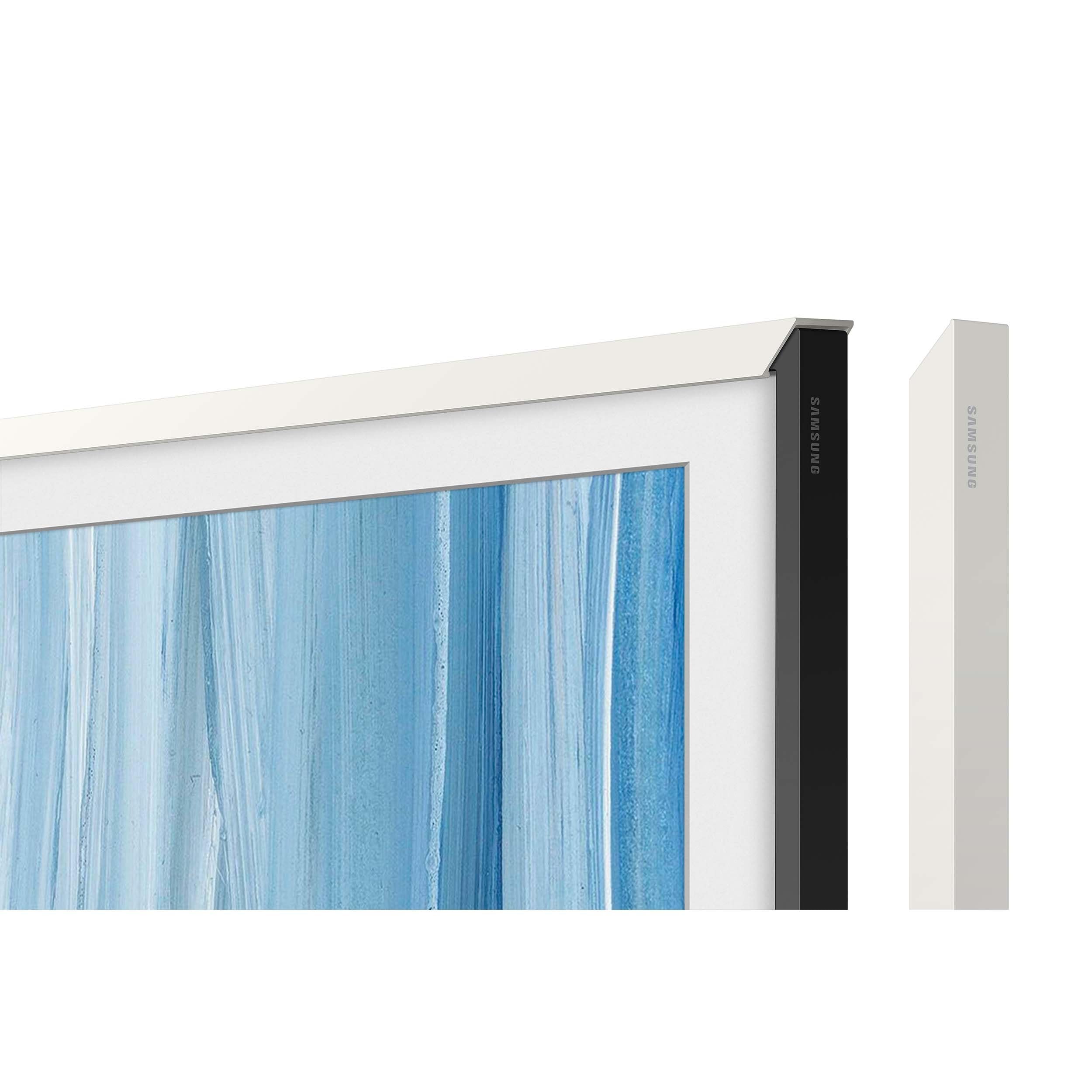
One of the unique selling points is the ability to swap bezels. The 55-inch Frame TV comes with a standard black bezel, but you can purchase interchangeable bezels in colors like white, beige, wood, and stainless steel for about $199 each. This allows the TV to match your existing frames and decor, creating a cohesive gallery wall. It's a small touch that has a big impact on how the TV integrates into a room, unlike most TVs that remain a black rectangle.
Pro 3: Excellent Color Accuracy and QLED Brightness
The 2026 Frame TV uses a 4K QLED panel with Quantum Dot technology, delivering 100% color volume in the DCI-P3 color space (per manufacturer). In practice, this means vibrant, lifelike colors that maintain saturation even in bright scenes. The TV is also quite bright, with peak HDR brightness measured by RTINGS at around 600–700 nits (though exact figures for 2026 model vary). This is sufficient for well-lit living rooms, making it a good choice for daytime viewing of news, sports, and sitcoms.
Pro 4: Flush Wall-Mount Design Included
Unlike most TVs where wall mounts are sold separately, the Frame TV includes a slim No-Gap Wall Mount that allows the TV to sit flush against the wall, just like a real picture frame. The mount is designed to be installed easily with a template, and the TV's thin profile (about 1.4 inches deep) means it protrudes very little. A separate slim-fit cable box keeps connections tidy, though it requires hiding cables within the wall for a truly clean look.
Pro 5: Smart TV Platform with Smooth Performance
The Frame TV runs on Tizen OS, which is responsive and includes all major streaming apps (Netflix, Prime Video, Disney+, etc.). It also supports Apple AirPlay and Samsung SmartThings for smart home control. The 2026 model is expected to include a faster processor (based on Tizen 7.0) resulting in quick app launches and navigation.
Pro 6: Good Built-in Speaker System
The 2026 Frame TV comes with a 2.2CH 60W speaker system including a subwoofer, which delivers fuller sound than many slim TVs. While not a replacement for a soundbar, it's adequate for casual viewing and reduces the need for extra audio gear.
Cons
Despite its aesthetic strengths, the Frame TV 2026 makes sacrifices in picture quality and value that may disappoint home theater enthusiasts.
Con 1: Limited Brightness and HDR Performance for Movies
While the Frame TV is bright enough for general TV, its HDR performance falls short of competitors. The matte screen that helps with antiglare ironically reduces perceived contrast in dark scenes. According to RTINGS testing on previous Frame models (expected to be similar for 2026), the TV has a native contrast ratio of only about 4,500:1, while OLED TVs achieve near-infinite contrast. This means HDR highlights in movies (e.g., stars in space or sparks in a fire) look less punchy. The matte coating also lifts black levels in dark rooms, making shadows appear grayish. For dedicated movie nights, an OLED or high-end LED TV will deliver a more cinematic experience.
Con 2: Premium Price for Inferior Picture Quality
At $1,299.99, the 55-inch Frame TV costs significantly more than similarly sized QLED and OLED TVs that offer better picture quality. For instance, the Samsung S90D OLED (also 55-inch) is often available for around $1,200 and delivers superior blacks, wider viewing angles, and better motion handling. You're paying a $200–$300 premium for the design features of the Frame. If picture quality is your top priority, the Frame TV is a compromise.
Con 3: Art Mode Subscription and Limited Free Content
While Art Mode is a key selling point, the 2026 model only includes a selection of free artworks; access to the full library of over 1,600 pieces requires a monthly subscription (Samsung Art Store, about $4.99/month). Without the subscription, you're limited to a dozen or so free works and your own photos. The subscription adds ongoing cost, and the art selection can feel repetitive.
Con 4: One Connect Box Adds Clutter (Despite Design Efforts)
The Frame TV uses an external One Connect Box that connects via a single thin cable. While this reduces wire clutter at the TV, the box itself (about 9x7x2 inches) needs to be placed somewhere, often requiring a shelf or cabinet near the TV. If you're wall-mounting, you'll need to run the cable through the wall or hide it in a conduit, which may require professional installation. The box also has a built-in fan that can be audible in quiet rooms.
Con 5: Lower Refresh Rate for Gaming (60Hz vs 120Hz)
The Frame TV 2026 has a native 60Hz refresh rate, not 120Hz that is becoming standard on mid-range TVs. This means it cannot display 4K 120fps content from PS5 or Xbox Series X, limiting its appeal for serious gamers. It does support variable refresh rate (VRR) but only for 60Hz, so motion in fast-paced games will be less smooth. Input lag is about 10ms (in Game Mode), which is fine for casual gaming but not competitive.
Con 6: Viewing Angle Limitations
VA panels (which the Frame uses) have narrower viewing angles compared to IPS or OLED. When sitting off-center, colors can wash out and contrast drops. In a wide seating arrangement or if family members watch from the side, picture quality degrades. The matte coating helps slightly, but it's a notable shortcoming compared to OLED or high-end IPS LCDs.
Con 7: No Dolby Vision Support
Samsung TVs generally support HDR10+ but not Dolby Vision, a premium HDR format used by many streaming services and 4K Blu-rays. While HDR10+ has some content, Dolby Vision is more widely adopted. This means you miss out on the best HDR quality from many movies and shows.
👍 Who It's For
The Samsung Frame TV 2026 is perfect for design-focused homeowners who view their TV as a piece of furniture rather than just a screen. If you have a well-lit living room where you watch primarily general TV (news, sitcoms, daytime shows) and want the TV to disappear into the wall as art when not in use, this is your ideal television. It's also great for those who like to decorate with multiple frames and want a TV that can match bezel colors. Art lovers who want to display personal photo collections or enjoy curated artwork will appreciate the Art Mode, especially if they have the monthly subscription.
👎 Who Should Avoid
Avoid the Frame TV if you are a home theater enthusiast who values deep blacks, cinematic HDR, and immersive movie nights. Also skip it if you are a serious gamer who plays high-frame-rate titles on PS5 or Xbox Series X, as the 60Hz panel will be a bottleneck. If you watch a lot of HDR content and want Dolby Vision, the Frame TV's lack of support is a dealbreaker. Additionally, if you are budget-conscious and believe a TV's primary job is picture quality, you can get better performance for less money with an LG C4 OLED or Sony X90L.
See today's Samsung Frame TV 2026 55-inch price and available configurations on Amazon.
🛒 Buy on AmazonAs an Amazon Associate we earn from qualifying purchases.
Alternatives to Consider
| Product | Choose Samsung Frame TV 2026 55-inch if... | Choose the alternative if... |
|---|---|---|
| Samsung S90D OLED 55"$100 less expensive | You want a TV that disappears into your wall as art and has a matte screen for bright rooms | You want perfect blacks, infinite contrast, and better HDR for movies and gaming |
| LG C4 OLED 55"Similar price | You prioritize design aesthetics and want customizable bezels for a gallery wall | You want superior HDR with Dolby Vision, wider viewing angles, and 120Hz gaming |
| TCL QM8 Mini-LED 55"$500 less expensive | You want an art TV that blends with decor and don't need the highest HDR peak brightness | You want high brightness and deep blacks on a budget, and don't care about art mode |
For buyers prioritizing picture quality over design, the LG C4 OLED (55-inch) offers superior blacks, wider viewing angles, and better motion handling at a similar price. The Samsung S90D OLED is another excellent choice with per-pixel lighting and 120Hz support. For those on a tighter budget, the TCL QM8 Mini-LED (55-inch) delivers impressive brightness and contrast for under $800. Finally, if you love the art concept but want better performance, the previous year's Frame TV (2024) is often discounted and offers much of the same design appeal.
Consider also the Hisense U8K, which uses Mini-LED to achieve high brightness and good black levels at a lower price. If design is paramount but you're willing to invest more, the Samsung Frame 85-inch might be an option, but the 55-inch is the typical size.
Is it worth the price?
At approximately $1,299.99, the Frame TV is worth it only if you are willing to pay a $200–300 premium for its art mode and design features. For your money, you get a unique aesthetic that no other TV offers, but you sacrifice HDR punch and gaming performance. If you rarely watch movies in the dark and want a TV that looks like art, it's worth the investment. If you're a cinephile or gamer, the Samsung S90D OLED at $1,199 offers better performance and the same smart platform.
📝 Bottom Line
The Samsung Frame TV 2026 (55-inch) is the right choice for design-conscious buyers who are willing to trade some picture quality for a television that blends into their home like a painting. Its strongest assets—customizable bezels, anti-glare matte screen, and art mode—are genuinely unique and well-executed. However, the matte screen compromises contrast and HDR impact, making it less suitable for movie lovers and gamers. The premium price also means you're paying for the design, not performance. If you're among those who dread the TV as a black rectangle on the wall, the Frame TV is worth the ask. For everyone else, a traditional TV will offer more for your money.
Check current Samsung Frame TV 2026 55-inch availability and bundle options on Amazon.
🛒 Buy on AmazonAs an Amazon Associate we earn from qualifying purchases.
Frequently Asked Questions
Quick Summary
Key Pros
- ✓Art Mode with anti-glare matte screen mimics real artwork in bright rooms
- ✓Customizable bezels allow TV to match decor and frame collections
- ✓Bright QLED panel with 100% color volume for vibrant, accurate colors
- ✓Flush wall mount included for easy, low-profile installation
- ✓Smooth Tizen smart TV interface with all major streaming apps
Key Cons
- ✗Matte screen reduces HDR punch and black levels in dark rooms
- ✗Premium price over better-performing TVs like Samsung S90D OLED
- ✗Art Store subscription ($4.99/month) for full art library
- ✗One Connect Box must be placed separately, requiring cable management
- ✗60Hz refresh rate limits gaming to 60fps; no 120Hz input
Ratings
Best For
- →Design-minded homeowners wanting a TV that looks like framed art
- →Those who watch mostly daytime TV, news, or sitcoms in bright rooms
- →People who want to display personal photos or art as a decorative element
- →Users who appreciate customizable bezels to match decor