Is Best Wine Opener for beginners Worth It? Honest Review (2026)
Everything beginners need to know to choose their first wine opener with confidence.
Opening a bottle of wine can feel intimidating for beginners—there are so many types of openers, techniques, and horror stories of broken corks. But with the right tool, it’s actually simple and even fun. This guide cuts through the confusion to help you pick the perfect wine opener for your needs. We’ll cover the key features that matter most for newcomers, recommend real Amazon products at every budget, and share tips to avoid common beginner mistakes. By the end, you’ll feel confident opening any bottle.
📋 In This Guide
• Why Beginners Struggle with Wine Opener
• What to Look For (Key Features)
• Top 4 Beginner-Friendly Wine Opener
• Essential Accessories for Beginners
• Common Beginner Mistakes to Avoid
• Your Progression Path
• FAQ & Learning Resources
😰 Why Beginners Struggle with Wine Opener
Newcomers are often overwhelmed by the sheer variety of wine openers: waiter’s corkscrews, wing corkscrews, lever models, and electric openers. Each has its own learning curve and jargon (like ‘double-lever’ or ‘worm screw’). Many beginners buy a cheap opener that’s hard to use, leading to frustration and crumbled corks. Others splurge on a high-end model with features they don’t yet need. The lack of clear guidance on what’s beginner-friendly makes the choice feel risky. This guide aims to make it straightforward so you can focus on enjoying your wine.
🔍 What to Look For: Key Beginner-Friendly Features
For beginners, the most important qualities are ease of use, forgiveness (tolerates mistakes like not centering the screw), and safety. Look for an opener that requires minimal effort—electric models are great because they do the work for you. If going manual, choose one with a lever or smooth worm screw that won’t damage the cork. Avoid openers with complicated steps or that need perfect technique. A built-in foil cutter is a nice bonus, but not essential. Remember: the best beginner opener is one you can use reliably on the first try.
✅ Essential Features for Beginners
•Effortless cork removal: Electric or lever-style openers remove corks with minimal muscle power.
•Forgiving screw: A sharper, wider worm screw reduces the chance of ripping the cork.
•Sturdy construction: Durable materials (stainless steel, ABS plastic) ensure longevity even if handled roughly.
•Built-in foil cutter: Saves a step and prevents messy cuts.
•Intuitive operation: Simple one-button or one-motion design reduces confusion.
•Safety lock: Prevents accidental activation (especially in electric models).
•Easy cleaning: Non-stick coatings or removable parts make maintenance simple.
🏆 Top 4 Best Wine Opener for Beginners
#1
💰 Budget
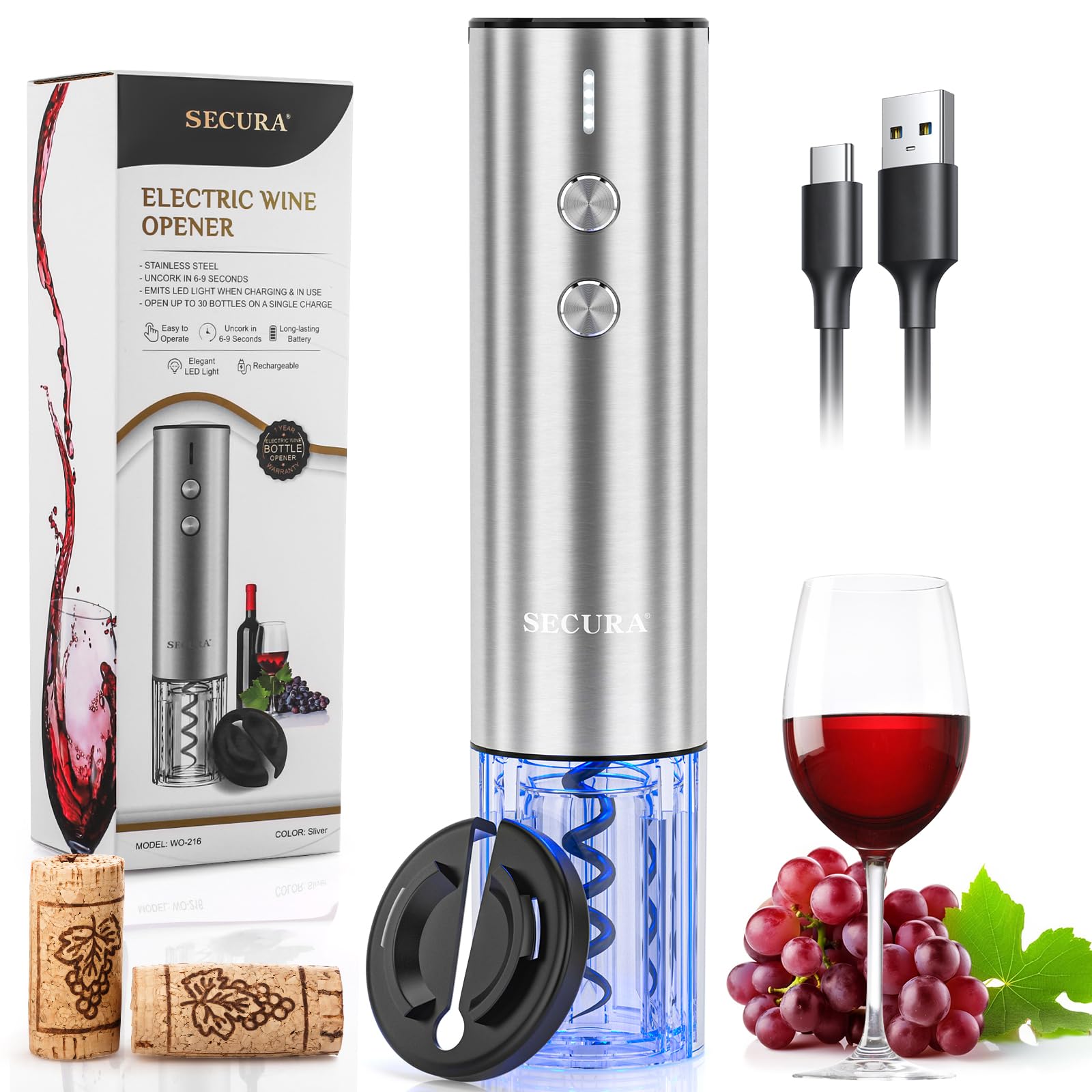
Secura Electric Wine Opener Set
Learning Curve: Easy
$29.99
Difficulty: 1/5
Why Great for Beginners:
This electric opener removes corks at the push of a button, making it effortless for beginners. It comes with two pourers and a foil cutter, so you have everything you need to start.
✓ Beginner Pros
+Simple one-button operation
+Includes foil cutter and pourers
+Rechargeable via USB
+Lightweight and ergonomic
✗ Beginner Cons
-May struggle with very tight corks
-Battery life could be better
-Plastic build feels less premium
👍 Best for: Beginners who want the easiest possible opening experience on a tight budget.
👎 Not for: Those who need a heavy-duty opener for daily use.
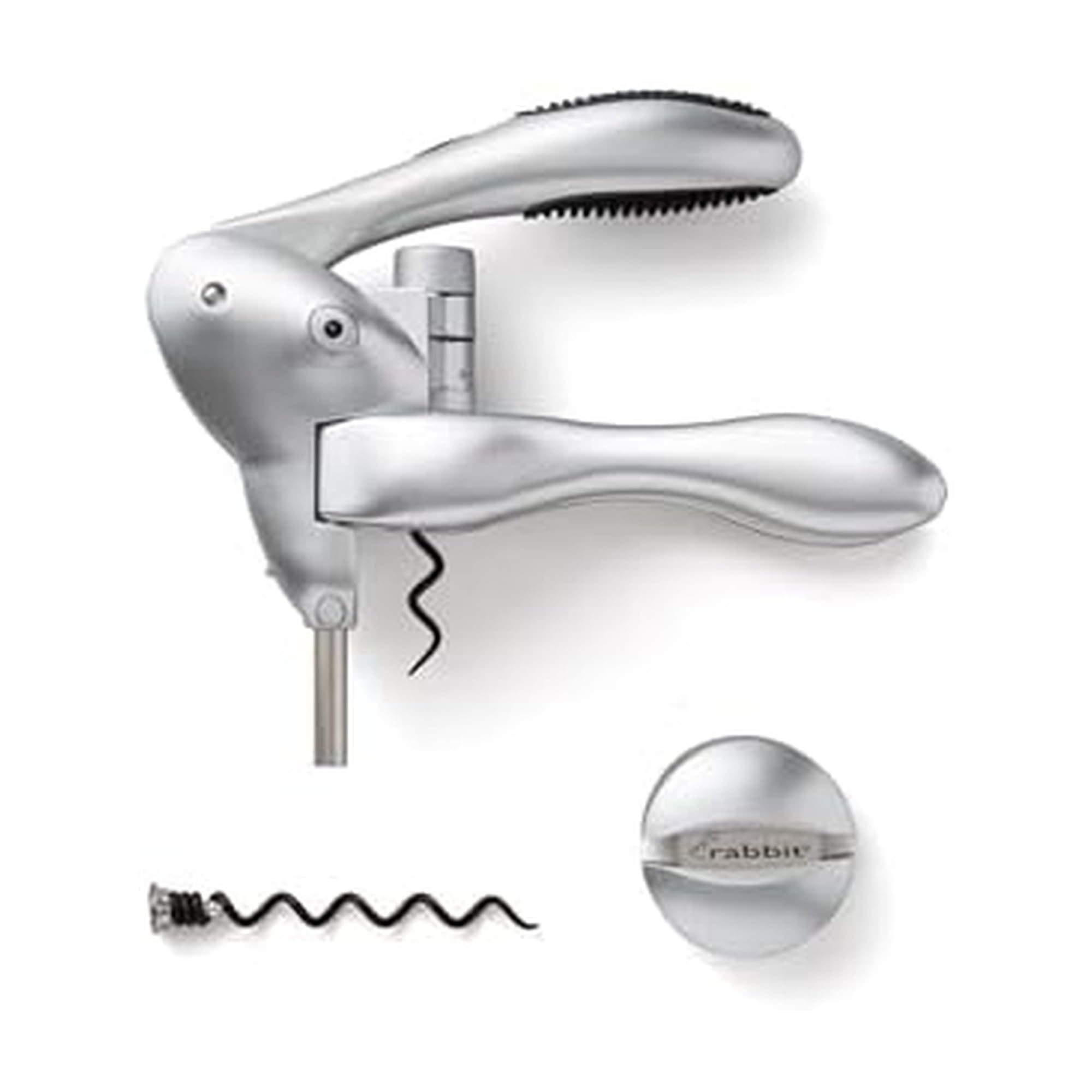
The Rabbit lever corkscrew is iconic for a reason: it removes corks with a smooth up-and-down motion. No twisting needed, and it works on most corks reliably.
✓ Beginner Pros
+Lever action is intuitive and easy
+Self-pulling screw reduces cork damage
+Durable metal construction
+Includes spare screw and foil cutter
✗ Beginner Cons
-Takes up counter space
-Can be tricky with very short bottles
-Not portable
👍 Best for: Beginners who want a reliable manual opener without the effort of twisting.
👎 Not for: Those who prefer a compact or electric opener.
This premium electric opener features a built-in wine chiller and comes with a vacuum stopper. It’s a complete system that makes opening, serving, and storing wine simple for beginners.
✓ Beginner Pros
+One-touch operation with LED indicators
+Built-in foil cutter and chiller sleeve
+Includes vacuum stopper for preservation
+Rechargeable and powerful
✗ Beginner Cons
-Higher price point
-Chiller sleeve is a gimmick for some
-Bulkier than basic electric openers
👍 Best for: Beginners who want a complete wine tool set and are willing to invest for convenience.
👎 Not for: Minimalists or those on a strict budget.
If you prefer a manual classic, this waiter's corkscrew is beginner-friendly thanks to its double-lever design and sharp worm screw. It’s lightweight and portable, perfect for picnics.
✓ Beginner Pros
+Double lever reduces effort
+Compact and portable
+Stainless steel construction
+Includes foil cutter
✗ Beginner Cons
-Requires some practice to master
-Not ideal for those with weak hands
-Cannot handle some synthetic corks
👍 Best for: Adventurous beginners who want to learn the sommelier technique.
👎 Not for: Anyone who wants the easiest possible opening experience.
Wine openers come in four main types: waiter’s corkscrew (used by sommeliers), wing corkscrew (twist and pull), lever corkscrew (like the Rabbit), and electric corkscrew. For beginners, electric models are the easiest—just press a button. However, they require batteries or charging. Lever openers (Rabbit-style) are also very user-friendly: place over the bottle, pull down, and push up. Manual wing corkscrews are inexpensive but require more strength and can break corks. Waiter’s corkscrews have a steep learning curve and are not recommended for beginners. The best beginner opener is one that removes the cork straight and cleanly every time without extra effort. Marketing terms like ‘self-pulling’ or ‘auto-lock’ usually indicate beginner-friendly features. Realistic expectations: even with the best opener, some corks are fragile—but a good tool minimizes damage.
🤔 How to Choose Your First Wine Opener
Start by asking: How often do I open wine? If once a week or less, a simple electric opener is fine. If more often, a lever model might be more reliable. Also consider your physical strength—electric is best for those with arthritis or limited hand strength. Set a budget: under $30 gets a basic electric or decent wing opener; $30–$70 gets a quality lever or mid-range electric; over $70 gets premium electric with extra features. Avoid the cheapest manual openers—they often have dull screws and weak hinges. Red flags: openers that require complicated steps, have poor reviews about breaking, or lack a foil cutter (unless you have one separately).
💰 Budget Guide for Beginners
100+
Professional entry – top-tier brands, excellent performance, and longevity.
30 - $70
Sweet spot – reliable electric or lever opener suitable for regular use.
70 - $100
Premium beginner – higher build quality and extra features like rechargeable batteries.
Under $ - $30
Entry level – functional but may lack durability; good for very occasional use.
⚠️ Common Beginner Mistakes to Avoid
Beginners often gravitate towards the cheapest option, only to find it’s flimsy and frustrating. For example, a $5 wing corkscrew can tear corks and cause spillage. Another common mistake is buying a waiter's corkscrew because it looks professional, but without practice, it’s hard to use. Also, many forget to cut the foil completely, leading to torn foil pieces falling into the wine. The key is to start simple: either an electric or a lever opener, and always use a proper foil cutter. Read product reviews from other beginners to avoid disappointments.
×Buying the cheapest opener and struggling with broken corks
×Choosing a manual waiter's corkscrew without learning the technique first
×Skipping a foil cutter and damaging the bottle rim
×Forgetting to remove the foil before using the opener
×Over-spending on a premium electric opener when a cheaper one would suffice
×Not considering the bottle type (e.g., synthetic corks vs natural) when choosing an opener
×Neglecting to charge an electric opener and being caught without power
×Buying an opener without reading reviews about durability
📈 Your Progression Path: Beginner to Intermediate
Start with an electric opener or a lever model to build confidence. Once you’re comfortable, you can try a high-quality waiter’s corkscrew to learn the classic technique. Practice on different cork types (natural, synthetic) to understand nuances. After 20–30 bottles, you’ll know if you prefer the convenience of electric or the control of manual. Signs you’ve outgrown beginner gear: you want something more portable, or you find yourself using the same motion repeatedly. At that point, consider upgrading to a dual-action lever or a premium electric with better battery life. Most beginners stay at the entry level for 6–12 months before seeking an upgrade.
📚 Learning Resources for Beginners
📖Wine Folly: The Essential Guide to Wine
📖Mastering Wine: A Beginner's Guide to Tasting, Selecting, and Enjoying Wine
📖Professional Wine Corkscrew Practice Kit (with synthetic corks)
📖Wine Bottle Opener Practice Kit for Waiters
📖The Art of Opening Wine: A Step-by-Step Video Course (available on Amazon Prime)
🎯 Bottom Line: Our Recommendations
For most beginners, the best choice is a mid-range electric or lever opener like the Rabbit Corkscrew (around $45) or the Oster Electric ($70). If budget is tight, the Secura Electric ($30) works well. Don’t forget a foil cutter and bottle stoppers—they’re essential for a smooth experience. Remember: opening wine should be fun, not a chore. With the right tool, you’ll look like a pro in no time. Start simple, enjoy learning, and soon you’ll be the go-to person for opening bottles at parties.
❓ Frequently Asked Questions
The best wine opener for beginners is an electric or lever-style opener. The Rabbit Corkscrew (lever) and Oster Electric Opener are top-rated for ease of use.
Beginners should spend between $30 and $70. This range offers reliable, easy-to-use openers that will last without being too expensive.
Beginners need an opener with automatic or lever action, a built-in foil cutter, and a forgiving screw. Avoid openers that require complicated steps.
Electric wine openers are the easiest—just press a button. The Secura Electric Opener is a budget-friendly option that is extremely simple to use.
Essentials include a foil cutter and bottle stoppers. A vacuum sealer is highly recommended to preserve leftover wine. An aerator is a nice bonus.
Consider your budget, how often you drink wine, and your physical strength. Electric is best for occasional use and weak hands; lever openers are good for regular use.
Not with the right tool. Many beginners struggle with manual corkscrews, but electric or lever openers make it easy. With practice, even a waiter's corkscrew becomes manageable.
Common mistakes include buying a cheap manual opener, forgetting to cut the foil, not charging an electric opener, and buying a waiter's corkscrew without practice.