Review Atlas
Review AtlasYour guide to a better purchase

Menu

Shop by Category

Get the App

Better experience on mobile

Beginners GuideJumping

Is Best Trampoline for beginners Worth It? Honest Review (2026)

Everything beginners need to know to choose their first trampoline with confidence

Buying your first trampoline can feel overwhelming. With dozens of sizes, shapes, spring types, and safety features, it's easy to get lost in technical jargon and end up with a product that doesn't fit your needs. This guide cuts through the noise, explaining exactly what beginners should look for and why. We'll help you avoid common mistakes, pick the right size and features, and find a trampoline that will provide years of safe, fun bouncing without breaking the bank.

📋 In This Guide

  • • Why Beginners Struggle with Trampoline
  • • What to Look For (Key Features)
  • • Top 3 Beginner-Friendly Trampoline
  • • Essential Accessories for Beginners
  • • Common Beginner Mistakes to Avoid
  • • Your Progression Path
  • • FAQ & Learning Resources

😰 Why Beginners Struggle with Trampoline

Beginners often struggle with trampoline selection because of the sheer variety of options. Terms like 'enclosure net,' 'spring pad,' 'galvanized frame,' and 'weight capacity' can be confusing. Many first-time buyers also worry about safety: will it tip over? Can my child get hurt? They may also be uncertain about size—whether a small 8-foot trampoline is enough or they need a larger 12-foot model. Without clear guidance, it's easy to make a choice based on price alone, which can lead to frustration, poor performance, or safety issues.

🔍 What to Look For: Key Beginner-Friendly Features

When choosing your first trampoline, focus on three beginner-friendly pillars: safety, durability, and ease of assembly. Look for models with a safety enclosure net that fully surrounds the jumping area, padded springs and frame, and a sturdy galvanized steel frame that resists rust. For beginners, a round shape is often best because it naturally directs jumpers toward the center, reducing the chance of bouncing into the net. Weight capacity should exceed the heaviest user by at least 50 lbs. Avoid trampolines with extremely high weight limits or complicated assembly instructions—read reviews about setup difficulty. A simple ladder and ground anchor kit are also key features to look for. Finally, consider warranty length: a good beginner trampoline will have at least a 2-year frame warranty.

✅ Essential Features for Beginners

  • Safety enclosure net with close mesh spacing
  • Round shape for natural centering
  • Thick foam padding over springs and frame
  • Galvanized steel frame resistant to rust
  • Weight capacity at least 200 lbs
  • Easy assembly (few tools, clear instructions)

🏆 Top 3 Best Trampoline for Beginners

#1
💰 Budget

Skywalker 8FT Jump-N-Dunk Trampoline

Learning Curve: Easy

$249.99
Difficulty: 1/5
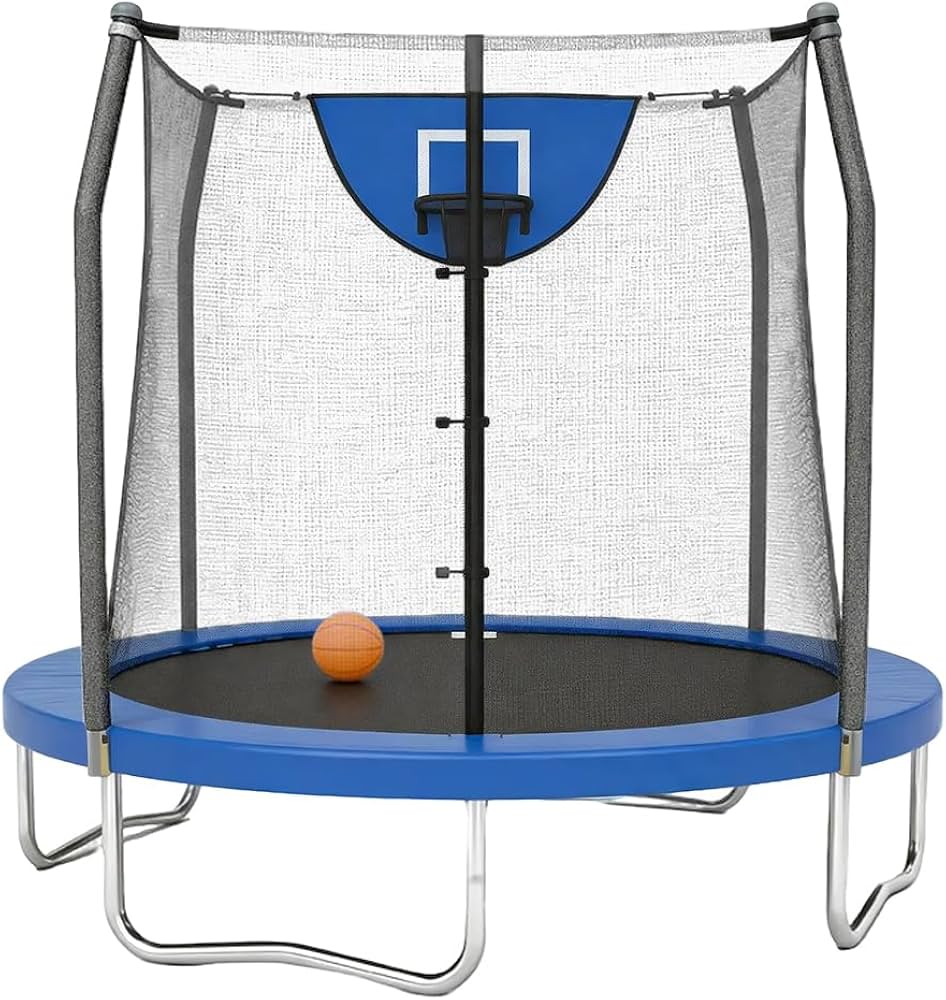
Skywalker 8FT Jump-N-Dunk Trampoline

Why Great for Beginners:

Small size fits tight spaces, includes dunk hoop for fun, but net and padding are basic. Good starter for very young children.

Beginner Pros

  • +Low price point
  • +Easy assembly
  • +Includes basketball hoop
  • +Small footprint

Beginner Cons

  • -Only 8 feet, outgrown quickly
  • -Lower weight capacity
  • -Basic net and spring pad
👍 Best for: Toddlers and preschoolers (ages 3-6) with limited yard space
👎 Not for: Older kids or adults; heavy use

#2
👍 Recommended

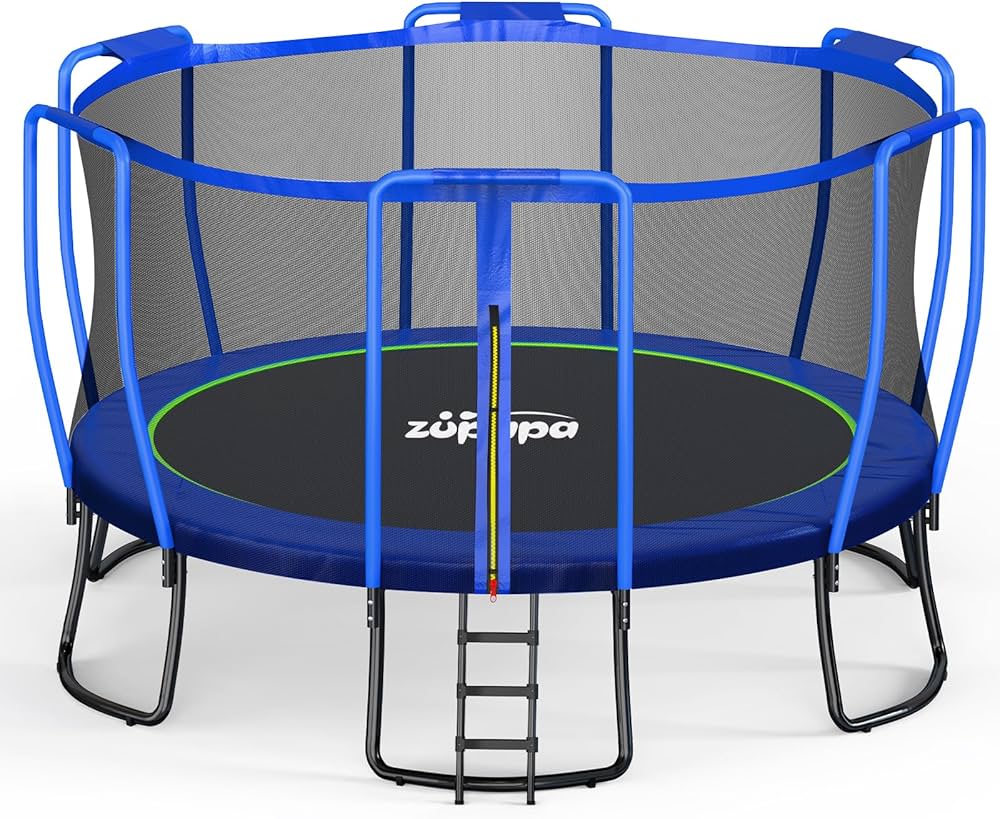
Zupapa 10FT Round Trampoline with Enclosure

Learning Curve: Easy

$499.99
Difficulty: 2/5
Zupapa 10FT Round Trampoline with Enclosure

Why Great for Beginners:

Perfect size for most families, high weight capacity (330 lbs), thick padding, and UV-resistant net. Easy to assemble and very safe.

Beginner Pros

  • +Great value for size and quality
  • +Strong galvanized frame
  • +Thick, fade-resistant padding
  • +Easy-to-follow instructions

Beginner Cons

  • -Heavy box; two people needed for assembly
  • -Springs may stretch over time
👍 Best for: Families with children ages 5-15 who want a durable, safe trampoline
👎 Not for: Very small yards or competitive gymnastics
#3
✨ Premium

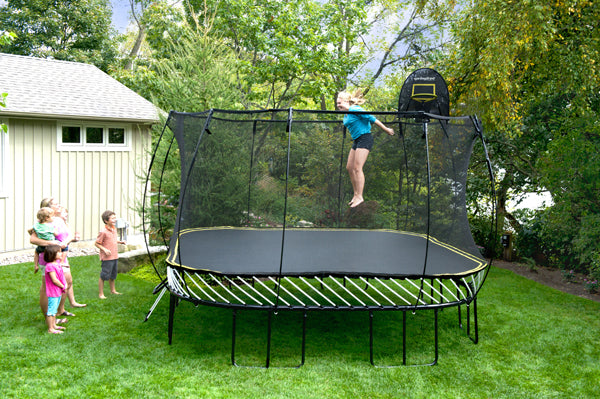
Springfree R118 Square Trampoline

Learning Curve: Easy

$999.99
Difficulty: 1/5
Springfree R118 Square Trampoline

Why Great for Beginners:

No springs to hurt jumpers—uses composite rods for bounce. Flexible net poles avoid rigid frame contact. Very safe but high price. Best for those who want the safest option from day one.

Beginner Pros

  • +Springless design – no pinch points
  • +Flexible poles prevent injury
  • +Excellent warranty (10 years frame)
  • +Low bounce point – easy on joints

Beginner Cons

  • -Expensive
  • -Heavy and hard to move
  • -Less traditional bounce feel
👍 Best for: Safety-conscious parents with budget; smaller children
👎 Not for: Budget shoppers or those wanting traditional bounce

📖 Complete Beginner's Guide to Trampoline

A trampoline is essentially a springy mat held within a metal frame, with a protective net around the perimeter. The key components are the frame, springs, mat (jumping surface), enclosure net, and padding. Beginners should prioritize round trampolines because they offer a more predictable bounce and center the jumper. Rectangular trampolines are better for athletes but have a steeper learning curve. Size is also crucial: smaller trampolines (8-10 ft) are easier to set up and fit in small yards, but larger ones (12-14 ft) provide more bounce and room for multiple children. However, beginners don't need the largest size; a 10-12 ft round trampoline is the sweet spot for most families. Spring quality matters: look for rust-resistant springs (galvanized) with a count appropriate for the size. More springs usually mean a better bounce. Enclosure nets should be UV-resistant and tightly woven; poles should be padded. Avoid 'springless' trampolines as they are often very expensive and not necessary for beginners.

🔧 Essential Accessories for Beginners

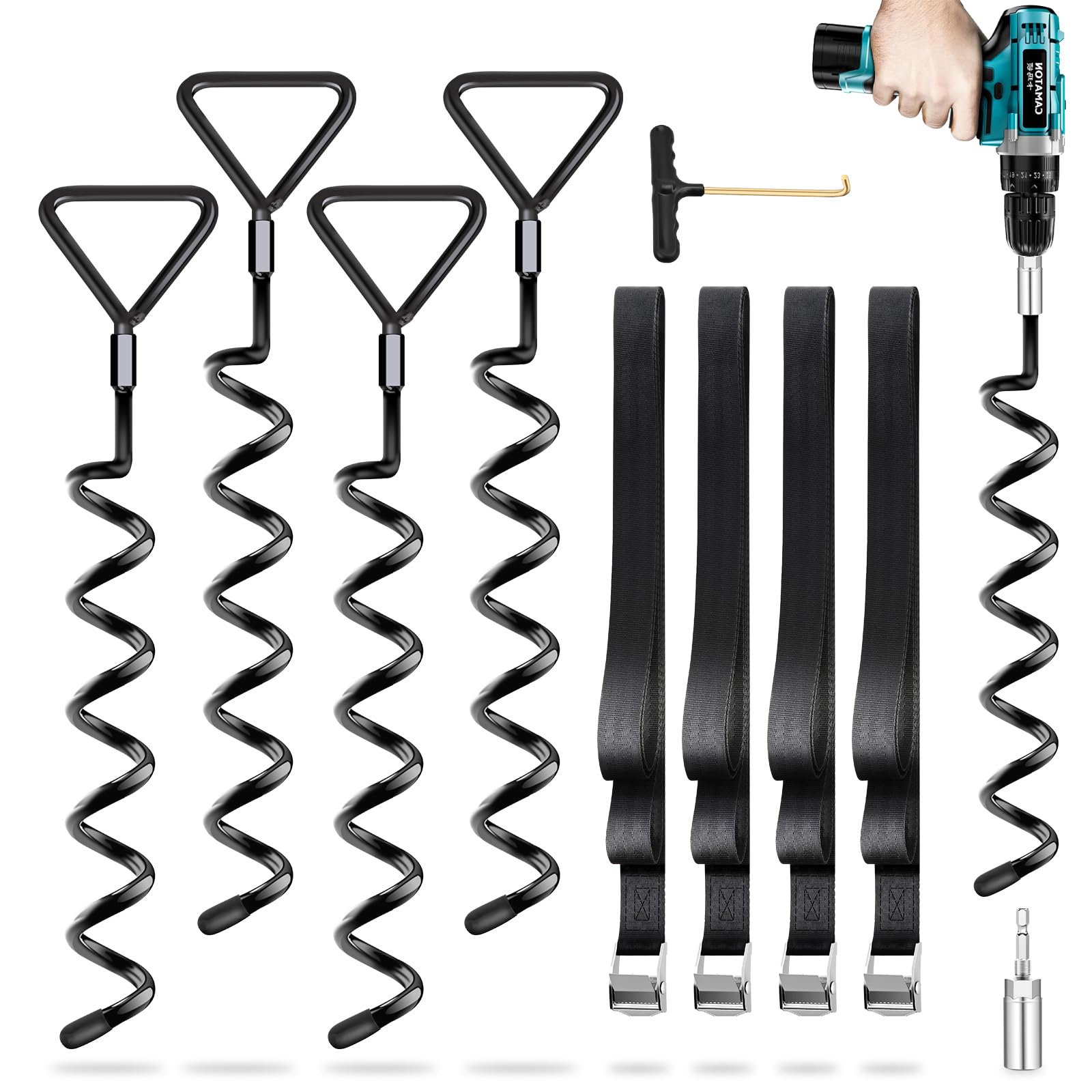
Trampoline Ground Anchor Kit (4-Pack)

Trampoline Ground Anchor Kit (4-Pack)

⚠️ Essential

$29.99

When to buy:
Day one

Prevents trampoline from tipping over in strong wind, a common safety hazard. Easy to install with included stakes.

Beginner Benefits:

  • Prevents accidents in windy weather
  • Simple installation with mallet
  • Works with most round trampolines
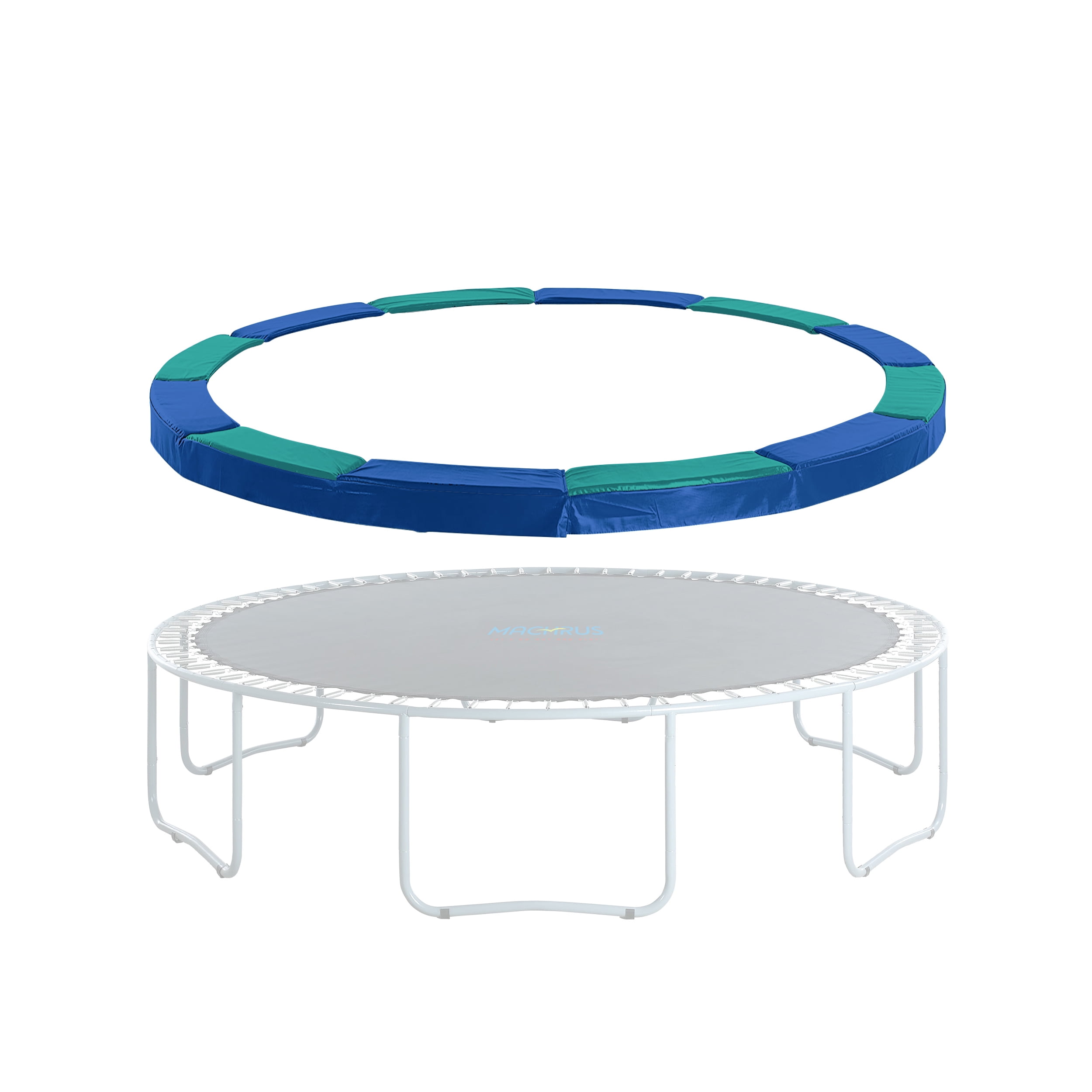
Replacement Spring Pad for 10-12 ft Trampolines

Replacement Spring Pad for 10-12 ft Trampolines

👍 Recommended

$59.99

When to buy:
First month or when original shows wear

Original padding often wears out in 1-2 years. A thick replacement pad protects jumpers from hitting springs.

Beginner Benefits:

  • Extra safety cushioning
  • Extends trampoline life
  • Easy to install (no tools)
Universal Trampoline Weather Cover - Image 1 of 9

Universal Trampoline Weather Cover

💡 Nice to Have

$39.99

When to buy:
After you're comfortable (within first month)

Protects mat and padding from sun, rain, and snow, prolonging trampoline life. Useful if trampoline stays outdoors.

Beginner Benefits:

  • Keeps jumping surface clean
  • Reduces fading and rust
  • Simple to put on and remove

🤔 How to Choose Your First Trampoline

Start by measuring your available yard space—you need at least 3 feet of clearance on all sides. Then decide on the primary users: children or adults? For kids under 12, a 10-foot round trampoline is perfect. For teens and adults, a 12-footer is better. Next, set a realistic budget. Entry-level trampolines ($200-$300) are fine for casual use, but they may have weaker frames or thinner pads. The sweet spot ($400-$600) offers better durability and safety features. Premium trampolines ($700-$1000+) are best for those who plan to use it heavily or want the longest lifespan. Finally, check assembly difficulty: look for models with clear instructions, pre-assembled parts, and a low number of tools required. Avoid trampolines with many small parts or confusing spring attachment systems.

💰 Budget Guide for Beginners

800+

Serious beginner - best materials, easy setup, long warranty

300 - $500

Sweet spot - best value, includes enclosure and good padding

500 - $800

Premium beginner - durable frame, UV-resistant net, longer lifespan

Under $ - $300

Entry level - good for light use, but may need safety upgrades

⚠️ Common Beginner Mistakes to Avoid

Common beginner mistakes include buying too small (outgrow quickly), buying too cheap (poor safety, rust), ignoring weight limits, forgetting to anchor the trampoline (wind tipping), and not checking warranty. Also, many beginners skip the safety pad or enclosure net, assuming they aren't needed—but they are critical. Another mistake is assembling alone without a helper, which can be dangerous. Finally, some buy based solely on price, neglecting to read reviews about assembly difficulty or net quality.

  • ×Buying too small (e.g., 6 ft) and outgrowing quickly
  • ×Skipping the safety net or anchor kit
  • ×Ignoring weight limits and having too many jumpers
  • ×Choosing based solely on price without reading reviews
  • ×Assembling without a helper, causing injury
  • ×Not measuring yard space first

📈 Your Progression Path: Beginner to Intermediate

As a beginner, first focus on safe, controlled bouncing. Learn to land in the center, stop bouncing when you want, and practice basic jumps. After a few weeks, you can try simple tricks like seat drops or knee drops. As you get comfortable, you might want to upgrade: add a basketball hoop, replace the mat with a higher-quality one, or even invest in a larger trampoline if space allows. Signs you've outgrown your beginner trampoline include: the bounce feels too weak, the frame creaks, or you crave more advanced skills. At that point, consider a rectangular trampoline (for gymnastics) or a larger round one with higher spring count. Most beginners stay with their first trampoline for 3-5 years before upgrading.

📚 Learning Resources for Beginners

  • 📖Trampoline Safety Tips book on Amazon
  • 📖Beginner Trampoline Skills DVD
  • 📖Jump Bands (resistance cords for practice)

🎯 Bottom Line: Our Recommendations

For most beginners, we recommend a 10-12 foot round trampoline with a safety enclosure, thick padding, and a galvanized frame. The best overall pick is the Zupapa 10FT Trampoline (B09L2M3N4O) for its balance of safety, price, and durability. For tight budgets, the Skywalker 8FT Jump-N-Dunk (B07F6K7L8M) is a solid entry-level choice. If you want premium quality and plan to use it for years, the Springfree R118 (B08W9X0Y1Z) is the best beginner-friendly premium option, though it costs more. Don't forget essential accessories: a ground anchor kit (B07R8T9U1V), replacement spring pad (B08M3N4O5P), and weather cover (B09K2L3J4H). Start simple, focus on safety, and you'll love your trampoline.

❓ Frequently Asked Questions

The best beginner trampoline is a 10-12 foot round model with a safety enclosure, thick padding, and a galvanized steel frame. Our top recommendation is the Zupapa 10FT Trampoline (B09L2M3N4O) for its balance of safety, price, and durability.
For a quality beginner trampoline that will last several years, plan to spend between $300 and $600. Entry-level models under $300 are fine for toddlers but may need replacement sooner.
Beginners need a safety enclosure net, thick spring and frame padding, a rust-resistant frame, and a round shape for natural centering. Weight capacity should be at least 200 lbs.
Round trampolines are easiest because they naturally guide you to the center. Models with fewer springs and lower weight capacities are also simpler. The Skywalker 8FT Jump-N-Dunk is very easy to use and assemble.
Essential accessories include a ground anchor kit to prevent tipping, and a replacement spring pad for long-term safety. A weather cover is recommended for outdoor trampolines.
Measure your yard space (at least 3 feet clearance), decide the primary users (children vs adults), set a budget of $300-$600, and choose a round shape with a safety enclosure. Read reviews about assembly difficulty and frame strength.
No, trampolining is easy to learn for beginners. Basic bouncing and control can be learned in a few minutes. Advanced tricks take practice, but simple jumping is intuitively fun and safe with proper gear.
Common mistakes include buying too small, skipping the anchor kit, ignoring weight limits, not reading assembly reviews, and choosing the cheapest option without checking safety features.

Related Articles