#1
💰 Budget
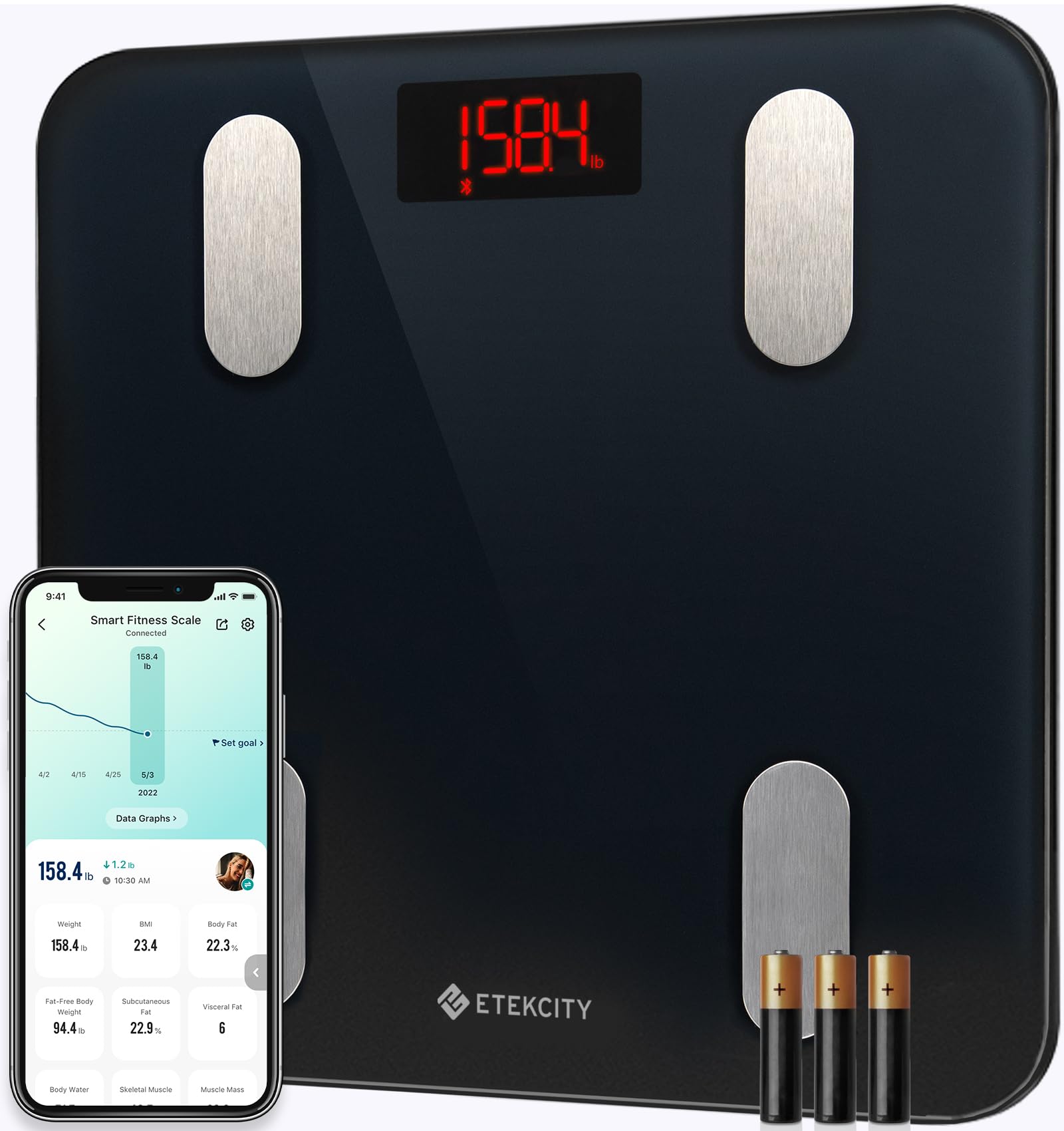
Etekcity Smart Scale for Body Weight, Digital Bathroom Scale with Bluetooth, Body Fat Percentage, BMI
Learning Curve: Easy
$19.99
Difficulty: 2/5
Why Great for Beginners:
This is one of the cheapest smart scales that still works well. It pairs with a simple app and gives you weight and body fat trends. Ideal if you're not sure if a smart scale is right for you yet.
✓ Beginner Pros
- +Very affordable for a first try
- +Clear display and simple step-on operation
- +Works with a free app that shows history
- +Metrics auto-sync to your phone
✗ Beginner Cons
- -No Wi-Fi, so you need your phone nearby
- -Body fat estimates can be inconsistent
- -App design could be more polished
👍 Best for: Someone who wants to start tracking weight and body composition without spending much money.
👎 Not for: People who want Wi-Fi sync or more advanced metrics, or who prefer a premium app experience.