Review Atlas
Review AtlasYour guide to a better purchase

Menu

Shop by Category

Get the App

Better experience on mobile

Beginners Guideβ€’Educational Robotics

Is Best Robot Kit for beginners Worth It? Honest Review (2026)

Everything beginners need to know to choose their first Robot Kit with confidence

Are you fascinated by robots but feel overwhelmed by the sheer number of options? You're not alone. Choosing your first robot kit can be intimidating, with choices ranging from simple snap-together bots to complex coding machines. This guide is your friendly, jargon-free companion to finding the perfect robot kit for beginners. We'll break down everything you need to know, help you avoid common mistakes, and give you clear recommendations that match your goals and budget. By the end, you'll feel confident and excited to start your robotics journey.

πŸ“‹ In This Guide

  • β€’ Why Beginners Struggle with Robot Kit
  • β€’ What to Look For (Key Features)
  • β€’ Top 5 Beginner-Friendly Robot Kit
  • β€’ Essential Accessories for Beginners
  • β€’ Common Beginner Mistakes to Avoid
  • β€’ Your Progression Path
  • β€’ FAQ & Learning Resources

😰 Why Beginners Struggle with Robot Kit

Beginners often hit a wall of confusion when shopping for robot kits. The first challenge is the technical jargon β€” terms like 'microcontroller', 'sensors', 'Arduino', and 'Raspberry Pi' are thrown around, leaving newcomers unsure what’s essential and what’s not. Secondly, the overwhelming number of choices is paralyzing: there are robotic cars, humanoids, animals, and construction kits, each with different difficulty levels. Fear of wasting money is also huge β€” what if you buy the wrong kit and can't use it? Many people also underestimate the learning curve and end up with a kit that's either too shallow (no room to grow) or too steep (frustrating from day one). Finally, beginners often overlook hidden costs like batteries, tools, and extra parts, which can make their first experience feel like a money pit.

πŸ” What to Look For: Key Beginner-Friendly Features

A beginner-friendly robot kit should let you succeed quickly while still offering room to learn. Look for kits that require minimal assembly (usually snap or screw together with clear instructions), use block-based programming (like Scratch) or come with pre-written code, and include basic sensors like a distance sensor or line follower. Durability is key β€” you'll make mistakes, and your robot will crash into walls. Expandability is also important: can you add more sensors or parts later? Good documentation, tutorials, and a supportive community are lifesavers. Avoid kits that require soldering, coding from scratch, or advanced tools right away. Remember, the best kit for beginners is one that matches your current skill level and grows with you.

βœ… Essential Features for Beginners

  • β€’Pre-assembled or snap-together construction: No soldering or complex wiring required, so you can get started in minutes.
  • β€’Block-based coding interface (Scratch-like): Drag-and-drop programming lets you learn logic without typing syntax.
  • β€’Remote control capability: Start by driving your robot around before diving into programming.
  • β€’Durable design: Withstands falls, bumps, and enthusiastic handling from beginners.
  • β€’Sensors (e.g., ultrasonic, line-following): These let the robot interact with its environment and make projects exciting.
  • β€’Clear instructions and tutorials: Step-by-step guides with pictures help avoid frustration.
  • β€’Expandability: Ports or slots for adding sensors or combining with other kits as you improve.

πŸ† Top 5 Best Robot Kit for Beginners

#1
⭐ Top PickπŸ‘ Recommended

Makeblock mBot Robot Kit

Learning Curve: Easy

$79.99
Difficulty: 1/5
Makeblock mBot Robot Kit

Why Great for Beginners:

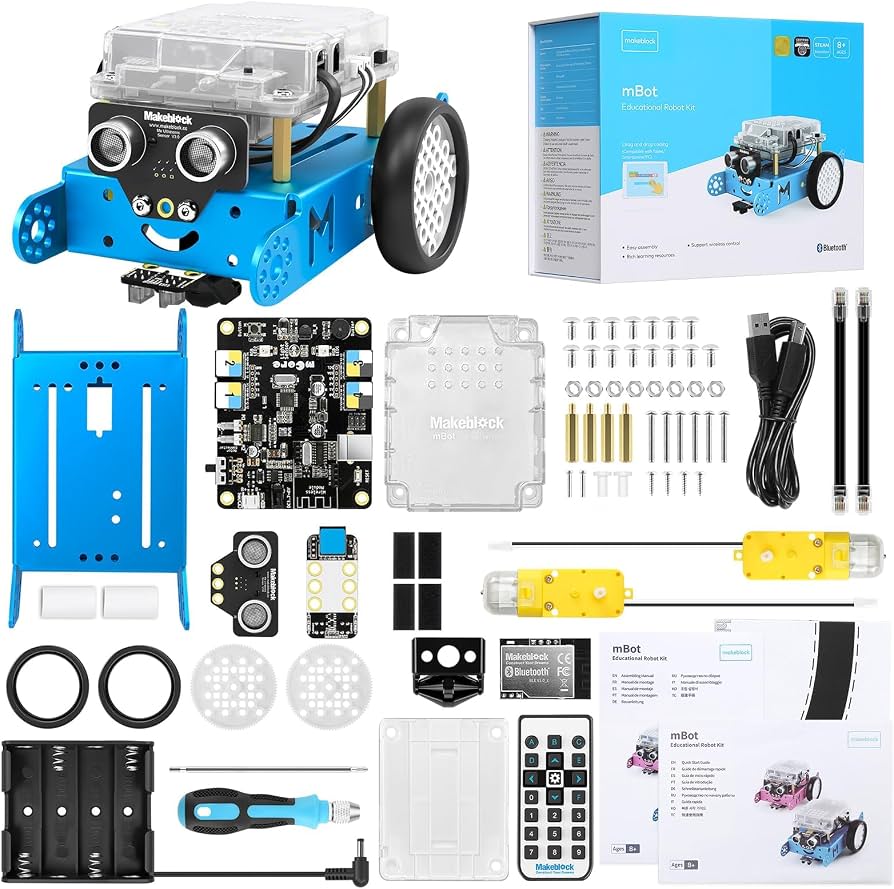
The mBot is legendary for its beginner appeal. It assembles in minutes with just a screwdriver, uses Scratch block-based coding via an app, and comes with line-following and obstacle-avoidance sensors. A huge online community means you're never alone.

βœ“ Beginner Pros

  • +Tool-free assembly in about 15 minutes
  • +Simple block programming with graphical interface
  • +Sturdy aluminum chassis that survives crashes
  • +Includes ultrasonic distance sensor and line-follower
  • +Works with plenty of online tutorials and lesson plans

βœ— Beginner Cons

  • -Requires 4 AA batteries (not included)
  • -Bluetooth connection can be finicky
  • -Expansion requires additional parts
  • -Not suitable for very young kids (8+ recommended)
πŸ‘ Best for: Beginners aged 8 and up, including teens and adults, who want a classic educational robot car with easy coding.
πŸ‘Ž Not for: Those who prefer a pre-built robot or want advanced programming like Python out of the box.

#2
πŸ‘ Recommended

LEGO Boost Creative Toolbox

Learning Curve: Easy

$159.95
Difficulty: 1/5
LEGO Boost Creative Toolbox - Image 1 of 7

Why Great for Beginners:

LEGO Boost combines the familiarity of LEGO with easy, app-based icon coding. No text code needed, just drag colorful blocks. It can build five different models, including Vernie the Robot and a guitar, making it versatile and endlessly fun.

βœ“ Beginner Pros

  • +No building skills required - just LEGO bricks
  • +Icon-based coding perfect for younger kids
  • +Five different models in one set
  • +Motor and sensors included in the box
  • +Highly forgiving: parts snap together and can be rebuilt

βœ— Beginner Cons

  • -Needs 6 AA batteries (not included)
  • -Building instructions are all on the app, which can be screen-time heavy
  • -Limited advanced programming capabilities
  • -Price is higher than basic car kits
πŸ‘ Best for: Kids and families who love LEGO and want a playful introduction to robotics and coding with a familiar building experience.
πŸ‘Ž Not for: Adults seeking serious engineering challenges or text-based coding.
#3
✨ Premium

Sphero BOLT

Learning Curve: Easy

$179.99
Difficulty: 2/5
Sphero BOLT

Why Great for Beginners:

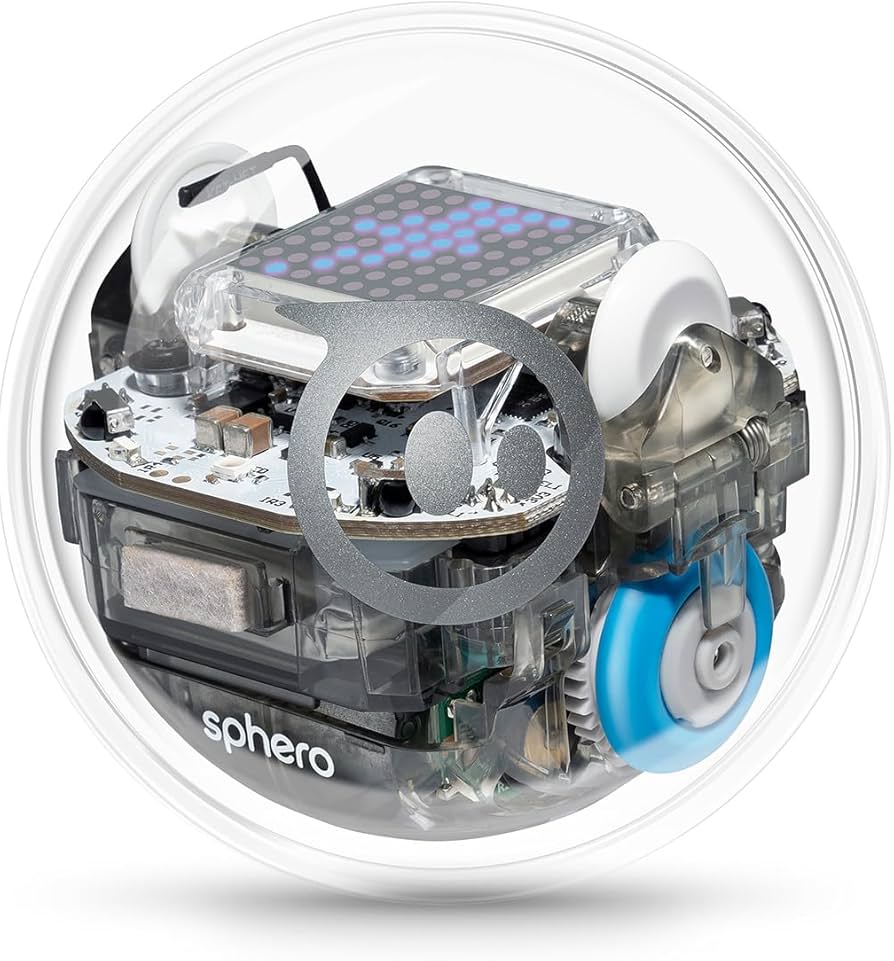
If you want a robot that is ready to go out of the box, BOLT is a fantastic premium choice. It's a sturdy, app-controlled robotic ball that teaches coding through block-based and text programming. Its programmable LED matrix and sensors inspire creativity, and it's durable enough to roll around anywhere.

βœ“ Beginner Pros

  • +Pre-built, so zero assembly required
  • +Two programming modes: blocks for beginners, JavaScript for future learning
  • +Built-in sensors (accelerometer, gyroscope, etc.) offer interactive features
  • +Waterproof and drop-resistant, you can just roll it
  • +Great educational content in the free Sphero Edu app

βœ— Beginner Cons

  • -Higher price point
  • -Doesn't teach building or hardware assembly
  • -Need a compatible smartphone/tablet to use it
  • -Battery lasts about 2 hours per charge
πŸ‘ Best for: Programmers and tech enthusiasts who want a smooth, engaging coding experience without worrying about hardware assembly.
πŸ‘Ž Not for: Those who enjoy hands-on building or want to work with sensors and wires.
#4
πŸ’° Budget

OSOYOO Robot Car Starter Kit

Learning Curve: Moderate

$59.99
Difficulty: 3/5
OSOYOO Robot Car Starter Kit

Why Great for Beginners:

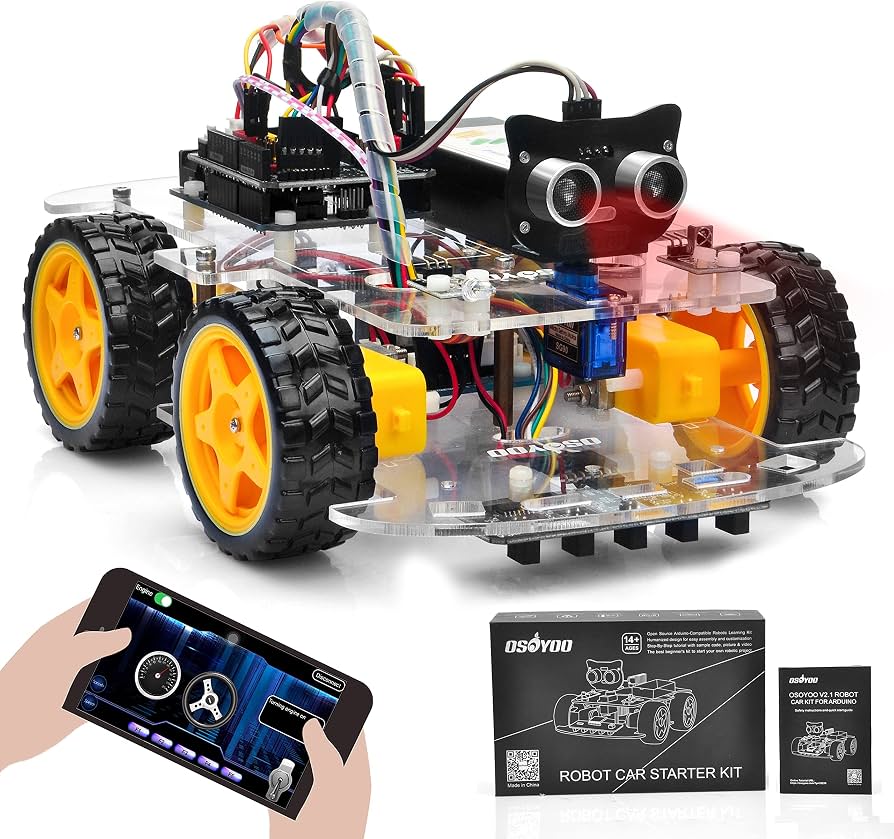
This budget-friendly kit is a fantastic entry point into robotics. It includes a microcontrollers board, ultrasonic sensor, and line-following module. It's more hands-on than other options, so you'll learn how to wire and program, but there's plenty of online guidance to help you along.

βœ“ Beginner Pros

  • +Very affordable
  • +Teaches real electronics wiring (but not soldering)
  • +Suitable for Arduino beginners with included examples
  • +Expandable with additional sensors
  • +Large online community support

βœ— Beginner Cons

  • -Requires assembly and wiring, which might be tricky for absolute beginners
  • -Programming is in C-like Arduino code, not blocks
  • -Quality of connectors can be questionable
  • -No remote control included (only Bluetooth app)
πŸ‘ Best for: Tinkerers and tech-savvy beginners (teens to adults) who are excited to learn where the wires go and how code works.
πŸ‘Ž Not for: Young kids or those who want a quick, fun robot without effort.
#5
Alternative

Wonder Workshop Dash Robot

Learning Curve: Easy

$129.99
Difficulty: 1/5
Wonder Workshop Dash Robot

Why Great for Beginners:

Dash is a charming, pre-built robot aimed at kids ages 6-11. It's ready out of the box and controlled via free apps that use block-based coding. Dash is playful and expressive, with voice interaction, and it's tough enough to handle a spin around the house.

βœ“ Beginner Pros

  • +Zero setup – works instantly
  • +Intuitive app-based coding for kids
  • +Lots of free activities and challenges
  • +Cute and friendly design encourages play

βœ— Beginner Cons

  • -Not a build-it-yourself kit
  • -Limited hardware expansion
  • -Requires a tablet or smartphone
  • -Might feel too basic for teens or adults
πŸ‘ Best for: Parents introducing young children (6-11) to robotics and coding in a fun, screen-controlled way.
πŸ‘Ž Not for: Older kids or adults wanting to build and customize their own robot.

πŸ“– Complete Beginner's Guide to Robot Kit

Robot kits come in all shapes and sizes, but they generally fall into categories like robotic cars, humanoid robots, animal-inspired bots, and building-block kits. For absolute beginners, robotic car kits are the most popular choice because they are easy to build, fun to control, and forgiving. The basic principle is simple: a chassis with motors, a controller board, and sensors that you program to perform actions. In a typical kit, you'll connect a few components, load a program, and see your robot move instantly.

Understanding what 'beginner-friendly' really means is crucial. It doesn't mean 'toy' β€” it means there is a smooth learning curve, plenty of guidance, and room to experiment without feeling lost. For instance, a kit with pre-written example programs lets you see immediate results, and then you can tweak them to understand the logic. This approach builds confidence far better than starting from a blank screen.

Marketing terms can be misleading. 'Easy to assemble' might still require a screwdriver and patience. 'No coding required' could mean you only use a remote, limiting your learning. 'STEM education' sometimes just means it has colorful parts. Look beyond the box and check what programming methods are actually included. Look for on-screen interfaces, online tutorials, and compatibility with platforms like Scratch or an app.

For your first robot kit, focus on one that offers a gradual progression: start by assembling, then drive it with remote control, then try simple block-based programs, and finally integrate sensors. This gradual path allows you to learn at your own pace without getting overwhelmed. Most beginners can spend anywhere from a few weeks to several months on a well-designed kit, so choose one that will keep you engaged without hitting a ceiling too quickly.

πŸ€” How to Choose Your First Robot Kit

Start by asking yourself a few questions: Who will be using this? Is it for yourself, a child, or a family? What interests you most β€” building, programming, or just playing with a robot? What’s your budget? And how much time do you plan to invest? Your answers narrow down the field significantly. For example, a younger child might benefit from a pre-built robot like the Wonder Workshop Dash, while a teen or adult might prefer a build-it-yourself kit like the Makeblock mBot.

Next, consider the learning curve. If this is your first crack at robotics, avoid kits that require advanced programming languages or soldering. Instead, choose one with robust beginner tutorials. Budget matters too: entry-level kits (under $50) are fine for a quick taste but may feel limiting. The sweet spot is $50–$150, where quality and features are balanced. Premium kits (over $150) offer more advanced sensors and build quality, but they can be overwhelming if you're totally new.

Beware of red flags: kits without clear documentation, obscure brands with small communities, and 'perfect for all ages' claims that really mean they’re complicated. Also avoid buying a kit that seems too cheap β€” you’ll likely spend more on extra parts later. Trust your gut: if a kit feels exciting and manageable, it’s likely the right one.

πŸ’° Budget Guide for Beginners

300+

Enthusiast entry: For serious beginners who want pro-level features and are comfortable with a steeper learning curve.

50 - $150

Sweet spot: Best value for most beginners, offering quality construction, sensors, and beginner-friendly coding.

150 - $300

Premium beginner: These kits offer advanced sensors, more durable parts, and a longer learning path.

Under $ - $50

Entry level: Basic kits with limited functionality, often okay for a quick trial but may need upgrading soon.

⚠️ Common Beginner Mistakes to Avoid

Many beginners fall into the trap of buying the cheapest kit to 'test the water.' That often backfires because cheap kits have flimsy parts, vague instructions, and limited functionality, leading to a frustrating experience that kills the hobby. On the other extreme, others splurge on advanced robotic arms or drones, thinking they'll 'grow into them,' but end up overwhelmed by the steep learning curve and abandon it.

Another common pitfall is ignoring the learning style of the user. A person might love assembling things but hate coding, so a kit with complicated programming language might not be the best fit. Conversely, a keen programmer might get bored with a purely pre-built toy with minimal hardware interaction.

To avoid these mistakes, always match the kit to the person's current experience, interest, and patience. Look for kits with strong support ecosystems: clear manuals, online tutorials, active forums, and responsive customer service. And remember to set aside an initial budget for accessories like batteries, screwdrivers, and a carrying case β€” those little extras make the start much smoother.

  • Γ—Buying a kit that requires advanced skills like soldering or text coding before they've ever written a line of code.
  • Γ—Choosing a super cheap, no-name kit that lacks documentation and support, leading to frustration and dead ends.
  • Γ—Ignoring the need for batteries and tools, ending up with a robot they can't even power on on day one.
  • Γ—Overlooking expandability and buying a kit with no room to add sensors or learn more complex programming later.
  • Γ—Forgetting about the intended user's age and skill level β€” giving a 6-year-old a complex Arduino kit sets them up to fail.
  • Γ—Skipping online tutorials and community help, expecting to learn everything from the box alone.
  • Γ—Buying the premium kit as a first kit, assuming more expensive equals better learning, but it only adds complexity.

πŸ“ˆ Your Progression Path: Beginner to Intermediate

Your first robot kit is just the beginning. Start by building the kit exactly as instructed, then run the example programs to see what it can do. Once you're comfortable with the basics, try modifying small things: adjust motor speeds, change sensor thresholds, or add a simple loop. Then challenge yourself to build a new function, like making the robot follow a wall or avoid obstacles

As you gain confidence, you can explore more advanced programming languages like Python (using a Raspberry Pi), dive into physics and mechanics, or start designing your own custom robots. That's the point where you've outgrown your beginner kit and are ready for more complex components like 3D-printed parts or microcontrollers with more capabilities.

On average, beginners stay with their first kit for 2-4 months, moving to intermediate projects when they can build and program a simple robot from scratch or when they feel limited by the kit's functionality. The key is to keep challenging yourself and never stop tinkering. When you're ready to upgrade, consider a kit with more sensors, a stronger motor, or support for advanced coding, such as the Arduino-based ELEGOO kit or a Raspberry Pi robot.

πŸ“š Learning Resources for Beginners

  • πŸ“–{"resourceName":"'Robot Building for Beginners' by David Cook","asin":"1430227450","price":29.99,"type":"Book","whyResource":"This book is a classic for DIY robotics. It explains electronics and mechanics in simple, conversational prose, making it ideal for absolute beginners."}
  • πŸ“–{"resourceName":"'Scratch Programming for Beginners' Book","asin":"1939765897","price":24.99,"type":"Book","whyResource":"Since many robot kits use Scratch-like block coding, this book teaches the basics of programming logic in a fun, visual way."}
  • πŸ“–{"resourceName":"Arduino Project Handbook (Vol 1)","asin":"1593276907","price":20.34,"type":"Book","whyResource":"Great for those with Arduino-based kits, it provides 25 practical projects that build confidence and skills progressively."}
  • πŸ“–{"resourceName":"Official Raspberry Pi Beginner's Guide","asin":"1912047660","price":14.99,"type":"Book","whyResource":"If your kit uses Raspberry Pi or you plan to upgrade, this guide gives you a solid foundation in using the board, Python, and electronics."}
  • πŸ“–{"resourceName":"Make: Electronics (2nd Edition) by Charles Platt","asin":"1680450263","price":29.95,"type":"Book","whyResource":"A fantastic introduction to electronics basics with hands-on experiments. Perfect for understanding how your robot works at a component level."}
  • πŸ“–{"resourceName":"Learning Resources Botley 2.0 Coding Activity Set","asin":"B08PBWYSRR","price":49.99,"type":"Toy","whyResource":"If you have young kids, this screen-free robot teaches coding concepts directly with simple push-button programming and comes with fun activities."}

🎯 Bottom Line: Our Recommendations

For most beginners, the Makeblock mBot is the best overall pick. It offers a perfect balance of assembly, coding, and expandability, and its huge community means help is always a click away. If you're on a tight budget, the OSOYOQ Robot Car Starter Kit is a solid entry point, though it's a little tougher. For a hands-on, code-focused experience that's worth the extra money, the Sphero BOLT is an excellent premium option, especially if you prefer a pre-built robot.

Whichever kit you choose, remember to grab some rechargeable batteries and a precision screwdriver set β€” they'll instantly make your life easier. And don't forget that the learning journey matters more than the choice itself. Even the simplest kit can teach you the fundamentals of robotics if you're curious and patient.

Take the leap today! With this guide, you're ready to pick a kit that fits your needs, avoid the common pitfalls, and begin creating robots you'll be proud of. Happy building!

❓ Frequently Asked Questions

The best beginner robot kit is one that offers easy assembly, block-based coding, and good expandability. The Makeblock mBot is a top recommendation because it's simple to put together, uses Scratch-style programming, and includes sensors. For kids who want a pre-built robot, the Wonder Workshop Dash is fantastic.
I'd say between $50 and $150 is the sweet spot. Under $50 you'll likely get a frustrating, limited kit. Over $150, you get premium features, but they can be overwhelming for a true beginner. A budget of $80–$100 gets you a quality kit like the mBot or LEGO Boost.
Beginners need quick assembly (no soldering), a graphical or block-based programming interface, at least one sensor (like distance or line-follower), and clear, beginner-friendly instructions. Expansion capability is also important so you can add more sensors later.
The LEGO Boost is one of the easiest because it uses familiar LEGO bricks and a drag-and-drop icon coding app. Sphero BOLT is also extremely easy since it comes pre-built and ready to program in minutes.
No! Beginner kits use block-based visual programming (like Scratch), where you drag and drop code blocks. You don't need prior coding experience. Advanced kits might require Python or C, but you can avoid those until you're confident.
Essential accessories include rechargeable batteries (often AA or 18650), a precision screwdriver set, and possibly extra jumper wires. A breadboard is great for later experimentation. A carrying case helps you stay organized.
First, decided who it's for and their age. Then think about what they enjoy most: building, coding, or playing. Consider your budget and whether you want a kit that's more hardware-focused or software-focused. Read reviews and look for strong community support.
Not with the right kit. Many beginer kits are designed to be built in under an hour without special tools. They come with photo instructions and all necessary parts. The difficulty increases when you move to Arduino or Raspberry Pi kits that require wiring and coding, so start with a simpler kit.
The most common mistakes are buying the cheapest kit (poor quality), buying the most expensive (overcomplicated), skipping required accessories like batteries, and ignoring the user's age and skill level. Also, many forget to check the learning resources and community behind the kit.
Absolutely! Robot kits are excellent gifts because they combine learning and fun. For a gift, consider the age and interest of the recipient. LEGO Boost or Wonder Workshop Dash are great for kids, while Makeblock mBot or Sphero BOLT suit teens and adults.
Most beginner kits take between 15 minutes to an hour to assemble. For example, the mBot can be assembled in about 15-30 minutes. LEGO Boost takes a bit longer but is still under an hour. After that, you'll spend time learning programming through the app or computer.
A robot kit is designed to teach robotics and programmingβ€”you assemble it and often code its movement. A robot toy is typically pre-built and just for play. Robot kits offer more learning value and can be easily expanded or modified.

Related Articles