Review Atlas
Review AtlasYour guide to a better purchase

Menu

Shop by Category

Get the App

Better experience on mobile

Beginners Guideβ€’Jigsaw Puzzles

Is Best Puzzle Set for beginners Worth It? Honest Review (2026)

Everything beginners need to know to choose their first Puzzle Set with confidence

Starting your first jigsaw puzzle can be both exciting and intimidating. With hundreds of optionsβ€”different piece counts, image styles, and piece shapesβ€”it's easy to feel overwhelmed. This guide is here to simplify the process, help you avoid common beginner mistakes, and point you to the best puzzle sets for someone just starting out. By the end, you'll know exactly what to look for and which puzzle to buy first.

πŸ“‹ In This Guide

  • β€’ Why Beginners Struggle with Puzzle Set
  • β€’ What to Look For (Key Features)
  • β€’ Top 5 Beginner-Friendly Puzzle Set
  • β€’ Essential Accessories for Beginners
  • β€’ Common Beginner Mistakes to Avoid
  • β€’ Your Progression Path
  • β€’ FAQ & Learning Resources

😰 Why Beginners Struggle with Puzzle Set

Many beginners jump into puzzles with high expectations, only to get frustrated by a too-challenging image or flimsy pieces that don't fit well. Others are overwhelmed by the sheer variety: should you start with 300 pieces or 1000? What about shaped puzzles or custom cuts? Technical terms like 'random cut' or 'ribbon cut' can be confusing, and the fear of buying a puzzle that's either too easy or impossibly hard stops many from starting. The key is finding a puzzle that matches your current skill and patience level, with good quality pieces that lock together smoothly.

πŸ” What to Look For: Key Beginner-Friendly Features

For your first puzzle, prioritize piece quality and image clarity. Look for sturdy pieces that snap together without bendingβ€”thin, flimsy pieces can be frustrating. A clear, high-contrast image with distinct color zones makes it easier to sort and assemble. Avoid images that are too dark or have large areas of solid color (like a sky or ocean). A piece count between 300 and 500 is ideal for beginners: challenging enough to be rewarding, but not overwhelming. Also consider the cut: 'ribbon cut' pieces are more uniform and beginner-friendly, while 'random cut' offers more variety but can be trickier. Finally, look for puzzles that include a poster of the image for reference.

βœ… Essential Features for Beginners

  • β€’Moderate piece count (300–500 pieces)
  • β€’High-quality, thick puzzle board that resists bending
  • β€’Clear, high-contrast image with distinct color sections
  • β€’Snug, interlocking pieces that stay together
  • β€’Included reference poster for easy viewing
  • β€’Minimal dust (puzzle dust can be messy)
  • β€’Gender-neutral, appealing image (nature, animals, landmarks)

πŸ† Top 5 Best Puzzle Set for Beginners

#1
πŸ’° Budget

Ceaco 300 Piece Jigsaw Puzzle – Tropical Beach Sunset

Learning Curve: Easy

$12.99
Difficulty: 1/5

Ceaco 300 Piece Jigsaw Puzzle – Tropical Beach Sunset

Why Great for Beginners:

A low-cost, 300-piece puzzle with a bright, easy-to-sort sunset image. Good for a quick first experience, though piece quality is basic.

βœ“ Beginner Pros

  • +Very affordable
  • +Low piece count reduces overwhelm
  • +Clear, vibrant image
  • +Includes poster

βœ— Beginner Cons

  • -Thinner pieces may bend
  • -Some dust
  • -Cut could be more precise
πŸ‘ Best for: Beginners on a strict budget or young children
πŸ‘Ž Not for: Adults who want a more premium tactile experience

#2
πŸ‘ Recommended

Buffalo Games 500 Piece Jigsaw Puzzle – Country Road

Learning Curve: Moderate

$16.99
Difficulty: 2/5
Buffalo Games 500 Piece Jigsaw Puzzle – Country Road

Why Great for Beginners:

A perfect starter puzzle with 500 pieces, thick board, and a high-contrast landscape. Buffalo Games is known for consistent quality and minimal dust.

βœ“ Beginner Pros

  • +Thick, sturdy pieces
  • +Snug fit
  • +Clear image with distinct areas
  • +Good value

βœ— Beginner Cons

  • -Some may find 500 pieces a bit much at first
  • -Image style may not appeal to everyone
πŸ‘ Best for: Most adult beginners looking for a satisfying challenge
πŸ‘Ž Not for: Those who prefer very small piece counts
#3
πŸ‘ Recommended

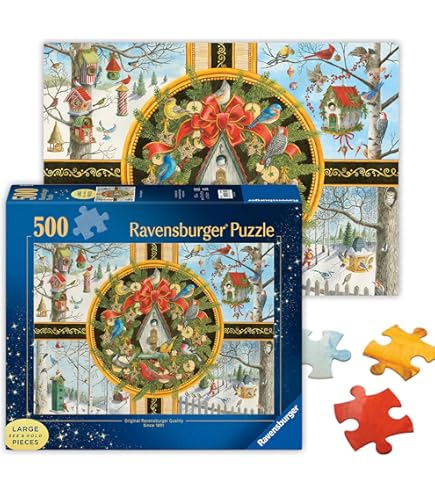
Ravensburger 500 Piece Jigsaw Puzzle – Enchanted Garden

Learning Curve: Easy

$24.99
Difficulty: 2/5
Ravensburger 500 Piece Jigsaw Puzzle – Enchanted Garden

Why Great for Beginners:

Ravensburger is the gold standard for beginner puzzles. Thick pieces, perfect interlocking, and a beautiful garden scene that's easy to sort. Minimal dust and no glare.

βœ“ Beginner Pros

  • +Premium piece quality
  • +Softclick technology for snug fit
  • +Anti-glare surface
  • +Beautiful, colorful image

βœ— Beginner Cons

  • -Higher price
  • -500 pieces may be too easy for some
πŸ‘ Best for: Beginners who value quality and want a reliable, enjoyable experience
πŸ‘Ž Not for: Strict budgets
#4
Alternative

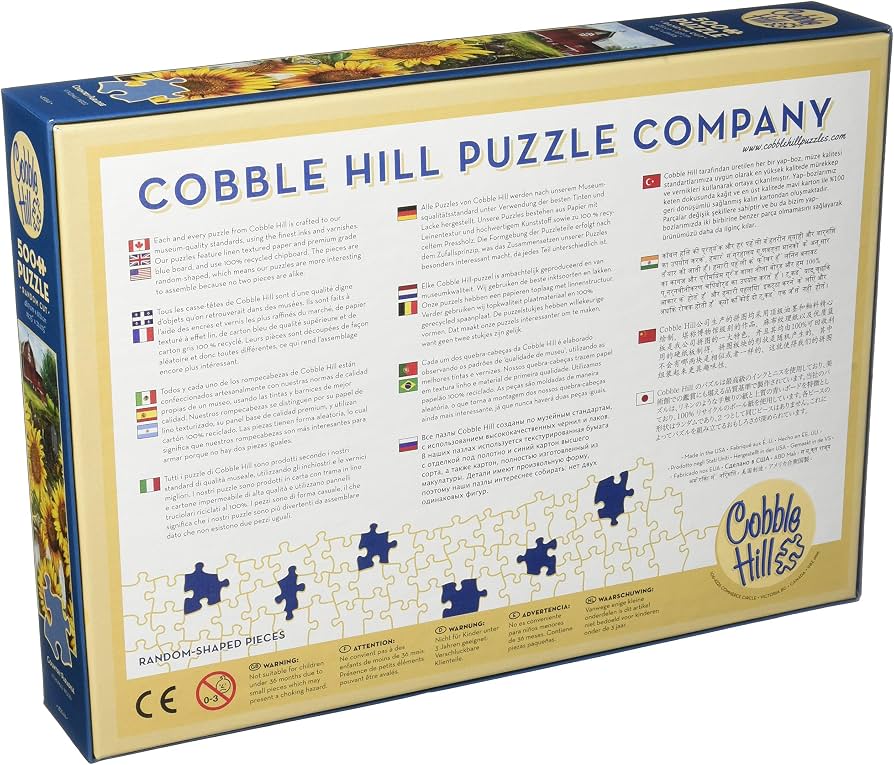
Cobble Hill 500 Piece Jigsaw Puzzle – Vintage Map

Learning Curve: Moderate

$19.99
Difficulty: 3/5
Cobble Hill 500 Piece Jigsaw Puzzle – Vintage Map

Why Great for Beginners:

Cobble Hill puzzles feature a linen finish that reduces glare and thick, random-cut pieces for a unique challenge. The vintage map image offers many color zones and text details to help sorting.

βœ“ Beginner Pros

  • +Linen finish reduces glare
  • +Thick pieces
  • +Random cut adds variety
  • +Interesting image

βœ— Beginner Cons

  • -Random cut can be trickier for absolute beginners
  • -Some pieces may have similar shapes
πŸ‘ Best for: New puzzlers who want a slightly different experience
πŸ‘Ž Not for: Those who prefer uniform ribbon cut
#5
✨ Premium

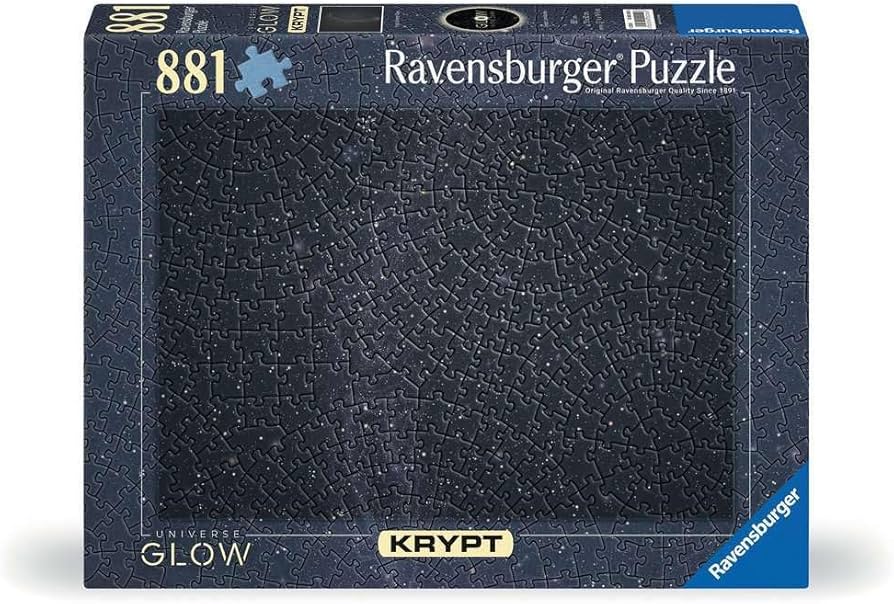
Ravensburger 1000 Piece Jigsaw Puzzle – Krypt Glow in the Dark

Learning Curve: Requires patience

$44.99
Difficulty: 4/5
Ravensburger 1000 Piece Jigsaw Puzzle – Krypt Glow in the Dark

Why Great for Beginners:

While 1000 pieces is ambitious, this glow-in-the-dark puzzle is surprisingly beginner-friendly due to its distinct color sections and radiant effect. Great for a motivated beginner who wants a showpiece.

βœ“ Beginner Pros

  • +Glow-in-the-dark effect is fun
  • +High quality thick pieces
  • +Snug fit
  • +Unique design

βœ— Beginner Cons

  • -1,000 pieces may be frustrating for some
  • -Higher price
  • -Image can be dark in normal light
πŸ‘ Best for: Confident beginners who want a challenge and a unique result
πŸ‘Ž Not for: Impatient beginners or those on a budget

πŸ“– Complete Beginner's Guide to Puzzle Set

Jigsaw puzzles consist of hundreds of interlocking pieces that form a complete picture. Beginners often think more pieces = better, but starting with 1000 pieces can lead to burnout. Instead, begin with 300–500 piecesβ€”enough to be satisfying but not overwhelming. The image matters: bright scenes with clear boundaries (like a garden, map, or animal collage) are easier to sort than abstract art or monochromatic landscapes. Puzzle quality varies: cheap puzzles have thin pieces that break or don't fit right, while mid-range options offer thick, precision-cut pieces. Look for puzzles labeled 'premium quality' or 'thick board'. Also, consider the type of cut: ribbon cut (grid-like) is more predictable, while random cut adds variety. Most beginners prefer ribbon cut for its consistency. Finally, always check dimensions so you have enough table space.

πŸ€” How to Choose Your First Puzzle Set

Ask yourself: How much time do I want to spend? A 300-piece puzzle might take a few hours, while 500 pieces could take a weekend. What kind of image do I enjoy? Landscapes, animals, and vintage maps are popular for beginners. Do I want a puzzle I can frame? Some beginners like to glue and frame their first puzzle as a keepsake. Budget-wise, expect to spend $10–$30 for a good beginner puzzle. Avoid the very cheapest (under $10) as quality suffers, and don't overspend on artisan puzzles yet. Red flags: puzzles with blurry images, thin pieces, lots of dust, or poor reviews about fit.

πŸ’° Budget Guide for Beginners

10 - $20

Sweet spot for most beginners – good quality from brands like Ceaco or Buffalo Games. Excellent value for 300–500 piece puzzles.

20 - $35

Premium beginner – includes brand names like Ravensburger and Cobble Hill. Thicker pieces, better image quality, and often a linen finish to reduce glare.

35 - $50

High-end beginner – wooden puzzles or specialty cuts. Not necessary for first puzzle, but a treat if you have the budget and want a unique experience.

Under $ - $10

Entry level – can be hit or miss; often thin pieces and poor fit. Good for trying out if on a tight budget, but quality is low.

⚠️ Common Beginner Mistakes to Avoid

Common mistakes include buying a 1000-piece puzzle as a first attempt, choosing an image with large areas of solid color (like a night sky), ignoring piece quality (thin flimsy pieces), skipping puzzle boards or sorting trays, and buying a puzzle that's too small (like 100 pieces) leading to boredom. Also, some beginners forget to check the finished size and run out of table space. Finally, many give up too earlyβ€”puzzles take patience, and a break can help.

πŸ“ˆ Your Progression Path: Beginner to Intermediate

Start with a 300–500 piece puzzle of a clear image. Learn basic sorting: separate edge pieces, group by color. Once comfortable, move to 500–750 pieces with slightly more challenging images (like busy market scenes). As your skills grow, try 1000-piece puzzles with moderate complexity. Signs you're ready: you can complete a 500-piece puzzle in a day, you enjoy the process more than the result, and you're curious about specialty cuts (random, wooden, etc.). Next steps: try panoramic puzzles, 3D puzzles, or custom photo puzzles. Many puzzlers stick with 1000-piece puzzles for years, gradually increasing difficulty through image complexity.

πŸ“š Learning Resources for Beginners

  • πŸ“–{"resourceName":"The Jigsaw Puzzle Book: Tips, Tricks, and Inspiration for Beginners","asin":"B07X9Y8Z1A","price":14.99,"description":"A beginner-friendly book covering puzzle strategies, sorting methods, and how to choose puzzles. Inspiring for new hobbyists."}
  • πŸ“–{"resourceName":"Puzzle Sort & Store: Stackable Sorting Trays (Set of 4)","asin":"B08F2G3H4I","price":11.99,"description":"Another set of sorting trays that can help you learn organization from the start. Practical tool with educational benefit."}
  • πŸ“–{"resourceName":"Jigsaw Puzzle Timer – Digital Stopwatch for Speed Puzzles","asin":"B09M0N1O2P","price":9.99,"description":"Once you're comfortable, timing your solves adds a new challenge. This simple timer is great for tracking progress."}
  • πŸ“–{"resourceName":"Puzzle Board with Cover – 2000 Piece Capacity","asin":"B0A1B2C3D4","price":39.99,"description":"A larger board for when you upgrade to bigger puzzles. Includes a cover to store vertically."}

🎯 Bottom Line: Our Recommendations

For most beginners, the best starter puzzle is a 500-piece Ravensburger or Buffalo Games puzzle with a clear, colorful image. Budget-conscious beginners can try the 300-piece Ceaco puzzle. If you want something premium, the 500-piece Cobble Hill puzzle offers excellent quality and linen finish. Don't forget a puzzle board for portability and sorting trays to organize pieces. Remember: the goal is to have fun and relax, not to race. Your first puzzle is about enjoying the processβ€”pick an image that makes you smile, and take your time.

❓ Frequently Asked Questions

A 300–500 piece jigsaw puzzle with a clear, high-contrast image from a reputable brand like Ravensburger, Buffalo Games, or Cobble Hill. These offer good quality and beginner-friendly designs.
Between $10 and $30 is ideal. Avoid cheap puzzles under $10 as they often have poor quality, and you don't need to spend over $50 on artisan puzzles as a beginner.
Moderate piece count (300–500), thick sturdy pieces, clear image with color variety, snug fit, and an included poster. Avoid single-color large areas and very small piece counts.
A 300-piece puzzle from Ravensburger or Buffalo Games with a simple landscape or animal scene. These brands have consistent quality and easy-to-handle pieces.
A puzzle board or mat for portability, sorting trays to organize pieces, and possibly a puzzle glue if you want to preserve your finished puzzle. A good light source also helps.
Pick an image you love, choose 300–500 pieces, check reviews for quality, ensure the finished size fits your table, and buy from a trusted brand. Start with a puzzle that excites you.
Not if you choose wisely. A 300–500 piece puzzle with a clear image is manageable. The difficulty comes from the image complexity and piece count, so start easy and build up.
Buying too many pieces too soon, choosing a monochrome image, ignoring piece quality, not having a dedicated workspace, and rushing through the process. Patience is key.
Yes, many beginners enjoy preserving their first puzzle. Use puzzle glue specifically designed for jigsaw puzzles and a cheap frame. Just ensure your puzzle is on a flat surface.
A 300-piece puzzle might take 2–4 hours, while a 500-piece puzzle takes 4–8 hours, depending on the image and your pace. Spread it over several sessions.

Related Articles