Is Best Power Bank for beginners Worth It? Honest Review (2026)
Everything beginners need to know to choose their first power bank with confidence.
Choosing your first power bank can feel overwhelming. With so many options—different capacities, ports, and speeds—it's easy to get lost in technical jargon. This guide simplifies the process for complete beginners, breaking down what you actually need, what to avoid, and which power banks offer the best value. By the end, you'll feel confident picking the perfect portable charger for your lifestyle.
📋 In This Guide
• Why Beginners Struggle with Power Bank
• What to Look For (Key Features)
• Top 4 Beginner-Friendly Power Bank
• Essential Accessories for Beginners
• Common Beginner Mistakes to Avoid
• Your Progression Path
• FAQ & Learning Resources
😰 Why Beginners Struggle with Power Bank
Beginners often face confusion over power bank specifications like mAh (milliamp-hours), output wattage, and fast-charging protocols. There are hundreds of options on Amazon, ranging from tiny keychain chargers to massive 50,000mAh bricks. Without knowing which features matter for their devices, many end up buying a power bank that's too weak, too heavy, or incompatible with their phone. Common frustrations include slow charging, not enough capacity for a full charge, and oversized units that are a hassle to carry.
🔍 What to Look For: Key Beginner-Friendly Features
For beginners, the most important features are capacity (measured in mAh), output ports (USB-A vs USB-C), and physical size. A good starter power bank should have at least 10,000mAh to charge a modern smartphone one to two times. Look for at least one USB-A port and a micro-USB (or USB-C) input for charging the power bank itself. Avoid high-wattage units with multiple outputs and complex displays—they add cost without benefit. Simpler is better: automatic power delivery, no buttons needed, and a portable size that fits in your bag.
✅ Essential Features for Beginners
•10,000mAh or higher capacity for multiple charges
•USB-A output (plus USB-C input for power bank itself)
•Compact size that fits in a pocket or bag
•Automatic charging (no buttons or settings needed)
•Reputable brand with safety certifications
•LED indicator for remaining battery level
🏆 Top 4 Best Power Bank for Beginners
#1
💰 Budget
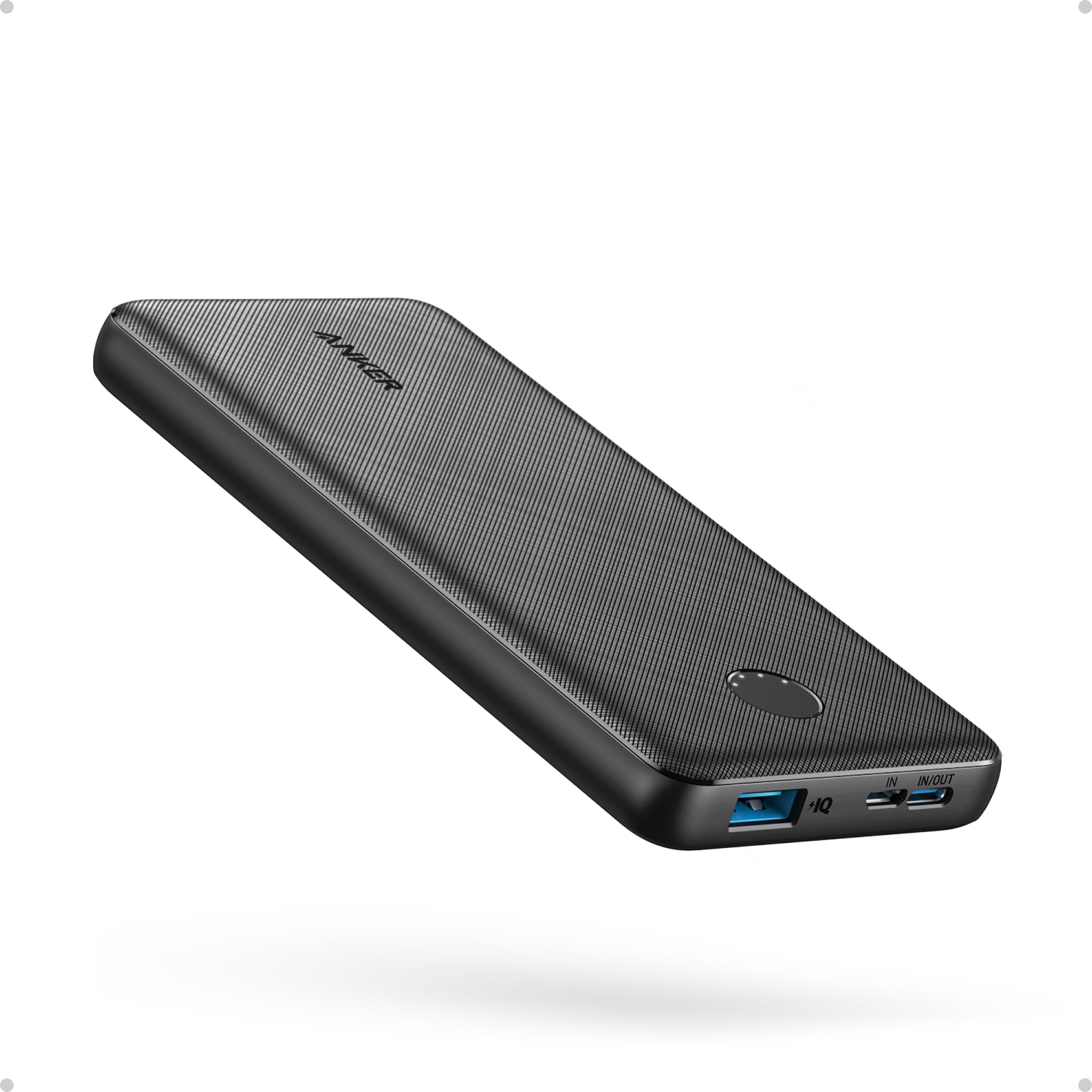
Anker PowerCore 10000mAh Portable Charger
Learning Curve: Easy
$21.99
Difficulty: 1/5
Why Great for Beginners:
Compact, reliable, and affordable. This 10,000mAh capacity charges a smartphone twice and fits in any pocket. No complicated buttons—just plug and charge.
✓ Beginner Pros
+Very compact and lightweight
+Trusted brand with safety features
+Simple to use, no learning curve
+Enough capacity for most daily needs
✗ Beginner Cons
-Only one USB-A output (can't charge two devices)
-Micro-USB input (not USB-C, may require different cable)
👍 Best for: Users who need a simple, pocketable backup for daily use
👎 Not for: Those who want to charge multiple devices or need USB-C input
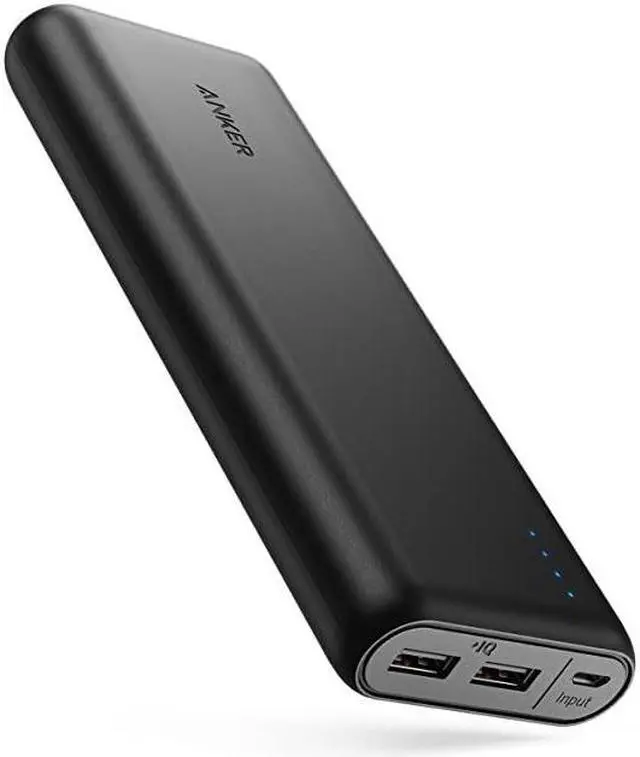
A perfect middle ground: 20,100mAh capacity charges phones four times, yet still portable. Dual USB-A outputs let you charge two devices simultaneously. Trusted brand with excellent customer support.
✓ Beginner Pros
+High capacity without being too heavy
+Dual outputs for charging two devices
+Durable build and safety certifications
+Easy to use with automatic power delivery
✗ Beginner Cons
-Micro-USB input (not USB-C)
-Slightly larger than 10,000mAh units
👍 Best for: Most beginners who want extra capacity for travel or heavy use
👎 Not for: Those needing USB-C input or wanting the smallest size
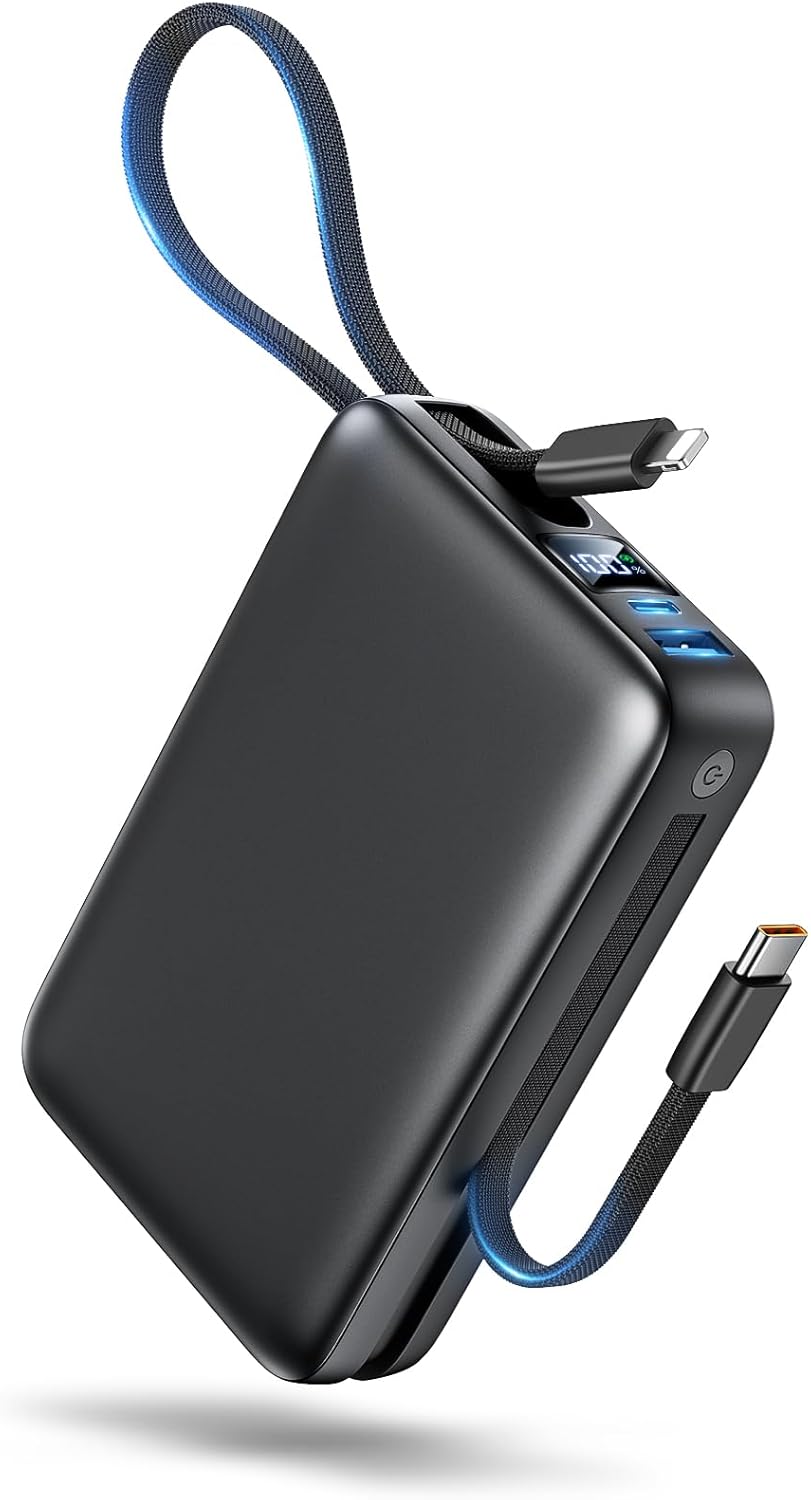
Alternative to Anker with USB-C input and two outputs. Offers fast charging for compatible devices. Good for beginners who want modern connectivity without a premium price.
✓ Beginner Pros
+USB-C input for modern devices
+Two outputs (USB-A and USB-C)
+Supports fast charging (PD/QC)
✗ Beginner Cons
-Slightly larger than Anker equivalents
-Fast charging may be confusing for absolute beginners
👍 Best for: Beginners with USB-C devices who want future-proofing
👎 Not for: Those who prefer the simplicity of a single port
Extreme capacity for heavy needs. Charges up to three devices at once with dual USB-A and a micro-USB (or USB-C) output. Ideal for long trips or multiple gadgets. Beginners should only consider if they genuinely need the capacity.
✓ Beginner Pros
+Massive 26,800mAh capacity
+Three outputs (dual USB-A + micro-USB)
+Reliable Anker quality
✗ Beginner Cons
-Heavy and bulky for daily carry
-More expensive than needed for most beginners
-Micro-USB input on some versions
👍 Best for: Beginners who need to charge tablets, multiple phones, or travel for days
👎 Not for: Those looking for a light everyday power bank
A power bank is essentially a rechargeable battery that charges your devices on the go. Capacity is the most important spec: 5,000mAh charges one smartphone roughly once; 10,000mAh charges twice; 20,000mAh charges four times. Beginners underestimate how much capacity they need—aim for at least 10,000mAh. Input/output ports: Most budget power banks use micro-USB to charge themselves, but newer models use USB-C. For beginners, a power bank with USB-C input is more future-proof. Output speed: Standard 5V/2A (10W) is fine for most phones. Fast charging (PD or QC) is nice but not necessary for a first purchase. Size and weight: A 10,000mAh unit is pocketable; 20,000mAh is heavier but still backpack-friendly. Avoid huge 30,000mAh+ bricks until you know you need them.
🔧 Essential Accessories for Beginners
Anker PowerLine+ USB-C to USB-C 3.1 Gen 2 Cable (6ft)
⚠️ Essential
$12.99
When to buy:
Day one
A durable USB-C cable is essential for modern devices. This one supports fast charging and data sync. Having a reliable cable ensures your power bank can charge phones and tablets efficiently.
A dedicated wall charger will recharge your power bank faster than plugging into a laptop. 20W is enough for most power banks and phones. Beginners often forget that the power bank itself needs charging.
Start by determining how often you'll need to charge away from home. If you just want emergency backup for a day out, a 10,000mAh unit is perfect. If you travel or rely heavily on your phone, consider 20,000mAh. Check your phone's charging speed; if it supports fast charging, get a power bank that matches it for faster top-ups. But even standard 10W will work. Budget: Spend between $15 and $50 for an excellent beginner unit. Avoid the cheapest $10 ones (poor build, low capacity) and the $100+ ones with unnecessary features. Stick with reputable brands like Anker, RAVPower, or Aukey.
💰 Budget Guide for Beginners
60+
Performance - multiple ports, high wattage, for power users
20 - $35
Sweet spot - best value with 10,000-20,000mAh, good build quality
Entry level - smallest capacity, basic features, may need upgrade soon
⚠️ Common Beginner Mistakes to Avoid
Many beginners buy a power bank with too little capacity (e.g., 5,000mAh) and are disappointed when it only charges their phone halfway. Others pick a massive 30,000mAh unit that's too heavy to carry daily. Some ignore input ports and end up with a micro-USB power bank when their phone uses USB-C, requiring two different cables. Lastly, cheap no-name brands often have inflated capacity claims or poor safety features—stick to known brands.
×Buying too low capacity (5,000mAh or less) and running out of power
×Choosing a massive 30,000mAh+ that's too heavy to carry
×Ignoring input port type (micro-USB vs USB-C) and needing extra cables
×Falling for cheap, off-brand power banks with inflated specs
×Not considering size/weight for everyday portability
×Overpaying for fast charging features they don't need yet
📈 Your Progression Path: Beginner to Intermediate
Once you own your first power bank, learn how to maintain it: charge it fully at least once every three months to preserve battery health. After a year, you may want to upgrade to a faster-charging model or a higher capacity if your needs grow. Intermediate users might look for multiple ports to charge multiple devices, or built-in cables for convenience. But for at least the first six months, your beginner power bank will serve you well.
📚 Learning Resources for Beginners
📖B07YF5Y6GQ
📖B07R6H8XKV
📖B07D2F4J9G
🎯 Bottom Line: Our Recommendations
For most beginners, the Anker PowerCore 10000mAh (budget pick) offers the best balance of size, reliability, and price—perfect for daily use. If you need more capacity for travel, the Anker PowerCore 20100mAh is a premium step up without breaking the bank. Pair it with a quality USB-C cable and a wall charger for the best experience. Start simple, avoid overthinking specs, and enjoy the freedom of never running out of battery.
❓ Frequently Asked Questions
The Anker PowerCore 10000mAh is excellent for beginners due to its compact size, reliability, and low price. For a bit more capacity, the Anker PowerCore 20100mAh is a great step up.
Between $20 and $40 is ideal. Spending less than $15 often yields poor quality; more than $50 may include features beginners don't need.
Adequate capacity (10,000-20,000mAh), at least one USB-A output, and a micro-USB or USB-C input for charging the power bank itself. Simplicity is key.
Any Anker PowerCore series model is very easy: just plug in and it starts charging automatically. No buttons or settings to learn.
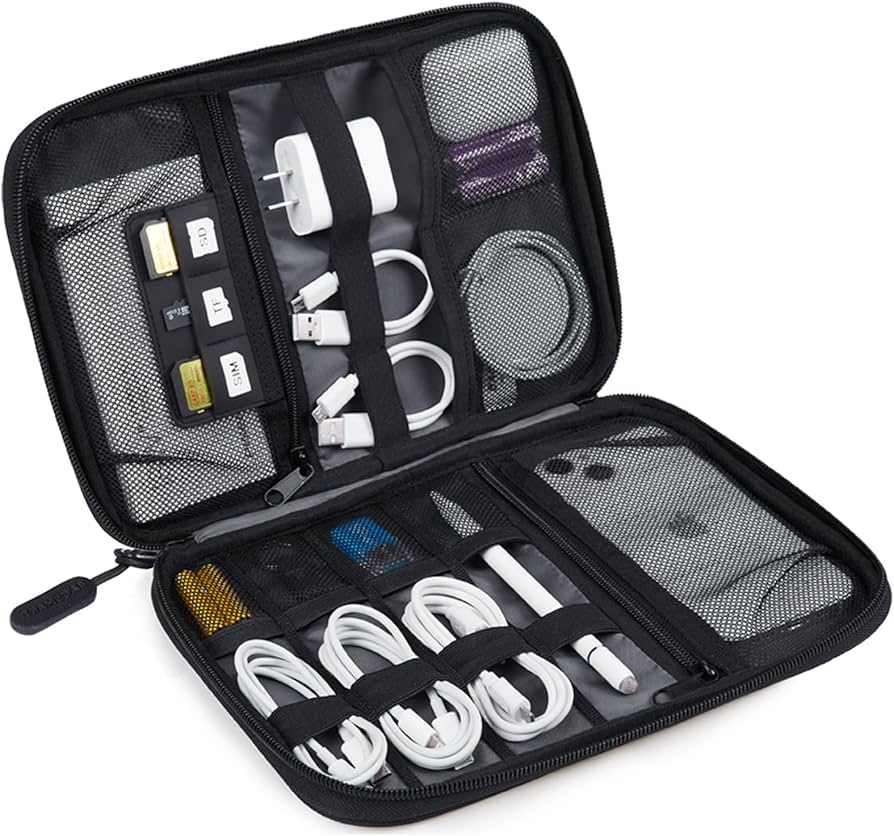
A quality USB cable (USB-C if your device uses it) and a wall charger to recharge the power bank quickly. A carrying case is optional but helpful.
Decide how much capacity you need (10,000mAh for daily, 20,000mAh for travel). Pick a reputable brand like Anker, RAVPower, or Aukey. Check that it has at least one output port that matches your device's charging cable.
Not at all. Modern power banks are designed for simplicity—just plug in your device and it charges. The only challenge is choosing the right capacity and cable compatibility.
Common mistakes include buying too little capacity, ignoring input port type (micro-USB vs USB-C), choosing bulky units, and buying no-name brands with false capacity claims.
No. Standard 10W charging is perfectly fine for beginners. Fast charging is a nice upgrade later if you find your phone charges too slowly.
Most beginner power banks (10,000-20,000mAh) cannot charge laptops, which require higher wattage (30W+). If you need laptop charging, look for a power bank specifically designed for that with at least 60W output and high capacity.