Is Best Mixing Bowls for beginners Worth It? Honest Review (2026)
Choose your first mixing bowls with confidence — no confusing jargon, just clear advice for beginners.
If you're just starting out in the kitchen, the sheer number of mixing bowls available can feel overwhelming. Stainless steel, glass, plastic, with lids, without lids, nested sets, individual bowls — you might wonder if you need all of this before you can even bake your first batch of cookies. The good news is that choosing your first mixing bowls doesn't have to be complicated. This guide is designed for absolute beginners. We'll walk you through what actually matters, help you understand the basics in plain language, and recommend a few dependable sets that won't break the bank. By the end, you'll feel confident picking the right bowls for your kitchen and your cooking style.
📋 In This Guide
• Why Beginners Struggle with Mixing Bowls
• What to Look For (Key Features)
• Top 5 Beginner-Friendly Mixing Bowls
• Essential Accessories for Beginners
• Common Beginner Mistakes to Avoid
• Your Progression Path
• FAQ & Learning Resources
😰 Why Beginners Struggle with Mixing Bowls
One of the biggest hurdles beginners face is the overwhelming variety. Walk down any cookware aisle or browse online and you'll see materials you never knew existed, sizes from tiny to huge, and sets with features that seem designed for professional chefs. Jargon like 'triply stainless steel,' 'triply clad,' or 'thermo-resistant borosilicate glass' makes even simple decisions feel like a science exam. You might also worry about buying the 'wrong' thing — spending money on a set that doesn't fit your needs or that you'll outgrow in a month. That anxiety is completely normal. The truth is, mixing bowls are forgiving. Even a basic set will let you bake and cook almost anything. Beginners often overthink the choice, focusing on features they won't use for years instead of what makes everyday tasks easier: good grips, stable bases, and easy cleaning.
🔍 What to Look For: Key Beginner-Friendly Features
When you're starting out, you don't need every bell and whistle. Focus on the essentials: durability, ease of cleaning, comfortable handling, and nesting storage. A set that includes several sizes (usually 1.5, 3, and 5 quarts) will cover most recipes, from whisking a dressing to mixing a cake batter. Look for bowls with non-slip bases or handles — they won't slide around on the counter while you stir. If you plan to reheat leftovers or need to check if dough is done, glass bowls are nice because you can use them in the microwave and see the ingredients through the sides. When you first start, you're likely to be a bit heavy-handed with your stirring. Choose something sturdy that won't topple over.
✅ Essential Features for Beginners
•Non-slip base: Keeps bowls steady while you whisk, blend, or knead.
•Nested design: Saves cabinet space, a must for small kitchens.
•Pour spouts: Prevents drips and makes transferring batters clean.
•Lips & handles: Give you a secure grip even with wet hands.
•Measurement markings: Simplify recipe prep without extra tools.
•Dishwasher-safe: Effortless cleanup for busy beginners.
•Lids: Allow storage and reduce dish pile-up.
🏆 Top 5 Best Mixing Bowls for Beginners
#1
💰 Budget
U-Taste 10-Piece Mixing Bowl Set with Airtight Lids
Learning Curve: Easy
$29.99
Difficulty: 1/5
Why Great for Beginners:
This set gives you everything you need at an unbeatable price. The bowls nest together to save space, and the included lids mean you can store leftovers straight away. The plastic is BPA-free and dishwasher-safe, making cleanup a breeze.
✓ Beginner Pros
+Great price for a 10-piece set
+Lids on every bowl for storage
+Nesting design saves cabinet space
+BPA-free and dishwasher-safe
+Measurement markings on some bowls
✗ Beginner Cons
-Plastic may absorb odors or stain over time
-Lightweight, so could tip if mixing heavy dough
-Not microwave-safe (unless specified)
👍 Best for: Beginners on a tight budget who want a complete set with lids right away.
👎 Not for: Those who prefer heavy, premium materials or plan to use microwaves for melting ingredients.
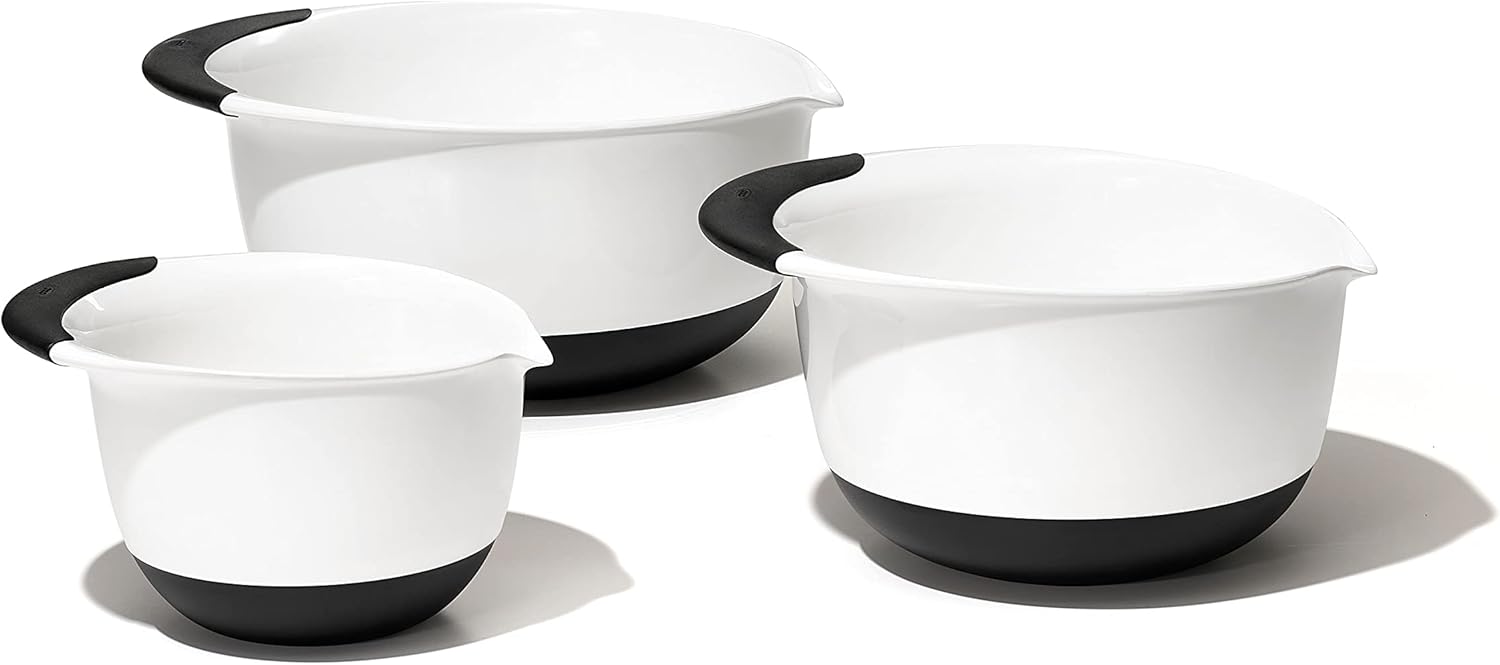
OXO is known for thoughtful design, and this set is no exception. The handles are comfortable, the bowls are steady on the counter thanks to a non-slip base, and the clear plastic lets you see what's inside. It's the perfect middle ground for beginners who want a reliable set they'll use for years.
✓ Beginner Pros
+Non-slip base so bowls stay put
+Easy-to-hold handles
+Transparent plastic – see ingredients at a glance
+Dishwasher-safe and BPA-free
+Lids included
✗ Beginner Cons
-Only 3 bowls (but they cover the key sizes)
-Plastic can scratch, but visual clarity is a big plus
👍 Best for: Beginners who want a reliable, thoughtfully designed set without spending a fortune.
👎 Not for: Those who prefer glass or metal materials, or need a larger variety of sizes.
Pyrex is a trusted brand, and this glass set is perfect for beginners who want to see their ingredients and use the microwave without worry. The bowls are heavy enough to stay put, come with lids, and are oven-safe up to 350°F, giving you flexibility as your skills grow.
✓ Beginner Pros
+Clear glass – see if lumps remain in batter
+Microwave, oven, and dishwasher safe
+Lids for storage
+Sturdy and stable on the counter
+Easy-to-pour lips
✗ Beginner Cons
-Glass can break if dropped
-Heavier than plastic or steel
👍 Best for: Beginners who want visibility and the ability to heat ingredients directly in the bowl.
👎 Not for: Clumsy cooks who need unbreakable bowls or those on a tight budget.
Cuisinart 4-Piece Prep and Mixing Bowl Set with Spatulas
Learning Curve: Easy
$34.99
Difficulty: 1/5
Why Great for Beginners:
This set is ideal for beginners who want a bit of everything – it includes three mixing bowls plus two spatulas, all nested together. The bowls have a non-slip base and pour spouts, and the included spatulas are the perfect scraping tools for every baker.
✓ Beginner Pros
+Bonus spatulas – no need to buy separately
+Non-slip bases for stable mixing
+Pour spouts help transfer batters
+Compact nesting design
+Dishwasher-safe and BPA-free
✗ Beginner Cons
-Only 3 bowl sizes (no huge bowl for big doughs)
-Plastic, not as durable as metal
👍 Best for: Beginners who want an all-in-one set with the essential utensils, without overpaying.
👎 Not for: Those who need a big 5-quart bowl or prefer glass/stainless steel.
Vollrath 5-Quart Heavy-Duty Stainless-Steel Mixing Bowls, Set of 5
Learning Curve: Easy
$89.99
Difficulty: 1/5
Why Great for Beginners:
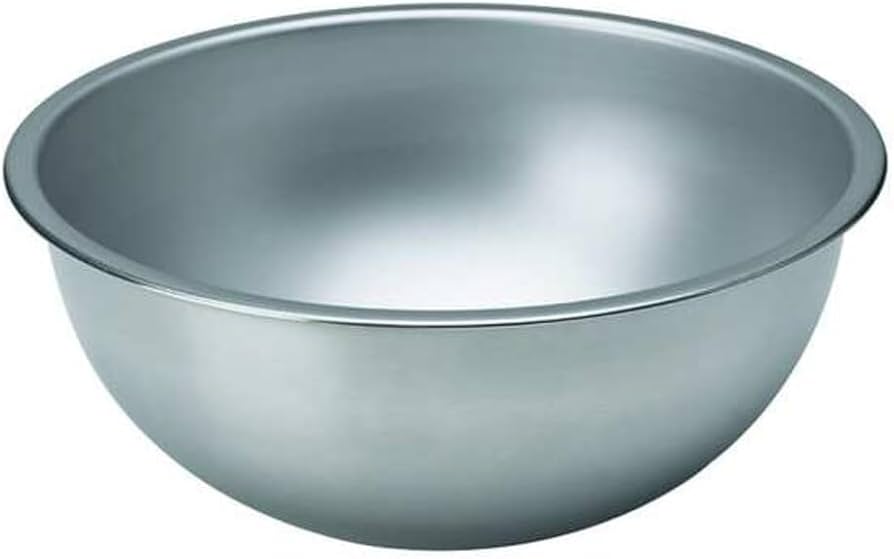
If you want a set that will last a lifetime, this Vollrath set is it. Made from tough, 18/10 stainless steel with a wide, rolled rim that's easy to grip, these bowls are the choice of professional chefs. They're lightweight yet incredibly sturdy, and you can throw them in the dishwasher without worry.
✓ Beginner Pros
+Professional-grade durability
+Wide, rolled rims for easy holding
+Lightweight and won't break
+Dishwasher-safe and practically indestructible
+Comes in 5 essential sizes
✗ Beginner Cons
-No lids (sold separately)
-Higher price point
-Steel bowls are not microwave-safe
👍 Best for: Beginners who are serious about cooking and want the best quality right away, or those who can splurge.
👎 Not for: Those on a budget, who need microwave visibility, or who want storage lids.
Mixing bowls are essentially deep containers used to combine ingredients, and they come in four main materials: stainless steel, glass, plastic, and ceramic. Stainless steel bowls are lightweight, durable, and often have a flared rim that makes them easy to grip. They don't break if you drop them, but you can't see inside if you're looking for lumps. Glass bowls are ideal if you want to see your ingredients, and they're microwave-safe (provided they're marked as such) — great for melting butter or reheating. Plastic bowls are the cheapest and lightest, but they can stain and warp if exposed to high heat. Ceramic bowls look lovely, but they're heavy and can chip or crack if you're clumsy. For most beginners, a stainless steel set with a non-slip bottom is the best all-around choice: it's practically indestructible, dishwasher-safe, and works for everything from mixing batters to storing leftovers. Glass is a close second if you're gentle and value seeing your ingredients. When you're evaluating a set, hold a bowl and see if the handle (if any) feels comfortable. Check the rim — a rolled edge is easier to hold and provides a better seal with lids. Also consider the depth. Deeper bowls prevent splashes when you're mixing at high speed. As for 'beginner-friendly,' that simply means bowls that feel stable, are easy to lift and pour, and don't make you fight with them. It's the small design touches — a pour spout, a handle, a grippy bottom — that turn an okay bowl into a joy to use.
🔧 Essential Accessories for Beginners
OXO Good Grips Silicone Spatula Set of 3
⚠️ Essential
$14.99
When to buy:
Day one
Spatulas are the workhorses of the kitchen. You'll use them to fold, stir, scrape every last bit of batter, and even clean the sides of your mixing bowls. This set includes three sizes, so you'll always have the right one on hand.
Whisking is a fundamental skill, and a good whisk makes it effortless. Whisk together eggs, dry ingredients, or a roux without a mixer. The balloon whisk catches plenty of air, giving you fluffier results from the start.
OXO Good Grips Multipurpose Stainless Steel Measuring Spoons
👍 Recommended
$9.99
When to buy:
First month
Recipes can be exact, and measuring spoons are essential for baking. This set includes 6 sizes and a leveler to give you precise measurements every time — no more guessing between tsp and tbsp.
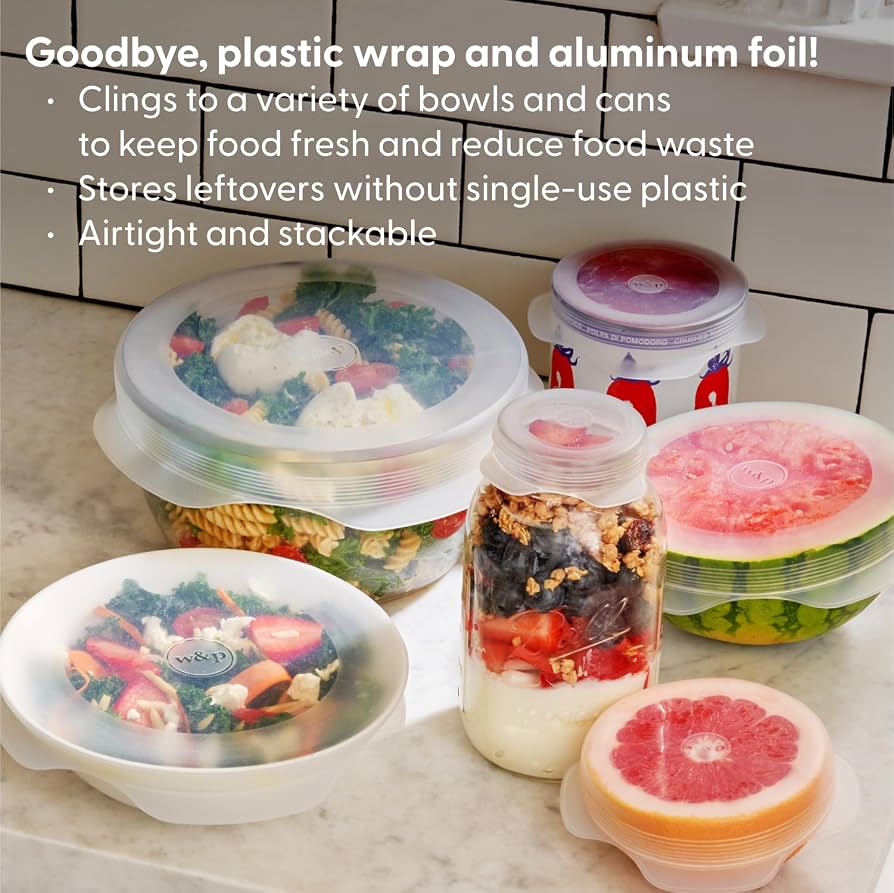
These stretchy silicone lids turn your mixing bowls into storage containers without the hassle of plastic wrap. Great for proofing dough, covering leftovers, or putting a lid on the bowl you're storing in the fridge.
Accurate measurements are crucial in baking. This set includes both measuring cups and spoons, so you won't have to hunt for the right tool. The sturdy plastic cups are easy to read and nest together for storage.
Start by asking yourself a few questions: What will you mostly be making? If you plan to bake cakes, cookies, and breads, you'll want at least one 3- or 5-quart bowl for dough and batters. If you're more of a savory cook who also eats leftovers, having lids on some bowls is a bonus. How much storage space do you have? Nested sets are ideal for small kitchens. What's your budget? Mixing bowls can cost anywhere from $15 for a basic plastic set to over $100 for premium glass or heavy-gauge steel. For beginners, the sweet spot is $30–$60. That range gives you a decent set that will last a couple of years without feeling like a splurge. Avoid the cheapest sets — they often tip over, stain, or feel flimsy. Conversely, don't feel pressured to buy a professional-grade set; you won't appreciate the extra heft or cost yet. A simple decision framework: list your top two meals you'll use the bowls for, then choose a material that matches your habits. If you meal prep and use the microwave, glass is better. If you're rough on equipment or frequently bake hard dough, stainless steel is the way to go.
💰 Budget Guide for Beginners
100+
Professional entry: Top-of-the-line materials and craftsmanship, but likely more than a novice needs.
25 - $60
Sweet spot: Best value for most beginners. These sets are sturdy, dishwasher-safe, and come in useful sizes.
60 - $100
Premium beginner: Excellent quality with glass or heavy-gauge steel, often with lids and bonus accessories.
Under $ - $25
Entry level: Basic plastic or very compact steel sets. Good for trying out, but you may outgrow them quickly.
⚠️ Common Beginner Mistakes to Avoid
One of the most common mistakes beginners make is buying a single bowl that's too small or too large. A 5-ounce ramekin won't hold a cake batter, and a 12-quart mixing bowl is awkward for a simple whisk. Another is grabbing a set with too many sizes you'll never use, leaving you to spend more than needed. People also skip buying measuring cups and spoons, then realize you can't follow a recipe properly. A classic error is choosing bowls that are not dishwasher-safe — you'll end up hand-washing them every time, which is exhausting when the whole point is convenience. Some beginners buy glass bowls and then wonder why they crack in the microwave (only use microwave-safe glass). Others ignore the 'non-slip' label and end up chasing bowls around the counter. Finally, many beginners overlook lids, later discovering you can't store that half-used bowl of frosting or batter without covering it in plastic wrap.
×Buying too cheap: flimsy plastic bowls that tip over or stain easily.
×Buying too expensive: professional stainless steel sets that are heavy and more niche than you need.
×Skipping essential accessories: using a fork instead of a whisk or spatula, then wondering why things aren't smooth.
×Not considering learning curve: some bowls are just harder to work with — too deep, too shallow, or slippery bases.
×Choosing wrong material: buying glass when you need microwave-safe, or plastic when you need oven-safe.
×Ignoring beginner-friendly features: picking a bowl that looks nice but is hard to store or pour from.
×Not planning for growth: buying an 11-piece set with too many tiny bowls instead of a versatile 3–4 piece set.
×Forgetting to check dishwasher safety: ending up with hand-wash-only bowls that become a chore.
📈 Your Progression Path: Beginner to Intermediate
As a beginner, start by mastering one or two basic recipes: maybe a simple sponge cake or a one-dish pasta. Use your mixing bowls for everything — combine ingredients, whisk, fold, and even serve from them. Once you're comfortable with the basics, you'll naturally find yourself reaching for a certain bowl more often. If you discover that your bowls are too small for your favorite bread recipe or that the metal bowls are causing you to overmix (because you can't see the color), it's time to think about an upgrade. Also pay attention to your cleaning habits: if you're constantly scrubbing by hand because your bowls aren't dishwasher-safe, you'll appreciate a new set. Progression might look like this: start with the recommended beginner set; after 6–12 months, add a high-quality whisk, a scale, and maybe a glass bowl for microwave tasks. When you eventually outgrow your beginner set, you'll know — you'll be baking everything from meringues to yeasted breads and will want heavier, specialized bowls.
📚 Learning Resources for Beginners
📖The Complete Baking Cookbook by Sarah Maxwell
📖How to Bake Everything by Mark Bittman
📖Food Network Magazine: The Big Book of Easy Baking
📖The King Arthur Flour Cookie Companion
🎯 Bottom Line: Our Recommendations
For most beginners, the best overall pick is the OXO Good Grips 3-Piece Mixing Bowl Set: it's reasonably priced, stable, and the non-slip base genuinely makes a difference. If you're on a tight budget, the U-Taste 10-Piece Set with Lids gives you incredible value — you get multiple bowls plus lids for almost the cost of one bowl. For a more premium option that will last for years, the Vollrath stainless steel set is a professional favorite and reasonably approachable for a serious beginner. Whatever you choose, don't forget to grab a spatula set and a silicone whisk — they're your best friends when it comes to scraping every last bit of batter and avoiding lumps. Start with a set that covers your basic sizes, take it slow, and remember that every baker started right where you are now. You've got this!
❓ Frequently Asked Questions
For most beginners, the best set is the OXO Good Grips 3-Piece Mixing Bowl Set. It's affordable, stable, and has thoughtful features like non-slip bases and handles that make mixing easy and safe. If you're on a budget, the U-Taste 10-Piece Set with Lids is great value, and if you prefer glass, the Pyrex 3-Piece Set is an excellent choice.
You can find perfectly good mixing bowls for $25–$60. That's the sweet spot: sets under $25 are often flimsy and may not last, while sets over $100 (like professional stainless steel) offer more durability but aren't necessary for most beginners. Spend enough to get a sturdy set with the features you need, and you'll be set for years.
Focus on bowls that are easy to use and clean. Essential features include: a non-slip base (so the bowl doesn't move while you stir), at least 3 sizes (small, medium, large), pour spouts (to transfer liquids without dripping), and dishwasher-safe construction. Lids are a nice bonus for storing leftovers.
The easiest bowls are those with an ergonomic handle and a non-slip bottom, like the OXO Good Grips set. They're stable, comfortable to hold, and don't require special care. Glass or plastic bowls with spouts also make it easy to pour without splashing.
You'll definitely need a silicone spatula and a balloon whisk. A spatula helps you scrape the bowl clean so you don't waste batter, and a whisk is essential for mixing without a mixer. Measuring spoons and cups are next on the list for precise baking, and lids are handy for storage.
Ask yourself what you'll make most. If you bake cakes and breads, get a set with a large 3- or 5-quart bowl. If you mostly cook meals and need storage, choose a set with lids. Also consider your storage space — nested sets save room. Match your choice to your habits, not to what looks nice.
Absolutely not! Mixing bowls are one of the most beginner-friendly kitchen tools. You put ingredients in, you stir. The key is having bowls that are stable and comfortable to use. With the right set, mixing becomes effortless and actually fun.
Common mistakes include buying a too-small bowl for big batters, choosing a slippery-bottomed bowl that moves around, selecting hand-wash-only bowls (annoying), and forgetting to get a spatula or whisk. Beginners also often buy too many sizes at once or cheap bowls that tip quickly.
Yes, if you prefer to see your ingredients and want to use your bowls in the microwave. Glass bowls are heavier and can break, but they don't stain or retain odors. They're great for melting butter and seeing if your batter is smooth. Just handle them carefully.
A set of 3 bowls (roughly 1.5, 3, and 5 quarts) is a perfect start. This covers almost any recipe — whisking sauces (small), mixing cakes (medium), and kneading breads (large). You can always add more later if needed.
Nested bowls fit inside each other to save storage space, making them ideal if you have a small kitchen. Separate bowls take up more room but are often of different shapes and sizes, sometimes with different lids. Most beginners prefer nested sets for convenience.