Review Atlas
Review AtlasYour guide to a better purchase

Menu

Shop by Category

Get the App

Better experience on mobile

Beginners GuideCooking

Is Best Knife Block for beginners Worth It? Honest Review (2026)

Everything beginners need to know to choose their first Knife Block with confidence

Choosing your first knife block can feel overwhelming. There are wooden blocks, bamboo blocks, magnetic strips, self-sharpening slots, and dozens of knife sets with confusing terms like "full tang" and "high-carbon stainless steel." But here's the good news: you don't need to become a knife expert to make a great first choice.

This guide is written for complete beginners. We'll walk you through exactly what to look for, which features genuinely matter, and which sets offer the best value. You'll finish with a short list of beginner-friendly knife blocks and a simple plan for your first kitchen setup.

No jargon, no overthinking - just confidence.

📋 In This Guide

  • • Why Beginners Struggle with Knife Block
  • • What to Look For (Key Features)
  • • Top 5 Beginner-Friendly Knife Block
  • • Essential Accessories for Beginners
  • • Common Beginner Mistakes to Avoid
  • • Your Progression Path
  • • FAQ & Learning Resources

😰 Why Beginners Struggle with Knife Block

Beginners face a classic problem: they don't yet know what good looks like. A knife block is a simple product on the surface, but once you start shopping, the options feel endless. There are universal blocks, bamboo, acacia, magnetic strips, in-drawer organizers, self-sharpening blocks, and knife sets that range from $20 to $800.

Then there's the language. Terms like "forged bolsters," "full tang," "HRC rating," "V-edge geometry," and "high-carbon stainless" are thrown around as if everyone understands them. This vocabulary is intimidating and can make a simple purchase feel like a test.

Many beginners also worry about safety. Will I cut myself? Will the block tip over? Will my knives get dull? These concerns are valid, but with the right guidance, they're all easy to handle.

🔍 What to Look For: Key Beginner-Friendly Features

When you're a beginner, you want a knife block that feels safe, simple, and not too precious. The most beginner-friendly setup is a knife set with a stable wooden or bamboo block that holds each knife in its own clearly marked slot. Look for knives that are already sharp, made from high-carbon stainless steel, and have either a full tang or at least a comfortable, balanced handle.

You don't need a 30-piece set. A solid starter knife block should include an 8-inch chef's knife, a paring knife, a serrated bread knife, and perhaps a utility knife. A sharpening steel or a built-in sharpening slot is a huge plus, but you can also buy a simple sharpener separately.

Strongly avoid blocks with unattached random knives, super cheap "stamped" sets that feel flimsy, and anything that seems hard to clean. For a beginner, the right block is one that encourages you to grab the proper knife, store it safely, and hand wash it without fuss.

✅ Essential Features for Beginners

  • Pre-sharpened blades ready for immediate use
  • High-carbon stainless steel for durable, rust-resistant edges
  • Full tang construction for excellent balance and control
  • Comfortable, nonslip handles
  • Stable block with nonslip base to prevent tipping
  • Assortment covers essential knives only
  • Easy-to-clean slots and simple instructions
  • Built-in honing slot or included sharpening steel

🏆 Top 5 Best Knife Block for Beginners

#1
💰 Budget

Farberware 16-Piece Knife Block Set with Sharpening Steel

Learning Curve: Easy

$49.99
Difficulty: 1/5
Farberware 16-Piece Knife Block Set with Sharpening Steel - Image 1 of 7

Why Great for Beginners:

This complete set is one of the most popular entry-level choices for beginners. The knives arrive ready to use, and the wooden block keeps your essentials organized without a big financial commitment.

Beginner Pros

  • +Includes 16 knives and tools
  • +Very affordable
  • +Knives are pre-sharpened
  • +Wooden block looks classic in any kitchen
  • +Steel included for basic maintenance

Beginner Cons

  • -Steel dulls faster than more expensive knives
  • -Block takes up a fair amount of counter space
  • -Knives should be hand washed
  • -Handles feel a bit lightweight
👍 Best for: New cooks who want a low-risk starter set and don't cook professionally.
👎 Not for: Anyone who wants higher-end blade steel or is already cutting large quantities daily.

#2
👍 Recommended

Cuisinart Advantage 15-Piece Knife Block Set

Learning Curve: Easy

$79.99
Difficulty: 2/5
Cuisinart Advantage 15-Piece Knife Block Set - Image 1 of 8

Why Great for Beginners:

Cuisinart is a familiar brand for beginners, and this set gives you the essential knives without overwhelming you. The high-carbon stainless steel holds an edge well for the price, and the dual-material handles feel comfortable in most hands.

Beginner Pros

  • +High-carbon stainless steel for better edge retention
  • +Includes chef's, paring, and serrated knives
  • +Compact enough for average kitchens
  • +Ergonomic handle design reduces hand fatigue
  • +Well-balanced blade weight

Beginner Cons

  • -Not dishwasher safe
  • -Some users find the block slightly hard to clean
  • -The included sharpening steel is basic
👍 Best for: Everyday home cooks who want a reliable all-in-one starter kit.
👎 Not for: Professional chefs or anyone who already has a favorite chef's knife.
#3
👍 Recommended

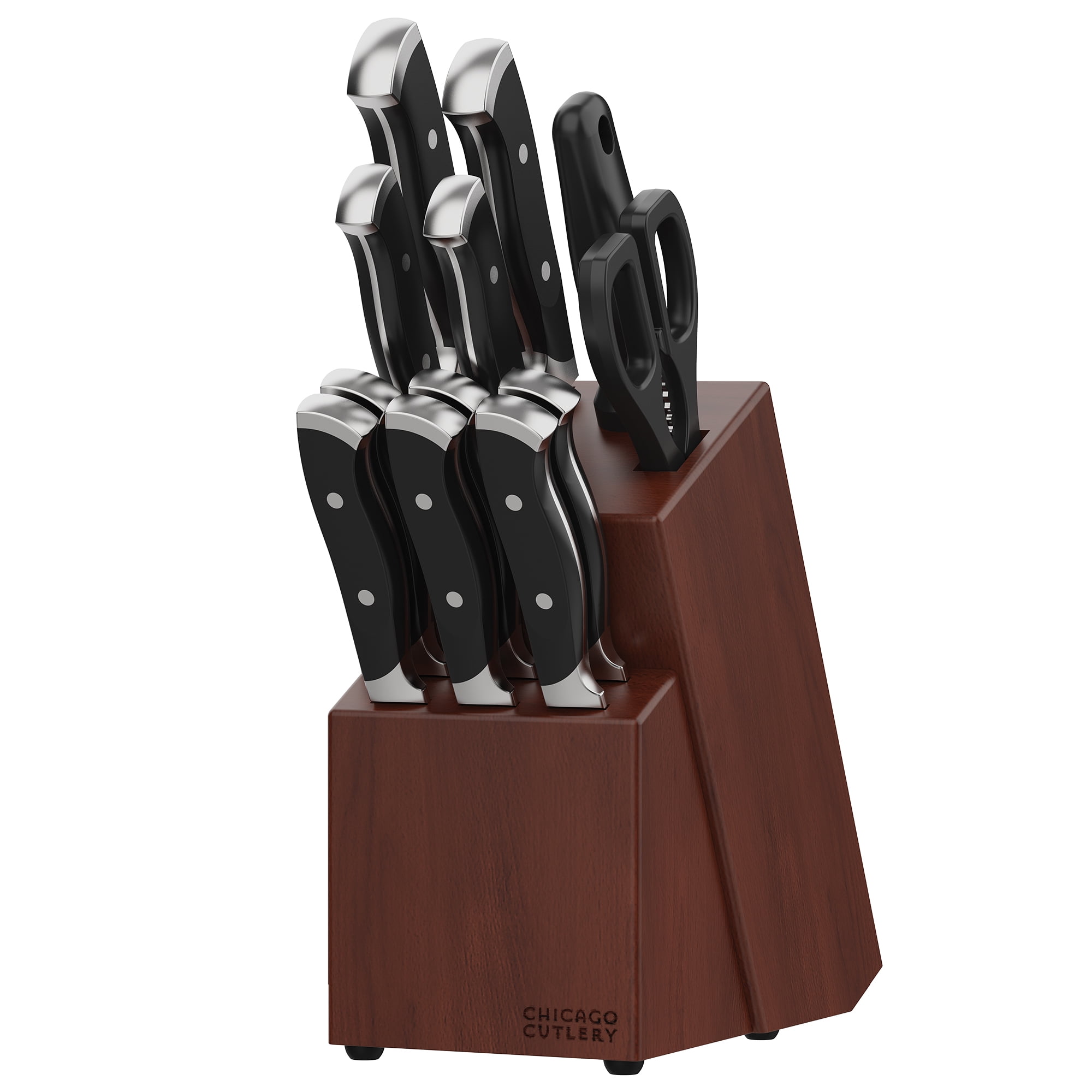
Chicago Cutlery 15-Piece Wood Block Knife Set

Learning Curve: Moderate

$69.99
Difficulty: 2/5
Chicago Cutlery 15-Piece Wood Block Knife Set

Why Great for Beginners:

Chicago Cutlery has a long-standing reputation for dependable, entry-level knives. This set includes a sharpening steel and kitchen shears, making it an excellent starter package that teaches basic knife care.

Beginner Pros

  • +Full tang design for better balance
  • +Includes sharpening steel and shears
  • +Classic wooden block complements most kitchens
  • +Sturdy blade construction
  • +Variety of knife sizes for learning

Beginner Cons

  • -Handles may be bulky for very small hands
  • -Block is a little large
  • -Requires hand washing to maintain finish
👍 Best for: Beginners who want a traditional kitchen look and want to practice sharpening skills.
👎 Not for: Those with tiny countertops or who prefer a slim, modern block.
#4
✨ Premium

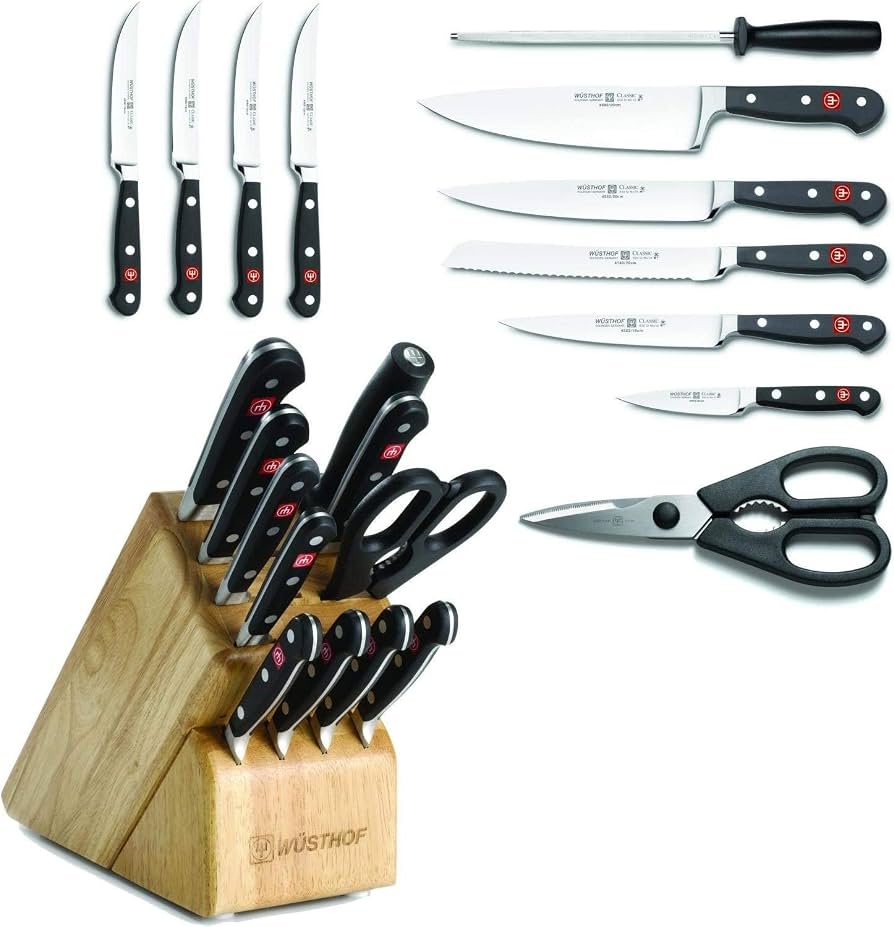
Wusthof Classic 12-Piece Knife Block Set

Learning Curve: Moderate

$449.99
Difficulty: 3/5
Wusthof Classic 12-Piece Knife Block Set

Why Great for Beginners:

If you're ready to invest in your kitchen, Wusthof's Classic collection is a legendary beginner-to-professional choice. These forged knives are exceptionally sharp, perfectly balanced, and their edge retention means you'll spend less time re-sharpening and more time cooking.

Beginner Pros

  • +Excellent high-carbon stainless steel
  • +Forged full-tang construction
  • +Comfortable triple-riveted handles
  • +Slots with built-in knife guides
  • +Comes with block sized for each knife

Beginner Cons

  • -Expensive for a first set
  • -Includes fewer pieces than budget sets
  • -Requires careful hand washing and storage
  • -Premium price can make beginners nervous to use them
👍 Best for: Serious beginner cooks who want one exceptional set that will last decades.
👎 Not for: Casual cooks who rarely use more than one knife or want an extremely large set.
#5
Alternative

Magnetic Wooden Wall Mount Knife Holder Strips

Learning Curve: Moderate

$39.99
Difficulty: 3/5
Magnetic Wooden Wall Mount Knife Holder Strips - Image 1 of 8

Why Great for Beginners:

A magnetic strip is a good alternative for beginners who don't want a countertop block or who already own knives. It keeps blades visible, saves space, and forces you to develop safe handling habits.

Beginner Pros

  • +Mounts on wall or backsplash to save space
  • +Works with most straight-edged knives
  • +Strong magnets hold blades firmly
  • +Easy to wipe clean
  • +Modern kitchen look

Beginner Cons

  • -Doesn't come with knives
  • -Requires wall mounting and screws
  • -Not ideal for very heavy knives
  • -Knives with full bolsters may not fit evenly
👍 Best for: Small kitchens, renters, and beginners who have a few good knives and want a space-saving solution.
👎 Not for: Anyone who wants a complete all-in-one knife block set.

📖 Complete Beginner's Guide to Knife Block

A knife block is simply a storage system that protects your blades and keeps them within reach. Most blocks come with knives, which is usually the best path for a beginner because you get a matched set and a place to put each knife. The most common types are traditional wood or bamboo slot blocks, magnetic wall strips, universal slot blocks, and self-sharpening blocks.

Traditional slot blocks are ideal for beginners. They keep knives separated, cover the blades for safety, and sit stably on the counter. Bamboo and acacia wood are popular because they're sustainable and lightweight. These blocks have slots of different sizes, so you always know which knife goes where.

Magnetic wall strips are popular in small kitchens and hold knives on the side of the blade. They save counter space, but they require mounting and keeping knives at the correct angle, which is slightly more advanced. They're great if you already have knives and want a modern look, but not the easiest starting point.

Self-sharpening blocks include built-in sharpeners in the slots; each time you pull a knife out, the edge stays aligned. For a beginner, this can be convenient, but cheap self-sharpening mechanisms can sometimes over-remove steel. If you choose one, look for a set from a respected brand and read reviews closely.

What does "beginner-friendly" really mean? It means the knives work well without extra knowledge, the block is safe to use, and mistakes are easy to correct. You don't need the most expensive steel or a huge knife collection. You need a set that feels comfortable in your hand, holds an edge through normal family meals, and gives you room to build skills.

🔧 Essential Accessories for Beginners

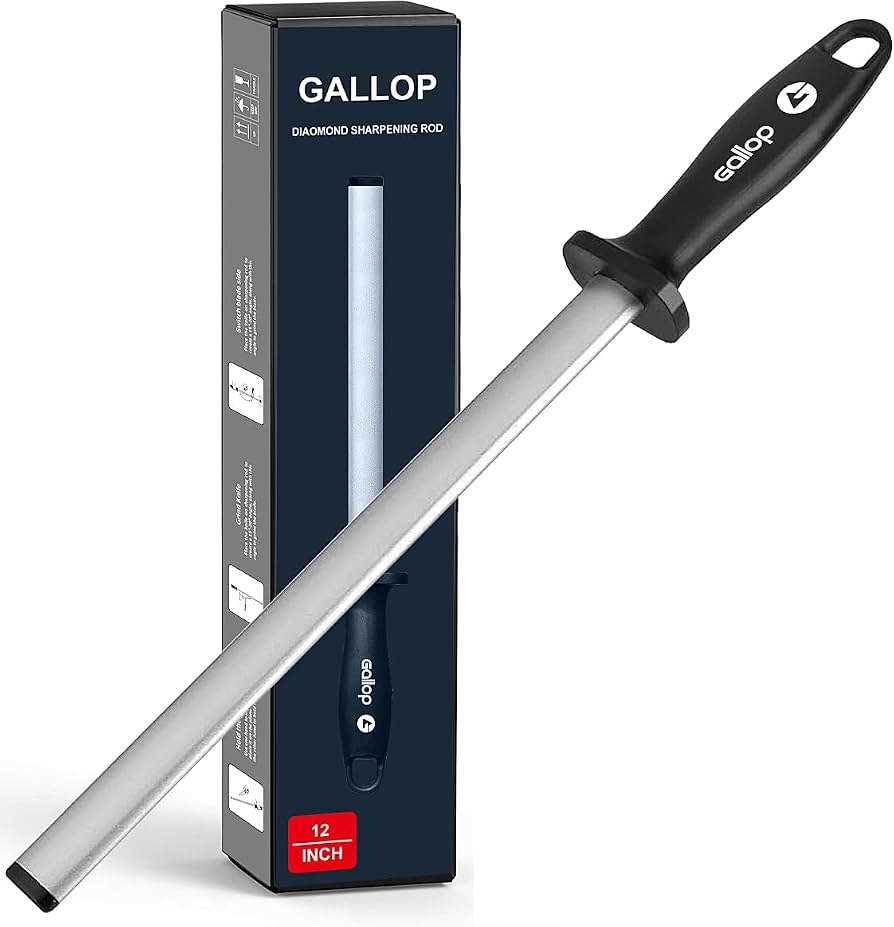
12-Inch Diamond Sharpening Steel with Finger Guard

12-Inch Diamond Sharpening Steel with Finger Guard

⚠️ Essential

$24.99

When to buy:
Day one

A honing steel keeps your knife edge aligned between sharpening sessions. With one in your starter kit, you'll always have a way to keep the blade safe and slicing smoothly.

Beginner Benefits:

  • Reduces how often you need sharpening
  • Prevents dull-knife accidents
  • Builds good knife-care habits
  • Simple to use after one short lesson
Food-Safe Cut Resistant Gloves (Pair) - Image 1 of 6

Food-Safe Cut Resistant Gloves (Pair)

⚠️ Essential

$15.99

When to buy:
Day one

Learning to chop with confidence is much easier when you know your non-dominant hand is protected. These gloves prevent small nicks while you learn the claw grip and proper cutting techniques.

Beginner Benefits:

  • Adds a safety net for shaky hands
  • Boosts confidence in the kitchen
  • Easy to wash and dry
  • Comfortable enough to wear for long prep times
Bamboo Cutting Board Set of 3 with Juice Groove - Image 1 of 9

Bamboo Cutting Board Set of 3 with Juice Groove

👍 Recommended

$29.99

When to buy:
First month

The right cutting board protects your knife edge and prevents cross-contamination. Bamboo boards are lighter than thick wood, gentle on beginner knives, and much kinder to edges than glass or ceramic.

Beginner Benefits:

  • Separate boards promote food safety
  • Soft surface preserves knife sharpness
  • Non-slip corners keep board steady
  • Easy to store upright in a rack
Universal Edge Guards / Knife Sheaths for Kitchen Knives

Universal Edge Guards / Knife Sheaths for Kitchen Knives

💡 Nice to Have

$12.99

When to buy:
After you're comfortable

If you ever store knives in a drawer or want to carry them to a picnic, blade guards prevent accidental cuts and protect the edge. They give beginners extra peace of mind while reaching into the drawer.

Beginner Benefits:

  • Prevents accidental hand cuts
  • Keeps blades from banging against other tools
  • Transparent so you can see which knife you're grabbing
  • Inexpensive extra layer of safety
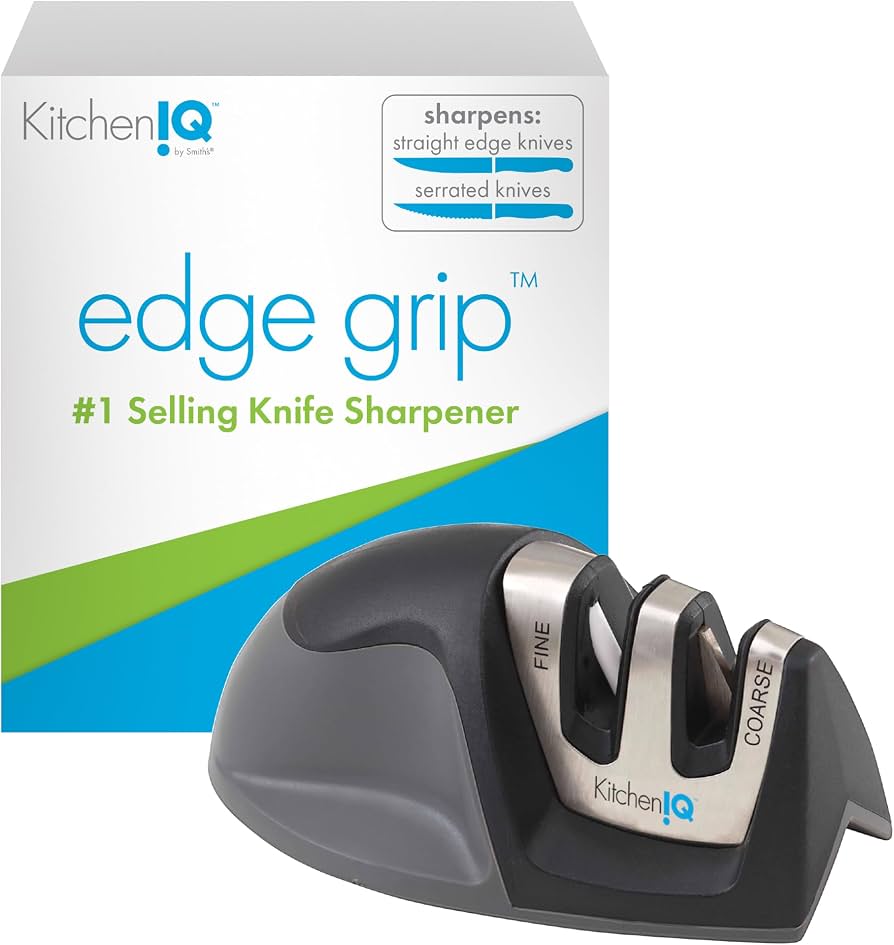
KitchenIQ 2-Stage Pull-Through Knife Sharpener

KitchenIQ 2-Stage Pull-Through Knife Sharpener

👍 Recommended

$19.99

When to buy:
First month

Eventually every knife needs more than honing, and a pull-through sharpener gives beginners a simple way to restore a razor edge without learning whetstone angles. It's the most forgiving way to maintain your first knife block set.

Beginner Benefits:

  • No skill needed to get a sharp edge
  • Works on most standard kitchen knives
  • Quick enough to use once a month
  • Compact and easy to store

🤔 How to Choose Your First Knife Block

Start by asking yourself three questions: How much counter space do you have? How often will you cook? What pieces do you actually need? If you have a small kitchen, consider a compact block or magnetic strip. If you cook daily, spend a little more on a set with a chef's knife that feels solid. If you mostly just need to chop vegetables and slice bread, a 5-to-10-piece set is plenty.

Next, set a realistic budget. Entry-level knife blocks can work, but extremely cheap sets often have disappointing blades and wobbly blocks. The best value for most beginners is a $60-to-$120 set from a known brand with wood or bamboo, high-carbon stainless steel, and a full selection of basic knives. If you have extra money and love cooking, a premium set is a worthwhile long-term investment.

Be aware of red flags: blocks with unnecessary gadgets, knives that feel flimsy or have gaping handles, no mention of blade material, or a block that slides easily on the counter. Choose a product you'll feel confident using tonight.

💰 Budget Guide for Beginners

250+

Professional entry: serious, high-quality sets that will likely last a lifetime and can be enjoyed by motivated beginners.

50 - $120

Sweet spot: the best value for most beginners. Includes a starter set with essential knives and a stable block.

120 - $250

Premium beginner: noticeably better steel, construction, and extras for cooks who spend more time in the kitchen.

Under $ - $50

Entry level: good for trying a knife block and basic knives without a big commitment, but you may want to upgrade soon.

⚠️ Common Beginner Mistakes to Avoid

One of the biggest beginner mistakes is buying the cheapest option and then feeling the knife dulls after a few weeks. A $25 set may seem like a deal, but the steel is often soft and frustrating to sharpen. Another common mistake is buying a huge 20-piece set that takes over your counter and leaves nine unused knives in the block. Beginners also often ignore the sharpener, so their first knife becomes dangerously dull - and a dull knife is actually more dangerous than a sharp one.

Avoid the trap of "premium is always better" too. A $500 set is lovely, but if it feels too expensive to use, you'll be scared of damaging it and won't practice. The middle path - a quality, mid-priced set with a few extra safety tools - works best for most beginners.

  • ×Buying the cheapest set and getting frustrated when knives dull quickly
  • ×Choosing a 20+ piece set with many knives you'll never use
  • ×Skipping a honing steel or sharpener
  • ×Putting knives in the dishwasher
  • ×Ignoring counter space and block size
  • ×Choosing style over safety and stability
  • ×Grabbing a premium set that's too expensive to use comfortably
  • ×Forgetting a cut-resistant glove while learning

📈 Your Progression Path: Beginner to Intermediate

As a beginner, your first goal is simply to use your knife block regularly and learn good habits. Start by practicing with the chef's knife: chop onions, slice tomatoes, and dice potatoes. Move on to the paring knife for small tasks and the bread knife for crusty loaves. Watch a few videos on pinch grip, claw grip, and how to use a honing steel.

After a few months, you'll likely know whether you prefer a heavier knife or a lighter one. Once you feel confident, you can expand by adding a dedicated sharpener, a second cutting board, or a specialty knife like a santoku. Some people outgrow their starter block when they notice they reach only for two knives and wish the block was smaller or held more tools.

When you're ready to move to the intermediate stage, focus on buying fewer but better knives instead of another large set. A magnetic strip can replace a bulky block, and you can choose each knife individually. That is the moment your kitchen really starts to feel professional.

📚 Learning Resources for Beginners

  • 📖The Complete Manual of Kitchen Knife Skills: A Beginner's Guide to Chopping, Dicing and Slicing by Marianne Lumb
  • 📖Knife Skills: An Illustrated Cookbook and Guide to Fast, Sharp Cooking
  • 📖50 Kitchen Knife Skills: Beginner to Pro
  • 📖Victorinox Swiss Classic 8-Inch Chef's Knife (practice/workhorse knife)
  • 📖Learn How to Sharpen Your Knives: Beginner Whetstone Kit

🎯 Bottom Line: Our Recommendations

For most beginners, the best knife block is a 10-to-16-piece set that includes an 8-inch chef's knife, paring knife, serrated knife, and a few extras at a comfortable price. We recommend the Cuisinart Advantage 15-Piece Knife Block Set or the Chicago Cutlery 15-Piece Wood Block Set as sweet-spot choices. If you're on a tight budget, the Farberware 16-Piece Set gives you a solid start for under $50. If you're ready to invest in something that can last decades, the Wusthof Classic 12-Piece set is a fantastic premium beginner option.

No matter which you choose, add a honing steel, a cut-resistant glove, and a good cutting board right from the start. These accessories make the learning curve short and keep you safe. Remember: no one expects you to chop like a professional on day one. Choose a starter set that excites you, keep your knives sharp, and practice a little every week. Your kitchen confidence will grow faster than you think.

❓ Frequently Asked Questions

The best beginner knife block is a traditional slot-style wooden or bamboo block that comes with a starter set of knives. Look for a stable base, essential knives like chef's, paring, and serrated, and easy-to-grip handles. Good examples for most beginners are the Cuisinart Advantage 15-Piece set and the Chicago Cutlery 15-Piece Wood Block set.
Spending between $50 and $120 is the sweet spot for most beginners. This range gets you a reliable set with decent steel, a sturdy block, and enough knife variety to practice. You can start under $50, but expect to upgrade sooner. Spending over $250 is only necessary if you're already serious about cooking.
Beginners should focus on a stable block with securely fitting slots, knives that are pre-sharpened and made from high-carbon stainless steel, comfortable handles, and a simple way to keep them sharp. Avoid blocks with complicated sharpening systems or too many extra pieces.
A traditional wooden or bamboo slot block is the easiest for beginners because each knife has its own place, blades stay protected, and you don't need to learn how to mount anything. Look for a set that includes a chef's knife, paring knife, and bread knife.
Start with a honing steel, a cut-resistant glove, and a good cutting board. A pull-through sharpener and blade guards are useful additions in your first month. These accessories keep you safe and make your beginner knives last longer.
Consider your counter space, how often you cook, and which knives you use most. Pick a set that covers the basics, fits your budget, and feels comfortable in your hand. Read recent buyer reviews and avoid the very cheapest sets or overpriced sets with extra pieces you'll never use.
No. A knife block is one of the easiest kitchen tools to use. The learning curve is about knife skills, not the block itself. The block simply stores knives safely and keeps them organized.
The most common mistakes are buying too cheap, buying too many pieces, putting knives in the dishwasher, skipping regular sharpening, choosing a block that doesn't fit the counter, and being afraid to use a good knife set.
Self-sharpening blocks can be convenient because the blade passes through built-in sharpeners when you pull a knife out. For beginners, they're okay if the block comes from a reputable brand. Some cheap self-sharpening mechanisms can be too aggressive, so check customer feedback before buying.
With hand washing, regular honing, and occasional sharpening, a good mid-range set can last five to ten years. More expensive forged sets can last a lifetime. Eventually, you might outgrow the block and choose individual knives, but the knives can still be used.

Related Articles