Review Atlas
Review AtlasYour guide to a better purchase

Menu

Shop by Category

Get the App

Better experience on mobile

Beginners GuideCoffee

Is Best French Press for beginners Worth It? Honest Review (2026)

Everything beginners need to know to choose their first French Press with confidence

Choosing your first French press can feel overwhelming. With so many options—glass vs. stainless steel, different filter types, and varying price points—it's easy to get lost. But don't worry: French press coffee is actually one of the simplest and most rewarding manual brewing methods. This guide will cut through the noise and help you pick the perfect press for your needs, avoid common beginner mistakes, and start brewing amazing coffee right away. By the end, you'll know exactly what to buy and why.

📋 In This Guide

  • • Why Beginners Struggle with French Press
  • • What to Look For (Key Features)
  • • Top 4 Beginner-Friendly French Press
  • • Essential Accessories for Beginners
  • • Common Beginner Mistakes to Avoid
  • • Your Progression Path
  • • FAQ & Learning Resources

😰 Why Beginners Struggle with French Press

Many beginners are intimidated by technical terms like 'plunger mesh,' 'carafe material,' 'grind size,' and 'steeping time.' Add to that the fear of breaking a glass carafe or ending up with bitter, muddy coffee. The sheer number of options—from cheap no-name brands to high-end double-filtered designs—makes it hard to know where to start. Plus, without proper guidance, beginners often buy the wrong grind size, skip essential accessories like a grinder, or neglect cleaning, leading to a disappointing first experience.

🔍 What to Look For: Key Beginner-Friendly Features

For a beginner, the ideal French press should be simple, durable, and forgiving. Look for a classic glass carafe (borosilicate is best) so you can see the brewing process—it helps you learn the correct steeping time and color. A stainless steel plunger and filter are standard and easy to clean. The handle should be comfortable and stay cool. Avoid complicated locking mechanisms or multi-chamber designs that add complexity. The most beginner-friendly presses have a coarse mesh filter that doesn't clog easily and allow some coffee oils through, producing a fuller flavor. You don't need a thermal carafe yet; glass is fine as long as you handle with care.

✅ Essential Features for Beginners

  • Simple plunger mechanism: easy to press without too much force, with a smooth action
  • Borosilicate glass carafe: heat-resistant and see-through, so you can watch the coffee bloom and steep
  • Stainless steel filter: durable and rust-resistant, with a mesh that traps grounds but lets oils through
  • Comfortable, cool-touch handle: ergonomic and stays cool to the touch, safe to hold
  • Stable base: wide enough to prevent tipping, with a non-slip ring or feet
  • Easy to disassemble: all parts come apart for thorough cleaning (no nooks for old coffee grounds)

🏆 Top 4 Best French Press for Beginners

#1
💰 Budget

Bodum Brazil French Press

Learning Curve: Easy

$24.95
Difficulty: 1/5
Bodum Brazil French Press - Image 1 of 9

Why Great for Beginners:

The Bodum Brazil is affordable, lightweight, and features a simple design that's easy to use and clean. Its borosilicate glass carafe withstands heat well, and the plunger mechanism is intuitive.

Beginner Pros

  • +Very affordable, low-risk purchase
  • +Easy to disassemble for cleaning
  • +Clear glass lets you watch the brew
  • +Light enough for daily use

Beginner Cons

  • -Glass is thin and can break if dropped
  • -Filter may let some fine grounds through
  • -Handle can get warm with extended use
👍 Best for: Beginners on a tight budget or those unsure if they'll stick with French press
👎 Not for: Clumsy users or those who want a press that lasts for many years

#2
👍 Recommended

Bodum Chambord French Press

Learning Curve: Easy

$39.95
Difficulty: 1/5
Bodum Chambord French Press - Image 1 of 9

Why Great for Beginners:

The Chambord is the classic French press that has been trusted for decades. Its elegant design, sturdy carafe, and reliable filter make it the gold standard for beginners and experts alike.

Beginner Pros

  • +Proven design with consistent performance
  • +Thicker glass than budget models, more durable
  • +Plunger glides smoothly with minimal resistance
  • +Easy to find replacement parts if needed

Beginner Cons

  • -Still breakable if handled carelessly
  • -Price is higher than basic models
  • -Does not keep coffee hot for long after brewing
👍 Best for: Most beginners who want a reliable, quality press without breaking the bank
👎 Not for: Those who need a travel-friendly or shatterproof press
#3
Alternative

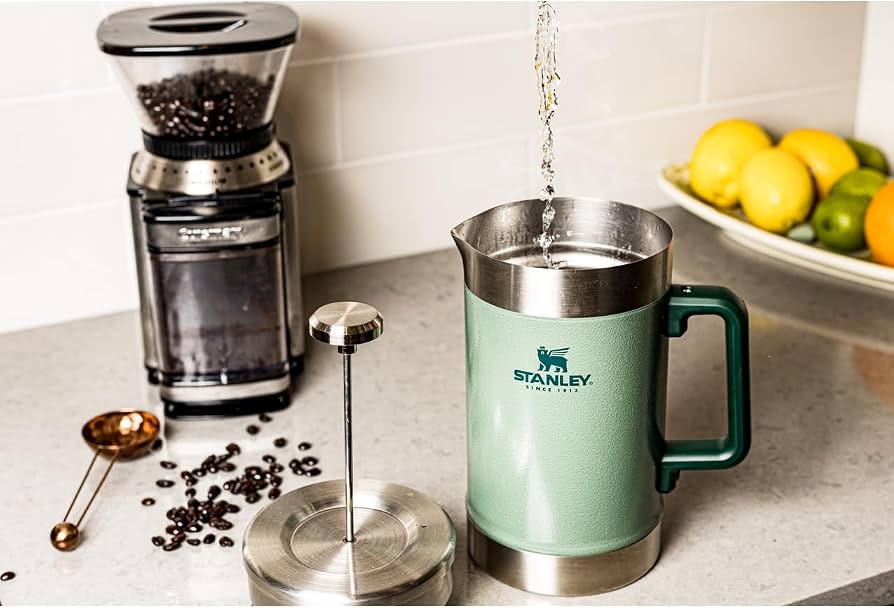
Stanley Classic French Press

Learning Curve: Easy

$38.00
Difficulty: 2/5
Stanley Classic French Press

Why Great for Beginners:

Stanley's French press is made from stainless steel and is virtually indestructible. Perfect for beginners who want a rugged press for camping or fear breaking glass.

Beginner Pros

  • +Unbreakable stainless steel construction
  • +Double-wall insulation keeps coffee hot longer
  • +Easy to clean and dishwasher safe

Beginner Cons

  • -Cannot see the brew, making it harder to judge steep time
  • -Heavier than glass presses
  • -Filter can be a bit coarse
👍 Best for: Active beginners who camp, travel, or are concerned about breaking glass
👎 Not for: Those who prefer visual brewing feedback or a lighter press
#4
✨ Premium

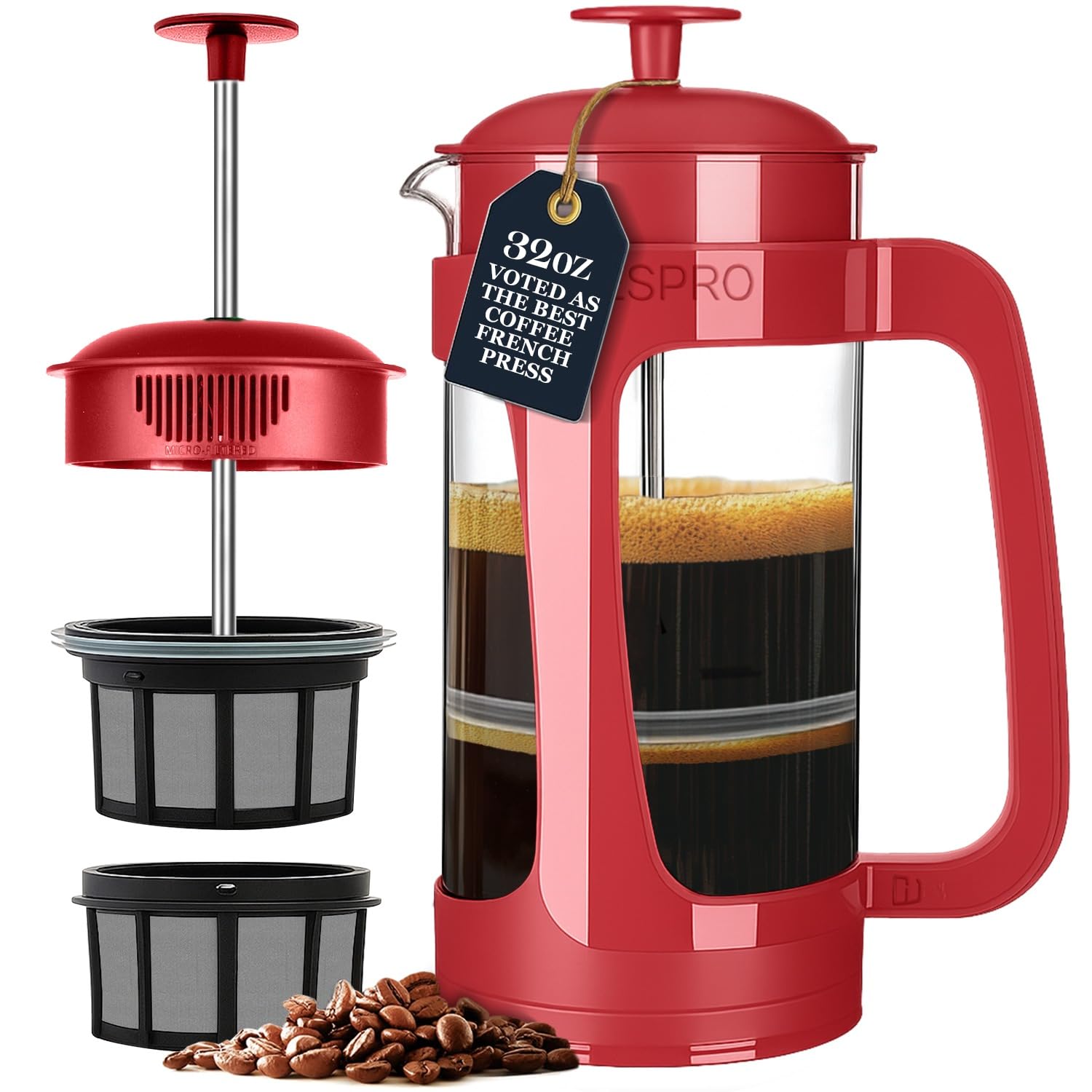
Espro P3 French Press

Learning Curve: Easy

$69.95
Difficulty: 2/5
Espro P3 French Press

Why Great for Beginners:

The Espro P3 features a double micro-filter that reduces sludge and sediment, giving you a cleaner cup. Its stainless steel construction is durable and keeps coffee hot longer.

Beginner Pros

  • +Double filter produces clearer coffee than standard presses
  • +Stainless steel is shatterproof and retains heat
  • +Insulated carafe keeps coffee warm for over an hour

Beginner Cons

  • -More expensive, may not be justified for a beginner
  • -Slightly heavier and bulkier
  • -Filter assembly has more parts to clean
👍 Best for: Beginners who want a premium, long-lasting press and prefer less sediment in their cup
👎 Not for: Budget-conscious beginners or those who like the classic heavy body of French press coffee

📖 Complete Beginner's Guide to French Press

A French press consists of a carafe (usually glass or stainless steel) and a plunger with a mesh filter. You add coarse coffee grounds, pour hot water, let it steep for about 4 minutes, then press the plunger down to separate the grounds from the liquid. The result is a full-bodied, rich coffee with natural oils that paper filters would trap. The two main types are glass (traditional, cheap, and see-through) and stainless steel (durable, retains heat longer, but more expensive and you can't see the brew). For beginners, glass is ideal because you can visually monitor the steeping process, which helps you learn timing. However, if you're clumsy or plan to take it camping, stainless steel might be better. The most beginner-friendly option is a classic glass press like the Bodum Chambord—it's iconic, straightforward, and forgiving. Avoid presses with extra features like built-in timers or integrated grinders; they add cost and complexity without improving the brew. Also, ignore marketing hype about 'double filters' or 'vacuum insulation' until you've mastered the basics. A simple press, a burr grinder, and fresh beans are all you need for excellent coffee.

🤔 How to Choose Your First French Press

Start by asking yourself: How often will I use it? Every day or occasionally? At home, work, or on the go? What's my budget? Most beginners are happy with a $20–$40 press. Consider durability: Glass is beautiful but breakable; stainless steel is nearly indestructible. For home use, a 34oz (1 liter) press is perfect for 2-4 cups. If you're mostly brewing for yourself, a 12oz (350ml) press is enough. Don't buy the cheapest press from an unknown brand—often the mesh is coarse and leaks grounds. Also, don't overspend on a premium press before you know you enjoy the method. A sweet spot is the Bodum Brazil or Chambord. If you want something travel-friendly or worry about breaking glass, get a Stanley or a stainless steel press. Red flags to avoid: non-removable plunger parts, plastic carafes (they can impart taste), and filters that feel flimsy or are hard to press.

💰 Budget Guide for Beginners

90+

High-end - Top-tier thermal or insulated presses from brands like Espro or Frieling. Great for heavy daily use, but overkill for someone just starting out.

25 - $50

Sweet spot - High-quality glass presses with borosilicate glass, robust stainless steel filters, and comfortable handles. Best value for most beginners.

50 - $90

Premium beginner - Stainless steel or double-filtered presses that offer better heat retention and less sludge. Ideal for those who want a long-term press or are sensitive to finer grounds.

Under $ - $25

Entry level - Basic glass presses that work but may have thinner glass and less durable plungers. Good to test the waters, but expect to upgrade if you enjoy the method.

📈 Your Progression Path: Beginner to Intermediate

Start by mastering the fundamentals: use a coarse grind, water just off the boil (195-205°F), a 4-minute steep, and a consistent coffee-to-water ratio (1:15). Once you can brew a delicious cup consistently, experiment with different beans, grind sizes (slightly finer or coarser), and steeping times (3-5 minutes). You can also try the 'bloom' technique (adding a little water first). After a few months, you might want to upgrade your grinder to a high-quality electric burr grinder, or invest in a kettle with precise temperature control. When you find yourself craving a cleaner cup, consider a press with a double filter like the Espro. Most beginners stay at this level for 6-12 months before exploring other methods like pour-over or AeroPress.

🎯 Bottom Line: Our Recommendations

For most beginners, the Bodum Chambord (34 oz) is the best all-around choice: classic, reliable, and beginner-friendly. If you're on a tight budget, the Bodum Brazil is a great starter. If you want something unbreakable for travel or camping, go with the Stanley. And if you have extra budget and want the cleanest cup possible, the Espro P3 is a worthy investment. Don't forget to get a burr grinder (Hario Skerton Pro) and a digital scale – these two accessories will dramatically improve your coffee. Remember, the perfect cup comes from practice, not from the most expensive gear. Happy brewing!

❓ Frequently Asked Questions

The Bodum Chambord is widely considered the best for beginners due to its simple design, durability, and clear glass carafe that lets you see the brewing process.
Around $25–$40 is the sweet spot for a quality glass press. Avoid the cheapest options (under $15) as they may have poor filters and thin glass. A $40 press will serve you for years.
Beginners need a simple, easy-to-clean press with a borosilicate glass carafe (to see the brew), a stainless steel filter, a comfortable handle, and a stable base.
The Bodum Brazil is the easiest because it's simple, lightweight, and inexpensive. The plunger is smooth and the carafe is clear, making it very intuitive.
A burr grinder (to grind fresh coffee coarse) and a digital scale (to measure coffee and water) are essential. A gooseneck kettle with temperature control is nice but not necessary to start.
Decide based on budget, durability needs, and whether you want to see the brew. For home use and learning, a glass press like Bodum Chambord is best. For travel or clumsiness, choose stainless steel like Stanley.
Not at all! French press is one of the easiest manual brewing methods. The main challenge is getting the grind size right and controlling steep time, but with a little practice, you'll make great coffee.
Common mistakes include using too fine a grind, steeping too long, using boiling water, and not cleaning the press properly. Also, buying too cheap or too expensive before knowing preferences.
You can, but pre-ground coffee is usually too fine, leading to over-extraction and a muddy cup. For best results, buy whole beans and grind them coarse just before brewing.
Standard is 4 minutes. You can adjust between 3–5 minutes depending on taste. Start with 4 minutes, then tweak to avoid bitterness (shorter) or weakness (longer).
Glass is better for beginners because you can see the brewing process, which helps you learn correct timing and consistency. Stainless steel is more durable but hides the brew.
The Bodum Brazil (around $25) is the best budget option. It's well-made, easy to use, and produces good coffee. It's a common starter press.

Related Articles