Is Best Chef's Knife for beginners Worth It? Honest Review (2026)
Everything you need to know to choose your first chef's knife with confidence.
Standing in the kitchen aisle or scrolling online, you see dozens of chef's knives. Some cost $20, others $200. The terms—forged, stamped, German vs. Japanese, steel types—can make your head spin. You worry about picking the wrong one, overpaying, or ending up with a knife that's too hard to use. This guide cuts through the confusion. We'll explain what actually matters for a beginner, recommend three proven options, and point out common missteps so you can start chopping with confidence.
📋 In This Guide
• Why Beginners Struggle with Chef's Knife
• What to Look For (Key Features)
• Top 3 Beginner-Friendly Chef's Knife
• Essential Accessories for Beginners
• Common Beginner Mistakes to Avoid
• Your Progression Path
• FAQ & Learning Resources
😰 Why Beginners Struggle with Chef's Knife
The biggest struggle for beginners is information overload. Knife forums and reviews throw around jargon like Rockwell hardness, edge geometry, and bolster design. Many newcomers don't even know what a chef's knife is supposed to do. They also fear making an expensive mistake: buy too cheap and it dulls quickly, buy too expensive and you're afraid to use it. Another challenge is finding a knife that feels right in the hand without holding it first. Amazon returns can be a hassle, so the pressure to choose correctly is high. Finally, beginners often don't realize that skill matters more than the knife, and they expect the tool to do all the work.
🔍 What to Look For: Key Beginner-Friendly Features
As a beginner, you want a knife that is sharp out of the box, stays sharp for a reasonable time, and is comfortable to hold. The blade should be about 8 inches long—versatile enough for most tasks but not intimidating. Look for a full tang (metal extends through the handle) for balance and durability. A moderate hardness (around 56-58 HRC) is forgiving: it can be sharpened easily and won't chip. Stainless steel (like X50CrMoV15) is low-maintenance. Avoid knives with complicated blade shapes or asymmetrical grinds. A knife that feels too heavy or too light can strain your wrist. Grip should be non-slip, even when wet. Features you DON'T need yet: Damascus patterns, high-carbon steel (rusts easily), or ultra-hard Japanese blades (brittle and harder to sharpen).
✅ Essential Features for Beginners
•8-inch blade length - Most versatile and manageable
•Moderate hardness (56-58 HRC) - Easy to sharpen and less brittle
•Stainless steel - Rust-resistant and low maintenance
•Full tang with triple rivets - Balance and durability
•Comfortable, non-slip handle - Reduces fatigue and improves control
•Sharp out of the box - Immediate confidence in use
•Forgiving edge - Tolerates tapping on cutting boards and minor errors
•Good value under $100 - Avoids buyer's remorse
🏆 Top 3 Best Chef's Knife for Beginners
#1
💰 Budget
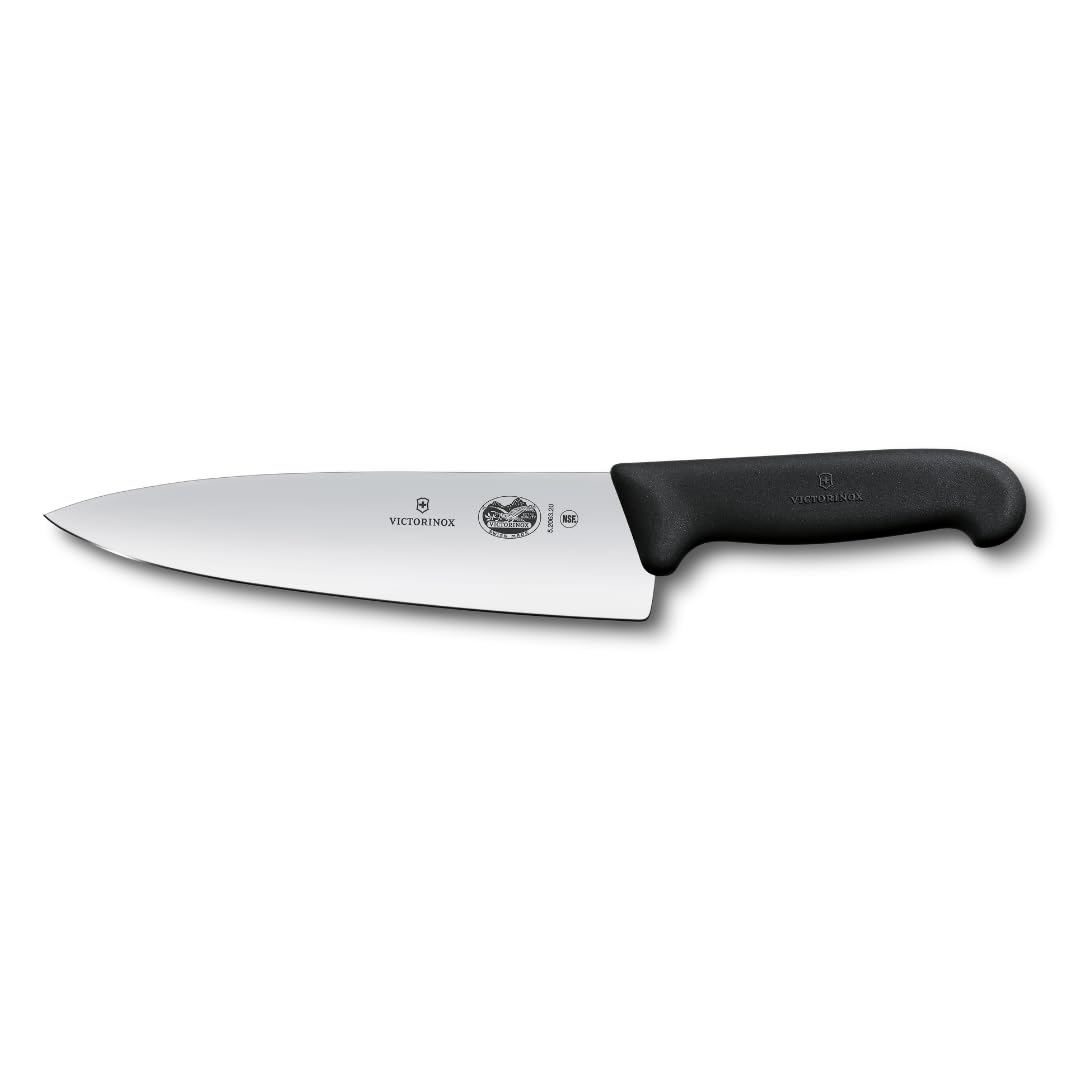
Victorinox Fibrox 8-Inch Chef's Knife
Learning Curve: Easy
$43.99
Difficulty: 1/5
Why Great for Beginners:
Lightweight, sharp out of the box, and has a non-slip handle that feels secure even when wet. It's forgiving and easy to maintain, making it the #1 choice for culinary school students.
✓ Beginner Pros
+Lightweight and easy to control
+Sharp factory edge
+Affordable - low risk investment
+Dishwasher safe (though hand wash recommended)
+Widely available and easy to replace
✗ Beginner Cons
-Plastic handle feels cheap to some
-Blade is stamped, not forged - less durable over decades
-No bolster - requires adjusting grip when sharpening
-Slightly flexible blade can be less precise for hard veggies
👍 Best for: Absolute beginners on a budget, students, and anyone who wants a reliable knife without fuss.
👎 Not for: Those who prefer a heavier, more traditional feel or plan to pass the knife down to grandchildren.
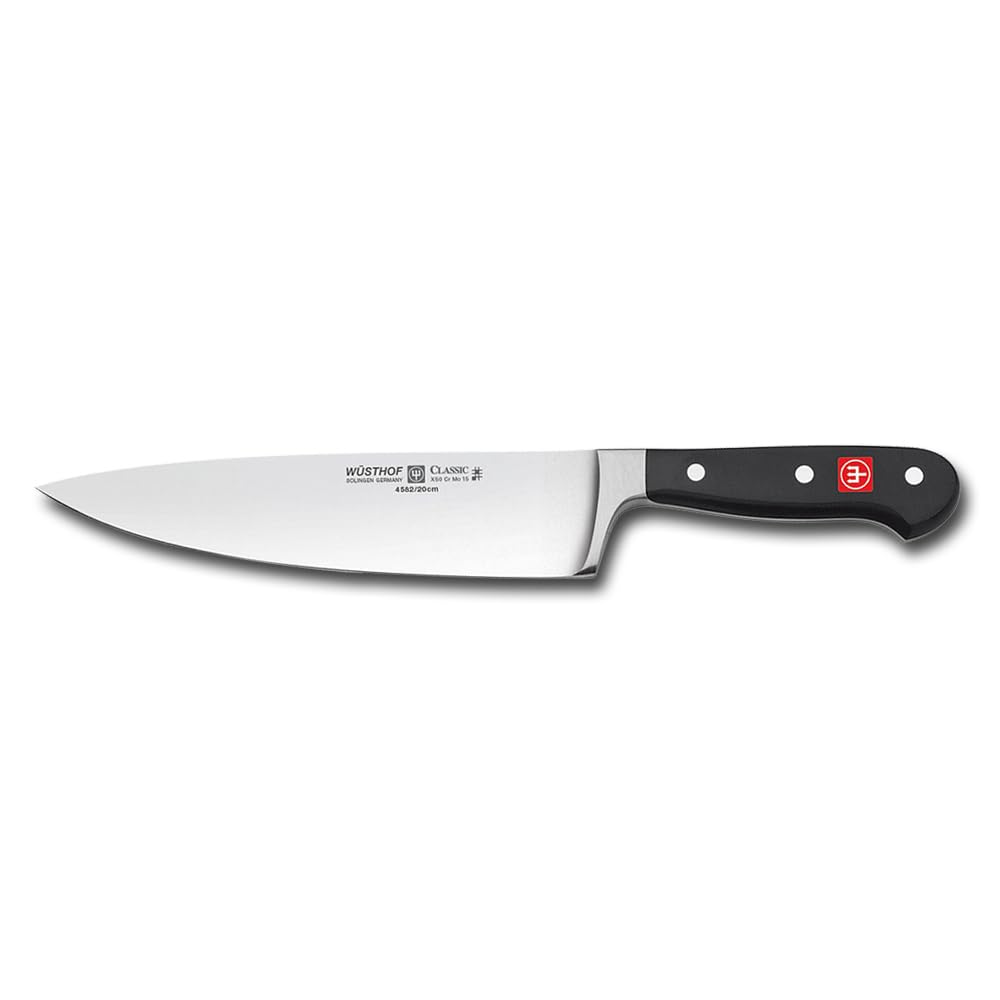
A forged knife that offers superb balance and a comfortable polypropylene handle. It's tough enough to withstand beginner mistakes and stays sharp for longer than stamped knives.
✓ Beginner Pros
+Forged blade - more durable and balanced
+Comfortable, nonslip handle with a full bolster
+Retains edge well with regular honing
+Timeless design that feels professional
✗ Beginner Cons
-Heavier than Victorinox (7.5 oz) - may cause fatigue for some
-Price may be high for an uncertain beginner
-Bolster makes sharpening the full edge trickier
-Not dishwasher safe
👍 Best for: Beginners who want a high-quality tool that will last decades and are willing to invest a bit more.
👎 Not for: Those with very small hands or who prefer an ultra-light knife; also not for those who won't maintain it.
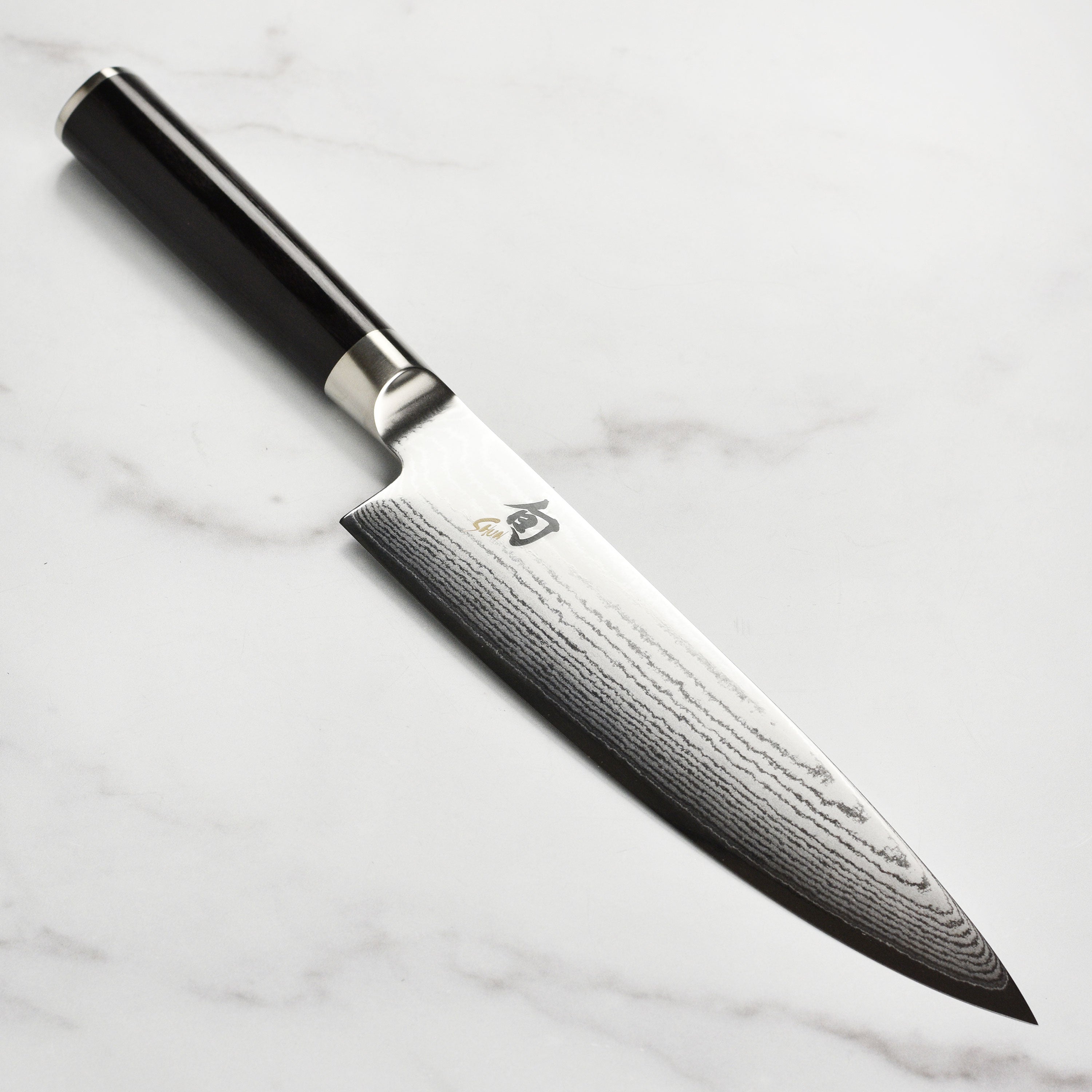
A beautiful Japanese knife with a VG-MAX steel core that is extremely sharp. It comes with a lifetime warranty and holds an edge remarkably well. Best for beginners who value precision and aesthetics.
✓ Beginner Pros
+Razor-sharp out of the box - cuts with minimal effort
+Beautiful Damascus pattern and walnut handle
+Excellent edge retention (hardness 61 HRC)
+Lifetime warranty from a reputable brand
✗ Beginner Cons
-Hard steel can chip if used on bones or frozen food
-Requires hand washing and careful storage
-Expensive - fear of damaging it might limit use
-Handle can be slippery when oily
👍 Best for: Serious beginners who can afford a premium knife and are willing to learn proper knife care. Great for those who appreciate fine tools.
👎 Not for: Beginners who want a workhorse that can be abused, or those on a tight budget.
A chef's knife is your go-to tool for slicing, dicing, and chopping. It's a generalist, not a specialist. The two main types are forged and stamped. Forged knives are heavier, with a bolster (the thick junction between blade and handle), and tend to be more durable. Stamped knives are cut from a sheet of steel, lighter, and usually more affordable. For beginners, a good stamped knife can be excellent value, but a lighter forged knife works too. German-style knives (like Wusthof, Zwilling) have a slightly curved edge and are tough, forgiving. Japanese-style knives (like Shun, Miyabi) have a flatter edge and harder steel—they're razor-sharp but more brittle. For a beginner, German or German-style steel is the safest bet. 'Beginner-friendly' means the knife is easy to sharpen, doesn't chip easily, feels balanced, and doesn't require special care. Marketing terms like 'Damascus' or 'hand-forged' are often irrelevant for a first knife. Focus on fit and finish, weight, and return policy.
🔧 Essential Accessories for Beginners
OXO Good Grips 12x18 Cutting Board
⚠️ Essential
$19.99
When to buy:
Day one
A good cutting board protects your knife's edge and provides a stable surface. This OXO board is gentle on blades (unlike glass), has non-slip edges, and is easy to clean.
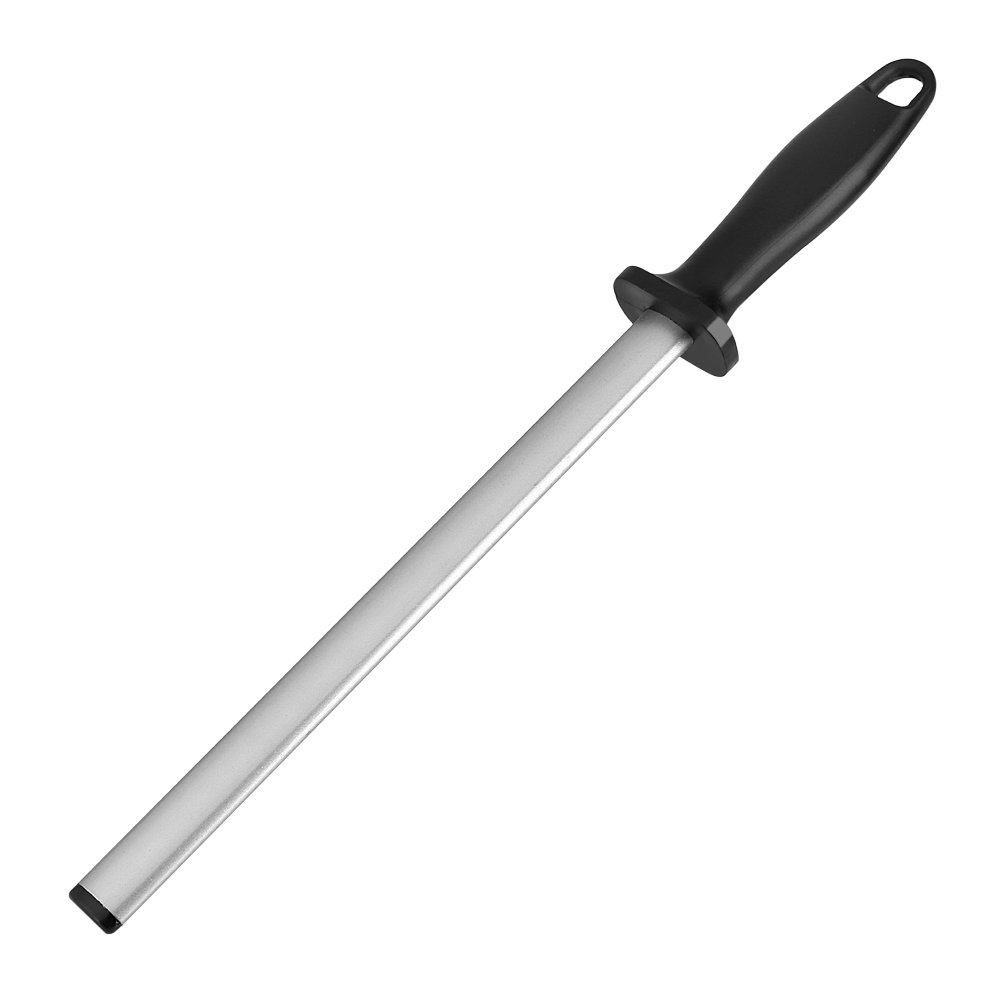
Honing realigns the edge between sharpenings and keeps your knife cutting smoothly. Without it, your knife will feel dull within weeks. This steel is beginner-friendly and works on German and Japanese knives.
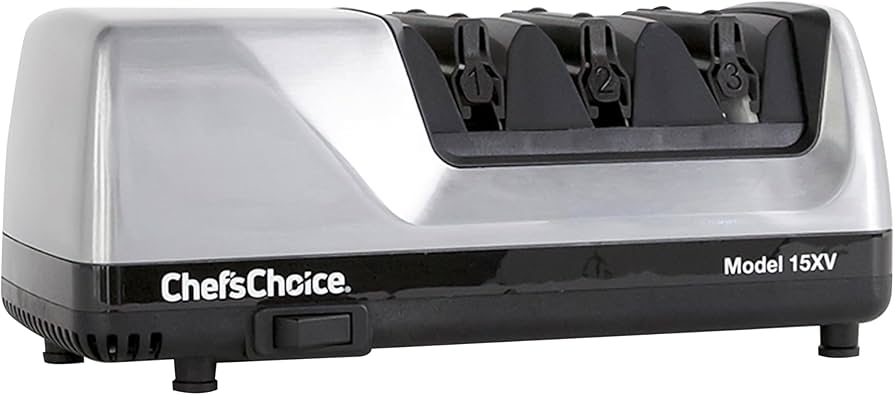
Chef's Choice 15 Trizor XV EdgeSelect Diamond Hone Sharpener
💡 Nice to Have
$149.99
When to buy:
After you're comfortable
A high-quality electric sharpener makes maintaining a sharp edge effortless. This model creates a professional triple-angle edge that is sharp and durable. Perfect for beginners who don't want to learn whetstones yet.
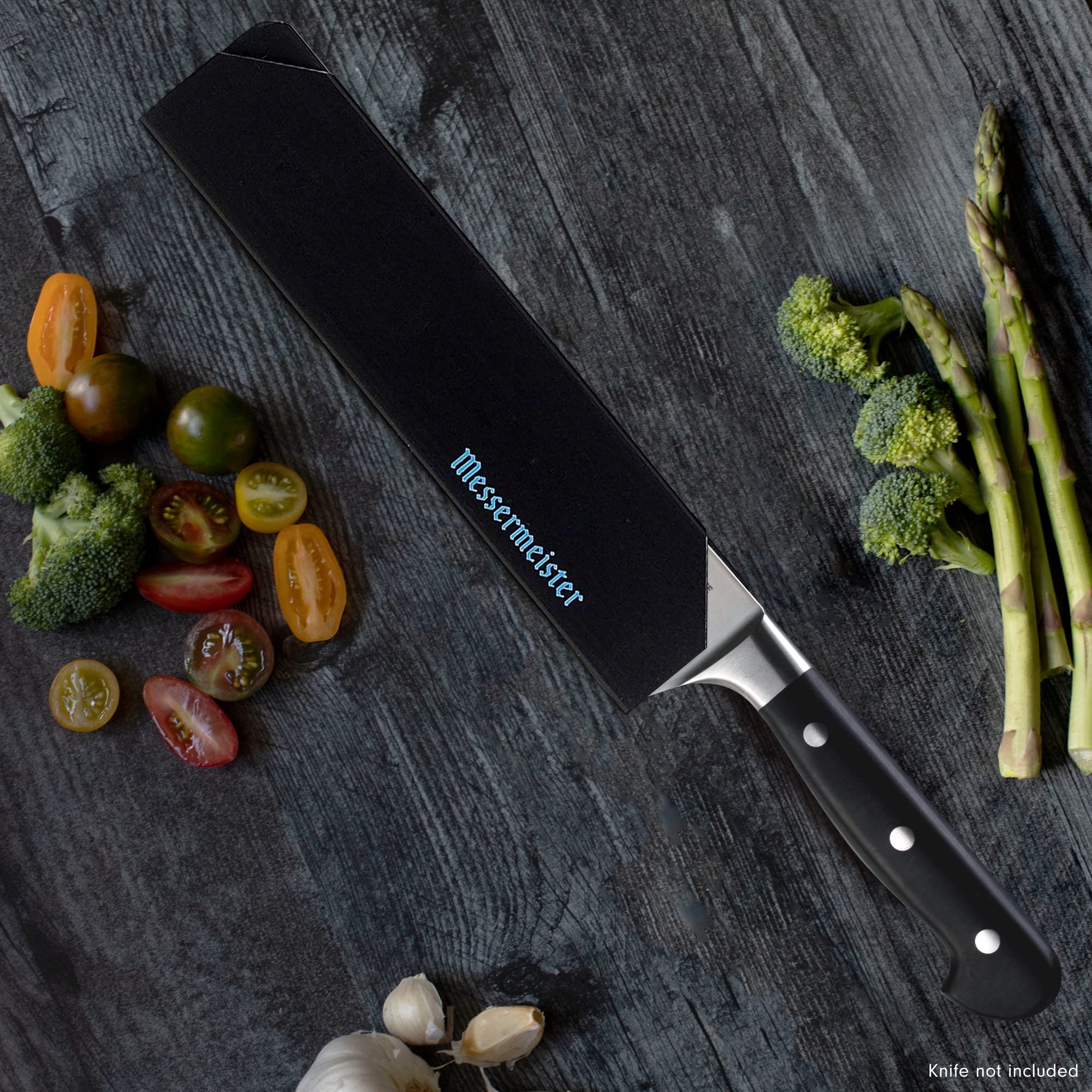
Protects your knife edge and your fingers when storing. This guard fits 8-inch chef's knives perfectly and stays in place. Prevents accidents when reaching into a drawer.
Ask yourself: How often will you cook? For occasional home cooking, a $40-50 knife is fine. If you cook several times a week, invest $80-120. Will you maintain the knife? If you want zero maintenance, a stamped stainless steel knife with a plastic handle (like Victorinox Fibrox) is ideal. If you're willing to learn basic honing and occasional sharpening, a forged knife like Wusthof Pro is a step up. Budget: Avoid the absolute cheapest ($10-20) as they dull fast and can be unsafe. Red flags: No name brand, unsharpened edge, flimsy plastic handle, or claims of 'never needs sharpening.' Always choose a knife with good reviews and a known warranty.
💰 Budget Guide for Beginners
200+
Professional entry - serious beginners who want top performance and aesthetics.
50 - $100
Sweet spot - best value for most beginners, lasts years with basic care.
Entry level - good for occasional cooking, may need replacement in a year or two.
⚠️ Common Beginner Mistakes to Avoid
Many beginners buy a cheap, serrated 'chef's knife' thinking it's easier, but serrated blades can't be sharpened and tear food. Others buy a $200 Japanese knife and then chip it on a bamboo board or misuse it. Some skip the honing rod and think a dull knife is normal. Another mistake: buying a knife set instead of a single good chef's knife—sets often contain useless knives. Beginners also forget about a proper cutting board; glass or stone boards will destroy the edge instantly. Lastly, they assume all knives come sharp; factory edges vary, so be prepared to give a new knife a quick honing or even a first sharpening.
📈 Your Progression Path: Beginner to Intermediate
Start by learning basic cuts: slicing, dicing, and mincing. Practice on soft veggies like onions, tomatoes, and peppers. After a few months, you'll notice if the knife feels too light or too heavy. Upgrade from a stamped to a forged knife around the $100-150 mark. Learn to sharpen with a whetstone (about 1000/6000 grit). Intermediate cooks often switch to a Japanese knife for precision work. A typical beginner stays with their first knife 1-2 years before upgrading. Signs you've outgrown it: you find yourself re-sharpening frequently, the blade is too flexible, or you crave more control.
📚 Learning Resources for Beginners
📖{"resourceName":"Knife Skills: A Guide to Slicing, Dicing, and More (Book)","asin":"B01LZ2G7H8","price":12.99,"type":"book","descriptionMd":"A concise book by the editors of Cook's Illustrated that covers essential knife techniques with step-by-step photos. Includes how to hold a knife, basic cuts, and maintenance tips."}
📖{"resourceName":"Kuhn Rikon 3-Piece Sharpening Set (Whetstone Kit)","asin":"B09B8N4T7Q","price":29.99,"type":"tool","descriptionMd":"A beginner friendly whetstone set with 400/1000 and 3000/8000 grit stones, plus a base and guide. Great for learning to sharpen manually."}
📖{"resourceName":"The Food Lab: Better Home Cooking Through Science","asin":"B07J4R1X1W","price":26.99,"type":"book","descriptionMd":"J. Kenji López-Alt's masterwork includes a comprehensive chapter on knives and cutting techniques. It teaches why and how to use a chef's knife effectively."}
📖{"resourceName":"Cutting Board Oil (Food Grade Mineral Oil)","asin":"B08B1XV6LJ","price":9.99,"type":"maintenance","descriptionMd":"To maintain a wooden cutting board, apply mineral oil monthly. This bottle is food-safe and prevents cracks and warping."}
🎯 Bottom Line: Our Recommendations
For most beginners, the Victorinox Fibrox 8-Inch Chef's Knife is the best overall pick—sharp, comfortable, and under $50. If you want a step up in quality and durability, the Wusthof Pro 8-Inch is a fantastic investment that will last decades. For those who want something beautiful and ultra-sharp from the start, the Shun Classic 8-Inch is a premium option, but be prepared for a bit more care. No matter which you choose, pair it with a soft wooden or plastic cutting board and a honing rod. Your first knife should inspire confidence, not fear. Happy chopping!
❓ Frequently Asked Questions
The Victorinox Fibrox 8-Inch Chef's Knife is widely considered the best for beginners. It's sharp, affordable (around $45), comfortable, and requires minimal maintenance.
Most beginners should spend between $40 and $100. Under $40 often means poor quality; over $100 gives diminishing returns for a novice. A sweet spot is $50-70.
Focus on an 8-inch blade, stainless steel, moderate hardness (56-58 HRC), full tang, and comfortable grip. Avoid specialty features like Damascus or very hard steels.
The Victorinox Fibrox is easiest due to its light weight, non-slip handle, and forgiving edge that doesn't chip easily.
Essential: a cutting board (wood or plastic), a honing rod, and a knife guard or storage block. Optional: a pull-through sharpener for easy maintenance.
Decide on budget, then consider weight and handle feel. Look for an 8-inch blade, stainless steel, and good reviews. Many beginners prefer a lighter knife.
Not really. With a sharp knife and basic technique, beginners can start immediately. It's actually easier than using a dull knife because you apply less force.
Buying too cheap, using the wrong cutting board (glass, stone), forgetting to hone, trying to cut through bones, and washing the knife in the dishwasher.
A single 8-inch chef's knife is enough for 90% of tasks. Sets often include unnecessary knives and cost more. Start with one good knife and add later if needed.
Hand wash with mild soap and dry immediately. Store in a knife block or with a blade guard. Hone regularly with a steel rod and sharpen as needed (every few months).