
Is Samsung S90D 65-Inch OLED Worth It? Honest Review (2026)
Honest breakdown of strengths, weaknesses, and who should buy this 4K OLED TV
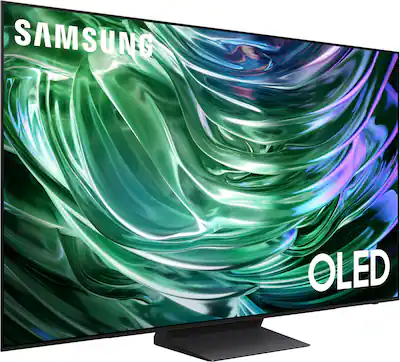
Quick Decision
Buy the Samsung S90D if you want a bright OLED with exceptional gaming features and don't rely on Dolby Vision. Skip it if Dolby Vision support is essential or you're on a tight budget, as mini-LED alternatives offer similar brightness for less.
Best if you...
- Console gamers (PS5, Xbox Series X) wanting 4K 120Hz and VRR
- Home theater enthusiasts who watch HDR10+ content
- Users in bright rooms needing a brighter OLED
Skip it if you...
- Users who watch a lot of Dolby Vision content on Netflix or Disney+
- PC gamers seeking 144Hz support
- Heavy news/sports viewers with constant static elements
If you're in the market for a premium 65-inch OLED TV in 2026, the Samsung S90D is likely on your shortlist. It promises the deep blacks and infinite contrast OLED is known for, but with a brighter QD-OLED panel that aims to overcome traditional OLED limitations. This analysis covers the S90D's real strengths and weaknesses based on manufacturer specs and third-party testing from publications like RTINGS, helping you decide if it's right for your living room.
About the Samsung S90D 65-Inch OLED
The Samsung S90D 65-inch OLED is a 4K smart TV featuring a QD-OLED panel for enhanced brightness and color volume. It targets home theater enthusiasts and gamers seeking deep blacks, vibrant colors, and low input lag. With a 120Hz refresh rate, AMD FreeSync Premium Pro, and Samsung Gaming Hub, it excels in both movie watching and gaming.
Key Specifications
- Display
- 65-inch QD-OLED 4K
- Processor
- Neural Quantum Processor 4K
- HDMI Ports
- 4 x HDMI 2.1
- Resolution
- 3840 x 2160
- HDR Support
- HDR10+, HLG, HDR10 (no Dolby Vision)
- Refresh Rate
- 120Hz
- Smart Platform
- Tizen OS
- Gaming Features
- FreeSync Premium Pro, G-Sync Compatible
- Peak Brightness
- ~1,000 nits (HDR)
Overview
The Samsung S90D is part of Samsung's 2024 OLED lineup, still highly relevant in 2026 due to its QD-OLED technology. It offers a 65-inch 4K display with a 120Hz panel, HDR10+ support, and built-in Tizen smart platform. The TV is designed for both cinematic viewing and gaming, with features like AMD FreeSync Premium Pro and a dedicated Game Bar. It's available on Amazon with various pricing, often around $1,499.
Pros
The S90D brings several genuine advantages over other OLEDs and premium LED TVs, particularly in brightness, color, and gaming performance. These strengths make it a compelling choice for specific use cases.
Superb QD-OLED Picture Quality
The S90D uses a QD-OLED panel, which combines OLED's per-pixel lighting with quantum dot color enhancement. According to Samsung, this delivers up to 92% more color volume than conventional OLEDs. Third-party testing from RTINGS confirms exceptional color accuracy and wide color gamut coverage (100% DCI-P3). Blacks are truly infinite with no blooming, and the increased brightness (around 1,000 nits peak in HDR) makes highlights pop better than older OLEDs.
Outstanding Gaming Features
With 4K at 120Hz support, AMD FreeSync Premium Pro, and low input lag (~10ms at 120Hz), the S90D is a top-tier gaming TV. It supports HDMI 2.1 on all four ports, enabling 4K 120Hz from consoles like PS5 and Xbox Series X. The Gaming Hub aggregates cloud gaming services like Xbox Game Pass and GeForce Now, while the Game Bar provides quick access to settings like refresh rate and screen ratio.
Excellent Brightness for an OLED
Traditional OLEDs are often criticized for being dim compared to LED-LCD TVs. The S90D's QD-OLED panel addresses this, achieving over 1,000 nits in HDR highlights (via Samsung specs and RTINGS measurements). This makes it more suitable for bright rooms than previous OLEDs, though it still cannot match the peak brightness of high-end mini-LED TVs like the Sony X95L.
Striking Design and Build Quality
The S90D features a sleek, ultra-thin profile with a nearly bezel-less display. The stand is sturdy and minimalist, allowing for easy cable management. The overall aesthetic is premium and unobtrusive, fitting well in modern living spaces.
Strong HDR10+ Support
Samsung champions HDR10+ over Dolby Vision. The S90D supports HDR10+ Adaptive and HDR10+ Gaming, which dynamically adjusts brightness scene-by-scene. While Dolby Vision is more widely supported in streaming services, HDR10+ is compatible with Amazon Prime Video, Hulu, and an increasing number of 4K Blu-rays.
Extensive Smart TV Features (Tizen)
The Tizen OS on the S90D is responsive and offers a vast app library, including all major streaming services. It integrates with Samsung SmartThings for smart home control and supports Apple AirPlay 2 and Samsung’s own screen mirroring. The remote is solar-powered, reducing battery waste.
Cons
Despite its strengths, the S90D has notable drawbacks that may affect your decision, especially if you prioritize Dolby Vision or need higher refresh rates.
No Dolby Vision Support
Samsung continues to omit Dolby Vision in favor of HDR10+. While HDR10+ is gaining support, Dolby Vision remains the dominant HDR format in streaming (Netflix, Disney+, Apple TV+) and on 4K Blu-rays. This means the S90D cannot take full advantage of Dolby Vision's 12-bit color depth and dynamic metadata, potentially limiting HDR performance on many titles.
Burn-In Risk (Typical OLED Concern)
Like all OLED TVs, the S90D is susceptible to permanent burn-in if static UI elements are displayed for prolonged periods. Samsung includes pixel shifting and logo dimming to mitigate this, but RTINGS long-term burn-in tests show risk remains. It's less ideal for heavy news or sports ticker viewing.
120Hz Refresh Rate Cap (No 144Hz)
Some competitors, like LG C4, offer 144Hz support for PC gaming. The S90D maxes out at 120Hz, which is fine for consoles but a minor drawback for high-end PC gamers with GPUs capable of 144fps.
Tizen OS Can Be Cluttered with Ads
Tizen's home screen includes ads and promoted content that cannot be removed. This clutters the interface and may annoy users who prefer a clean smart TV experience. The OS also lacks the customization found on platforms like Roku.
No Dolby Atmos Passthrough on eARC
According to user reports and AVS Forum discussions, the S90D has issues passing Dolby Atmos TrueHD over eARC to soundbars/receivers. This affects those using lossless Atmos from Blu-rays with external audio systems.
Price Still Premium vs. LED Alternatives
At around $1,499, the S90D is significantly more expensive than comparably sized LED TVs with similar features. For example, the TCL QM851K (65-inch mini-LED) offers similar brightness and gaming features for around $1,000, making the S90D a less compelling value for budget-conscious buyers.
👍 Who It's For
The Samsung S90D is ideal for cinephiles and gamers who prioritize picture quality and want the best possible black levels and color saturation. If you watch a lot of HDR content, especially from services that support HDR10+ (like Amazon Prime), you'll appreciate the dynamic tone mapping. Gamers with PS5 or Xbox Series X will benefit from all four HDMI 2.1 ports and features like FreeSync Premium Pro. It's also a great choice for bright rooms where you need an OLED that can deliver decent brightness without sacrificing black levels.
👎 Who Should Avoid
Skip the S90D if Dolby Vision is a must-have for your Netflix or Disney+ viewing—you'll be better off with an LG C4 or Sony A80L that support it. If you're a PC gamer with an RTX 4090 who wants 144Hz, consider the LG C4 instead. Budget-conscious buyers who can live with a few blooming artifacts but want similar brightness and gaming features should look at mini-LED TVs like the TCL QM851K. Also avoid if you watch a lot of static content like news channels or sports tickers due to burn-in risk.
See today's Samsung S90D 65-Inch OLED price and available configurations on Amazon.
🛒 Buy on AmazonAs an Amazon Associate we earn from qualifying purchases.
Alternatives to Consider
| Product | Choose Samsung S90D 65-Inch OLED if... | Choose the alternative if... |
|---|---|---|
| LG C4 65-inch OLEDSimilar price, usually within $100 | You prioritize higher peak brightness and HDR10+ support over Dolby Vision | Dolby Vision compatibility and 144Hz refresh rate matter more |
| Sony A80L 65-inch OLEDGenerally $100–$200 more expensive | You want better HDR10+ support and gaming features over superior motion handling | You value Sony's image processing and upscaling for lower resolution content |
| TCL QM851K 65-inch Mini-LED$400–$500 less expensive | You want OLED black levels and are willing to pay more for deep blacks | You prefer higher peak brightness and a lower price, and can tolerate slight blooming |
For those who need Dolby Vision, the LG C4 65-inch is a strong alternative at a similar price, offering 144Hz refresh rate and better Dolby Vision support. The Sony A80L is another excellent choice, known for superior motion processing and image upscaling, though it's a bit dimmer. If budget is a concern, the TCL QM851K 65-inch mini-LED provides impressive HDR brightness and gaming features for about $400 less, though it lacks perfect black levels. The Samsung S90D itself is best for those who want a bright OLED with great gaming features and prefer HDR10+ ecosystem.
Is it worth the price?
At approximately $1,499, the Samsung S90D is worth it for home theater enthusiasts and gamers who want the best combination of OLED blacks and high brightness. The performance is genuinely top-tier, especially if you use HDR10+ sources. However, the lack of Dolby Vision is a real compromise for many streamers. The LG C4, at roughly the same price, offers Dolby Vision and 144Hz, making it a better all-rounder for most buyers. If you can find the S90D on sale for under $1,300, it becomes a more compelling choice.
📝 Bottom Line
The Samsung S90D is a fantastic OLED TV that delivers on its promise of brighter and more colorful images than conventional OLEDs. Its four HDMI 2.1 ports and gaming-centric features make it a dream for console gamers, while the QD-OLED panel provides near-reference picture quality for movies. The main trade-offs are the absence of Dolby Vision and the typical OLED burn-in concerns, which may be deal-breakers for some. If you can live without Dolby Vision and want a bright, gaming-friendly OLED, the S90D is an excellent choice. However, for most buyers, the LG C4 offers a more balanced feature set at a similar price. Ultimately, the decision comes down to whether you prioritize brightness and HDR10+ over Dolby Vision support.
Check current Samsung S90D 65-Inch OLED availability and bundle options on Amazon.
🛒 Buy on AmazonAs an Amazon Associate we earn from qualifying purchases.
Frequently Asked Questions
Quick Summary
Key Pros
- ✓QD-OLED panel delivers superior brightness and color volume compared to standard OLEDs
- ✓Four HDMI 2.1 ports with full 4K 120Hz support and low input lag
- ✓Peak HDR brightness over 1,000 nits, excellent for HDR content and bright rooms
- ✓Sleek, ultra-thin design with minimal bezels
- ✓Supports HDR10+ Adaptive and Gaming for dynamic HDR
Key Cons
- ✗Lacks Dolby Vision support, limiting HDR compatibility on many major streaming services
- ✗Burn-in risk inherent to OLED technology, especially with static content
- ✗Only 120Hz refresh rate, while some rivals offer 144Hz for PC gaming
- ✗Tizen OS includes ads that cannot be disabled
- ✗Known eARC issues with Dolby Atmos TrueHD passthrough
Ratings
Best For
- →Console gamers (PS5, Xbox Series X) wanting 4K 120Hz and VRR
- →Home theater enthusiasts who watch HDR10+ content
- →Users in bright rooms needing a brighter OLED
- →Fans of Samsung ecosystem and SmartThings integration