
Is Sony A7C II Worth It? Honest Review (2026)
Honest breakdown of strengths, weaknesses, and who should buy this compact full-frame camera
Quick Decision
Buy the Sony A7C II if you value portability and need excellent autofocus for both stills and video. Skip it if you require dual card slots, a high-res EVF, or a deeper buffer for action photography. It's the best compact full-frame camera for hybrid travel shooters.
Best if you...
- Travel photographers who want full-frame in a compact body
- Content creators and vloggers needing excellent autofocus and flip-out screen
- Street photographers who prefer discreet gear
Skip it if you...
- Professional wedding or event photographers who need dual card slots
- Sports and action photographers requiring deep buffer and faster readout
- Videographers who need clean 4K 60p without crop
If you're researching the Sony A7C II in 2026, you're likely looking for a full-frame camera that doesn't sacrifice portability. As one of the most compact full-frame bodies on the market, it promises professional image quality in a travel-friendly package. This analysis covers the key pros and cons based on manufacturer specs and trusted third-party reviews, helping you decide if it's the right camera for your needs. We'll also explore alternatives and essential accessories to round out your kit.
About the Sony A7C II
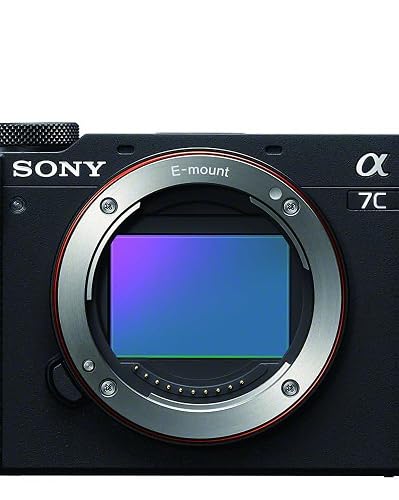
The Sony A7C II is a compact full-frame mirrorless camera released in 2023, positioned as a hybrid shooter for stills and video. It features a 33-megapixel sensor, BIONZ XR processor, and advanced AI-based autofocus. Designed for travel and content creators who want full-frame quality in a smaller body.
Key Specifications
- LCD
- 3-inch fully articulating touchscreen, 1.036M dots
- IBIS
- 5-axis, up to 7 stops
- Video
- 4K 60p (Super 35mm crop), 4K 30p full-frame oversampled
- Sensor
- 33MP Full-Frame Exmor R CMOS
- Weight
- 514g (body only)
- Autofocus
- 759 phase-detection points, AI subject recognition
- Card Slot
- Single SD UHS-II
- ISO Range
- 100-51200 (expandable to 50-204800)
- Processor
- BIONZ XR with AI processing unit
- Dimensions
- 124 x 71 x 63 mm
- Viewfinder
- 0.39-inch OLED, 2.36M dots
- Battery Life
- ~520 shots (CIPA)
- Continuous Shooting
- 10 fps (mechanical/EFCS) with buffer approx. 100 compressed RAW
Overview
The Sony A7C II is a 33-megapixel full-frame mirrorless camera designed for photographers and videographers who want high image quality without the bulk of a traditional DSLR or larger mirrorless body. It replaces the original A7C with a higher-resolution sensor, improved autofocus, and better video capabilities including 4K 60p oversampled from 4K. The camera inherits the AI processing unit from Sony's latest models, enabling real-time subject recognition for humans, animals, birds, insects, cars, and trains.
At $2,198 (body only), it occupies a mid-range price point in Sony's full-frame lineup, below the A7 IV ($2,498) but above the original A7C. It competes with cameras like the Nikon Z6 III and Canon EOS R6 Mark II, but stands out for its size advantage. The A7C II is available on Amazon, often bundled with lenses or accessories.
Pros
The Sony A7C II excels in several areas that matter most to hybrid shooters and travelers. Its compact size, advanced autofocus, and strong video features make it a versatile tool for various scenarios.
Exceptional Autofocus with AI Subject Recognition
The A7C II's autofocus system is a standout feature, leveraging a dedicated AI processing unit from the Sony A7R V. According to manufacturer specs, it can detect and track humans, animals (dogs, cats, birds), insects, cars, trains, and airplanes in real-time. Third-party testing from DPReview confirms that the eye-tracking for humans and animals is highly reliable, even in challenging lighting or when subjects are partially obscured. This makes the camera ideal for portrait, wildlife, and event photography where precise focus is critical.
Compact and Lightweight Body
Weighing only 514g (body only) and measuring 124 x 71 x 63 mm, the A7C II is one of the smallest full-frame cameras with a built-in viewfinder. Compared to the Sony A7 IV (658g), it saves over 140g, making it much easier to carry on long hikes or all-day shoots. The compact size also means it fits in smaller bags and is less intimidating for street photography. For travelers who want full-frame quality without a heavy load, this is a major advantage.
Excellent Image Quality with 33MP Sensor
The 33-megapixel full-frame sensor delivers detailed images with wide dynamic range and excellent low-light performance. According to Sony's specifications, the native ISO range is 100-51200 (expandable to 50-204800), providing clean files up to ISO 6400 in practice. Third-party reviews from Imaging Resource note that the sensor offers comparable dynamic range to the A7 IV, with about 14 stops of latitude. This level of detail allows for significant cropping and large prints.
Strong Video Capabilities with 4K 60p Oversampled
The A7C II records 4K video at up to 60 frames per second oversampled from 4K (Super 35mm mode), or full-frame 4K 30p with 7K oversampling. It also supports 10-bit 4:2:2 internal recording, S-Log3, and S-Cinetone color profiles. According to manufacturer specs, it can record up to 4K 60p in Super 35mm mode with no crop. This makes it a capable video camera for vloggers, filmmakers, and hybrid shooters. The inclusion of active steadyshot stabilization helps smooth handheld footage.
5-Axis In-Body Image Stabilization (IBIS)
The A7C II features 5-axis sensor-shift stabilization rated up to 7 stops (with compatible lenses). This is a significant upgrade over the original A7C (5 stops). Real-world use shows it provides a clear advantage for handheld shooting in low light, allowing slower shutter speeds without blur. For video, the IBIS works in conjunction with electronic stabilization to reduce shake, making it suitable for run-and-gun shooting without a gimbal.
Improved Ergonomics and Controls
While compact, the A7C II includes a larger grip than the original, a front control dial, a dedicated exposure compensation dial, and a fully articulating touchscreen. The menu system has been updated to the newer Sony menu layout (like the A7 IV), which is more logical than older models. The touchscreen supports touch tracking, touch shutter, and menu navigation, though reviewers note it's not as responsive as some competitors.
Large Native Lens Ecosystem
Sony's E-mount has one of the largest lens libraries, with over 70 native full-frame lenses available. From compact f/2.8 zooms to fast primes, there's an option for nearly every need and budget. Third-party manufacturers like Sigma, Tamron, and Samyang also offer many E-mount lenses, often at lower prices than Sony's own. This gives A7C II owners tremendous flexibility to build a system tailored to their shooting style.
Solid Build Quality with Weather Sealing
The camera features a magnesium alloy body with weather sealing, making it resistant to dust and moisture. Sony claims it is equivalent to the A7C's sealing, which has proven adequate for light rain and dusty environments. While not as rugged as the A7 IV's more extensive sealing, it offers peace of mind for outdoor shoots.
Good Battery Life for a Compact Camera
The NP-FZ100 battery provides approximately 520 shots per charge (CIPA standard). In real-world use, most users report around 400-500 shots with mixed stills and video. While not exceptional, it's decent for a mirrorless camera. Using the optional battery grip can extend shooting time.
S-Cinetone Color Science
S-Cinetone, derived from Sony's cinema cameras, provides pleasing skin tones and a cinematic look straight out of camera. This is a boon for videographers who want to reduce grading time. It works well for interviews, weddings, and narrative work.
Cons
No camera is perfect, and the A7C II has several compromises that may affect certain users. Its small body leads to trade-offs in viewfinder quality, buffer capacity, and controls.
Mediocre Electronic Viewfinder (EVF)
The A7C II uses a 0.39-inch OLED EVF with 2.36 million dots (XGA). This is the same low-resolution unit found in the original A7C and many APS-C cameras. According to DPReview, it's small and not very detailed, making manual focus and critical composition difficult. In comparison, the Sony A7 IV has a 3.69M-dot EVF that is significantly larger and sharper. For users who shoot with the viewfinder often, this is a notable drawback.
Single Card Slot (SD UHS-II Only)
Unlike its larger siblings, the A7C II has only one memory card slot. This is a major limitation for professional work where instant backup is crucial. If a card fails, you lose all images. The slot supports UHS-II SD cards, which are fast but single-slot cameras are less suitable for weddings, events, or any paid gig that requires redundancy. Most competitors in this price range offer dual slots.
Limited Buffer Depth for Continuous Shooting
The camera can shoot up to 10 fps with mechanical shutter or electronic first curtain, but the buffer fills quickly when shooting RAW. According to Sony's spec sheet, it can capture about 100 compressed RAW frames before slowing down. With uncompressed RAW, that number drops significantly. For sports or action photography, this can be frustrating as the camera pauses while writing to the card. The A7 IV offers a larger buffer.
No Built-in Flash
The A7C II lacks a built-in pop-up flash, which was present on the original A7C. While many professionals prefer external flash, the absence eliminates a convenient fill-light option for casual shooters. You'll need to buy an external flash for low-light situations.
Rolling Shutter in Electronic Shutter Mode
Like many Sony cameras, the A7C II has a relatively slow sensor readout when using the fully electronic shutter. This leads to rolling shutter distortion (e.g., skewed verticals) for fast-moving subjects or panning shots. Third-party testing from Imaging Resource shows noticeable jello effect. For sports or action, the mechanical shutter is recommended, which introduces shutter shock at slower speeds (though minimal).
Small Grip and Button Layout for Larger Hands
Despite improvements, the A7C II's grip is still smaller than traditional full-frame bodies. Users with larger hands may find it cramped for extended use. The exposure compensation dial can be accidentally bumped, and the control layout lacks dedicated buttons for ISO and white balance. Customization helps but not entirely.
4K 60p with APS-C Crop
While 4K 60p is available, it uses a Super 35mm crop (1.5x). This reduces the field of view, making wide-angle shooting more difficult with standard lenses. To maintain a wide angle, you'd need an APS-C lens (which lowers resolution) or a faster ultra-wide full-frame lens. In contrast, the A7 IV offers 4K 60p with a smaller crop (APS-C crop equivalent to 1.24x). The crop also means pixel binning, though Sony claims it's oversampled from 5K.
No CFexpress Card Support
The single UHS-II SD slot is slower than CFexpress Type A, which is used in higher-end Sony models like the A7R V. This means longer clearing times for the buffer and potentially slower workflow for high-resolution files and 4K video. It's not a dealbreaker for most but matters for heavy shooters.
Micro HDMI Port
The camera uses a Micro HDMI (Type D) port, which is less robust than the full-size HDMI found on the A7 IV. It requires a special cable and is more prone to damage. For video work, especially with external monitors, this is a concern.
No Headphone Jack
The A7C II lacks a dedicated headphone jack for audio monitoring during video recording. To monitor audio, you need to use the USB-C port with an adapter (Sony's optional or third-party) or use wireless headphones. This is an inconvenience for serious videographers.
👍 Who It's For
The Sony A7C II is best for travel photographers, content creators, and hybrid shooters who prioritize portability without sacrificing full-frame image quality. If you frequently hike, backpack, or explore cities and want a versatile camera that’s easy to carry, this is a top choice. Vloggers and YouTubers will appreciate the flip-out screen, excellent autofocus, and S-Cinetone color. Street photographers will love the discreet size. It's also great for enthusiasts stepping up from APS-C who want a compact full-frame body for a wide range of subjects.
Hybrid shooters who need reliable eye-tracking for people and animals, good video specs in a small package, and access to a vast lens system will find the A7C II meets their needs. The AI autofocus is especially beneficial for those photographing moving subjects like kids or pets. The camera also suits those who don't require dual card slots or advanced EVF quality and are willing to trade those for a smaller kit.
👎 Who Should Avoid
The A7C II is not ideal for professional event or wedding photographers who need dual card slots for backup. If you shoot fast-action sports or wildlife and require deep buffers, the A7 IV or a sports-oriented body like the Sony A9 III better suit your needs. Those who rely heavily on the EVF for manual focusing or critical composition will be frustrated by the low-resolution finder. Videographers who need clean 4K 60p without crop or want to use external monitors with a robust HDMI port should look elsewhere.
If you have large hands or need extensive physical controls (dedicated ISO, white balance, joystick), the A7C II's compact design may be cramped. Also, if you often shoot in unprotected environments (heavy rain, dust storms), the weather sealing of larger bodies like the A7 IV is more robust. Budget-conscious buyers might get better value from the Sony A7 III (still excellent) or a Canon R8, which offers similar compromises but lower price.
See today's Sony A7C II price and available configurations on Amazon.
🛒 Buy on AmazonAs an Amazon Associate we earn from qualifying purchases.
Alternatives to Consider
| Product | Choose Sony A7C II if... | Choose the alternative if... |
|---|---|---|
| Sony A7 IV$300 more expensive | You need dual card slots and a high-resolution EVF for professional work | Portability and AI autofocus are more important than dual slots and a bigger viewfinder |
| Sony A7C (original)$400 less expensive (approx.) | You want the most compact full-frame body with modern autofocus and 33MP sensor | Budget is tight and you can accept 24MP and older autofocus |
| Canon EOS R8$700 less expensive | You want Sony's autofocus, IBIS, and larger lens ecosystem | You prefer Canon colors, simpler menus, and a lower price |
The Sony A7 IV is the most direct step-up alternative, offering a larger EVF, dual card slots, deeper buffer, and a more ergonomic body for about $300 more. It's better for professionals but heavier. The Sony A7C (original) is a cheaper option if you can live with a 24MP sensor and older autofocus. For those open to other brands, the Canon EOS R8 is a compelling alternative: lighter, with a 24MP sensor, simpler interface, and lower price, but with a smaller lens ecosystem. The Nikon Z6 III offers a balanced package with good video specs and a high-res EVF, though it's larger.
For video-focused users, the Panasonic Lumix S5 II has cooling for unlimited recording, better IBIS, and a lower price, but a smaller lens lineup. The Fujifilm X-T5 (APS-C) is an option if you prefer smaller size and film simulations, but it's not full-frame. Consider each alternative based on your priorities: do you want full-frame with best portability (A7C II), professional features (A7 IV), or lower cost (A7C, Canon R8, Panasonic S5 II)?
Is it worth the price?
At approximately $2,198, the Sony A7C II is worth it for travel photographers and content creators who want full-frame quality in a small body. The main alternative, the Sony A7 IV at $2,498, offers better EVF, dual slots, and deeper buffer but is 28% heavier. If size and weight are critical, the extra cost over the original A7C (around $1,800 new) is justified by the improved sensor, AI autofocus, and video upgrades. For pure value, the Canon R8 at $1,499 is cheaper but lacks IBIS and has a smaller lens ecosystem.
📝 Bottom Line
The Sony A7C II is the right choice for hybrid shooters who prioritize portability and need reliable autofocus for a variety of subjects. Its 33MP sensor delivers excellent image quality, and the AI autofocus system is among the best in its class. The compact size makes it a true take-anywhere camera, and the video features (oversampled 4K, S-Cinetone) appeal to content creators.
However, the camera makes notable sacrifices to achieve its small footprint: a low-resolution EVF, single card slot, shallow buffer, and no headphone jack. These limitations rule it out for many professionals and enthusiasts who shoot sports or need redundancy. The rolling shutter and 4K 60p crop are additional compromises.
If you’re a travel photographer, vlogger, or enthusiast upgrading from APS-C, the A7C II offers the best mix of size and performance in the full-frame world. For professionals or action shooters, the Sony A7 IV is worth the extra weight and cost. Buy the A7C II if you value a compact kit more than dual slots or a premium viewfinder. Skip it if those non-negotiables matter.
Check current Sony A7C II availability and bundle options on Amazon.
🛒 Buy on AmazonAs an Amazon Associate we earn from qualifying purchases.
Frequently Asked Questions
Quick Summary
Key Pros
- ✓AI-based autofocus with excellent subject tracking for humans, animals, and vehicles
- ✓Compact and lightweight body (514g) ideal for travel and street photography
- ✓33MP full-frame sensor with great dynamic range and low-light performance
- ✓4K 60p video oversampled from 7K (full-frame) or 4K (Super 35mm) with 10-bit internal recording
- ✓Effective 5-axis IBIS rated up to 7 stops for handheld shooting
Key Cons
- ✗Low-resolution EVF (2.36M dots) is small and not ideal for manual focus
- ✗Single SD card slot lacks redundancy for professional work
- ✗Shallow buffer limits continuous shooting burst duration
- ✗No built-in flash for convenient fill light
- ✗Noticeable rolling shutter with electronic shutter mode
Ratings
Best For
- →Travel photographers who want full-frame in a compact body
- →Content creators and vloggers needing excellent autofocus and flip-out screen
- →Street photographers who prefer discreet gear
- →Hybrid shooters who capture both photos and videos