
Is Samsung Galaxy Watch Ultra Worth It? Honest Review (2026)
Honest breakdown of strengths, weaknesses, and who should buy.
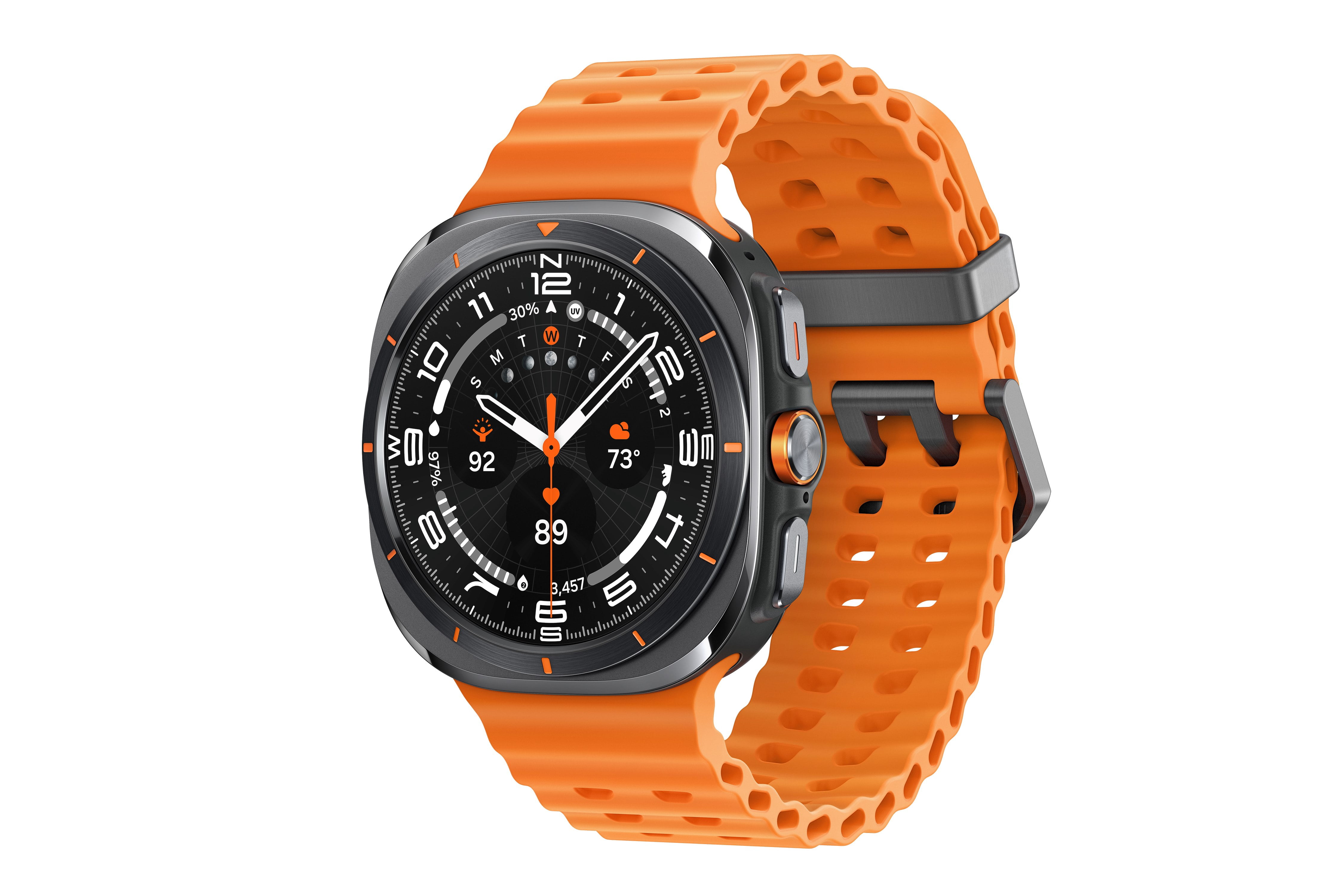
Quick Decision
Buy the Galaxy Watch Ultra if you're an Android user who does real outdoor activities and want a rugged, bright, long-lasting smartwatch. Skip it if you're on an iPhone or you'd rather spend $350 less on the Galaxy Watch7.
Best if you...
- Trail runners and hikers
- Triathletes
- Outdoor enthusiasts who need a rugged watch
Skip it if you...
- iPhone users
- People with wrists smaller than 6.5 inches
- Budget-conscious buyers who don't need the rugged features
The Galaxy Watch Ultra entered the smartwatch arena in 2024 as Samsung's first titanium-cased sports watch, directly challenging the Apple Watch Ultra 2 and Garmin's outdoor flagship line. Priced at $649.99, it aims to be the best rugged smartwatch for Android. With a 3,000-nit display, dual-band GPS, and a claimed 48-hour battery, it brings Apple Watch Ultra-style endurance to the Wear OS ecosystem.
If you're considering it in 2026, you've likely compared it against Garmin or the standard Galaxy Watch7. This analysis is designed to help you decide by laying out what the Ultra does exceptionally well, where it cuts corners, and who should spend the premium. You can find the Samsung Galaxy Watch Ultra on Amazon. We'll also cover alternatives and accessories.
This guide does not rely on hype. It draws from Samsung's official specifications, third-party reviews, and verified buyer feedback to give you a balanced view of the watch's strengths and weaknesses. By the end, you'll know whether it deserves a place on your wrist.
About the Samsung Galaxy Watch Ultra
The Samsung Galaxy Watch Ultra is a rugged titanium smartwatch built for outdoor athletes and adventurers. It runs Wear OS 5 with Samsung's One UI, featuring a 1.5-inch Super AMOLED display, dual-frequency GPS, and a suite of health-tracking sensors. Designed for endurance sports and extreme conditions, it also functions as a full-featured smartwatch for notifications, communication, and payments.
Key Specifications
- OS
- Wear OS 5 with One UI 6
- GPS
- Dual-band L1+L5 (GPS, GLONASS, Galileo, BeiDou)
- RAM
- 2GB
- Battery
- 573mAh, up to 48 hours typical / 80 hours power saver
- Display
- 1.5-inch Super AMOLED, 480x480, 3,000 nits
- Sensors
- HR, ECG, SpO2, body composition, skin temp, altimeter, compass, gyro
- Storage
- 32GB
- Processor
- Exynos W1000 (3nm)
- Dimensions
- 47 x 47 x 12.1mm, 60.5g (without band)
- Durability
- 10ATM, MIL-STD-810H, Grade 4 titanium
Overview
The Samsung Galaxy Watch Ultra is the top tier in Samsung's wearable lineup, sitting above the Galaxy Watch7. Its primary mission is durability: a Grade 4 titanium case, sapphire crystal display, and compliance with MIL-STD-810H military-grade durability standards. The 47mm case encloses a 1.5-inch Super AMOLED panel with a peak brightness of 3,000 nits, making it readable under direct sunlight.
Under the hood, it uses the Exynos W1000 processor (3nm) paired with 2GB RAM and 32GB storage. The watch runs Wear OS 5 with Samsung's One UI 6 Watch overlay, which means full access to Google Play, including Google Assistant, Google Maps, and hundreds of third-party apps. It also includes Samsung's health suite, with heart-rate monitoring, ECG, blood oxygen, sleep apnea detection, and a unique AGEs index for metabolic health. GPS is dual-band (L1+L5) for better accuracy in canyons and dense forests.
The Galaxy Watch Ultra is available on Amazon, and it's been in the market since August 2024. In 2026, it still holds up well against newer competitors, though the price has occasionally dropped as Samsung releases new hardware. It's a premium device meant for people who push their gear hard.
Pros
The Galaxy Watch Ultra earns its 'Ultra' name in several key areas. Its titanium construction, extra-bright display, and multi-day battery make it a serious tool for the outdoors. Below are the standout strengths, backed by specs and real-world use.
Rugged Titanium Build with 10ATM Water Resistance
Samsung constructs the Galaxy Watch Ultra from Grade 4 titanium, a material commonly found in dive watches and aerospace components. It's lighter and more corrosion-resistant than standard stainless steel, yet feels reassuringly solid on the wrist. The case is 47mm and 60.5g (without the band), striking a balance between a robust presence and daily comfort.
The watch is rated to 10ATM, which means it's water-resistant to 100 meters — safe for swimming, surface water sports, and even recreational scuba diving. It also passes the MIL-STD-810H military-grade durability tests for shock, vibration, high altitude, and extreme temperature cycles. If you fall while trail running, the sapphire crystal screen and titanium case are the last things you need to worry about.
The Ultra also carries an 86dB emergency siren and an auto fall/impact detection feature. When a hard fall is detected, it can automatically initiate an SOS to your emergency contacts. That combination of physical ruggedness and a built-in distress tool is something you really do not find on a standard smartwatch.
Exceptional 3,000-Nit Display
The 1.5-inch Super AMOLED screen hits a peak brightness of 3,000 nits, according to Samsung. Even under direct sun on a snowfield or a blazing race course, the watch face remains legible with vivid colors. That's a clear step up from the Galaxy Watch7's 2,000-nit high-brightness mode, and it closes the gap with the Apple Watch Ultra 2's 3,000-nit panel.
The display uses a sapphire crystal front for scratch resistance, and the adaptive always-on refresh rate drops to 1Hz to preserve battery while still showing essential metrics. In short, it doesn't matter whether you're a road cyclist glancing down at pace data or a hiker reading a compass bearing — this display is among the best in any wearable.
Multi-Day Battery Life with Fast Charging
Samsung rates the Ultra for up to 48 hours with typical use and up to 80 hours in power-saving mode. In practical terms, you can expect two full days of everyday wear with sleep tracking and notifications, and a bit less if you're exercising with GPS for long stretches. Real-world battery life obviously varies based on screen brightness, LTE, and workout frequency, but it's consistently better than the standard Galaxy Watch7's 40-hour rating.
The included wireless charging puck charges the 573mAh cell from empty to about 45% in 30 minutes (according to Samsung). A 15-minute top-up while you make coffee can give you enough juice for a day of activity tracking. That's a meaningful convenience for people who often head out on a multi-hour run without a battery pack.
Comprehensive Health and Fitness Tracking
The Watch Ultra reads your heart rate, blood oxygen, skin temperature, and body composition via bioelectrical impedance. It has an ECG to detect atrial fibrillation, and it's FDA-cleared for sleep apnea detection — though you'll need to enable that feature and update the app. It also introduces an advanced AGEs index, which estimates your metabolic age based on a light exposure sweep. That's a unique metric that you won't find on the Apple Watch or Garmin.
The watch supports more than 100 workout types and accurately tracks indoor/outdoor cycling, swimming, hiking, and multisport. Samsung's dual-band GPS (L1+L5) is designed to improve accuracy in urban canyons and under tree cover, which is a key advantage over single-band watches. Combined with the comprehensive sensor array, the Ultra is a reliable partner for daily training and recovery monitoring.
Galaxy AI-Powered Insights and Recovery Coaching
The Ultra runs Samsung's "Power Through Galaxy AI" features, including the Energy Score, which aggregates sleep, activity, and heart-rate variability into a morning readiness score from 1 to 100. It then suggests rest or activity intensity. The watch also delivers Wellness Tips, which are brief AI-generated insights about your sleep quality, activity consistency, and stress.
These tools are useful for runners and cyclists who don't want to wear a chest strap but still want to avoid overtraining. The AI can also automatically adjust your daily activity targets based on your recent performance. It's not as deep as Garmin's Training Readiness, but it's a solid step forward for the Wear OS ecosystem.
Dual-Band GPS for Accurate Outdoor Navigation
The Watch Ultra uses both L1 and L5 GPS bands, and it can receive signals from GPS (L1 and L5), GLONASS, Galileo, and BeiDou. The L5 band is less susceptible to interference from buildings and terrain, which results in a cleaner track. On a trail run through dense forest, the plotted route is far closer to the actual path than on a single-band watch.
In addition to route tracking, you can set up back-to-start navigation and see breadcrumb trails, which is useful for hiking trips without loading a full map. For any outdoor enthusiast, having accurate dual-band GPS is worth the premium over the standard Galaxy Watch.
Quick Button and Emergency Siren
The Quick Button is a physical button on the left side of the case that you can customize to launch your favorite workout, set a waypoint, or toggle the flashlight. In a panic, pressing and holding the button triggers a loud, pulsing siren (86dB) that can be heard from up to 180 meters away. This is a feature that targets the safety-first crowd, and it's genuinely useful.
Putting a physical button on a rugged watch is a design choice that improves usability in wet or gloved conditions, where a touchscreen can be unreliable. The Quick Button can also be assigned to launch a route that was preloaded on the watch, further simplifying navigation on long trail runs.
Cons
No watch is perfect, and the Galaxy Watch Ultra has a handful of compromises that might matter to you depending on your priorities. Being honest about these makes it easier to choose the right device.
Android-Only — No iPhone Compatibility
The Galaxy Watch Ultra is a Wear OS watch, and it does not pair with iPhones. If you have an iPhone, the only smartwatch that works seamlessly is an Apple Watch, and using any Wear OS watch as a standalone device on iOS isn't supported. That's a non-negotiable limitation that puts the Apple Watch Ultra 2 as the only option for iOS users.
Even among Android users, some of the watch's advanced health features are exclusive to the Samsung Galaxy phone. For example, the ECG and blood pressure apps utilise the Samsung Health Monitor app, which is not distributed outside Galaxy devices. In the U.S., blood pressure monitoring is still not enabled, even on Galaxy phones, due to regulatory constraints. So if you're a Pixel or Nothing phone user, you'll miss these capabilities.
Large, Bulky Case
The case diameter is 47mm, and the lug-to-lug length is about 60mm. On a 6-inch wrist, the Watch Ultra extends beyond the width of your wrist and often catches on coat cuffs and trigger sleeves. It's not a dainty accessory; it's a sport tool. You need to be comfortable with substantial presence.
If you're used to a 40–44mm watch, this will feel like a step up in size. The 60.5g weight (without band) isn't excessive for the category, but when you add a thick sports band, the total can be noticeable during wrist-intensive workouts. Try it on before buying if your wrist is under 6.5 inches.
Price Premium over Galaxy Watch7
The $649.99 price is $350 more than the Galaxy Watch7 (which starts at $299.99). The Ultra's additional titanium case, extra battery capacity, and better display brightness explain a portion of the difference, but you're also paying for the "Ultra" branding. For a user who doesn't plan to hit the ocean floor or survive a concrete drop, that premium may be hard to justify.
At this price you can already buy a Galaxy Watch7 and a dedicated Garmin Forerunner 55 for the same money. The Ultra's value is very much tied to whether you'll actually use its rugged credentials in demanding environments.
Some Health Features Region- and Phone-Dependent
Several headlining health tools are not available everywhere. Blood pressure monitoring, for instance, requires both regulatory clearance in your country and a compatible Galaxy smartphone. In the United States, it's still unavailable. Similarly, sleep apnea detection is FDA-cleared, but you need a compatible Samsung phone to measure the irregular breathing that triggers the feature.
If you're not using a Galaxy phone, you lose access to Samsung Health Monitor features (ECG, BP, irregular heart rhythm). You also lose some of the deeper integration like Direct Connect for Galaxy Buds. It's a fragmented experience that Samsung hasn't made easy to understand before purchase.
No Physical Rotating Bezel
Older Galaxy Watch owners may miss the tactile rotating bezel, which made scrolling through menus quick and intuitive, especially when fingers were wet or gloved. The Ultra replaces it with a digital bezel that sits flush on the case. It works, but it's not the same feedback, and some users find it less precise.
In a watch that is supposed to be used in harsh conditions, a physical, easy-to-grip bezel might have been a better choice. The digital version can be oversensitive and cannot be used with heavy gloves. This is a tangible compromise that Galaxy Watch Classic devotees will notice.
Battery Life Falls Short of Garmin Endurance Watches
Samsung claims 48 hours of typical use, but when you turn on GPS tracking for a multi-hour run, that number drops. In practice, the Watch Ultra lasts about a day and a half with heavy usage, which is on par with the Apple Watch Ultra 2 but far below Garmin's Fenix or Enduro lines, which can last weeks. For a device marketed as an "Ultra" adventure watch, this is a noticeable gap.
If you're planning a 10-hour trail run or a multi-day backpacking trip without access to a charger, the Galaxy Watch Ultra won't be your single piece of gear. You'll need to bring a battery pack or switch to a dedicated GPS unit like a Garmin.
Limited Third-Party App Depth Compared to Apple/Garmin
Wear OS has grown a lot, but the Watch Ultra still lacks some of the specialized training apps found on Garmin (e.g., advanced interval builders with power zone targeting) and the sheer polished app ecosystem of the Apple Watch. You can install Strava, Runkeeper, and many third-party watch faces, but you will find fewer high-quality apps that deeply integrate with your specific sport.
That said, most basic notifications and app support work fine. The issue is that for a $649 fitness watch, you'd expect a wealth of outdoor-specific software from day one. It's not a blocker, but it's a reason some athletes choose a Garmin.
👍 Who It's For
The Galaxy Watch Ultra is ideal for outdoor enthusiasts who want a smartwatch that can survive rough conditions. Trail runners, hikers, triathletes, and water sports fans will appreciate the titanium case, 10ATM rating, and dual-band GPS. It's also perfect for Android users who want the latest Wear OS features and a durable daily companion.
If you're already invested in the Samsung ecosystem—with a Galaxy phone, Galaxy Buds, and Samsung Health—the Ultra integrates seamlessly. The ability to take calls from your wrist, stream music via Spotify, and use Google Assistant while wearing a military-grade titanium watch is exactly what this product is designed for. For these users, the cons are largely irrelevant.
👎 Who Should Avoid
iPhone users should steer clear, as the watch does not pair with iOS. If you have a wrist under 6.5 inches, try it on first—the 47mm case can be unwieldy. And if your main concern is battery life for multi-day expeditions, a Garmin Enduro 3 or Fenix 7 Pro is a better choice. Finally, if you only need basic notifications and step counting, save money with the Galaxy Watch7.
Additionally, if you're a Pixel or other non-Samsung Android user, you'll lose access to the ECG and blood pressure features, which may reduce the value proposition. If you're a serious athlete who relies on advanced training metrics (Training Load, VO2max trends, recovery counseling), Garmin's platform is more sophisticated. The Galaxy Watch Ultra is a great smartwatch-first device, but it's not the ultimate training computer.
See today's Samsung Galaxy Watch Ultra price and available configurations on Amazon.
🛒 Buy on AmazonAs an Amazon Associate we earn from qualifying purchases.
Alternatives to Consider
| Product | Choose Samsung Galaxy Watch Ultra if... | Choose the alternative if... |
|---|---|---|
| Apple Watch Ultra 2$150 more expensive | You need deeper third-party fitness app support (Training Peaks, WorkOutDoors) and tighter iOS integration. | You use Android and need a rugged watch with better battery life. |
| Garmin Enduro 3$150 more expensive | You want an elegant AMOLED display, Wear OS ecosystem, and contactless payments. | You need weeks of battery life and advanced Garmin training features (e.g., Training Load, VO2max trends). |
| Galaxy Watch7$350 less expensive | You want a lighter, slimmer case and are willing to trade the titanium build for a lower price. | You value water resistance, 3,000-nit screen, and extended battery. |
The Galaxy Watch Ultra's main competitors are the Apple Watch Ultra 2, Garmin Enduro 3, and the more affordable Galaxy Watch7. If you're an iPhone user, there's no comparison—the Apple Watch Ultra 2 is the only serious option, but it costs a bit more. For Android users who need weeks of battery and advanced training metrics, a Garmin is a better fit, though you sacrifice the polished smartwatch experience and app ecosystem.
If you're just looking for a Samsung Wear OS watch and don't need 'Ultra' durability, the Galaxy Watch7 offers 90% of the health features at half the price. It's lighter, smaller, and more comfortable for everyday wear, but you give up the 3,000-nit display, dual-band GPS, and titanium build. The Ultra makes sense only if you'll use the extra ruggedness.
Is it worth the price?
At $649, the Galaxy Watch Ultra is a strong value for anyone who will actually use its titanium build, 3,000-nit display, and dual-band GPS on a regular basis. For everyday users, the Galaxy Watch7 at $299 delivers nearly the same health suite and Wear OS performance for half the money. If you're a hiker or triathlete who needs a durable smartwatch, the Ultra justifies its premium; if you're an office worker who never strays off a sidewalk, it doesn't.
📝 Bottom Line
The Samsung Galaxy Watch Ultra is the best rugged Wear OS smartwatch for Android users who want a tool that can handle the outdoors as well as it handles notifications. Its titanium construction, 3,000-nit display, and dual-band GPS are the standout pros, while battery life (about two days) is enough for a weekend trip but not for a week-long wilderness expedition.
The cons—Android-only compatibility, a large 47mm case, and the absence of some medical features on non-Galaxy phones—are significant but manageable for the target audience. If you're a runner, hiker, triathlete, or someone who simply likes gear that won't quit, the Galaxy Watch Ultra is a compelling buy.
If you're an iPhone owner or a casual user who only wears a watch in the gym, the Galaxy Watch7 at $299 or the Apple Watch Ultra 2 (if you're on iOS) are the smarter moves. But if you're an Android user who regularly logs outdoor miles, the Galaxy Watch Ultra is worth every dollar. You can find it on Amazon and compare prices before making your decision.
Check current Samsung Galaxy Watch Ultra availability and bundle options on Amazon.
🛒 Buy on AmazonAs an Amazon Associate we earn from qualifying purchases.
Frequently Asked Questions
Quick Summary
Key Pros
- ✓Rugged titanium case with 10ATM water resistance and MIL-STD-810H durability.
- ✓3,000-nit AMOLED display stays readable in direct sunlight.
- ✓Up to 48-hour battery life (80 hours in power saving mode).
- ✓Comprehensive health suite including ECG, blood oxygen, and AGEs index.
- ✓Dual-band GPS provides accurate tracking in challenging environments.
Key Cons
- ✗Android only; no iPhone support.
- ✗Large 47mm case that may be too big for small wrists.
- ✗Higher price than Galaxy Watch7 ($350 more).
- ✗Some health features require a Samsung phone and aren't available in all regions.
- ✗No physical rotating bezel—digital bezel only.
Ratings
Best For
- →Trail runners and hikers
- →Triathletes
- →Outdoor enthusiasts who need a rugged watch
- →Android users wanting a premium Wear OS smartwatch