
Is LG C2 OLED 65-inch Worth It? Honest Review (2026)
Strengths, weaknesses, and who should buy the value-focused LG OLED in 2026.
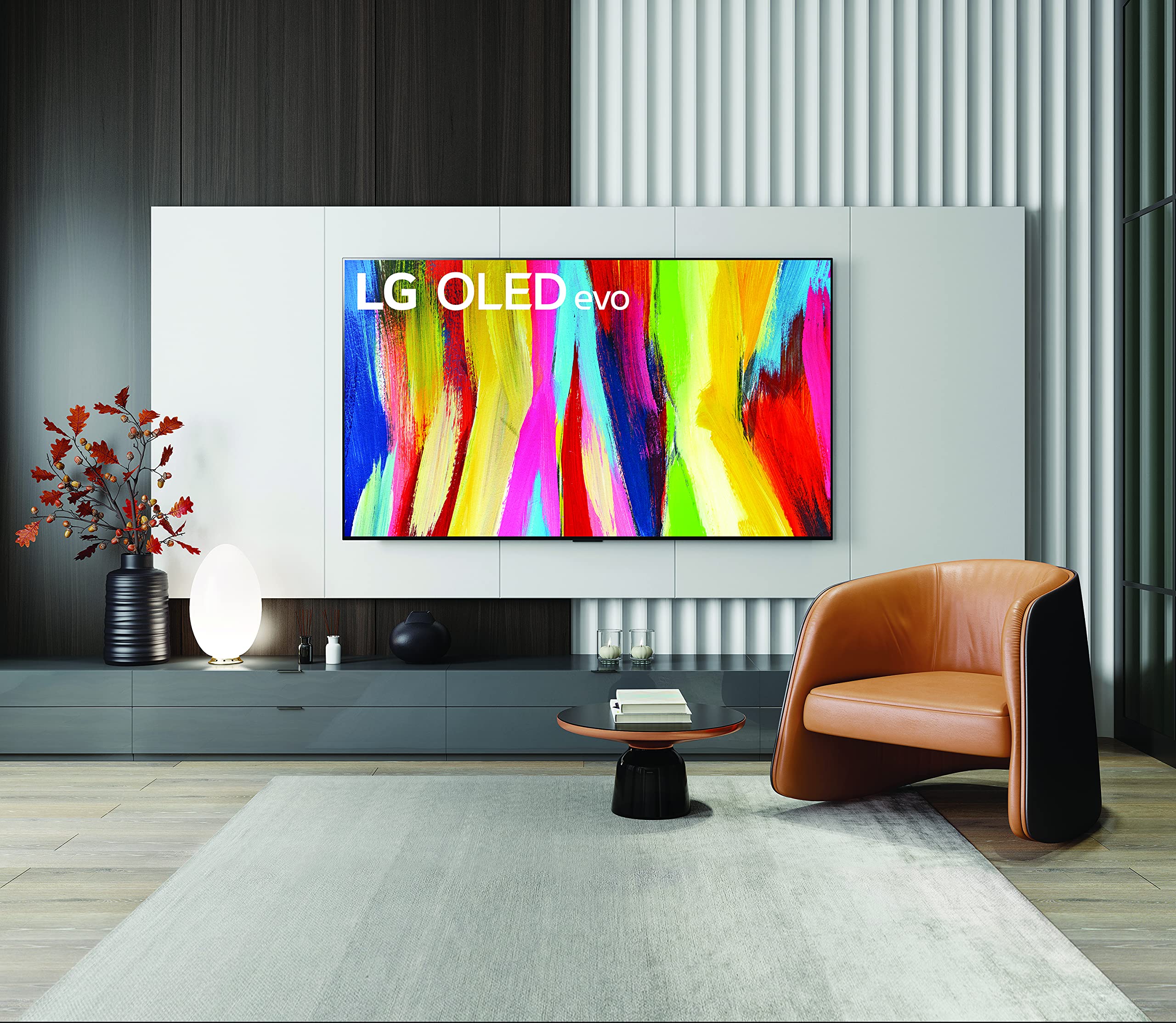
Quick Decision
Buy it if you're a console gamer or dark-room home-theater fan who wants OLED's perfect blacks at a discount — the C2 delivers nearly all the C4's picture quality for about $300 less. Skip it if you mostly watch in a bright room, need 144Hz for PC gaming, or want a current smart-TV interface.
Best if you...
- PS5 and Xbox Series X owners who want 4K/120Hz on all four HDMI ports
- Dark-room movie and HDR enthusiasts on a budget
- Buyers upgrading from an older LED who want OLED's contrast without flagship pricing
Skip it if you...
- Bright, sun-drenched living room day-time viewers
- PC gamers who want 144Hz or higher refresh rates
- HDR purists chasing the brightest possible specular highlights
Every year, the question "which TV should I buy" gets harder because new OLED panels keep getting brighter and more expensive. In 2026, many shoppers are looking for the OLED experience without paying the $2,000+ that LG's newest C5 series commands — which is exactly why the LG C2 OLED 65-inch has re-entered the conversation. First released in 2022, the C2 is now a value-oriented pick that still delivers the fundamental OLED advantages: perfect black levels, near-instant response times, and four HDMI 2.1 ports.
This analysis draws on LG's published specifications, verified third-party measurements from RTINGS, and documented buyer feedback patterns across major retail platforms, including Amazon, to give you a balanced view. Below we walk through the specific pros and cons, compare the C2 to the most relevant 2026 alternatives, and — in the bottom line — give you a direct recommendation.
About the LG C2 OLED 65-inch
The LG C2 OLED 65-inch (model OLED65C2PUA) is a 4K OLED television first released in 2022, featuring LG's α9 Gen5 AI processor, a native 120Hz panel, and four full-bandwidth HDMI 2.1 ports. It is designed primarily for home theater and console gaming, and in 2026 it competes as a value-priced alternative to newer OLED models like the C4.
Key Specifications
- Display
- 65-inch OLED, 3840 × 2160 (4K UHD)
- Input Lag
- 9.2 ms at 4K/120Hz (RTINGS)
- Processor
- α9 Gen5 AI Processor 4K
- HDMI Ports
- 4 × HDMI 2.1 (48 Gbps full bandwidth)
- VESA Mount
- 300 × 200
- HDR Support
- Dolby Vision, HDR10, HLG (no HDR10+)
- Response Time
- ~0.2 ms (RTINGS)
- Speaker Output
- 40W 2.2ch
- Operating System
- webOS 22 (final major update webOS 26)
- Native Refresh Rate
- 120Hz
- Peak HDR Brightness
- ~790 nits (2% window, RTINGS)
- Variable Refresh Rate
- G-Sync Compatible, FreeSync Premium, HDMI VRR
Overview
The LG C2 OLED 65-inch was LG's mainstream OLED workhorse in 2022. It pairs a 65-inch 4K OLED panel with the fifth-generation α9 AI processor, native 120Hz refresh, and full 48 Gbps bandwidth on every HDMI input. At launch it carried a $2,499 list price and won broad acclaim — including RTINGS' 2022 best-gaming-TV recognition — but four years later, it exists in a very different market.
In 2026, the C2 no longer competes at the premium tier; it competes on value. LG has discontinued the model, but remaining new units and verified refurbished sets are still listed on Amazon, with 65-inch pricing that typically lands between roughly $1,000 and $1,300 depending on stock levels and sales events. That puts it below the current C4's typical $1,500 street price while retaining most of the picture-quality characteristics that made the C-series famous.
Before the pros and cons, one important shift: the C2's target buyer has changed. When it launched, it was a flagship. Today, it's the smart-budget pick for buyers who want genuinely great image quality but don't need the latest brightness record or the newest smart-TV interface. That context matters because it changes whether some of the C2's weaknesses are deal-breakers or minor trade-offs.
Pros
The C2 remains one of the most genuinely balanced OLEDs you can buy in 2026 — the strengths that made it a top pick in 2022 have not evaporated. The sections below cover the six attributes that still justify its price.
Perfect Black Levels and Near-Infinite Contrast
Per-pixel dimming is the defining feature of OLED, and the C2 delivers a measured contrast ratio that RTINGS classifies as effectively infinite. Because each of its 8.3 million pixels switches off individually, letterbox bars in movies appear as absolute black rather than the washed-out gray you see on LCD panels. Night scenes in shows like "The Last of Us" keep their shadow detail without the cloudy halo effect typical of edge-lit or even many full-array LED sets.
For a home-theater viewer, this is the single biggest reason to choose an OLED in 2026. Combined with superb low-light near-black performance, the C2 renders film grain, fades, and dark interior scenes with a level of depth that affordable Mini-LEDs, including the TCL QM8, can't fully replicate. In a fully dark or dim room, the C2 still looks like a dramatically more expensive TV than its 2026 street price suggests.
Four Full-Bandwidth HDMI 2.1 Ports
The C2 ships with four HDMI 2.1 inputs, each supporting the full 48 Gbps data rate. That means 4K at 120Hz, VRR, ALLM, and 10-bit HDR color all run on the same input without compromises. RTINGS confirmed all four ports carry the full feature set — something still not true of several 2025-2026 competitors like the Sony A80L, which offers only two full-bandwidth ports.
With a PlayStation 5, Xbox Series X, a soundbar connected through eARC, and a streaming stick, you can fill all four ports without touching a switcher. Few living-room setups will exhaust this connectivity in 2026, and it removes the biggest console-management headache for families that own more than one modern system.
Near-Instant Response Time with 120Hz Native Refresh
RTINGS measured the C2's pixel response time at roughly 0.2 ms, effectively eliminating the motion blur smearing that is visible on LCD screens. Combined with the native 120Hz panel, fast-action games, sports broadcasts, and 24p film content maintain crisp edges without ghosting artifacts.
For console owners, the input lag story is just as strong: RTINGS measured 9.3 ms at 4K/60Hz and 9.2 ms at 4K/120Hz. That is fast enough that on-screen actions register essentially immediately, and it is within striking distance of dedicated gaming monitors. The one caveat is you cannot reach 144Hz as you can on the newer C3/C4 models, but console players never needed that.
Excellent HDR Image Quality With Dolby Vision Support
Third-party testing from RTINGS measured peak HDR brightness of roughly 790 nits in a 2% white window on the 65-inch C2. That is a modest result by 2026 standards — QD-OLED panels from Samsung exceed 1,000 nits — but highlights still appear punchy largely because they sit on infinite black. The combination of high micro-contrast and pure black is why an 800-nit OLED can look more striking than a 1,500-nit LCD in a dark room.
The C2 also supports Dolby Vision, HDR10, and HLG, covering essentially every major streaming service including Netflix, Disney+, and Apple TV+. Note that LG omits HDR10+ support, so Amazon Prime titles mastered in HDR10+ will fall back to HDR10.
Wide Viewing Angles
Because OLED pixels emit light individually rather than through a liquid crystal layer, color and contrast hold when viewing off-axis. RTINGS testing shows the C2 holds its black level and peak brightness far better than typical VA-based LCD televisions, making it a rare TV that works well for a wide sectional or a kitchen-adjacent viewing position.
For families who do not sit dead-center, this is a practical advantage you notice every day. Skin tones stay natural from 30 to 40 degrees off-axis, whereas an LCD at the same angle will visibly wash out and lose contrast.
Slim, Premium Design
The C2's panel is about two inches deep and nearly bezel-less; the metal-backed frame looks more like a gallery piece than a utilitarian black slab. On a flush mount, it sits close enough to the wall to almost disappear — a look only achievable with edge-lit LCDs in past years.
The central pedestal stand is narrower than many competing stands, giving you more tabletop flexibility, and cable routing behind the panel keeps the setup clean. It is not the thinnest OLED ever made, but it is still far more elegant than the vast majority of 2026 LED televisions.
Cons
No product is perfect, and the C2's age shows in a few specific and important ways. These weaknesses do not affect every buyer equally, but you should understand exactly what you are trading off by choosing a 2022 model in 2026.
Only 120Hz — No 144Hz Support for PC Gamers
LG introduced 144Hz support with the 2023 C3 series and has kept it since. The C2 remains capped at 120Hz over HDMI. For PS5 and Xbox Series X users this makes no practical difference, because both consoles top out at 120Hz games.
But if you plan to use the C2 as a PC gaming monitor, newer panels refresh 24 times a second more often — a real, if modest, advantage in esports titles where every frame counts. The bigger issue is that the C2 cannot be overclocked to 144Hz at all, so this is a hard limitation rather than a setting you can change.
Brightness Ceiling Trails Current QD-OLED and Mini-LED Rivals
The C2's peak HDR output of roughly 790 nits was competitive in 2022. By 2026, Samsung's QD-OLED sets reach beyond 1,000 nits, and even LG's own C4 manages roughly 890 nits. In a bright living room with afternoon sunlight, the C2's picture can look comparatively muted.
Specular highlights in HDR movies — explosions, sunlight glinting off metal, studio spotlights — will not have the same explosive quality on the C2 as on a brighter panel. This is the single most noticeable downgrade when comparing the C2 side-by-side with a current-generation OLED.
Aggressive Auto Brightness Limiter
RTINGS flagged the C2 for a fairly aggressive auto-brightness limiter (ABL). The panel pulls back brightness when large portions of the screen go white — a bright hockey rink, a snowfield, or a white web page. Sustained full-screen white content can trigger a noticeable dip in brightness that some buyers find distracting.
This matters most for daytime sports viewers with hockey or tennis, and for PC users who keep productivity apps open. The TV is protecting the panel from heat and potential burn-in, but the result is that the C2 does not stay consistently bright in bright scenes.
Burn-In Risk Is Real, and the Warranty Does Not Cover It
OLED burn-in is not a myth; it is a documented failure mode. RTINGS' long-term burn-in test showed that panels displaying static CNN-like content for weeks can develop permanent image retention. LG includes a pixel-refresh routine, logo dimming, and pixel shifting to reduce the risk — and the 65-inch C2 uses the more resilient WBE evo panel — but the underlying vulnerability remains.
LG's standard warranty explicitly does not cover burn-in, and the manufacturer's own OLED assurance program covers below-the-line content only on certain newer models. If you watch a financial network for eight hours a day, or you keep a game HUD pinned on screen for long sessions, you are taking a real risk with this panel.
webOS 22 Has Reached Its Final Major Update
LG promised four major operating system upgrades for 2022 OLED models. WebOS 26, delivered in 2025, was the last of those. In 2026 you will still receive security patches for a while, but the C2 will not gain new features — it will miss the UI refinements and apps that arrive on LG's 2023 and later panels.
The underlying webOS interface is also noticeably cluttered, with a row of promoted apps and seasonal advertising banners sitting above your app grid. In 2026, it feels dated compared to the cleaner, faster interfaces on the C4 or on streaming boxes like the Apple TV 4K.
No DTS:X Audio Decoding
LG dropped DTS audio decoding starting with its 2021 TV lineup. The C2 decodes Dolby and Atmos streams but passes DTS tracks through only as a limited bitstream via eARC — it cannot decode DTS:X. For most streaming users this is irrelevant, since services use Dolby audio exclusively.
But for Blu-ray collectors with DTS-HD Master or DTS:X tracks, the TV cannot process those formats natively. You will need an AV receiver or a soundbar that can decode DTS on its own, which adds cost and complexity to your home theater setup.
Clearance-Era Inventory in 2026
LG's C2 was discontinued after 2023, so new units are becoming scarce. As remaining stock shrinks, you are generally paying between $1,000 and $1,200 for a four-year-old design — and sometimes approaching the C3 or C4's promo price during sales.
Refurbished or open-box units carry extra risk around panel hours and warranty coverage, so the headline discount can be less attractive than it looks. If you are paying close to $1,200 for a C2, you should seriously check the price of a newer C4 at the same time, because the gap is often smaller than you think.
👍 Who It's For
The LG C2 65-inch is the smartest pick for one specific buyer: someone upgrading from a mid-range LED who wants a genuine OLED look without spending the premium that 2025 or 2026 flagship models demand. Console gamers with a PlayStation 5, Xbox Series X, or both benefit the most, since the C2 has four full-bandwidth HDMI 2.1 ports and can actually run both consoles at 4K/120Hz plus VRR simultaneously — a capability that matters more and more as cross-play and shared setups become common.
Home theater purists in dark or dimly lit rooms will also find enormous value — this is where the C2's infinite black levels, 0.2 ms response, and Dolby Vision support genuinely shine. Families that seat people at wide angles rather than dead-center will see the C2's off-axis consistency as a major upgrade over a VA LED. If you only watch a few hours a night rather than leaving a news channel on for eight hours, the burn-in risk is manageable, and the panel care features give you a degree of protection.
👎 Who Should Avoid
Bright-room daytime viewers should skip the C2 in 2026. Its ~790-nit ceiling means a sun-flooded living room will wash out the picture, and for roughly $200 more, a Mini-LED set like the TCL QM8 maintains visibility in those conditions while offering most of the contrast benefit in dimmer scenes.
PC gamers who want 144Hz, HDR enthusiasts who chase every nit of highlight energy (the Samsung S90D will be worth the extra money), and anyone who keeps a financial network, sports ticker, or news channel on screen for many hours a day should also look elsewhere — static elements on the C2 carry the one real longevity risk OLED still has. Finally, buyers who want a current-generation smart-TV interface with years of new-app development ahead should choose LG's 2024 or later panel, not the C2.
See today's LG C2 OLED 65-inch price and available configurations on Amazon.
🛒 Buy on AmazonAs an Amazon Associate we earn from qualifying purchases.
Alternatives to Consider
| Product | Choose LG C2 OLED 65-inch if... | Choose the alternative if... |
|---|---|---|
| LG C4 OLED 65-inchAbout $300–400 more expensive | You can find the C2 below roughly $1,200 and you mainly game on PS5, Xbox, or watch movies in a dark room where its black levels matter more than peak brightness. | You want a brighter panel (~890 nits), 144Hz PC input, and a newer webOS interface with several more years of feature updates. |
| Samsung S90D QD-OLED 65-inchAbout $200–300 more expensive | You prize Dolby Vision support, prefer LG's menu system, or don't want to pay a large QD-OLED premium for brightness you may not need in a dark room. | Bright, colorful HDR highlights matter most to you — the S90D's quantum-dot panel reaches beyond 1,000 nits and produces more vivid specular detail. |
| TCL QM8 Mini-LED 65-inchAbout $200 less expensive | You're in a bright room and want near-OLED dark levels without any burn-in risk, plus you'd rather spend about $200 less. | You're a dark-room purist who demands perfect letterbox blacks and zero blooming — only OLED delivers that, and the C2 is the cheaper way to get it. |
Two refresh-tier competitors make the most sense if you can push past the C2's price point. The LG C4 OLED 65-inch, the C2's direct successor, adds roughly 100 nits of brightness, 144Hz input for PC, and a much newer webOS build — all for $300 to $400 more. The Samsung S90D QD-OLED 65-inch is the pick for HDR extremists: its quantum-dot panel reaches beyond 1,000 nits and produces noticeably more vivid color highlights, though you lose Dolby Vision if you stream from services that rely on it.
At the budget end, the TCL QM8 line shows how far Mini-LED has come. For about $200 less than a C2, you get most shadow detail and much higher peak brightness, with zero burn-in concerns — at the cost of more visible halos around bright objects and blooming in letterbox bars. If you watch almost exclusively in a bright room, the QM8 is the better value; if you watch mostly in dark or controlled light, the C2 is the better television.
Is it worth the price?
At an approximate street price of $1,200 for the 65-inch, the C2 is a clear "yes" for console gamers and dark-room movie fans who are comfortable with its age: you get roughly 90% of what the current C4 offers for roughly 20–25% less. It becomes a "no" if you watch mostly in daylight or want 144Hz input — then spending $300–400 more on the C4, or about $200 less on a bright Mini-LED set like the TCL QM8, delivers better value for your specific viewing conditions.
📝 Bottom Line
The LG C2 OLED 65-inch is the right choice for budget-conscious console gamers and dark-room home theater fans in 2026 because it delivers the two things that make OLED special — perfect black levels and near-instant response times — at a fraction of the price of LG's current flagship. The four full-bandwidth HDMI 2.1 ports, 9.2 ms input lag, and 120Hz panel are exactly what a PS5 or Xbox Series X owner wants, and nothing that has happened in the TV market since 2022 has changed the fundamental appeal of per-pixel lighting.
That said, the C2 has real trade-offs you must accept. Its ~790-nit peak brightness now trails QD-OLED and Mini-LED competition, the aggressive ABL dims full-screen bright scenes, and the 120Hz cap leaves PC gamers wanting more. There is also the ever-present OLED burn-in question — you should treat the C2 like a carefully managed investment, not a set you leave on the news channel all day. If you can stomach those caveats, the C2 is an outstanding value. If you cannot — because your room is bright, your content is static, or you want the latest webOS — spend the additional money on a C4, an S90D, or save more with a Mini-LED set.
Final word: buy the C2 if you found a genuinely new or fully warrantied unit below roughly $1,200 and it will live in a dim-to-controlled-light room with mostly varied content. Skip it if any of those conditions don't hold — you will be happier paying more now than regretting the compromises later. As of 2026, the TV's price on Amazon fluctuates with remaining stock; check current listings and buy only from sellers with clear return policies.
Check current LG C2 OLED 65-inch availability and bundle options on Amazon.
🛒 Buy on AmazonAs an Amazon Associate we earn from qualifying purchases.
Frequently Asked Questions
Quick Summary
Key Pros
- ✓Infinite contrast ratio with perfect black levels (RTINGS: effectively infinite)
- ✓4 full-bandwidth HDMI 2.1 ports, each supporting 4K/120Hz
- ✓Ultra-low 9.2 ms input lag at 4K/120Hz (RTINGS)
- ✓Near-instant ~0.2 ms pixel response time (RTINGS)
- ✓Dolby Vision, HDR10, and HLG support across all major streamers
Key Cons
- ✗Only 120Hz — no 144Hz PC input (C3 and later add it)
- ✗Peak brightness ~790 nits now trails QD-OLED and Mini-LED rivals
- ✗Aggressive auto brightness limiter dims full-screen bright content
- ✗Burn-in risk remains for static content; LG's warranty does not cover it
- ✗webOS 22 received its final major update in 2025; no new features coming
Ratings
Best For
- →PS5 and Xbox Series X owners who want 4K/120Hz on all four HDMI ports
- →Dark-room movie and HDR enthusiasts on a budget
- →Buyers upgrading from an older LED who want OLED's contrast without flagship pricing
- →Families with wide seating arrangements who need off-axis picture consistency