
Is Levoit Core 400S Air Purifier Worth It? Honest Review (2026)
Balanced look at the Levoit Core 400S smart air purifier - what it does well, where it falls short, and who should buy it in 2026.
Quick Decision
Buy the Levoit Core 400S if you need a genuinely smart air purifier for a 300-400 sq ft room and want quiet automated operation. Skip it if your room is much smaller or you don't care about Wi-Fi, because the non-smart Levoit Core 300 does a similar job for around half the price.
Best if you...
- Allergy sufferers who need constant particle removal in a bedroom
- Pet owners dealing with dander and light odors
- Smart-home enthusiasts who want scheduling and voice control
Skip it if you...
- Those who need strong VOC/odor removal for cooking or chemicals
- People with an open-plan area over 500 square feet
- Budget-first buyers who can accept a smaller non-smart purifier
You're probably here because you want cleaner indoor air and you've seen the Levoit Core 400S mentioned in best-air-purifier roundups. This guide breaks down the strengths and weaknesses of the Core 400S, focusing on what it actually does for a medium-sized room in 2026.
The Core 400S sits in Levoit's mid-range smart series. It uses a True HEPA H13 filter with an activated-carbon pre-filter, a PM2.5 laser sensor, and the free VeSync app to bring automation and remote control. We'll also compare it against the Coway Airmega 250, Winix 5500-2, Levoit Core 300, and Blueair Blue Pure 211+, plus cover replacement-filter costs and common accessories.
At around $180 on Amazon, it's not the cheapest air purifier, but it's also not the most expensive. The goal here is to help you decide if the extra cost over a simpler unit is justified for your room size and smart-home setup.
About the Levoit Core 400S Air Purifier
The Levoit Core 400S is a Wi-Fi-connected air purifier designed for medium to large rooms up to 403 square feet. It uses a True HEPA H13 filter, an activated-carbon layer, and a PM2.5 laser sensor to remove dust, pollen, smoke, and some odors, with control via the free VeSync app, Alexa, or Google Assistant.
Key Specifications
- CADR
- 260 CFM (manufacturer rated)
- Sensor
- Laser PM2.5 sensor
- Coverage
- 403 sq ft (approx. 37.4 m²)
- Filter Type
- True HEPA H13 + activated carbon
- Noise Level
- 24-52 dB depending on speed
- Maximum Power
- 47 W
- Smart Features
- Wi-Fi, VeSync app, Amazon Alexa, Google Assistant
- Replacement Filter
- Core 400-RF
- Suggested Filter Replacement
- Every 6-8 months
Overview
The Levoit Core 400S was introduced in 2022, and it remains relevant in 2026 as one of the more affordable Wi-Fi air purifiers. It's a 403-square-foot unit with 260 CFM CADR and three manually controlled speeds plus auto and sleep modes. The square-shaped tower is designed to sit on the floor in a bedroom, living room, or office.
The key feature is the PM2.5 display and app connectivity. Unlike a simple mechanical purifier, the 400S can tell you the current air quality, adjust fan speed automatically, and turn on/off via a schedule or voice assistant. It uses a laser particle sensor rather than a chemical sensor, which means it reacts to dust, smoke, pollen, and pet dander, but not to gases.
Because it's on Amazon, you can see frequent discounts and bundles with extra filters. The usual street price in 2026 is roughly $160-$190, with occasional coupons bringing it closer to $150. This puts it in direct competition with the Winix 5500-2 and Coway Airmega 250.
Pros
For the money, the Core 400S gets the basics right: solid particle filtration, a clean design, and genuinely useful smart features. The detailed pros below explain what each strength means in day-to-day use, not just on paper.
Strong 403 sq ft Coverage for Typical Living Spaces
Levoit rates the Core 400S for rooms up to 403 square feet, which covers the majority of bedrooms and living rooms in modern apartments. With a manufacturer-rated CADR of 260 CFM, it can cycle the air in a 403 sq ft room roughly 4.8 times per hour with a standard 8-foot ceiling. That's more than enough for allergy and smoke particles in a typical medium room.
In practice, this means you can run it on auto or low most of the time and still get a meaningful air exchange in a 200-300 sq ft bedroom. For a larger living space, you'd need to run it on high more often, but the capacity is still a step above smaller units like the Levoit Core 300, which only covers 219 sq ft.
Genuinely Useful App, Schedule, and Voice Control
The Core 400S is one of the few air purifiers near the $180 price point that pairs Wi-Fi with a genuinely useful app. Through the free VeSync app, you can turn the unit on/off, choose fan speed, set schedules, see current PM2.5 readings, and even monitor the room from away. It also works with Alexa and Google Assistant, so you can say "turn on the air purifier" without getting up.
The app doesn't require a subscription, and the setup process is straightforward for most users. If you use voice assistants or wanted to set the purifier to run an hour before you get home, this is one of the main reasons to pick the 400S over a non-smart competitor.
Quiet Sleep Mode for Bedrooms
Levoit advertises a sleep mode at 24 dB, which is close to a whisper and much quieter than many small fans. That makes it comfortable for light sleepers who want continuous filtration overnight. The display can be dimmed or turned off, and the fan speed in sleep mode is low enough that most people won't notice it.
Even on medium speed, the 400S is reasonably quiet, though not as hush as on sleep. If you're used to a white-noise machine, the purifier can double as one in auto mode, especially at night.
True HEPA H13 Filter With 99.97% Particle Capture
The Core 400S uses a True HEPA H13 filter, which the manufacturer says captures 99.97% of particles as small as 0.3 microns. That includes pollen, dust mites, mold spores, pet dander, and smoke particles. The washable pre-filter catches larger debris, extending the life of the main filter.
This is the standard filtration that air purifier buyers should expect in 2026, and the 400S delivers it without relying on ionizers or UV-C light. That's a plus for people who prefer a no-ozone, no-UV approach to indoor air quality.
Real-Time PM2.5 Display and Color-Coded Ring
The front panel shows the current PM2.5 concentration and a color-changing ring that goes from green to red as air quality drops. It's a genuinely useful feature if you want visible confirmation that the purifier is working. You can glance at it from across the room and know when it's reacting to something in the air.
This also helps you learn your home's pollution patterns. In a kitchen or near a window, you might notice the numbers spike at cooking time or when outdoor smoke drifts in, which can guide when you want the fan to run faster.
Low Running Cost (especially on low/sleep)
The Core 400S has a maximum power draw of about 47 W. Running it on high 24/7 would add roughly $5-$6 to a typical monthly electric bill at average U.S. electricity rates. On sleep or low mode, the draw drops substantially, so leaving it on all night or all day is unlikely to be a budget concern.
Compared to air conditioners or dehumidifiers, the 400S is an inexpensive appliance to operate year-round. That makes it easier to justify running it continuously during allergy or wildfire seasons.
Cons
No air purifier is perfect, and the Core 400S has trade-offs that matter more for some buyers than others. The cons below will help you figure out if its weaknesses are deal-breakers for your situation.
Replacement Filters Are an Ongoing Expense
The Core 400S uses a combined HEPA + carbon filter that you can't wash and reuse. Levoit recommends replacing it every 6-8 months under normal use, and replacement filters cost roughly $30-$35 each. That works out to about $60-$70 per year if you change it twice annually.
If you run the purifier 24/7, have pets, or live in areas with heavy smoke or dust, you'll likely need to replace it more often, pushing the annual cost even higher. It's an inherent cost of most quality air purifiers, but it's something to budget for beyond the $180 purchase price.
App Setup and Cloud Connections Can Be Finicky
Buyer feedback patterns mention occasional pairing problems, Wi-Fi drops, and the app not refreshing air-quality values as expected. The VeSync app is not the most polished smart-home platform, and if your Wi-Fi router is far away, the connection can be unstable.
This doesn't make the 400S unusable, but if you're buying a smart purifier primarily for remote control, you should be prepared to troubleshoot every once in a while. You can still use the physical buttons when the app is down, but you lose the remote features until the connection recovers.
Carbon Layer Is Light on Odors and VOCs
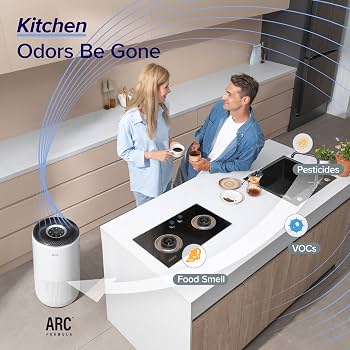
The activated-carbon layer in the 400S is relatively thin compared to the dedicated carbon filters in some larger or more specialized purifiers. It helps with light pet odors, cooking smoke, and some volatile organic compounds, but it is not the best choice for heavy chemical fumes, strong cooking smells, or fresh paint.
If your main concern is removing VOCs from a newly painted room or removing the smell of solvents, you'll get better results from a purifier with a much larger carbon bed or a separate gas-phase filter. The 400S is primarily a particle remover, not an odor eliminator.
Auto Mode Ignores Gases
The built-in laser sensor measures particulate matter (PM2.5), but it does not measure gases. That means auto mode reacts to dust, smoke, pollen, and pet dander, but won't speed up just because you've sprayed a cleaner or burned toast. It also won't alert you to chemical fumes.
Some competing purifiers include a gas or VOC sensor, which gives a clearer picture of indoor air quality. If that's important to you, the 400S will feel less responsive in certain daily situations.
Display Doesn't Auto-Dim at Night
The front display shows PM2.5, temperature, and a colored air-quality ring. In normal mode, it stays lit unless you manually turn it off with the app or a button. There's no ambient light sensor, so it won't automatically dim when you turn off the lights.
Sleep mode does turn off or dim the display, but that also locks you into a low fan speed. If you want to run the purifier on medium overnight and keep the display off, you have to do it manually each time.
No Carry Handle Makes Moving It Awkward
At around 11 pounds, the Core 400S isn't terribly heavy, but it also doesn't have a handle or recessed grip. Moving it from a bedroom to a living room means carrying the tower awkwardly, especially when the filter is inside and it's slippery to hold.
It's not a deal-breaker if you plan to set it in one spot, but if you want a purifier you'll move around the house frequently, a model with a handle or a more compact shape might be easier to live with.
Not Enough Airflow for Very Large or Open-Plan Homes
Despite its 403 sq ft rating, the Core 400S can struggle in a truly open-plan space that is 500, 600, or more square feet. The CADR is 260 CFM, which is fine for a single room, but a large floor plan can easily overwhelm it, forcing you to run it on high continuously and still not get complete coverage.
For those scenarios, you'd likely need two units or a larger purifier like the Levoit Core 600S or Blueair Blue Pure 211+. The 400S is best thought of as a room-sized purifier, not a whole-lower solution.
👍 Who It's For
The Levoit Core 400S fits people who spend most of their day in a medium-size bedroom or living room and want to remove dust, pollen, wildfire smoke, or pet dander. It's especially good for smart-home users, because the app, scheduling, and Alexa/Google tools let you set it to run before you arrive home or while you sleep. It's also a strong choice for light sleepers thanks to the low sleep-mode noise and the ability to turn off the display.
If you have allergies or asthma and want continuous, quiet filtration in a room around 200-400 square feet, the 400S offers a great balance of cleaning power and convenience. The real-time PM2.5 readout also gives you peace of mind that the appliance is actually doing something, which is a benefit for parents or health-conscious buyers who like to see tangible data.
👎 Who Should Avoid
If your main concern is removing volatile organic compounds, cooking smells, or chemical odors, the 400S's thin carbon layer won't satisfy you; look at a purifier with a separate gas filter or a larger carbon bed. If you want a barely visible, no-app appliance and have a room under 250 square feet, the Levoit Core 300 at around half the price will likely meet your needs without the smart-home complexities.
If your home has an open floor plan over 500 square feet, you'd likely need two units or a larger CADR model, so the 400S may leave you underwhelmed. Likewise, anyone who doesn't want to deal with filter replacement costs or what can be a finicky app might be better off with a simpler, mechanically controlled purifier.
See today's Levoit Core 400S Air Purifier price and available configurations on Amazon.
🛒 Buy on AmazonAs an Amazon Associate we earn from qualifying purchases.
Alternatives to Consider
| Product | Choose Levoit Core 400S Air Purifier if... | Choose the alternative if... |
|---|---|---|
| Coway Airmega 250$60 more expensive and replacement filters cost more | You want a compact smart purifier with app control and a more furniture-like design | You prefer a lower-maintenance carbon pellet filter and don't mind spending more on filter replacements |
| Winix 5500-2roughly $20 less expensive | You need Wi-Fi, app scheduling, and a quiet sleep mode | You want a lower upfront price, a washable carbon filter, and don't need app control |
| Blueair Blue Pure 211+$120 more expensive | You value app control, a slim tower, and moderate room coverage in the 400 sq ft range | You need a higher CADR for a larger open room and don't mind a mechanical dial instead of an app |
| Levoit Core 300roughly $80 more expensive | You want smart features, more coverage, and a PM2.5 display in the Levoit ecosystem | Your room is under 219 sq ft and you'd rather save around $80 |
Two common alternatives are the Winix 5500-2 and Coway Airmega 250. The Winix usually costs less, has a washable carbon pellet filter, and a plasma ionizer, but it lacks Wi-Fi and app control. The Coway Airmega 250 is more visually polished and has dual side intakes, but it's usually more expensive and uses two filters that cost more to replace.
If you want dramatically higher airflow for a large room, the Blueair Blue Pure 211+ is a reasonable pick, though it lacks the app-driven scheduling. For small rooms, the Levoit Core 300 is a popular budget option, but it doesn't cover much beyond 219 square feet and lacks Wi-Fi.
Is it worth the price?
At approximately $180, the Levoit Core 400S is worth it for smart-home users and people with 300-400 sq ft rooms who want the app, scheduling, and PM2.5 display. Compared to the Winix 5500-2, you pay about $20 more for Wi-Fi and app control; compared to the Core 300, you pay about $80 more for double the coverage and a much better user experience. If you just need a basic purifier in a small bedroom, the cheaper non-smart options will likely serve you just as well.
📝 Bottom Line
The Levoit Core 400S is the right choice for someone with a medium-sized bedroom or living room who wants smart controls and quiet continuous purification. Its 400-sq-ft coverage, reliable HEPA filtration, and free VeSync app make it one of the most complete Wi-Fi air purifiers near the $180 price point. The main compromises are the modest activated-carbon layer and the required filter replacements, which add a recurring cost of around $60-$70 per year if you run it heavily.
If you can live with occasional app hiccups and need a quiet purifier for a bedroom, the Core 400S is easy to recommend. If you need heavy-duty odor control or a huge open space, consider a larger unit like the Blueair Blue Pure 211+ or a dedicated VOC purifier. Overall, the Core 400S earns its place among the best smart air purifiers for medium rooms in 2026, but it's not a universal solution.
For most buyers in this category, the mix of app control, low noise, and clean-air output at this price is hard to beat. Check Amazon for current pricing and filter-bundle deals, because the price fluctuates throughout the year. If you're already leaning toward a smart purifier, the Core 400S is a sensible, well-rounded pick.
Check current Levoit Core 400S Air Purifier availability and bundle options on Amazon.
🛒 Buy on AmazonAs an Amazon Associate we earn from qualifying purchases.
Frequently Asked Questions
Quick Summary
Key Pros
- ✓Covers rooms up to 403 sq ft with a 260 CFM CADR
- ✓Free VeSync app adds scheduling, monitoring, and voice control
- ✓Sleep mode drops to 24 dB and works for light sleepers
- ✓True HEPA H13 captures 99.97% of common airborne particles
- ✓Real-time PM2.5 display and color-coded air quality ring
Key Cons
- ✗Filter replacements add roughly $60-$70 per year
- ✗App and cloud connectivity can be unreliable for some users
- ✗Built-in carbon layer is thin for VOCs and heavy odors
- ✗Auto mode only reacts to particles, not gases
- ✗Display lacks ambient-light auto-dim
Ratings
Best For
- →Allergy sufferers who need constant particle removal in a bedroom
- →Pet owners dealing with dander and light odors
- →Smart-home enthusiasts who want scheduling and voice control
- →People who want a visible air-quality readout