
Is KitchenAid Pro Line Stand Mixer 7Qt Worth It? Honest Review (…
Balanced, research-backed look at the 7Qt mixer's strengths, weaknesses, and best uses
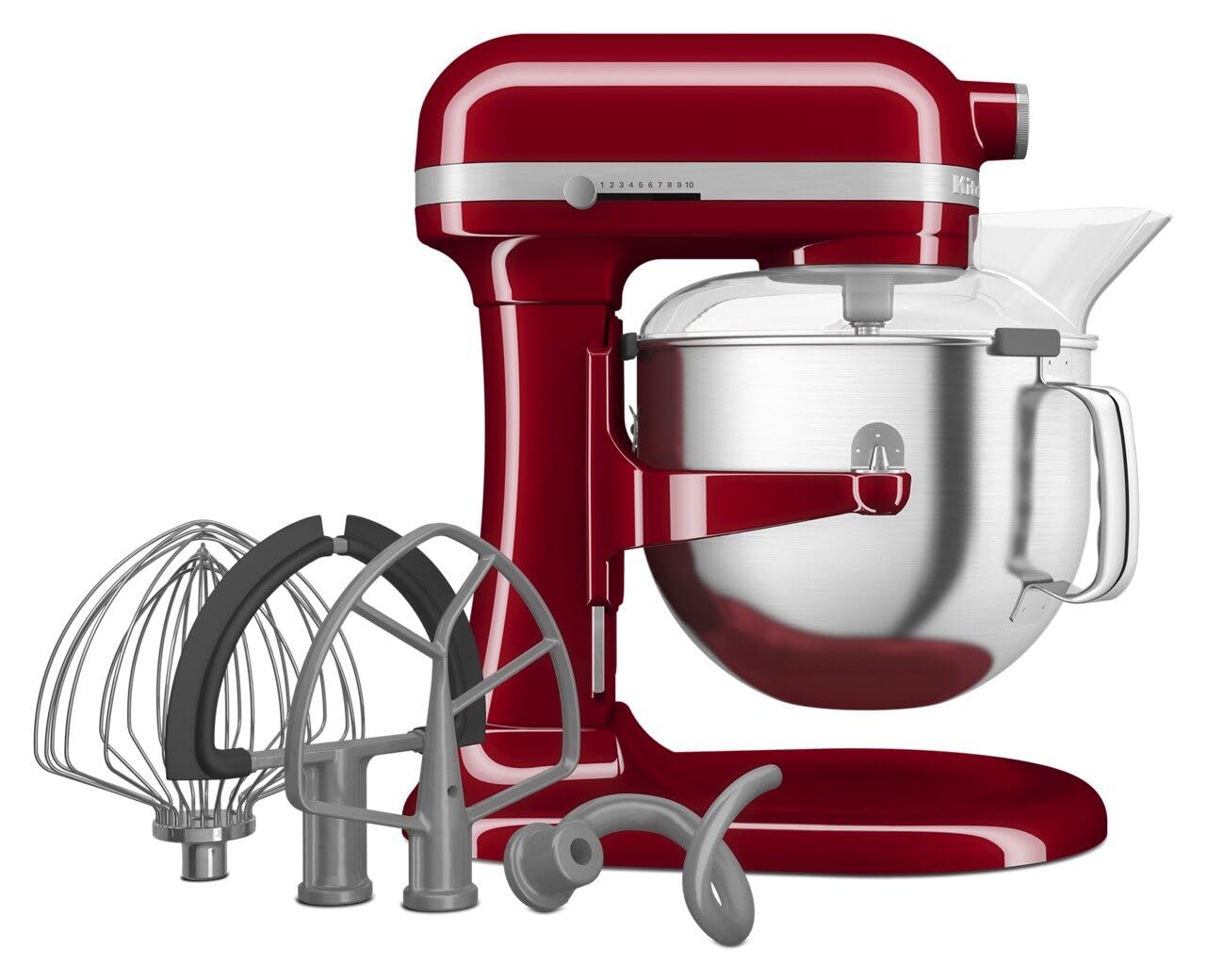
Quick Decision
Buy the KitchenAid Pro Line 7Qt if you knead heavy bread dough weekly or batch-bake in volumes that strain a 5-quart mixer — the 975-watt motor and 7-quart bowl deliver real capability that smaller machines lack. Skip it if you bake occasionally; the 6-quart Pro saves about $100 and the Artisan 5Qt saves roughly $150 for lighter workloads.
Best if you...
- Serious home bread bakers making multiple loaves per week
- Batch bakers who double or triple recipes for meal prep or freezers
- Cottage food operators selling baked goods from home
Skip it if you...
- Occasional bakers who mix once or twice a month
- People with limited counter space or storage height
- Budget-conscious buyers who don't need the extra quart
If you've outgrown a lightweight stand mixer, you know the exact moment it happens: the motor strains during a double batch of bread dough, the dough climbs the hook, or the machine nearly walks off the counter at speed. The KitchenAid Pro Line 7-Quart Stand Mixer is the brand's answer to that problem — a 1.3 HP, direct-drive machine designed to handle the heavy loads that choke smaller mixers. It's the model serious home bakers gravitate toward, but it's also a serious investment that isn't right for everyone.
This analysis digs into what the Pro Line 7Qt does well and where it falls short, based on verified manufacturer specifications, engineering comparisons with other KitchenAid models, and current pricing research. We'll break down its motor, capacity, build quality, and everyday usability — then cover who should buy it, who should skip it, and how it stacks up against the most relevant alternatives, including the Artisan 5Qt and the 6-Quart Pro series.
There is no perfect mixer. This one trades tilt-head convenience for stability and carries a premium price that deserves scrutiny. By the end, you'll know precisely whether the Pro Line 7Qt is worth its price in 2026 — and we'll point you toward the accessories that matter, plus where to buy, including Amazon.
About the KitchenAid Pro Line Stand Mixer 7Qt
The KitchenAid Pro Line Series 7-Quart Stand Mixer (model KV25G0X) is the brand's most powerful home mixer, featuring a 1.3 HP (975-watt) motor, a 7-quart stainless steel bowl, and a direct-drive transmission in a bowl-lift design. It is built for ambitious home bakers who need to knead large batches of bread dough and mix stiff batters that overwhelm smaller machines. The mixer sits between KitchenAid's mainstream Artisan line and its 8-quart Commercial lineup.
Key Specifications
- Motor
- 1.3 HP (975 watts)
- Design
- Bowl-lift
- Speeds
- 11 (with soft start)
- Weight
- 36 lbs
- Made In
- USA (Greenville, Ohio)
- Warranty
- 5-year motor; 1-year parts/labor
- Dimensions
- 16.5 x 13 x 16.5 inches (approx.)
- Drive System
- Direct drive
- Bowl Capacity
- 7 quarts (stainless steel)
- Included Accessories
- Coated flat beater, coated dough hook, wire whip, pouring shield
Overview
The KitchenAid Pro Line Series 7Qt (model KV25G0X) sits at the top of KitchenAid's non-commercial lineup, above the tilt-head Artisan series. Introduced in the mid-2010s, it remains KitchenAid's most powerful home mixer in 2026, pairing a 975-watt (1.3 HP) motor with a 7-quart stainless steel bowl and a direct-drive transmission that connects the motor to the planetary gears without the nylon gear used in the Artisan.
The Pro Line uses a bowl-lift design: instead of tilting the head back, you crank the bowl up into the beater. This keeps the beater closer to the bottom of the bowl for thorough mixing and gives the machine a more stable stance when working dense doughs. The box includes a coated flat beater, coated dough hook, wire whip, and pouring shield, so it arrives ready for most recipes.
In the market, the Pro Line 7Qt competes most directly with KitchenAid's own 6-quart Pro models, the Swedish Ankarsrum Assistent, and high-end machines from Kenwood and Cuisinart. It stands out for its combination of power, capacity, and the vast KitchenAid accessory ecosystem. You'll find it on Amazon with typical street pricing between $549 and $629, though KitchenAid's list price is $729.99.
Pros
The Pro Line 7Qt gets several things genuinely right. Its motor, capacity, and build quality are the headline strengths, but the smaller details — soft start, included accessories, and the bowl-lift geometry — matter just as much in daily use. Here's a specific look at the ways this machine earns its premium.
1.3 HP Motor Powers Through Dense Doughs Without Strain
The Pro Line 7Qt's 975-watt (1.3 HP) motor is the most powerful in KitchenAid's home lineup — roughly triple the Artisan 5Qt's 325 watts. That headroom lets it knead stiff bagel dough, brioche, and multi-grain breads at a steady pace without bogging down or cycling off from heat.
According to KitchenAid's specifications, the 7-quart bowl can mix up to 14 cups of flour for bread dough — enough for about four loaves of bread or nine dozen cookies in a single batch. The motor doesn't just power through ingredients; it maintains speed more consistently than lower-wattage models, which helps develop gluten properly for better oven spring.
The 11-speed control with soft start also adds finesse. The mixer ramps up gradually rather than jumping to full speed, which prevents flour clouds from exploding out of the bowl. For heavy doughs you'll typically use speeds 2–4, but having that reserve power means the machine never sounds like it's straining to finish.
7-Quart Capacity Handles Large Batches and Big Gatherings
The 7-quart stainless steel bowl is a genuine step up from the 5-quart Artisan. KitchenAid rates it for up to 14 cups of flour, which translates to four or five standard loaves of bread. For families who bake for holidays, bake sales, or freezer meal-prep, this capacity means you'll mix once instead of two or three times.
The bowl itself is stainless steel with a comfortable handle, and the pouring shield snaps on securely to keep dry ingredients contained. The bowl-lift design lowers cleanly for bowl changes, and the planetary mixing action covers the bowl surface thoroughly even with thick doughs.
One practical note: the large bowl can be an issue for small recipes. If you're mixing a single dozen cookies, the ingredients barely reach the bottom of the bowl, which can lead to uneven mixing if you don't scrape well. KitchenAid sells a smaller bowl-and-whip combo for bowl-lift models, but that's an extra purchase.
Direct-Drive Transmission Improves Torque and Longevity
The Pro Line's direct-drive system is its most important mechanical advantage over the Artisan. Instead of routing power through a nylon gear — a known failure point on tilt-head models — KitchenAid couples the motor directly to the planetary gear train. The result is more efficient torque transfer, less mechanical noise, and a drivetrain rated for years of heavy use.
KitchenAid backs this with a 5-year motor warranty and a 1-year parts-and-labor warranty — notably longer than the Artisan's 1-year coverage. This is the difference between a mixer that hums through its tenth year of weekly bread baking and one that may need gear repairs.
The trade-off is weight. The direct-drive gear train and all-metal construction push the mixer to roughly 36 pounds. For most owners the stability is worth it — the mixer stays planted even at higher speeds with a full bowl of cookie dough.
Bowl-Lift Design Keeps the Beater in the Dough
The bowl-lift mechanism on the Pro Line serves a real purpose beyond stability. Cranking the bowl up into the beater positions the beater closer to the bottom of the bowl, eliminating the gap you can get on tilt-head models where the head angle leaves ingredients unmixed. This means more thorough incorporation of butter and sugar, and better gluten development in bread dough.
Lifting the bowl is a one-handed crank operation with a positive click, and there are fewer moving parts on the hinge side than a tilt-head. The motor is positioned more centrally, which contributes to the machine's composure under load.
The downside is convenience: each time you want to scrape down the bowl or add flour, you lower the bowl, make the addition, and crank it back up. It's a small overhead per batch, and most owners find it acceptable given the stability payoff. If you prefer the flick-of-the-wrist accessibility of a tilt-head, however, that's a real usability difference that favors the Artisan.
All-Metal Construction and 5-Year Warranty Signal Longevity
The Pro Line's body is die-cast zinc with a painted finish, and the internal gears are metal rather than plastic. This is the level of construction you'd expect in a machine designed for daily commercial-style use. KitchenAid manufactures the Pro Line at its Greenville, Ohio, facility, which matters to buyers who prioritize domestic manufacturing.
KitchenAid's 5-year motor warranty and 1-year parts-and-labor warranty reflect confidence in the drivetrain. The attachment hub, bowl-lift column, and speed control are mature designs with years of field history — this is not a first-generation product.
Given the all-metal drivetrain and replaceable parts, the Pro Line is built to serve 10–15 years or more in a home kitchen. If you prefer to buy once and keep it for a decade, the construction alone justifies part of the price premium.
Soft-Start and 11 Speeds Provide Control for Delicate Recipes
The soft-start feature ramps the mixing action gently from rest to the selected speed over about a second. It prevents the burst of power that throws flour out of the bowl when you start mixing dry ingredients — pouring in a cup of flour while the mixer is running produces remarkably little cloud.
The 11 speeds range from a stir speed for folding in chips or whipped cream to speed 10 for whipping cream and eggs. For recipes that call for just a few seconds of mixing at low speed, the soft-start gives you fine control without the sudden jolt you get from smaller mixers.
It's a small touch, but one that makes the machine feel more premium every time you use it.
Included Accessories and Full Attachment Ecosystem
The Pro Line 7Qt ships with the coated flat beater, coated dough hook, wire whip, and pouring shield. The coated beaters are a meaningful upgrade over bare metal: they minimize food sticking and make cleanup easier. Buying these separately would cost $50–60, and the pouring shield is a $20 accessory when bundled with other KitchenAid mixers.
The mixer also accepts the full KitchenAid attachment ecosystem: pasta roller and cutter, food grinder, spiralizer, ice cream maker, and more. The hub drive at the front of the machine spins at one-tenth the speed of the mixing action, matching other KitchenAid stand mixers, so attachments work as intended.
One note: since the Pro Line uses a bowl-lift platform, confirm that any additional bowl or beater is the bowl-lift version. Tilt-head accessories sometimes differ and won't fit correctly.
Cons
No mixer is perfect, and the Pro Line 7Qt has real trade-offs that will show up in daily use. Some are physical realities — it's heavy and bulky — and others are value judgments, like whether the premium over the 6-quart model is justified. Below are the most significant drawbacks, with an honest assessment of who they affect most.
36 Pounds and a 16.5-Inch Footprint Demand Real Estate
The Pro Line 7Qt weighs about 36 pounds, making it the heaviest of KitchenAid's home mixers. Anyone who stores it in a cabinet will lift it roughly every time they bake — and then lift it back. The footprint is also substantial at roughly 16.5 inches deep and 13 inches wide, plus height, so on a standard counter it consumes a significant slice of usable workspace.
This weight isn't a design flaw; it's the consequence of the all-metal drivetrain and direct-drive transmission. But it's a genuine consideration for anyone with limited counter space, a smaller kitchen, or physical limitations such as arthritis or back strain. The 5-quart Artisan is about 11 pounds lighter and much easier to maneuver.
If you leave the Pro Line out permanently, the weight is a non-issue — use a mixer cover rather than moving it. If you plan to stow it between uses, measure your storage space and test the lift before committing to a $600 purchase.
The Price Premium Over the 6-Quart Pro Is Hard to Justify
The Pro Line's biggest value competitor is KitchenAid's own 6-quart Pro series, which shares the bowl-lift architecture and direct-drive layout. The 6-quart Pro typically sells for $450–$500 — about $100–$150 less — and for many home bakers the extra quart and stronger motor never actually matter.
KitchenAid positions the Pro Line as a step above the 6-quart for a reason: the 975-watt motor and 7-quart bowl sit above the roughly 575-watt motor and 6-quart bowl of the Pro 600. But a careful value analysis shows the 6-quart handles double batches of bread without drama. The honest recommendation: if your baking routinely approaches the 6-quart's limits — say, doughs with more than 10 cups of flour — the Pro Line earns its premium. If not, you're paying for headroom you'll rarely touch.
At the typical sale price of $549, the Pro Line is much easier to recommend. At $649–$729, the value case weakens significantly against the 6-quart model.
Bowl-Lift Design Adds Friction to Every Ingredient Addition
The bowl-lift mechanism, while stable, makes small cooking tasks less fluid. To scrape down the sides, add a cup of flour, or check dough consistency, you must lower the bowl, perform the action, and crank it back up — a two-step process every time. Tilt-head owners simply flip the head up, add, and flip it back down in half a second.
This matters most for recipes that call for gradual ingredient additions — many cake batters and some bread doughs that incorporate flour in stages. It's not a dealbreaker, but it's a persistent friction point that you'll notice more often than the difference in motor power.
The counterargument is that the bowl-lift design significantly improves mixing quality for heavy doughs, and most large-batch work happens in fewer, larger additions. For straightforward mixing and kneading, the overhead is minimal.
Overkill for Casual Bakers Who Rarely Mix Heavy Loads
This is an important con for a large fraction of potential buyers: the Pro Line 7Qt is simply more machine than a typical home baker needs. If you mix a cake or a batch of cookies a few times a month, the 1.3 HP motor and 7-quart bowl are never tested — and the machine's weight, size, and price are all pure downside.
A 5-quart Artisan at roughly $449 handles nearly everything a casual baker throws at it, and the 4.5-quart Classic costs less than half the Pro Line's street price. For this group, the Pro Line is a poor allocation of kitchen budget and counter space.
The honest framing: this machine is for people who bake enough that smaller mixers' limitations — bogging down on dough, small batch size, motor strain — cost them time on a weekly basis. Occasional bakers won't recoup the extra cost in capability.
Expensive Proprietary Attachments Push the Total Investment Higher
Once you've spent $600 on the mixer, attachments are priced individually: the pasta roller and cutter run about $99, the food grinder $49–$99, the ice cream maker about $89, and the spiralizer around $99. A full attachment kit can more than double your total investment.
There is no universal third-party standard for stand mixer attachments, so you're committing to KitchenAid's ecosystem. Quality varies among generic brands, and some third-party attachments perform poorly or wear out quickly; sticking with KitchenAid-brand parts means paying their prices.
If you'll only ever use the beater, dough hook, and whip that ship in the box, the ecosystem is a non-factor — but it's still worth acknowledging that the rest of the line-up is a long-term cost commitment.
Color Options Are Limited Compared to the Artisan Line
The Pro Line 7Qt is typically offered in six to eight colors at any given time, usually including Silver, Empire Red, White, and Black, with occasional limited editions. The Artisan line, by contrast, ships in dozens of finishes — soft pastels, metallic tri-tones, and seasonal specials — and has become a permanent counter statement in many kitchens.
If your mixer sits out on an open counter and color matters to you, the Pro Line's palette is constrained. There will not be a lavender or rose edition of the Pro Line to match your backsplash.
This is a minor con, but for design-conscious buyers it's a real factor — and it's part of why some people choose an Artisan even when they know the Pro Line is more capable.
👍 Who It's For
The Pro Line 7Qt is first and foremost a bread baker's machine. If you knead two loaves or more every week, maintain your own sourdough starter, or make bagels and brioche on weekends, the 1.3 HP motor is the difference between enjoying the process and babysitting a straining mixer. The 7-quart bowl also means you can double most bread recipes without overflow — a capability that genuinely saves you an hour on baking day.
Beyond bread, this mixer suits large-family cooks and meal preppers who make big batches of cookies for the freezer, dough for a week of pizza nights, or whipped potatoes for holiday gatherings. Cottage-food operators — people baking at home for sale at farmers' markets — will find professional capacity without the price and footprint of a true commercial mixer.
Finally, this is the mixer for buyers who value longevity and plan to keep one appliance for 10–15 years. The direct-drive metal gear train, the 5-year motor warranty, and the established parts ecosystem make the Pro Line the right choice for owners who treat appliances as lifetime investments.
👎 Who Should Avoid
If you bake a few times a month and never push the limits of a standard mixer, the Pro Line is overkill. You'll never use the upper end of the motor power, the bowl will be awkwardly large for typical recipes, and you'll spend $150–$200 more than the Artisan 5Qt that covers your needs. The weight alone will become a source of resentment if you have to haul it out of a cabinet regularly.
People with limited counter space, smaller kitchens, or physical challenges should also look elsewhere. With a 36-pound weight and a 16.5-inch footprint, the Pro Line isn't a fit for apartments with galley kitchens or for bakers with mobility or strength limitations. The 5-quart Artisan at 25 pounds, or a compact 3.5-quart KitchenAid, makes more sense.
Finally, budget-conscious buyers should be clear-eyed: the Pro Line's sweet spot is at or below $549 on sale. At $649–$729 list price, the 6-quart Pro series delivers nearly all the real-world capability for $100–$150 less — and that difference is better spent on a food scale, digital thermometer, and a good bread lame.
See today's KitchenAid Pro Line Stand Mixer 7Qt price and available configurations on Amazon.
🛒 Buy on AmazonAs an Amazon Associate we earn from qualifying purchases.
Alternatives to Consider
| Product | Choose KitchenAid Pro Line Stand Mixer 7Qt if... | Choose the alternative if... |
|---|---|---|
| KitchenAid Artisan 5Qt SeriesApproximately $150 more expensive | You need the extra power and capacity for dense doughs and large batches that a 325-watt tilt-head cannot handle | You prefer tilt-head convenience, a $150-lower price, and a much wider color selection |
| KitchenAid 6-Quart Pro Series (Pro 600)Approximately $100–$150 more expensive | You routinely max out the 6-quart bowl and want the additional quart and stronger 975-watt motor | You want virtually the same bowl-lift experience for about $100–$150 less |
| Ankarsrum Assistent OriginalComparable price range; Ankarsrum typically costs slightly more | You value the familiar KitchenAid mixing action, the attachment ecosystem, and the bowl-lift stability | You're primarily a bread baker who wants the rotating-bowl design and the strong reputation Ankarsrum has developed among dough enthusiasts |
| Cuisinart Precision Master 7QtApproximately $200 more expensive | You want KitchenAid's proven durability, brand history, and the huge accessories ecosystem | You want a 7-quart bowl and decent power while saving about $200 |
The most direct competitor is KitchenAid's own 6-quart Pro series, which uses the same bowl-lift architecture and direct-drive layout but pairs it with a roughly 575-watt motor and a 6-quart bowl, at a street price around $100–$150 lower. That's the value pick for anyone who wants bowl-lift convenience without paying for the Pro Line's extra headroom.
The Artisan 5Qt remains the choice for tilt-head accessibility and aesthetics: it's lighter, cheaper, and available in far more colors, but its 325-watt motor will strain on stiff doughs. Beyond KitchenAid, the Swedish Ankarsrum Assistent Original uses a rotating bowl and stationary dough hook — a fundamentally different approach that many bread bakers prefer for gluten development, though its attachment ecosystem is smaller. For a budget option, the Cuisinart Precision Master 7Qt offers similar capacity for roughly $200 less, but with less history of long-term reliability and nowhere near the same accessory selection. In short: the Pro Line's alternatives are defined by how much you bake and what you bake most.
Is it worth the price?
At a typical street price of $599 — and frequently on sale for $549 — the Pro Line 7Qt is worth it for bakers who specifically need the 975-watt motor and 7-quart capacity to handle heavy doughs and large batches. The main alternative to weigh is the 6-quart Pro series at roughly $100 less, which delivers similar bowl-lift usability for most recipes, and the Artisan 5Qt at about $150 less for lighter bakers. If you've outgrown your current mixer and bake bread or batch cookies weekly, the Pro Line earns its price; if you bake occasionally, you're paying for capability you won't use.
📝 Bottom Line
The KitchenAid Pro Line 7Qt is the right choice for serious home bakers and small cottage-food operations that need commercial-grade power, capacity, and durability in a home-sized package. Its 975-watt motor kneads dense doughs that stall lesser mixers, the 7-quart bowl handles double batches in a single pass, and the direct-drive all-metal construction is built to last a decade or more.
Its strongest assets are the motor (roughly three times the Artisan's wattage), the 7-quart capacity, and KitchenAid's 5-year motor warranty. Its most significant trade-offs are the 36-pound weight, the price premium of $100–$150 over the 6-quart Pro, and the bowl-lift mechanism that adds minor friction when adding ingredients. The limited color palette also matters if your mixer lives in a visible spot.
The verdict is simple: buy the Pro Line 7Qt if heavy dough and large batches are weekly realities and you prefer buying one machine for the next decade. At the sub-$550 sale price, it's an easy yes for serious bakers. If you want to save $100 without losing bowl-lift convenience, the 6-quart Pro is the smart pick — and if you bake occasionally and value a lighter, more colorful tilt-head, the Artisan 5Qt is the better buy.
Check current KitchenAid Pro Line Stand Mixer 7Qt availability and bundle options on Amazon.
🛒 Buy on AmazonAs an Amazon Associate we earn from qualifying purchases.
Frequently Asked Questions
Quick Summary
Key Pros
- ✓The 1.3 HP (975-watt) motor handles dense bread, bagel, and cookie doughs without straining.
- ✓The 7-quart bowl mixes up to 14 cups of flour — roughly four to five loaves of bread.
- ✓Direct-drive transmission delivers smooth torque and quieter operation than gear-driven Artisan models.
- ✓Bowl-lift design keeps the beater close to the bowl bottom for thorough mixing of heavy doughs.
- ✓All-metal construction with a 5-year motor warranty promises decades of use.
Key Cons
- ✗At 36 pounds, it's heavy and awkward to move, requiring dedicated counter or cabinet space.
- ✗The ~$599 price is $100–$150 above the very similar 6-quart Pro model, and roughly $150 above the Artisan 5Qt.
- ✗Bowl-lift design makes adding ingredients more cumbersome than tilt-head mixers.
- ✗The large footprint and height can crowd counter space and limit storage options.
- ✗Overkill for casual bakers who make a cake or cookies a few times a month.
Ratings
Best For
- →Serious home bread bakers making multiple loaves per week
- →Batch bakers who double or triple recipes for meal prep or freezers
- →Cottage food operators selling baked goods from home
- →Large families who bake for gatherings, holidays, or parties