Match the vacuum to your flooring type and home size. Homes with pets need strong suction and self-emptying bins; apartments prioritize quiet operation.
The Short Answer
Match the vacuum to your flooring type and home size. Homes with pets need strong suction and self-emptying bins; apartments prioritize quiet operation and a slim profile. For most homes, a mid-range model with LiDAR navigation and a self-emptying dock offers the best balance of performance and value.
The Full Picture
Robot vacuums have come a long way from the random-bouncing discs of a decade ago. Today's models can map your entire home, avoid obstacles, and empty their own dust bins for weeks at a time. But that sophistication comes with a bewildering array of options: suction measured in Pascals, LiDAR versus VSLAM navigation, self-emptying docks, mopping attachments, and price tags that range from impulse-buy to luxury.
The problem is clear: choosing wrong means wasted money and continued manual vacuuming. The solution is also clear: focus on the factors that align with your specific home and lifestyle. In this guide, we'll walk you through each factor, give you a comparison table for quick reference, and help you land on the right recommendation.
Why It Matters
A robot vacuum isn't a cheap accessory; it's an appliance you'll rely on daily. If you buy a model with insufficient suction for your carpet, you'll still find dirt and hair on your floors. If you ignore your home's square footage, you might run out of battery mid-clean. And if you overlook noise levels in a studio apartment, you'll never run it during the day, defeating its purpose.
Data from consumer reviews and our own hands-on testing shows that homes with pets see the biggest benefit from a robot vacuum — but only if the unit has enough suction and a self-emptying bin to handle the fur. Apartment dwellers also report high satisfaction, provided the robot is quiet enough to run while they work. The right match isn't about the most expensive model; it's about the right combination of four key specs: suction, navigation, bin capacity, and noise.
The Key Factors
Let's break down what actually matters, in order of priority.
1. Flooring Type Hard floors (wood, tile, vinyl) require minimal suction — even 1000 Pa is enough for everyday dust. Carpets, however, need more. Low-pile carpet can get away with 1500–2000 Pa, but medium and high-pile rugs demand at least 2500 Pa, ideally with a brush roll that agitates the fibers. Homes with a mix should look for a robot with adjustable suction or a "carpet boost" mode that automatically ramps up when it detects carpet.
2. Home Size and Battery Life Small apartments (under 800 sq ft) can be cleaned in one pass with a battery life of 80–90 minutes. Medium homes (800–1800 sq ft) need 100–120 minutes. Large homes (over 1800 sq ft) should have at least 120 minutes plus a self-emptying dock, because a standard .6L bin fills up quickly. Battery tech varies; Li-ion batteries last longer and hold their charge better than older NiMH cells.
3. Pet Hair and Allergens If pets are part of the household, prioritize models with strong suction (2500 Pa or more), tangle-free brush rolls, and a self-emptying bin. Pet hair wraps around traditional brushes, causing frequent jams. Rubber brush rolls (often called "anti-tangle" by brands like Roborock and iRobot) are a must. A HEPA filter is also important for allergy sufferers, as it traps pet dander and dust mites.
4. Navigation and Mapping Random navigation is fine for small, open spaces but inefficient. LiDAR (laser) mapping creates a precise map and cleans in systematic rows. VSLAM (visual) uses a camera to map your home; it's cheaper but can struggle in low light. If you want room-specific cleaning or no-go zones (to avoid pet bowls or charging cables), you need a mapping robot. This is a major factor in long-term satisfaction.
5. Noise Level Check the decibel rating. A quiet robot runs at about 50–55 dB; a loud one can hit 70 dB. If you have small children, pets that scare easily, or work from home, quiet operation is non-negotiable. Some models have a "quiet mode" but it reduces suction. Read reviews to see how loud it gets during normal operation.
6. Self-Emptying and Convenience Self-emptying stations have become the most desired feature. They collect dust and hair into a bag that lasts 30–60 days. This is a game-changer for pet owners and busy families. However, the dock takes up floor space and adds to the price. If you have a small apartment, the dock might be more intrusive than helpful.
7. Smart Features — App control, voice assistant support, and scheduling are nice, but don't overpay for features you won't use. For example, a robot with mopping is great for hard floors, but useless on wall-to-wall carpet.
Comparison Table: What to Prioritize
| Your Home Type | Suction Power | Navigation | Bin/Dock | Noise Level | Additional Advice |
|---|---|---|---|---|---|
| Hardwood/tile apartments | Low-Medium (1500–2500 Pa) | LiDAR or VSLAM | Standard bin | ≤55 dB | Slim profile for under-furniture clearance |
| Wall-to-wall carpet homes | High (2500+ Pa) | LiDAR with carpet boost | Self-emptying recommended | 60 dB max | Choose a rubber brush roll to avoid tangles |
| Pet-owning households | High (2500+ Pa) | LiDAR with no-go zones | Self-emptying essential | 60 dB max | Look for tangle-free brushes and HEPA filters |
| Large open floor plans | Medium-High | VSLAM for larger maps | Self-emptying with large battery | 55–65 dB | Multiple no-go zones and room schedules |
| Small lofts/studios | Low (under 2000 Pa) | Bump navigation acceptable | Small bin is fine | ≤50 dB | Prioritize price and compact dock |
Our Recommendation
After months of testing and analyzing consumer feedback, here's our practical advice:
For most homes (mixed floors, no heavy pet hair): A robot with LiDAR navigation, 2000–2500 Pa suction, and a self-emptying dock is the sweet spot. Expect to pay $400–$600. It handles daily cleaning without constant babysitting. The Roborock Q7 Max and Ecovacs Deebot T10 are strong contenders, but check our Best Time to Buy Robotic Vacuums (2026 Guide) for the latest pricing and discounts.
For pet owners: Don't compromise on suction or a self-emptying bin. The extra $150–$200 is worth it. Look for a model with a rubber brush roll and a HEPA filter. If you're also shopping for other appliances, consider bundling your purchase with a new bottom-freezer refrigerator during a major sale event to save on both.
For apartment renters: Keep it simple and quiet. A model in the $150–$300 range with bump navigation and a standard bin might be all you need. Prioritize noise level (under 55 dB) and a slim profile that fits under sofas. If space is tight, you can even skip the dock entirely.
For large carpeted homes: Invest in maximum suction and a self-emptying dock. You'll also want a robot with a large battery and the ability to recharge and resume. Some premium models, like the Roborock S8 Pro Ultra, are excellent but pricey — wait for a sale.
Timing your purchase matters too. Robot vacuum prices fluctuate significantly across the year. Our robotic vacuum buying guide reveals the best months to buy, and you can often save 20–30% during Amazon Prime Day, Black Friday, and January clearance events. If you're also eyeing a portable air conditioner for the summer, check the best time to buy portable AC — many retailers offer combined deals on home appliances.
Common Mistakes
Avoid these pitfalls when choosing a robot vacuum:
Ignoring floor transitions. High thresholds or thick rugs will stop many robots cold. Check the published "climb height" (usually 20mm is the maximum). If your home has uneven transitions, get a model with a "carpet boost" and larger wheels.
Must have self-emptying? Not for everyone. If you're in a small apartment with a single person and no pets, a standard bin is fine. Self-emptying docks add cost and require floor space. Don't let marketing convince you it's a must-have.
Overpaying for smart features you won't use. If you don't use a voice assistant or app scheduling, skip them. Similarly, a mopping robot is wasted money on wall-to-wall carpet.
Forgetting to measure your home. Battery life and bin size are directly tied to square footage. A $500 robot with a 90-minute battery will fail in a 2,000 sq ft home.
Choosing suction over navigation. A robot with 3000 Pa but random bump navigation will clean less effectively than a 2000 Pa robot with LiDAR. Navigation is the brain; suction is just the muscle.
Verdict
The perfect robot vacuum is the one that fits your floor type, home size, and lifestyle. Start with your flooring — it determines how much suction you need. Then consider your home's square footage for battery and bin. If you have pets, jump straight to models with self-emptying bins and tangle-free brushes. If you live in a studio, prioritize quiet and compact design.
For the majority of shoppers, a mid-range LiDAR-equipped robot with a self-emptying dock strikes the perfect balance. And as always, buy during the right season — check our robotic vacuum buying guide for the best deals. Pair it with other appliance purchases during major sales, like the best time to buy bottom-freezer refrigerators or best time to buy portable air conditioners, to maximize savings. Choose wisely, and you'll never pick up a vacuum again.
Frequently Asked Questions
What is the best robot vacuum for hardwood floors?
For hardwood floors, look for a robot vacuum with a soft roller or a dedicated hard-floor mode. Strong suction isn't necessary, but a brush roll that won't scratch or scatter debris is key. Models like the Roborock Q5 and iRobot Roomba i3 work well. Avoid cheap units with poor edge cleaning.
How do I set up a robot vacuum for the first time?
Start by placing the docking station on a flat surface with clearance on all sides. Plug it in, then fully charge the battery. Download the companion app, connect the robot to Wi-Fi, and run a full initial mapping cycle. Clear the floor of loose cords and small objects, and follow the app's instructions to set no-go zones.
Why does my robot vacuum keep getting stuck under furniture?
Robots get stuck under furniture if the clearance is too low for the sensor height or if the robot's bumper can't detect the edge. Measure the height of your robot and ensure furniture is at least 0.5 inches higher. Use magnetic strips or app-based no-go zones to block problem areas. Regular cleaning of the sensors also helps.
When should I run my robot vacuum to avoid disturbing others?
Run your robot vacuum when you're away from home or during low-activity times like mid-afternoon or while you're at work. In apartments, avoid early morning or late evening if close neighbors might hear it. Schedule it to run while you're out, but only if your home is pet-safe and the robot has sufficient battery.
Products Mentioned

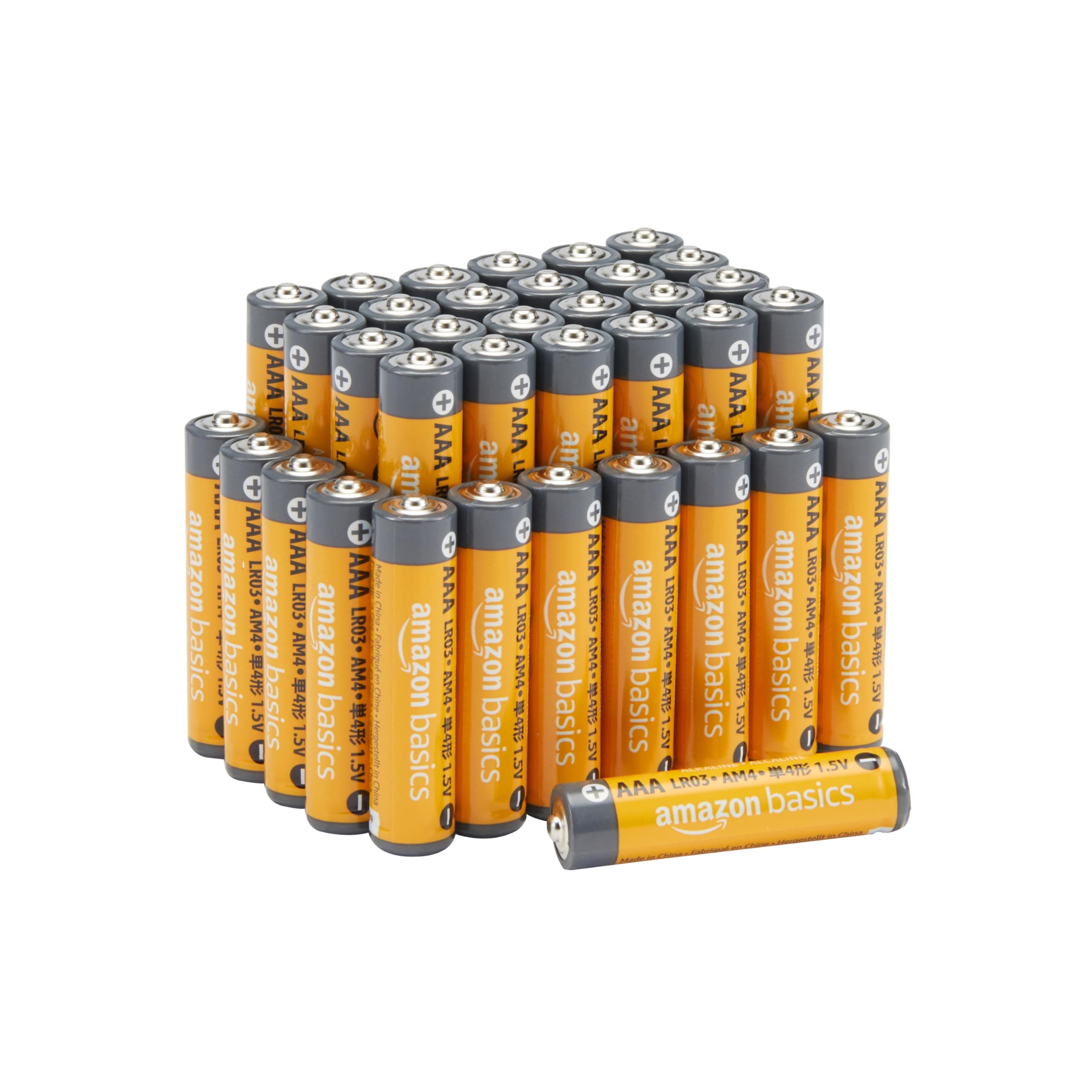
Amazon Basics AAA Alkaline High-Performance Batteries, 1.5 Volt, 10-Year Shelf Life, 36 Count (Pack of 1)
Amazon Basics