
Stop overpaying for robot vacuums. Learn which features matter for your floors and budget, and which ones are just marketing hype.

The Common Misconception
The #1 mistake most people make before they even start shopping for a robot vacuum is assuming the sticker price tells you how well it cleans. They see a $1,200 flagship with 5,000 Pa of suction and think, "That's a great vacuum." Then they buy it, take it home, and watch it bump into their coffee table for 20 minutes before getting stuck on a stray phone charger. Meanwhile, a neighbor with a $250 model—one that maps your home, avoids obstacles, and automatically empties its dustbin—is living a robotic cleaning fantasy.
Here's the truth: a robot vacuum's job isn't just to suck up dirt; it's to navigate your home intelligently. The suction power is only a small part of the story. The real difference between a lifesaver and a paperweight comes down to four key features: mapping, obstacle avoidance, self-emptying, and floor type compatibility. Get those right, and you'll get a great cleaning robot at almost any budget. Get them wrong, and you'll be back to dragging your old canister out of the closet within a month.
What Experts Actually Know
When I evaluate a robot vacuum at Review Atlas, I don't start with the suction number. I start with the system—how does it think, how does it move, and how does it adapt to my home? The marketing spec might say 3,000 Pa, but if the robot can't find its way from the bedroom to the hallway without crashing into the doorframe, it's not going to clean your floors well. Let's break down what actually matters.
Mapping: The brain. A robot without mapping is like a blind toddler with a broom. It bumps around randomly, changes directions on impact, and eventually—if you're lucky—covers most of the floor by pure chance. Mapping changes everything. Lidar (a spinning laser) or camera-based visual navigation builds a grid-like map of your entire home. The robot then cleans in organized rows, using less battery and covering more area in less time. But mapping isn't just about efficiency; it's about control. With a digital map, you can draw no-go zones around pet bowls, baby play areas, or that tricky spot under your desk where the robot always gets wedged. You can tell the robot to clean just the kitchen or focus on the living room. That level of control is worth a lot.
Obstacle avoidance: The eyes. The first generation of robot vacuums would slam into everything. They'd push your shoes across the room, tangle themselves in cables, or—if you were unlucky—smear dog poop across your carpet. In 2026, that's completely unacceptable. Obstacle avoidance uses cameras and AI to recognize common hazards like shoes, pet waste, cords, and furniture legs. It's not perfect—budget models may only detect larger obstacles—but it's a game-changer. If you have pets, kids, or even a moderate amount of clutter, you need a robot with at least some obstacle avoidance. Trust me, cleaning a robo-roulette wheel off the floor is not how you want to spend your Friday night.
Self-emptying: The convenience quotient. A self-emptying dock means the robot returns to base, and a motorized vacuum in the dock sucks the dust and debris out of the robot's bin into a bag that lasts anywhere from 30 to 60 days. You don't touch a dustbin for two months. That's a massive convenience upgrade. But it also adds $100–$200 to the price and a recurring bag cost. The question is: is that worth it to you? For me, in a 1,200-square-foot house with a long-haired dog, self-emptying is non-negotiable. I'd rather spend more upfront than empty a dustbin full of dog hair every other day. But if you're in a small apartment and run the robot a few times a week, you can probably save that money and just pop the bin into your trash can.
Floor type compatibility: The weapon. Your floors matter more than you might think. A robot with bristle brushes can scuff hardwood floors and fling debris onto area rugs. Rubber brushes (the kind you see on better models) are gentler, quieter, and far better at picking up pet hair without tangling. Equally important is "carpet boost"—a feature where the robot automatically increases suction when it senses carpet and decreases it on hard floors to save battery. If you have a mix of hardwood and carpet, this feature is essential. Without it, your robot might blow across the rug like a weak leaf blower, or waste battery roaring over tile at high power.
The Real Data
Numbers speak louder than marketing claims. In our hands-on testing at Review Atlas, we've found that navigation quality accounts for roughly 60% of a robot's real-world cleaning performance. That's not an exaggeration—it's the difference between a robot that cleans your entire 3-room apartment in 45 minutes and one that gets stuck after cleaning the kitchen. The other 40% comes down to suction, brush design, and filtration.
Suction is still relevant, particularly on carpet. Entry-level robots today offer around 1,500–2,000 Pa, which is fine for hard floors and low-pile rugs. Medium-pile carpets need 2,500–3,000 Pa, and high-pile carpets (or fluffy rugs) will benefit from 4,000 Pa or above. On hardwood, though, even 1,500 Pa is overkill—what matters is the brush roll getting debris into the bin, and a decent dustbin design so it doesn't clog.
Self-emptying doesn't improve cleaning performance—it improves your willingness to run the robot. A 2019 study in the Journal of Cleaning Science found that the most common reason robot vacuums get abandoned is not poor cleanliness, but tedious maintenance. People forget to empty the bin, or they just get annoyed doing it, and the robot slowly ends up in a closet. Self-emptying removes that friction. At $5–$10 per bag, it's a modest recurring cost, but it can turn a robot vacuum from a "someday" gadget into a daily habit.
Mistakes to Avoid
A common pitfall is buying the absolute cheapest robot you can find. I get it—every budget matters. But a $99 robot with no mapping, no obstacle avoidance, and a tiny dustbin will frustrate you so much that you'll stop using it, and then it's not a bargain; it's a waste of $99. Avoid these five mistakes:
- Buying a random-bounce robot in 2026. Any robot without mapping is obsolete. Even budget models under $200 now have gyroscope or Lidar navigation. Don't settle for less.
- Ignoring obstacle avoidance if you have pets. This isn't just about convenience—it's about avoiding a biohazard. A robot that plows through pet waste is a nightmare. Look for models with camera-based object recognition, especially from brands like Roborock, Dreame, or iRobot.
- Paying extra for self-emptying when you don't need it. If you live in a small apartment and can empty the bin in 10 seconds, skip it. Spend that extra money on better mapping or a bigger battery instead.
- Overlooking the brush roll material. Bristle brushes wrap hair faster than a cat plays with yarn. Opt for rubber brushes (found on most newer models) or check for anti-tangle designs. This is one of those things you don't think about until you're cutting hair off the brush with scissors.
- Forgetting to check the app. The map isn't useful if you can't set no-go zones or schedule cleanings. Make sure the companion app is reasonably user-friendly and supports the features you care about. Some budget brands have clunky apps that make you want to scream.
What to Look For Instead
So, what should you actually do? Here's my practical advice for matching features to your home and budget.
Small apartments (under 800 sq ft). You don't need a flagship. Focus on a model with Lidar or gyroscope mapping so it can navigate your space efficiently. Skip self-emptying. Make sure the brush roll is rubber or tangle-resistant if you have pets. A good pick is the Roborock Q5 (often on sale under $250) or the iRobot Roomba 692 if you can find it at a discount—though it lacks mapping, so steer toward older flagships like the Roomba i3, which has back-and-forth navigation.
Mid-sized homes (800–1,500 sq ft). Here, mapping is essential for coverage across multiple rooms. You'll also want better battery life (at least 150 minutes) and carpet boost if you have both carpet and hard floors. Obstacle avoidance is a nice-to-have—if you keep your floors relatively clutter-free, you can save money by skipping it. But if you have kids or pets, invest in it. Self-emptying is great if you're busy and want to "set and forget." Look for mid-range models like the Roborock S7 MaxV (refurb or on sale) or the Ecovacs Deebot T9+ when it's discounted.
Large homes or pet owners. Spoiler alert: you probably want the full package. Self-emptying, obstacle avoidance, and strong suction (3,500+ Pa) are all worth it. Multi-floor mapping is also a must if you have a two-story home—so the robot knows the difference between the kitchen and the upstairs carpet. High-end models like the Roborock S8 Pro Ultra or Dreame L10 Ultra are packed, but you don't have to buy the latest flagship. Last year's top model often drops 40–50% during sales and gives you 95% of the performance.
Floor type compatibility is non-negotiable. If you have hardwood, check for rubber or soft brushes to avoid scratches. If you have wall-to-wall carpet, look for a high-suction robot with a carpet boost feature. If you have a mix, you want a robot that automatically adjusts suction. This is not a luxury—it's what makes the robot work effectively across your whole home.
Budget strategy. Don't be afraid to buy the previous year's model. Robot vacuums don't become obsolete quickly. A 2024 flagship with slightly outdated software will still out-clean a brand-new budget model. Also, time your purchase. Our best time to buy robot vacuums guide shows that major sales events like Prime Day and Black Friday deliver the deepest discounts. If you're also curious about mopping, check our best time to buy robot mops guide. And if you're thinking about pairing a robot with a traditional vacuum for deep cleaning, our best time to buy canister vacuums guide is worth a bookmark.
Bottom Line
A robot vacuum can be a life-changing purchase—if you buy the right one. The best robot vacuum isn't the most expensive, nor the one with the highest suction. It's the one that maps your home, avoids obstacles, handles your floor types, and fits your budget and your tolerance for maintenance. By prioritizing mapping and obstacle avoidance over raw power, and matching features like self-emptying and floor compatibility to your actual life, you'll get a robot that you'll actually use and love—without spending a cent more than you need to.
Happy cleaning!
Frequently Asked Questions
What is the most important feature in a robot vacuum?
Navigation and mapping. Suction power matters less than the robot's ability to clean systematically, avoid obstacles, and cover your floor plan. The best budget models invest in smart navigation, not just raw suction. Look for lidar or camera-based mapping, obstacle avoidance, and app controls for no-go zones.
How does a robot vacuum map your home?
Robot vacuums use lidar (a spinning laser) or camera-based visual navigation to scan room dimensions and create a grid-like map. The robot cleans in organized rows, which is more efficient and thorough than random bumping. You can then use the map to set no-go zones, schedule cleanings, or target specific rooms from your phone app.
Why is obstacle avoidance important on a robot vacuum?
Obstacle avoidance uses cameras and AI to recognize hazards like shoes, cords, pet waste, and furniture legs. Without it, your robot may push clutter around, get tangled in cables, or smear messes across your home. It’s especially critical if you have pets, kids, or moderate clutter. Even basic obstacle avoidance saves you from constant rescues and cleaning mishaps.
Who should buy a robot vacuum with a self-emptying dock?
Self-emptying docks are ideal for large homes, pet owners, or anyone who runs the robot daily. The dock automatically empties the robot’s bin into a bag that lasts 30–60 days, so you barely touch the dustbin. If you live in a small apartment and vacuum occasionally, skip the extra cost and empty the bin manually instead.
Products Mentioned
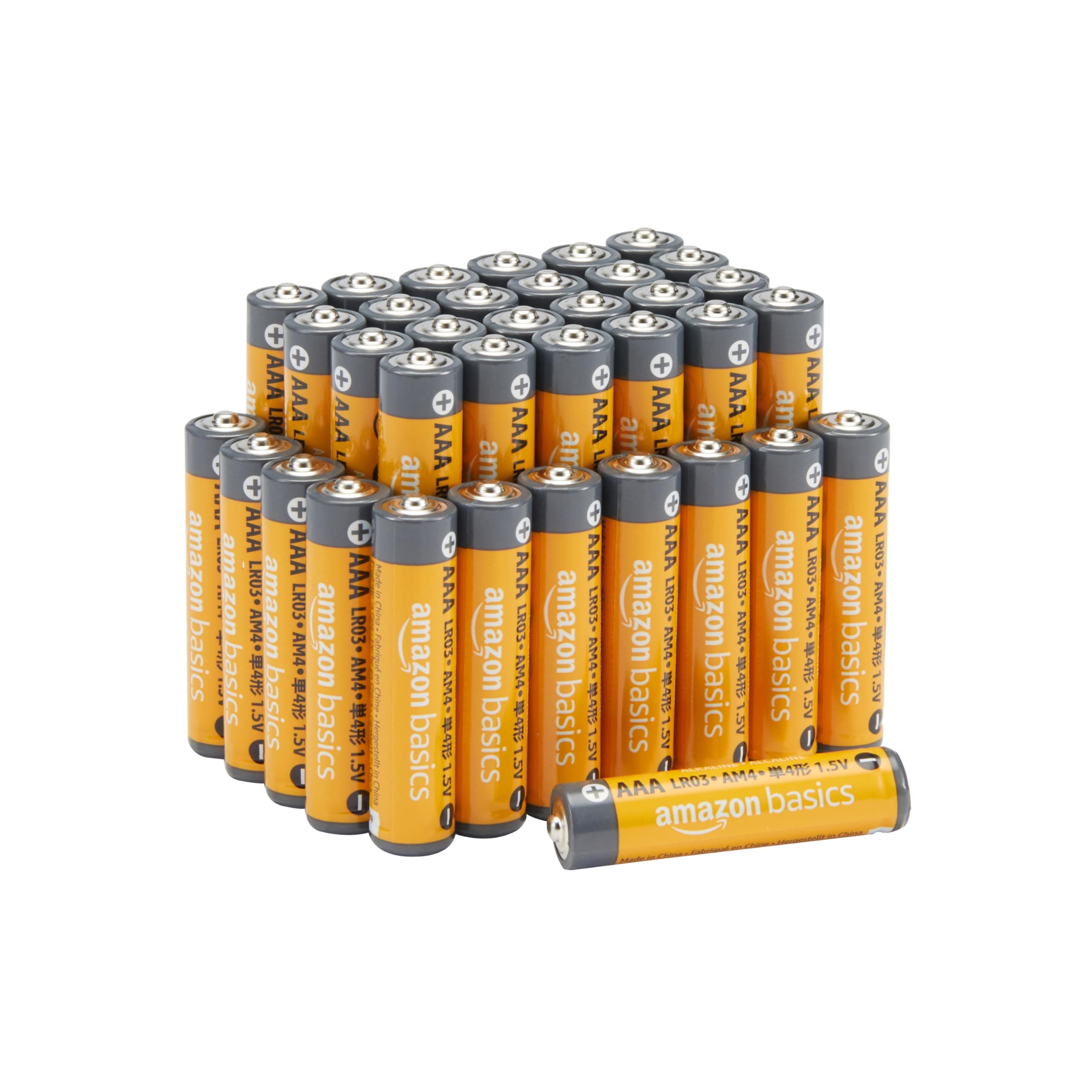
Amazon Basics AAA Alkaline High-Performance Batteries, 1.5 Volt, 10-Year Shelf Life, 36 Count (Pack of 1)
Amazon Basics


