
Match your vacuum to flooring and home size. Pets need strong suction and self-emptying bins; apartments need quiet operation and a slim profile.
The Short Answer
Match the vacuum to your flooring type and home size. Homes with pets need strong suction and self-emptying bins; apartments prioritize quiet operation and slim profile. This isn't about buying the most expensive model—it's about buying the one that fits the way you live.
The Full Picture
But with dozens of models ranging from $200 to $1,500, how do you know which one will actually keep your floors clean without driving you crazy? The problem is that robot vacuums are not one-size-fits-all. A $1,200 flagship with a self-emptying base might be overkill for a 500-square-foot apartment with no pets, while a $250 budget bot might struggle to keep up with two dogs and wall-to-wall carpet.
That's why the first step is always to audit your home. Think about your floor surface, square footage, number of pets, and how much noise you're willing to tolerate. Once you have that inventory, the decision becomes far simpler.
Robot vacuums have evolved from novelty gadgets to genuinely capable cleaning tools. The best ones now offer LiDAR mapping, object avoidance, and automatic dirt disposal. But those features cost money—and not every home needs them. So before you start shopping, read our Best Time to Buy Robotic Vacuums guide for pricing trends, then come back here for the decision framework.
Why It Matters
Choosing the wrong robot vacuum is more than a waste of money—it's a daily annoyance. A model with weak suction on carpet will leave debris behind, forcing you to pull out your stick vacuum anyway. A noisy model can disrupt work-from-home calls or baby naps. And a bulky charging base can eat up valuable floor space in a small apartment.
On the other hand, the right robot vacuum becomes a set-and-forget solution. It quietly handles daily dirt, pet hair, and dust so you don't have to think about it. That convenience is the real reason people buy them—and it only works if the vacuum actually suits your space.
If you have hard floors, for example, a robot vacuum is uniquely suited; they're great at picking up dust and small debris from wood, tile, and laminate. But if you have thick carpets, you need a model with strong suction and possibly a brush roll designed for high-pile flooring. And if you have pets, you'll want a model with tangle-free brushes and a high-capacity bin—or better yet, a self-emptying base.
The Key Factors
Here are the five biggest factors to evaluate when comparing robot vacuums:
1. Flooring Type
- Hardwood / Tile / Laminate: Almost any robot vacuum works. Look for gentle rubber brushes and a water-mopping option if you want to maintain shine.
- Low-Pile Carpet: Standard suction is fine, but you'll want a model with a dedicated brush roll and perhaps a boost mode.
- High-Pile / Shag Carpet: You need strong suction (2000+ Pa) and a brush roll that won't get tangled. Avoid models labelled as “hard floor only.”
2. Home Size
- Under 500 sq ft: A basic robot with a small dustbin is fine. You don't need a self-emptying base—you can just empty the bin yourself.
- 500–1,500 sq ft: Mid-range models with mapping and zone cleaning are ideal. Self-emptying is a nice bonus, not essential.
- Over 1,500 sq ft: Get a model with LiDAR mapping, multi-floor support, and a self-emptying base. Otherwise, you'll be constantly emptying the bin.
3. Pet Hair and Allergies
Pet hair is robot vacuums' biggest test. Look for:
- Strong suction (at least 2000 Pa)
- Tangle-free brush rolls (often rubber or comb-style)
- HEPA filters to trap allergens
- Self-emptying base so you don't touch the hair
4. Navigation and Smart Features
- Random navigation: Cheap but inefficient for larger homes.
- Gyroscopic navigation: Works fine for small spaces but can miss spots.
- LiDAR / Laser mapping: Creates precise maps and allows room selection, no-go zones, and spot cleaning.
- Object avoidance: Essential if you have cords, toys, or pet waste—a vacuum that can't avoid obstacles just pushes them around.
5. Noise Level
If you work from home or have a baby, pay attention to noise. Most robot vacuums run 60–75 dB. Anything above 70 dB is noticeable in a quiet room. Quieter models (under 60 dB) are usually lower-powered, so it's a tradeoff.
Quick Reference Table
| Your Situation | Best Features | Example Model Type |
|---|---|---|
| Hardwood/tile, small apartment | Slim profile, quiet motor, optional mopping | $300–$500 mid-range |
| Pet hair, carpets | Strong suction, tangle-free brush, self-emptying | $600+ flagship |
| Large home, multi-floor | LiDAR mapping, zone control, auto-empty | $800+ premium |
| Budget first-timer | Basic random navigation, small bin | $150–$250 budget |
For a broader look at all vacuum types, including stick vacuums that can complement your robot, check our Best Time to Buy Vacuums guide.
Common Mistakes to Avoid
- Buying on price alone. A $200 robot that can't navigate your home is a doorstop, not a vacuum. Invest in the features you actually need.
- Ignoring brush roll maintenance. If the vacuum stops picking up hair, it's usually because the brush is tangled. Look for self-cleaning or tangle-free designs.
- Forgetting about bin capacity. In a large home or with pets, a tiny bin means constant emptying. A self-emptying base solves this but costs more.
- Not checking the charging base footprint. Some bases are huge. Measure your space first.
- Assuming all robot vacuums map your home. Cheap models bump around randomly. If you want efficient coverage, you need mapping.
- Overlooking filters. If you have allergies, HEPA is non-negotiable. Standard filters let fine dust back into the air.
Our Recommendation
Here's how to decide based on your persona:
Apartment dweller with hard floors: Get a compact, quiet model without a big charging base. You don't need mapping—just decent suction and a small dustbin. A $300–$400 robot is more than enough. If you also want to mop, look for a 2-in-1 model.
Pet owner with mixed floors: Invest in a self-emptying robot with LiDAR mapping and tangle-free brushes. Strong suction is critical for carpets. Plan to spend $600–$900. The convenience of not touching pet hair is worth it.
Large family with a big house: Choose a premium robot with mapping, zone control, and a self-emptying base. You'll want multi-floor support if you have two levels. Budget $800 or more. Pair it with a good stick vacuum for quick spot cleans—see our Best Time to Buy Vacuums guide for deals.
Budget-conscious or first-timer: Start with a basic model under $250 and set realistic expectations. It won't replace your regular vacuum, but it will handle daily dust on hard floors. Upgrade later if you find the convenience worth it.
Also, if you suffer from allergies, consider pairing your robot vacuum with a good air purifier to capture the dust the vacuum might stir up. Our Best Time to Buy Air Purifiers guide breaks down when to buy and what specs matter.
Verdict
The right robot vacuum is the one that addresses your home's specific flooring, size, and mess level. Don't get dazzled by flagship features you'll never use. Match the machine to the mission, and it will reward you with cleaner floors and more free time. Start with the checklist above, pick your budget, and you'll make a choice you won't regret.
Frequently Asked Questions
What is object avoidance in a robot vacuum?
Object avoidance uses sensors and cameras to detect obstacles like cords, toys, or pet waste, allowing the vacuum to navigate around them instead of pushing them. It prevents tangles and damage, making it essential for cluttered homes. Budget models may lack this feature, so check specifications if you have frequent obstacles.
How often should I run a robot vacuum?
For most homes, running a robot vacuum daily or every other day keeps floors clean without overworking the device. Homes with pets or high traffic may benefit from daily runs, while smaller or low-traffic spaces can run 2–3 times weekly. Consistent scheduling helps maintain cleanliness and extends battery life.
Why is a self-emptying base worth it?
A self-emptying base automatically transfers debris from the vacuum's dustbin into a larger bag or bin, so you only empty it every 30–60 days. It reduces contact with allergens and pet hair, making it ideal for allergy sufferers or busy households. While it adds cost, the convenience justifies the investment for many users.
When should I replace my robot vacuum?
Replace your robot vacuum when battery life drops below 50% of original capacity, navigation becomes erratic, or parts like brushes and sensors wear out despite maintenance. Most models last 4–6 years. Upgrade sooner if new features like mapping or self-emptying would significantly benefit your home.
Products Mentioned

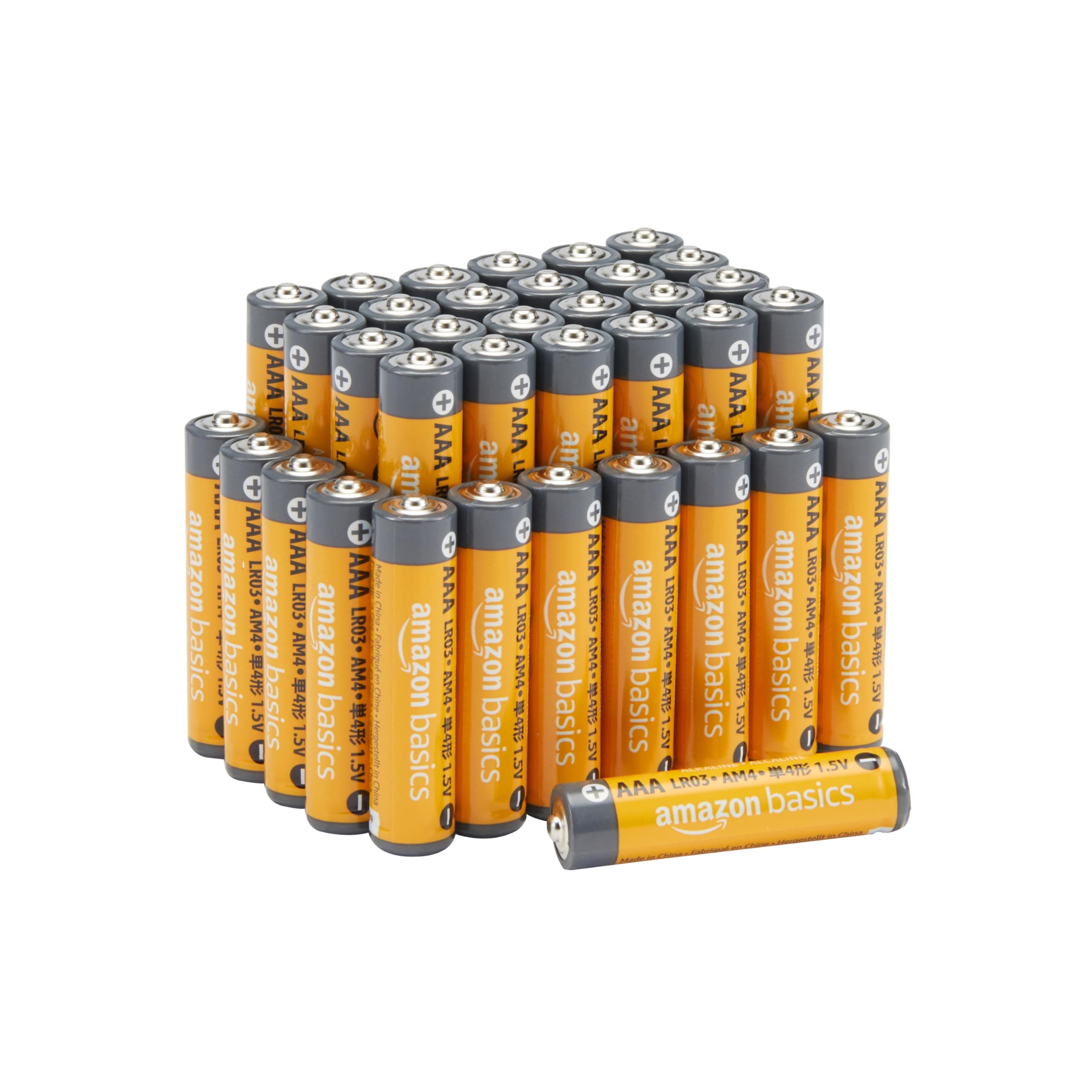
Amazon Basics AAA Alkaline High-Performance Batteries, 1.5 Volt, 10-Year Shelf Life, 36 Count (Pack of 1)
Amazon Basics