
Match the vacuum to your flooring type and home size. Homes with pets need strong suction and self-emptying bins; apartments prioritize quiet operation and slim profile.
The Short Answer
Match the vacuum to your flooring type and home size. Homes with pets need strong suction (2,500 Pa or more) and a self-emptying bin; apartments prioritize quiet operation and a slim profile. For most households, a mid-range robot vacuum with LiDAR navigation and a self-empty base offers the best balance of performance and cost.
The Full Picture
Robot vacuums have evolved from bouncing novelty gadgets into intelligent cleaning machines that map your home, empty their own dustbins, and even scrub floors. But that evolution brings a confusing array of specs—pascal ratings, LiDAR vs. camera, mop pads, self-empty bases. Choose wrong and you'll end up with a robot that gets tangled in cords, misses the pet hair, or makes your entire house a noise hazard.
We've tested and evaluated dozens of robot vacuums over the years, and the core lesson is simple: the best robot vacuum is the one that matches your home's specific needs. Below, we break down the key decision factors and give clear recommendations for every living situation.
Flooring Type: The Foundation of Your Decision
Your floors dictate how much suction you need and whether you need a mop.
- Hardwood, tile, or laminate: You don't need extreme suction. Look for a model with a soft brush roll to protect floors, and consider a mopping function for daily wet cleaning. Suction of 2,000–2,500 Pa is plenty.
- Low-pile carpet: A standard 2,500 Pa suction is effective, but choose a robot with a rubber brush roll that doesn't get tangled in carpet fibers.
- High-pile or shag carpet: Go for 3,000+ Pa and a model that boosts suction on carpet. A larger battery also helps because carpet resistance drains power faster.
If you have a mix of surfaces, select a robot with dual brush rolls and a mop that automatically lifts when it detects carpet—now standard on most mid-range models.
Home Size and Layout
Small apartments can get by with any robot, but larger homes need better navigation and battery life. Here's how to match:
- Under 800 sq ft: Any reliable robot with 90+ minute runtime works. Even a mid-tier model with gyro navigation can manage if the layout is simple.
- 800–1,500 sq ft: Battery capacity matters. Look for 2,500 mAh or more, plus a self-emptying base to avoid frequent bin changes.
- Over 1,500 sq ft: You need LiDAR or VSLAM navigation for efficient room-by-room mapping, plus a self-empty bin big enough for the whole house. Some models have a "recharge and resume" feature where they recharge mid-clean and pick up where they left off—essential for large homes.
Multi-level homes? Consider whether you'll carry the robot between floors or buy two. If one, choose a model with a lightweight, compact dock so moving it isn't a chore.
Pet Owners: Suction and Self-Emptying Are Non-Negotiable
If you have pets, skip the cheap stuff. Here's what to prioritize:
- Suction: 2,500 Pa for short hair; 3,000+ Pa for long hair or multiple pets.
- Self-emptying base: Without it, you'll be emptying the robot's tiny bin after every single run. A 3-liter bag holds up to a month of pet hair. This is the #1 feature pet owners should not compromise on.
- HEPA filtration: To trap dander, make sure the filter is sealed and rated HEPA H13. This also helps if you have allergies.
Running a robot vacuum can stir up airborne particles, so pairing it with a standalone air purifier—like those featured in our Best Time to Buy Air Purifiers guide—can keep your indoor air clean.
Smart Features: Navigation, Obstacle Avoidance, and App Control
Not all navigation is created equal. Here's the hierarchy:
- Random bounce: Avoid unless you have a tiny, obstacle-free apartment. It wastes time and misses spots.
- Gyro navigation: Better but still somewhat random. Works fine for simple, open layouts.
- LiDAR (Laser) mapping: The gold standard. Creates a precise floor plan, lets you draw no-go zones, and cleans systematically. Works in the dark. Worth the extra money.
- VSLAM (Camera) mapping: Camera-based; cheaper but struggles in low light and with moving objects.
Obstacle avoidance uses 3D sensors or cameras to navigate around shoes, cables, and pet accidents. This is a huge convenience if you don't clear the floor before every cleaning. If you have children or pets, choose a model with this feature.
App quality varies wildly. Look for scheduling, room selection, and cleaning history in the app. Voice assistant support (Alexa or Google Assistant) is a nice bonus.
Noise Level and Slim Profile: Apartment Essentials
Apartment dwellers need to think about two specs: noise and height.
- Noise: Robot vacuums range from 55 to 75 dB. A quiet model under 60 dB is about the level of a conversation; 65 dB is noticeable but not disruptive. If you run the robot while working or sleeping, aim for 60 dB or less. Many models have a "quiet mode" that reduces suction but also reduces noise.
- Slim profile: A standard robot is 3.5–4 inches tall. If your sofa or bed has only a 3-inch gap, you need a slim model (under 3 inches). Several manufacturers now make 2.85-inch models that slip under low furniture.
Mop or No Mop? Hybrid Robot Vacuums
Hybrid robot vacuums have a water tank and a built-in mop pad. For hard floors, they're a convenient way to keep up with sticky spots. Just know the limitations: the mop is a wipe, not a deep scrub. If you have mostly hard floors, it's worth getting a hybrid. For carpeted homes, skip the mop—you'll pay extra for a feature you won't use.
Look for a model with a separate mop pad that lifts when transitioning to carpet—this prevents soaking your rugs.
Battery and Recharge & Resume: For Large Homes
Battery capacity is measured in mAh. A typical robot has 2,000–5,000 mAh, giving 90–180 minutes of runtime. For homes over 1,500 sq ft, a 4,000+ mAh battery is recommended. "Recharge and Resume" lets the robot go back to its dock when low, recharge, and pick up from where it left off. This is a game-changer for larger spaces—otherwise, the robot quits halfway.
Comparison Table: What to Prioritize for Your Home
| Home Profile | Suction | Self-Emptying | Noise | Navigation | Slim Profile |
|---|---|---|---|---|---|
| Apartment / hard floors | 2,000–2,500 Pa | Optional | <60 dB | LiDAR | Yes (<3") |
| House with carpets | 2,500–3,000 Pa | Yes | 60–65 dB | LiDAR + obstacle avoidance | Not critical |
| Pet owners | 3,000+ Pa | Non-negotiable | 60–65 dB | LiDAR + obstacle avoidance | Not critical |
| Multi-level / large home | 2,500+ Pa | Yes | 65 dB | VSLAM or LiDAR + resume | No |
Common Mistakes to Avoid
- Buying the cheapest robot on sale. A $150 random-bounce robot will frustrate you more than it helps. Plan to spend at least $300 for a dependable model.
- Ignoring brush roll design. Plastic brushes tangle with hair. Rubber rolls are easier to untangle and perform better on carpets.
- Skipping the self-empty base for pet owners. If you have pets, you will hate emptying the bin every day. The self-empty base transforms the experience.
- Choosing maximum suction on hard floors. Too much suction can scatter dust or increase noise unnecessarily. Use automatic or 'hard floor' settings.
- Forgetting maintenance costs. Filter and brush replacements add up. Check the cost and availability before buying.
- Not checking the return policy. Even with research, a robot may not fit your home. Buy from a retailer with a generous return window, and test it with your furniture.
Our Recommendation
Here's our final verdict, tailored to your situation:
- For most homes: Get a robot with LiDAR navigation, 2,500+ Pa suction, rubber brush rolls, and a self-emptying base. That combination handles hard floors, carpets, and occasional pet hair. Expect to pay $500–$800.
- For pet owners: Prioritize suction (3,000+ Pa) and a self-empty bin with a 3L+ bag. A HEPA filter is a must. This will cost $700+, but it's worth every penny.
- For apartments: Focus on a slim profile under 3 inches, noise under 60 dB, and compact dock. A self-empty base is a plus but optional if space is tight. You can find good options for $300–$500.
- For large homes: Choose a model with high battery capacity and 'Recharge and Resume.' Self-empty is essential. Budget $800+ if you want top-tier performance.
To maximize value, time your purchase with known discount seasons. Our Best Time to Buy Robotic Vacuums guide reveals the exact months when prices drop—typically after CES in January, during spring cleaning sales, and on Black Friday. If you're also thinking about a stick vacuum for quick pickups, the Best Time to Buy Vacuums (Stick) guide can help you plan both purchases together.
Verdict
The right robot vacuum isn't the most expensive one—it's the one that aligns with your floors, your pets, your layout, and your tolerance for noise. Start by identifying your primary surface and pet status, then use the comparison table to narrow down the must-have features. Avoid the common mistakes, and you'll find a robot that genuinely saves you time rather than adding a new source of frustration.
Frequently Asked Questions
What is the best robot vacuum for pet hair?
The best robot vacuum for pet hair has at least 2,500 Pa suction (3,000+ for long hair), a self-emptying base, and HEPA H13 filtration. Rubber brush rolls prevent tangling. For most pet owners, a mid-range LiDAR model with a self-emptying dock offers the best balance of performance and cost, handling daily shedding without frequent bin emptying.
How much suction power do I need in a robot vacuum?
It depends on your floors. For hardwood or tile, 2,000–2,500 Pa is sufficient. Low-pile carpet needs around 2,500 Pa. High-pile or shag carpet requires 3,000+ Pa. If you have pets, bump to 2,500 Pa for short hair and 3,000+ for long hair or multiple pets. Suction is measured in pascals (Pa).
Why is LiDAR navigation better than gyro navigation in robot vacuums?
LiDAR uses lasers to create a precise map of your home, enabling systematic cleaning, no-go zones, and efficient path planning. It works in the dark and handles multi-room layouts well. Gyro navigation is less accurate, often resulting in random or spiral patterns that miss spots. For larger homes or thorough coverage, LiDAR is the gold standard.
When should I buy a robot vacuum with a self-emptying base?
If you have pets, allergies, or a home over 800 square feet, a self-emptying base is worth it. It holds up to a month of debris, so you won't empty the bin after every run. For pet owners, this is the #1 feature not to compromise on. For small apartments, you can skip it to save money.
Products Mentioned

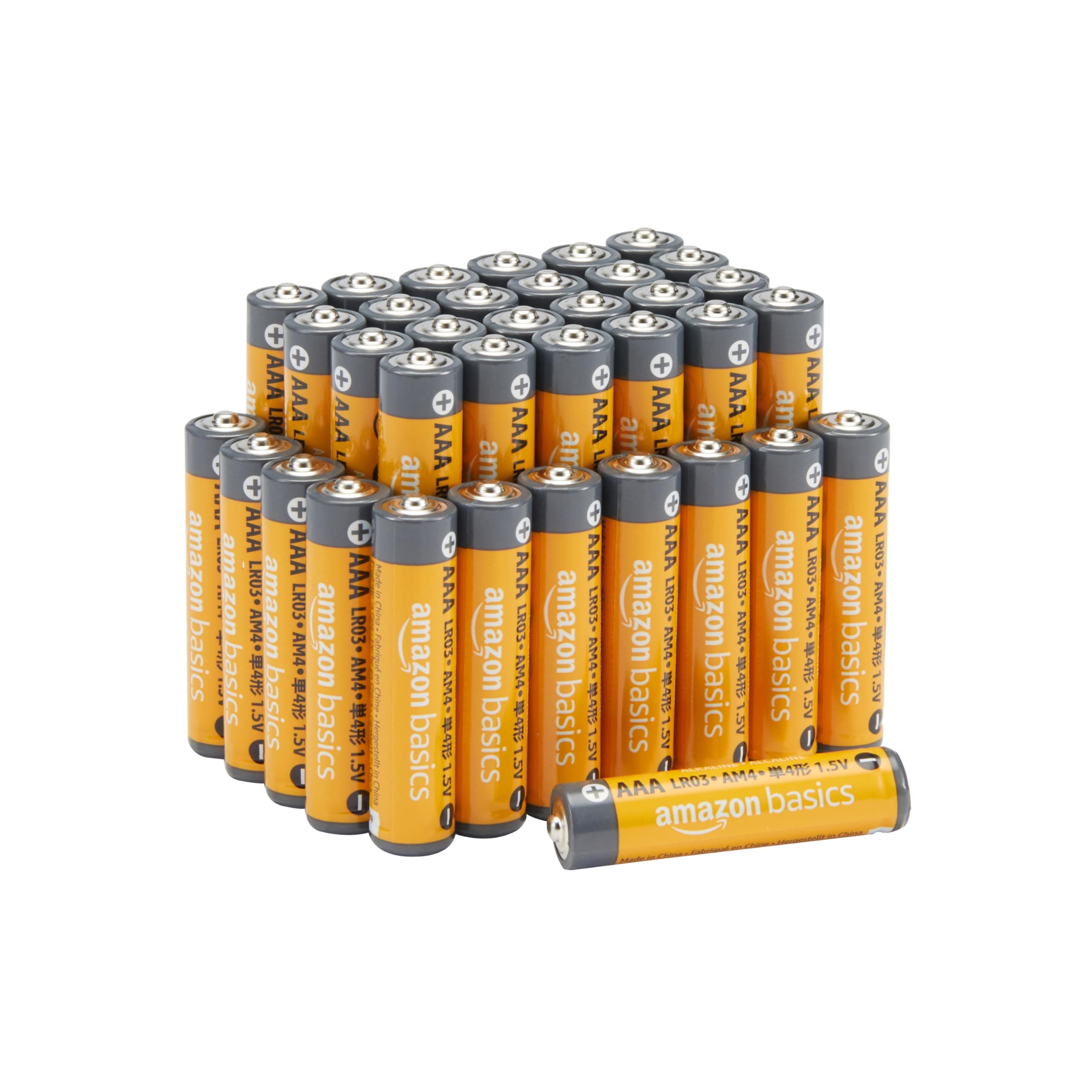
Amazon Basics AAA Alkaline High-Performance Batteries, 1.5 Volt, 10-Year Shelf Life, 36 Count (Pack of 1)
Amazon Basics