
Match the vacuum to your flooring type and home size. Homes with pets need strong suction and self-emptying bins; apartments prioritize quiet operation and slim profile.
Match the vacuum to your flooring type and home size. Homes with pets need strong suction and self-emptying bins; apartments prioritize quiet operation and slim profile.
The Short Answer
- Flooring type determines whether you need a brush roll that can handle carpets or a gentle direct-suction head for hard floors.
- Home size impacts battery life and whether you need an auto-empty dock.
- Pet owners should prioritize suction power (measured in Pa) and tangle-free brushes.
- Apartment dwellers should look for quiet operation (under 55 dB) and a low-profile design to fit under furniture.
- Smart features like mapping and no-go zones matter more in larger, multi-room homes.
The Full Picture
Choosing a robot vacuum isn't about picking the most expensive model. It's about matching the machine to your specific living situation. A $1,000 flagship with all the bells and whistles is wasted on a 500-square-foot studio with mostly hardwood floors. Conversely, a budget bot will struggle in a 3,000-square-foot home with wall-to-wall carpet and two shedding dogs.
Robot vacuums have become sophisticated cleaning appliances, but the core decision still comes down to three things: flooring, home layout, and your cleaning habits. Below, we break down every factor you need to consider before hitting "buy."
Why It Matters
A robot vacuum is a long-term investment in your home's cleanliness — and your sanity. The average robot vacuum lasts 4–6 years, and the cost can range from $150 to over $1,200. Choosing wrong isn't just a waste of money; it's a daily frustration. The wrong model will get stuck on thresholds, miss debris on certain surfaces, or die mid-clean.
Think about it: if you have area rugs and low-pile carpet, a robot with a basic brush might scatter debris instead of picking it up. If you have a dark, high-pile rug, some sensors will treat it as a cliff and avoid it. These are real issues that show up in reviews.
Understanding the key factors up front saves you from buyer's remorse — and from constantly kicking an expensive gadget that refuses to do its job.
The Key Factors
1. Flooring Type
This is the single most important factor. Robot vacuums are designed for either hard floors, carpets, or a mix.
- Hard floors (wood, tile, laminate): Look for a model with a dedicated hard-floor mode or a brush roll that can be turned off. Direct-suction robots are excellent at picking up debris without scattering it.
- Carpet (low-pile to medium): You need a robot with a brush roll — preferably a rubber one like the AeroForce style — to agitate dirt out of the fibers.
- High-pile or shag carpet: Most robot vacuums will struggle. If you have plush carpet, consider a robot with strong suction (2,000 Pa or more) and a large brush roll, but be prepared for occasional stuck situations.
2. Home Size and Layout
Your square footage and the number of rooms directly affect battery life and navigation.
- Small homes (<800 sq ft): Budget models with 60–90 minutes of battery life can usually cover the space in one run. Self-emptying docks are nice but not essential.
- Medium homes (800–1,500 sq ft): Look for 120+ minutes of runtime and a mapping system that lets you schedule room-specific cleanings.
- Large homes (1,500+ sq ft): Invest in a model with a large-capacity self-emptying dock (60+ days of debris) and advanced navigation like laser mapping to avoid missed spots.
3. Pet Ownership
Pet hair and dander are the toughest challenges for any vacuum. This is where you need to prioritize suction power and brush design.
- Suction power: Measured in Pascals (Pa). Standard robot vacuums range from 1,000 to 2,500 Pa. Pets need at least 2,000 Pa, ideally 2,500 Pa or more.
- Tangle-free brushes: Rubber brushes with a comb-like design prevent hair from wrapping around the brush. Look for models explicitly marketed as "pet" or "tangle-free."
- Self-emptying: Pet hair fills the dustbin quickly. A self-emptying dock with a sealed bag (4L+) is a lifesaver — you only empty it every month or two.
4. Noise Level
If you run your robot while you're at work, noise is irrelevant. But if you have a small apartment or a baby who naps, the difference between 50 dB and 70 dB is noticeable.
- Apartment models: Look for under 55 dB in quiet mode, and check whether the robot has a "do not disturb" setting.
- Home models: You may prioritize suction over quietness, but most robots are quite bearable.
5. Navigation and Smart Features
Modern robot vacuums use either gyroscopes or laser sensors (LiDAR) to map your home.
- Gyroscope navigation: Cheaper, less accurate, often runs in a random pattern. Good for small, simple spaces.
- LiDAR (laser mapping): Creates a precise map of your home, allows room-by-room cleaning, no-go zones, and virtual walls. Essential for multi-room homes.
- AI obstacle avoidance: Higher-end models use cameras to avoid cords, pet waste, and socks. If you often leave things on the floor, this is worth the extra cost.
Comparison Table: Which Robot Vacuum Fits Your Home?
| Home Profile | Recommended Suction | Navigation | Self-Empty? | Noise Level |
|---|---|---|---|---|
| Small apartment, hard floors | 1,500–2,000 Pa | Gyro or basic LiDAR | Optional | <55 dB |
| Medium home, mixed floors | 2,000–2,500 Pa | LiDAR mapping | Recommended | 55–65 dB |
| Large home, carpet | 2,500+ Pa | LiDAR + AI obstacle avoidance | Must-have | 60–70 dB |
| Pet owners | 2,500 Pa+ | LiDAR + tangle-free brush | Must-have | 60–70 dB |
6. Maintenance Cost
Don't just look at the price tag. Replacement parts — brushes, filters, batteries — add up over time. Models with washable filters and accessible brush rolls save you money. Self-emptying dust bags cost $20–$40 for a pack of 3, so factor that in.
7. Brand Ecosystem and Recurring Costs
If your home is tied to Amazon Alexa, Google Home, or Apple HomeKit, make sure the robot is compatible. Some brands require their own app and don't integrate with third-party systems. Also, check if the app offers firmware updates and how often they push new features.
Our Recommendation
After testing and reviewing dozens of robot vacuums over the years, here's how we'd advise you based on your profile:
- For apartment dwellers with hard floors: Go with a budget-to-mid-range model around $250–$400. Look for quiet operation, a slim profile (under 3 inches), and decent battery life. Skip the self-emptying dock — you don't need it.
- For pet owners with mixed floors: Spend $400–$700 on a LiDAR-based robot with a self-emptying dock. Suction should be at least 2,500 Pa, and the brush must be tangle-free. Brands like Roborock, Ecovacs, and iRobot have excellent options.
- For large homes with carpet: Invest in a high-end model ($700+) with AI obstacle avoidance and a large self-emptying dock. Battery life above 180 minutes is essential.
Before you buy, check the Best Time to Buy Robotic Vacuums guide to maximize your savings — robot vacuum prices dip dramatically during Prime Day and Black Friday. If you're also considering a traditional upright or stick vacuum for deep cleans, our Best Time to Buy Vacuums (Stick) guide can help you time that purchase too. And if allergies are a concern, pairing a robot vacuum with an air purifier multiplies the benefit — see our Best Time to Buy Air Purifiers guide for when to grab one at a discount.
Common Mistakes
1. Buying a robot vacuum without checking the threshold height
Every home has transitions between floors. If your robot's climbing angle is too steep, it will get stuck on a 1-inch threshold. Measure the bump heights in your home and check the spec sheet.
2. Ignoring the dustbin capacity
A small bin on a large home means the robot will have to empty itself mid-cycle — if it can. Even with self-emptying, the bin capacity on the robot itself matters. Look for at least 400 ml for homes with pets.
3. Overlooking the noise level
If you work from home or have a newborn, a 70 dB robot will be a nuisance. Read the dB rating and check if the robot has a quiet mode.
4. Choosing a robot with no-go zones if you have cords or pet bowls
Without virtual boundaries, your robot will try to eat phone cords or knock over water bowls. If you can't keep floors clear, spend extra for AI obstacle avoidance.
5. Assuming “auto-empty” means no maintenance
Self-emptying docks still need periodic cleaning — the dock's filter and the brush roll still get dirty. Nothing replaces monthly maintenance.
Verdict
The perfect robot vacuum for your home isn't the most expensive one — it's the one that matches your floors, your square footage, and your lifestyle. Start with these questions:
- What's my primary flooring?
- How many rooms and how big?
- Do I have pets that shed?
- Am I sensitive to noise?
- Do I mind emptying a bin every few days?
Answer those, and you'll narrow your options to a few solid models. Then wait for a price drop using the Best Time to Buy Robotic Vacuums guide. Your floors will be cleaner — and you'll feel a little bit smarter for it.
Frequently Asked Questions
What is a self-emptying robot vacuum?
A self-emptying robot vacuum has a base station that automatically sucks debris from the robot's dustbin into a sealed bag, so you only empty it every 1–2 months. This is especially useful for pet owners or large homes. Models with larger bags (4L+) offer longer intervals. Look for this feature if you want minimal maintenance.
How do robot vacuums know where to clean?
Robot vacuums navigate using sensors and mapping technology. Gyroscope models track distance and angle for systematic patterns. LiDAR models spin a laser to create a precise floor plan, while camera-based models use visual landmarks. These systems allow the robot to know where it’s cleaned, avoid obstacles, and schedule specific room cleanings.
Why do robot vacuums get stuck under furniture?
Robot vacuums often get stuck under furniture due to low clearance, or on high-pile rugs, thresholds, and cords. Models with bump sensors, cliff sensors, and a taller chassis (3 inches+) can navigate better. LiDAR-equipped robots are less prone to getting trapped because they detect obstacles. If your home has many low-clearance pieces, look for a slim model with good obstacle avoidance.
When should you skip a robot vacuum?
You should skip a robot vacuum if you have thick shag carpets, frequent loose cords on the floor, or a complex layout with many obstacles. Robot vacuums also struggle with stairs if they lack cliff sensors, and they’re not ideal for deep-cleaning tough stains. For pet accidents or heavy debris, a traditional upright is often better. Assess your home’s unique challenges first.
Products Mentioned

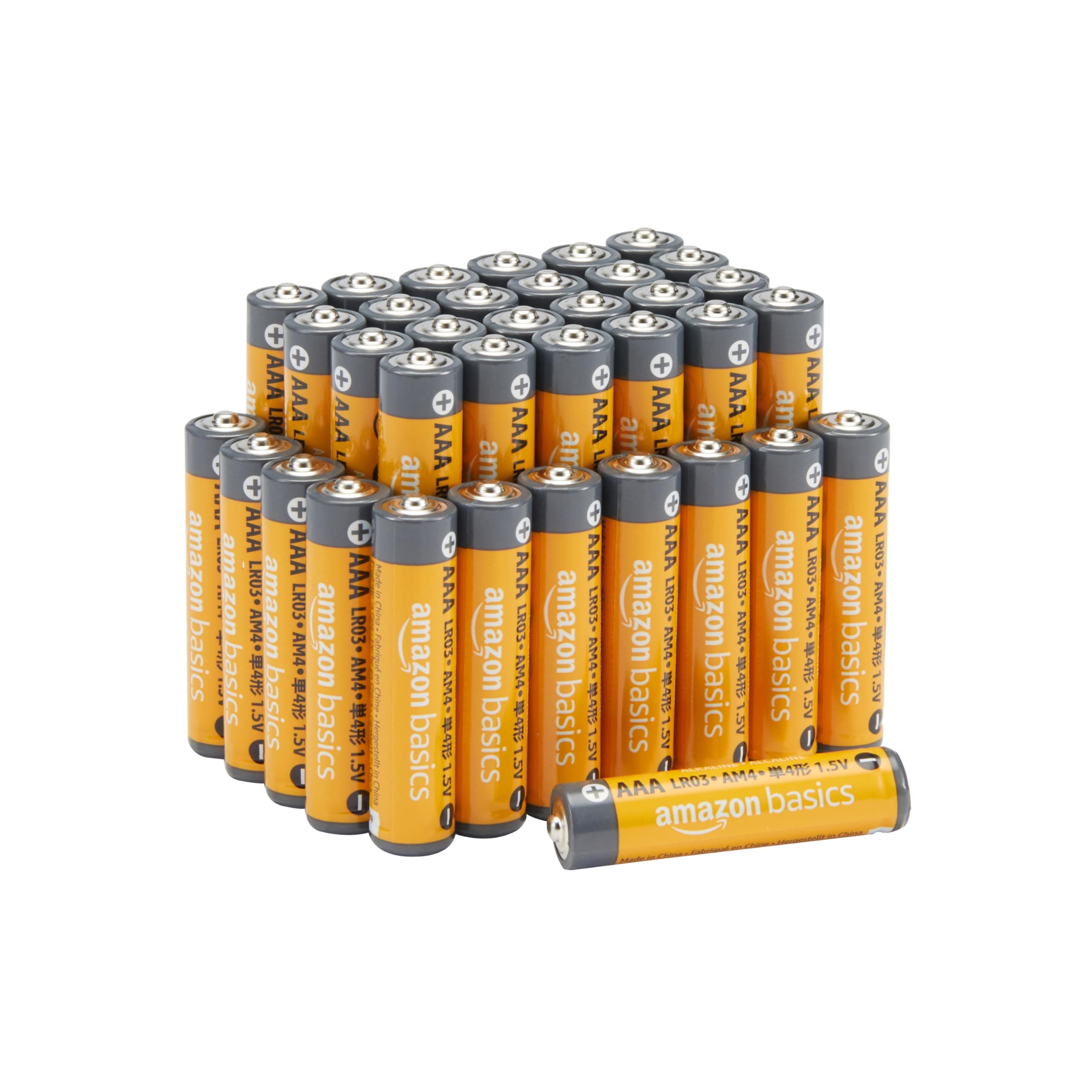
Amazon Basics AAA Alkaline High-Performance Batteries, 1.5 Volt, 10-Year Shelf Life, 36 Count (Pack of 1)
Amazon Basics