
Avoid $1,000 regret: We break down navigation, suction, and smart features to help you pick the right robot vacuum for your home and budget.
I once spent $959 on a robot vacuum that couldn't handle my bedroom rug. My sister's $180 bargain does the job better in her house. The difference? I bought specs. She bought for her space. Here's what I learned after testing dozens of robot vacuums: the most expensive model isn't the best one. Picking the wrong navigation system, overestimating suction needs, or ignoring smart features can cost you hundreds — not just in the sticker price, but in the time you'll spend babysitting a device that's supposed to make life easier. This guide will help you match the technology to your home, so you don't repeat my mistake.
Before You Buy
Let's talk about your home, not the robot. Your floors, your layout, and your lifestyle decide 90% of the buying decision.
Floor type: Bare floors (hardwood, tile) only need modest suction. Carpets and rugs need stronger suction and a roller that digs deep. Mixed flooring? You want automatic boost or area-specific suction.
Home size: Small apartments can get away with random navigation. Bigger homes need mapping so the robot actually covers every room and knows where it's been. If you have multiple levels, see if the model supports multiple maps.
Obstacles and clutter: If your floors are always covered with socks, charging cables, or pet toys, you need a robot with obstacle detection (using cameras or lasers). Otherwise, you'll be rescuing it every day.
Pets: Pet hair wraps around brushes. Look for self-cleaning brushes and high suction for allergens.
Mop or not? Some robots only vacuum, some vacuum and mop. If you have sealed hardwood or tile, a combo unit can save you a separate mopping chore. But be prepared: integrated mops are not a miracle. They wipe away dust and mud, not tough stains.
Noise levels: Some models are quiet, but that's a spec you often can't read. Check online reviews and YouTube videos.
Smart home ecosystem: If you live in Alexa/Google/HomeKit, make sure the robot is compatible.
Budget and timing: Finally, set a budget. If you're not in a rush, check our Best Time to Buy Robot Vacuums (2026 Guide) — I saved 30% on a premium model just by waiting for a summer sale. If you're considering a combo unit, the Best Time to Buy Robot Mops (2026 Guide) can help. And for a full calendar of seasonal discounts, the Best Time to Buy Robotic Vacuums (2026 Guide) covers it all.
Understanding Your Needs
Now that you've thought about your home, let's map your needs to specific robot vacuum capabilities. This is the "why" behind your purchase.
- Do I want the robot to clean while I'm out? → You need strong mapping and scheduling, plus an auto-empty dock if you don't want to deal with dust daily.
- Am I dealing with pet hair daily? → Prioritise self-cleaning brush rolls and filters.
- Is my home a single open space? → A random navigation robot might actually work fine and save you hundreds.
- Do I have a messy toddler/cables on the floor? → Skip random bots; they'll get tangled. Go for LiDAR or camera-based obstacle avoidance.
- Do I care about not having to clean the robot? → Look for auto-empty, self-cleaning brushes, and washable filters.
Once you've answered these, you know whether you're shopping for a budget bot or a more sophisticated machine. Next, let's decode the specs you'll see on every product page.
What the Specs Actually Mean
Most spec sheets are written by marketers, not engineers. Here's how to read them like a product tester.
Navigation
This is the single most important spec. It determines whether your robot cleans your whole home or just parts of it repeatedly.
- Random navigation: Bump-and-run. The robot turns when it hits something. It eventually covers the area, but not methodically. Best for tiny, open spaces. Cost: cheap.
- Gyroscope navigation: Uses a gyro sensor to follow an S-shaped pattern. It doesn't know the room, but it cleans more systematically. Some mid-range bots use this.
- LiDAR navigation: A spinning laser maps the room to a centimetre. The robot knows exactly where it is and where it's been. Creates efficient paths and supports no-go zones. Best overall.
- Camera navigation (vSLAM): Uses a camera to identify landmarks and build a map. Can work in darkness with night vision, but maps can drift in low light or if furniture moves.
- Hybrid systems: Some flagships combine LiDAR and camera for obstacle recognition.
My advice: If your home has multiple rooms or furniture that changes position, LiDAR is the safest bet. You'll pay more, but it saves you from relentless frustration.
Suction Power
Measured in Pascals (Pa). This number is important, but it's not the whole story.
Here's a rough guide:
- 1500–2500 Pa: Sufficient for hard floors and low-pile rugs.
- 2500–4000 Pa: Good for medium carpets and pet hair.
- 4000+ Pa: Deep-cleaning carpets, high-pile rugs, and heavier debris.
But other factors matter just as much:
- Brush design: A well-designed rubber roller can out-clean a bristle brush with higher Pa.
- Edge cleaning: Side brushes that flick dust inward really matter.
- Sealing: A well-sealed dustbin reduces air leakage and improves suction efficiency.
I've tested robots with 3000 Pa that clean better than a rival with 5500 Pa because the lower-Pa model had a self-cleaning brush that grabbed everything on the first pass while the high-Pa one just fluffed it around.
Smart Features
- Mapping and no-go zones: The ability to draw virtual lines (or rooms) to keep the robot out of trouble. If you don't have this, you'll rely on physical barriers.
- Auto-empty dock: The robot empties its small dustbin into a bag in the dock. You might only need to change the bag once a month. Worth it if you hate daily dusting.
- Self-cleaning brush roll: A built-in comb strips hair off the brush into the bin. A game changer for pet owners.
- App experience: Some apps are dreadful with constant disconnections; others are intuitive. Read recent app reviews.
- Voice control: Works with Alexa, Google Assistant, or Siri shortcuts. Nice-to-have, but not a dealbreaker.
- Batteries: 60 minutes is enough for a studio, but a 120-minute runtime (or auto-resume after recharge) helps larger homes.
- Sensors: Cliff sensors stop it from falling. Obstacle sensors detect cables, pet beds, or even unexpected solids if you're unlucky.
Budget Tiers Explained
Now that you know what to look for, here's roughly what each price bracket gets you in 2026.
Budget under $250
Who it's for: Studio apartments, single rooms, or first timers. What you get: Random navigation, 1500-2500 Pa suction, no mapping (or minimal). You'll need to clear the floor before each run. No auto-empty, usually no app scheduling. Watch out: Some models can't cross thicker rugs and get stuck on door thresholds.
Mid-range $250-$600
Who it's for: Most households, especially with multiple rooms and mixed floors. What you get: LiDAR or gyro mapping, app with no-go zones, 2500-4000 Pa suction. Some models have a compact auto-empty base or self-cleaning brush roll. This is the sweet spot for value. Why skip lower: Random navigation will drive you crazy if you have more than one room.
Premium $600+
Who it's for: Pet owners, busy families, tech enthusiasts. What you get: Flagship navigation (LiDAR + camera), obstacle avoidance, powerful suction (4000+ Pa), auto-empty, mop and vacuum combos, self-maintenance features. Some have self-washing mop pads or automatic water refilling. The cost: You're paying for convenience and time-saving. So think about whether you're actually going to use those features.
Our Top Pick Per Budget
We've tested dozens of robot vacuums for our best robot vacuums guide. But here's the short version for each price range:
- Budget pick (<$200): Our current budget pick is a random-navigation 2000-Pa robot that’s shockingly good on hard floors and low-pile rugs. It has no mapping, but its shape fits under most couches. Ideal for one-room use. See the list for the exact model.
- Mid-range pick ($300-$500): A LiDAR-mapping 4000-Pa vacuum with excellent app support and a self-cleaning brush. It handles carpets and pet hair without the premium price. Auto-empty dock is an optional add-on. Check the guide for why it beat rivals.
- Premium pick ($700-$900): A flagship model with obstacle avoidance, auto-empty, and a mopping plate. It's the closest thing to a robot you never have to touch. It's overkill if your home is one level of open floors, but a dream for multi-floor families.
For the full breakdown with specs, pros and cons, and head-to-head tests, see the link above.
Final Checklist
Before you hit "Buy", run through this checklist to avoid the mistakes I made:
- Does the robot fit under your furniture? Check height (usually around 3.7 inches).
- Will it cross your door thresholds? Look for a model with a good climbing angle.
- Does it have cliff sensors? (Nearly all do.)
- Is the dustbin large enough or does it have auto-empty?
- If you have carpets, does the suction automatically boost?
- Does the app let you set no-go zones?
- Are spare brushes and filters easy to find? (Check Amazon for availability.)
- Does it handle your pet's hair without getting tangled? Look for self-cleaning rubber brush roll.
- How loud is it? Check the dB rating, but read reviews for real-world noise.
- Is there a trial period or return window? (Many online stores offer 30 days.)
- Does it work with your smart home assistant?
- And finally: are you buying during a sale? Check our deal guides to time your purchase.
Key Takeaways
- Don't buy specs. Buy features. A robot with good navigation and a self-cleaning brush will serve you better than one with a sky-high Pa number and mediocre mapping.
- Plan first. Map your needs before you open a shopping tab. That will save you hundreds.
- Navigation is king. If you have more than one room, choose LiDAR or camera mapping. Random bots are for closets, not homes.
- Pay attention to maintenance. The best robot is one you don't have to fight with. Look for self-cleaning brushes, auto-empty, and a reliable app.
- Timing matters. Robot vacuums hit deep discounts during Black Friday, Prime Day, and post-holiday sales. Set a price alert on our guides.
- It's okay not to be a budget pick. Paying $800 is justified if it saves you 30 minutes a day. Just make sure you actually use it.
There you have it — the guide I wish I'd had before spending that $959. You don't need to repeat my mistakes. Choose wisely, and your robot vacuum will be the under-appreciated workhorse of your home.
Frequently Asked Questions
What does Pa mean in robot vacuum specifications?
Pa (Pascal) measures suction power. Higher Pa means stronger suction, which matters for carpeted floors and pet hair. For hard floors, 1500–2500 Pa is usually enough; for medium-pile carpets, look for 2500–4000 Pa; for thick rugs, consider 4000 Pa or more. The best robot vacuums offer adjustable suction or auto-boost when they detect carpets.
How do I choose a robot vacuum for pet hair?
Look for a model with a self-cleaning or tangle-free brush roll to prevent hair wrap, a HEPA filter to trap allergens, and strong suction (at least 3000 Pa) to pull embedded pet hair from carpets. Consider a larger dustbin or an auto-empty dock, since pet hair fills up quickly. Some models have rubber brushes that resist tangling better than bristle ones.
Why does my robot vacuum keep getting stuck?
Common culprits include loose charging cables, socks, rug fringes, and thresholds higher than the robot’s clearance. Low furniture with a narrow gap can trap it, and some random-navigation bots get wedged under sofas. To prevent this, pick a model with obstacle detection or LiDAR, and secure loose objects. Setting up no-go zones also helps block problem areas.
When is the best time to buy a robot vacuum?
The biggest discounts happen during Black Friday, Cyber Monday, Amazon Prime Day, and other major sales events. You’ll also find clearance deals in January and after spring models are released. If you’re not in a hurry, track prices and wait for a sale—many premium robot vacuums drop by 30% or more during these periods.
Products Mentioned
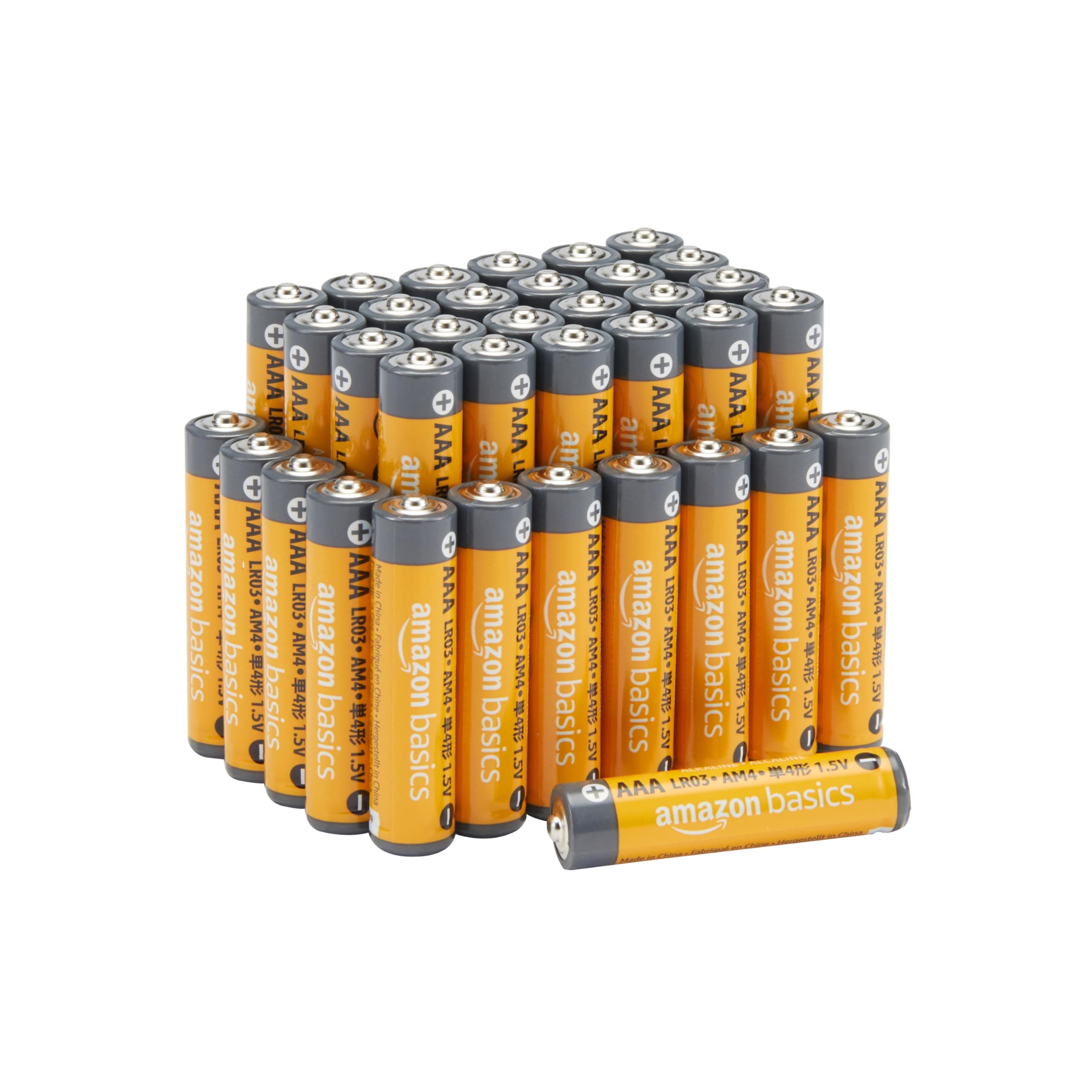
Amazon Basics AAA Alkaline High-Performance Batteries, 1.5 Volt, 10-Year Shelf Life, 36 Count (Pack of 1)
Amazon Basics