
Match the vacuum to your flooring type and home size. Homes with pets need strong suction and self-emptying bins; apartments prioritize quiet operation and slim profile.
Match the vacuum to your flooring type and home size. Homes with pets need strong suction and self-emptying bins; apartments prioritize quiet operation and slim profile.
The Short Answer
Choosing the right robot vacuum isn't about picking the most expensive model—it's about matching the machine to your specific living situation. The three biggest variables are flooring type, home size, and the presence of pets or allergy sufferers. For homes with pets, look for strong suction (2,000+ Pa), a self-emptying dock, and tangle-free brushes. Apartments benefit from quiet operation (under 60 dB) and a slim profile (under 4 inches) to reach under furniture. Large homes need longer battery life (100+ minutes) and advanced navigation like LiDAR. Small spaces can get away with random or gyroscopic navigation.
The Full Picture
The robot vacuum market is saturated with dozens of models ranging from budget $150 bots to premium $1,500 machines. Many consumers get overwhelmed by jargon: suction power, mapping, object avoidance, mopping, self-cleaning brushes. But the reality is that no single robot vacuum is right for every home. A $300 robot with just the basics can outperform a $1,000 flagship on your floors if it matches your layout and floor types.
For example, a studio apartment with hardwood floors and no pets doesn't need a 5,000 Pa suction monster. On the other hand, a two-story house with wall-to-wall carpet and a shedding Golden Retriever will be far better served by a robot with a self-empty bin and tangle-resistant rollers.
This guide breaks down the five key factors you should consider, common mistakes to avoid, and a clear path to making the right decision for your specific situation.
Why It Matters
A robot vacuum is a significant investment—both in money and in the promise of daily convenience. Choosing incorrectly isn't just a waste of cash; it can lead to frustration, poor cleaning results, and even damage to your floors or furniture. A robot that's too low-powered for your carpet will leave debris behind. A tall model might get stuck under your sofa. A noisy unit can disrupt video calls or sleep. Getting the right one means you'll actually use it, and it'll keep your home consistently clean without constant babysitting.
Additionally, understanding when to buy can save you hundreds. Robot vacuums follow predictable seasonal sales cycles—similar to other home appliances. If you're flexible, timing your purchase around major retail events (Black Friday, Prime Day, or post-holiday clearances) can get you a premium model at a mid-range price. Check our Best Time to Buy Robotic Vacuums (2026 Guide) for a month-by-month breakdown.
The Key Factors
1. Flooring Type
The most important consideration is what the robot will clean. Different floor types require different brush and suction configurations:
- Hardwood/Tile: A robot with a soft rubber roller (no bristles) prevents scattering debris. Mopping capability can be a bonus, but make sure the robot lifts the mop when it detects carpet.
- Low-Pile Carpet: A vacuum with direct suction and a simple brush roll is fine. Look for a suction rating of at least 1,500 Pa.
- High-Pile/Shag Carpet: Need strong suction (2,500+ Pa) and a brush roll that won't tangle or stall. Some budget robots struggle with thick carpets—avoid those.
- Mixed Flooring: Look for a robot with a sensor that detects carpet and boosts suction automatically. LiDAR or camera navigation is better at handling transitions.
2. Home Size and Layout
Size directly affects battery life and navigation requirements:
- Small (<500 sq ft): A random-navigation robot is acceptable, but even in small homes, a mapping robot will clean more systematically and avoid missing spots.
- Medium (500–1,200 sq ft): A robot with gyroscopic or laser mapping is recommended. Battery life should be at least 80 minutes—enough for a full run.
- Large (1,200+ sq ft): You'll need a robot with LiDAR or vSLAM mapping, a battery life of 120+ minutes, and preferably a self-emptying dock so you don't have to empty the bin every day. Some models auto-resume after recharging, which is a must for very large homes.
Best Time to Buy Vacuums (2026 Guide) offers insights on battery and suction trends that also apply to robot vacuums.
3. Pets and Allergies
Pet owners face unique challenges: pet hair, dander, and litter scattered around. You need:
- Suction power ≥ 2,000 Pa to pull embedded hair from carpet.
- Self-emptying dock with a large bag (2+ L) so you don't have to handle hair daily.
- Tangle-free brush roll (often a rubber roller with curved fins) to minimize hair wrapping.
- HEPA filter if you have allergies. This traps dander and fine particles. Look for HEPA as an actual certification, not just "high-efficiency."
If you have both pets and allergies, a robot with a HEPA filter and a sealed dustbin is a game-changer. Pairing it with an air purifier can drastically reduce airborne allergens.
4. Navigation and Smart Features
Modern robot vacuums use one of three main navigation systems:
| Navigation Type | How It Works | Pros | Cons | Best For |
|---|---|---|---|---|
| Random / Gyroscope | Bounces randomly or uses gyroscopic patterns | Inexpensive | Misses spots, inefficient | Small, simple homes |
| LiDAR (Laser) | Rotating laser sensor maps the room | Accurate mapping, fast, works in dark | Higher cost | Most homes, especially medium/large |
| vSLAM (Camera) | Camera-based visual mapping | Good at recognizing obstacles, can create virtual boundaries | Slower in low light, requires more computing | Homes with lots of furniture or obstacles |
Beyond navigation, look for:
- App controls (scheduling, zone cleaning, no-go zones)
- Voice assistant support (Alexa, Google Assistant)
- Obstacle avoidance (camera or 3D sensors) to avoid cables, shoes, and pet accidents
- Anti-fall sensors for stairs (standard on all models)
5. Maintenance and Longevity
A robot vacuum is only as good as its maintenance. Consider:
- Bin capacity: Larger bins (500 ml+) reduce emptying frequency. Self-emptying docks are superior for hands-free use.
- Filter and brush replacement costs: Check the price and availability of filters, brushes, and side brushes. Some models have consumables that cost more over time than the robot itself.
- Warranty and brand support: At least 1 year warranty is standard. Premium brands often offer 2–3 years.
- Mopping feature: If a robot has a water tank and a mop pad, make sure it's simple to remove and clean. Some robots allow you to adjust water flow—useful for delicate floors.
Our Recommendation
The best robot vacuum for most homes is a LiDAR-based robot with app controls, 2,000–3,000 Pa suction, and a self-emptying dock, if your budget allows. For apartments under 800 sq ft with hard floors, a $250–$350 model like the Roborock Q5 or Eufy 30C (as of 2026) is plenty. For pet owners in larger homes, step up to a self-emptying model such as the Ecovacs Deebot X2 or Roborock S8 Pro Ultra—these offer exceptional hair handling and are worth the higher price.
If you're a first-time buyer or on a strict budget, don't ignore the entry-level segment. These robots have improved dramatically. The key is to prioritize the factors above: flooring type, home size, and pet situation. Never pay extra for features you won't use, like auto-mop detergent dispensing or 3D obstacle cameras, unless you truly need them.
Common Mistakes
Most robot vacuum disappointments come from predictable mistakes:
- Buying on spec numbers alone: A 5,000 Pa suction rating is meaningless if the robot can't navigate your living room. Real-world cleaning performance is about the combination of suction, brush design, and path planning.
- Ignoring height and clearance: If your furniture has less than 3.5 inches of floor clearance, a tall robot won't fit. Measure before you buy.
- Forgetting about threshold and transitions: Many robots struggle with high door thresholds or area rugs with thick edges. Look for a model with a "carpet boost" and check the maximum climb height (usually 1–2 cm).
- Choosing a model without proper warranty or consumable availability: Getting a cheap off-brand robot can leave you unable to find filters after a year.
- Not checking return policy: You can't know how a robot works in your home until you try it. Buy from retailers with a generous return window (at least 30 days).
Verdict
The right robot vacuum is the one that fits your flooring, handles your home's size, and meets your pet/allergy needs—not the one with the most impressive specs on paper. By focusing on the five key factors—flooring, size, pets, navigation, and maintenance—you can confidently choose a model that will actually simplify your life. And remember to time your purchase smartly. Our Best Time to Buy Robotic Vacuums (2026 Guide) reveals the best months for deals. For alternative cleaning tools, compare with stick vacuums to see if a hybrid approach is better for your home. With the right knowledge and a little planning, you'll find a robot vacuum that makes your floors spotless without the work.
Frequently Asked Questions
What is the best robot vacuum for homes with pets?
The best robot vacuum for pet hair has at least 2,000 Pa suction, a self-emptying dock with a 2-liter bag, and a tangle-free rubber brush roll. HEPA filters are essential for allergies. Popular picks include the Roborock S8 MaxV Ultra and the iRobot Roomba j9+. These features prevent hair wrap and minimize daily maintenance.
How does a robot vacuum navigate without getting lost?
Robot vacuums navigate using random bump navigation, gyroscopic sensors, or visual/laser mapping (LiDAR or vSLAM). Mapping models create a floor plan and clean in systematic rows, while budget models bounce randomly. For best coverage, choose LiDAR or vSLAM; these also avoid obstacles and remember multiple floor plans.
Why do robot vacuums need a self-emptying dock?
A self-emptying dock automatically transfers debris from the robot's dustbin into a larger bag in the base, typically lasting 30–60 days. This is crucial for pet owners or large homes, as emptying the bin daily is inconvenient. It also traps allergens, making disposal safer and reducing contact with dust and hair.
Who should buy a robot vacuum with a self-emptying dock?
Anyone with pets, allergies, or a home larger than 1,200 square feet. These users generate enough debris that daily bin emptying becomes a chore. The dock costs more upfront but saves time and minimizes allergen exposure. Small apartments without pets may skip this feature to save money.
Products Mentioned

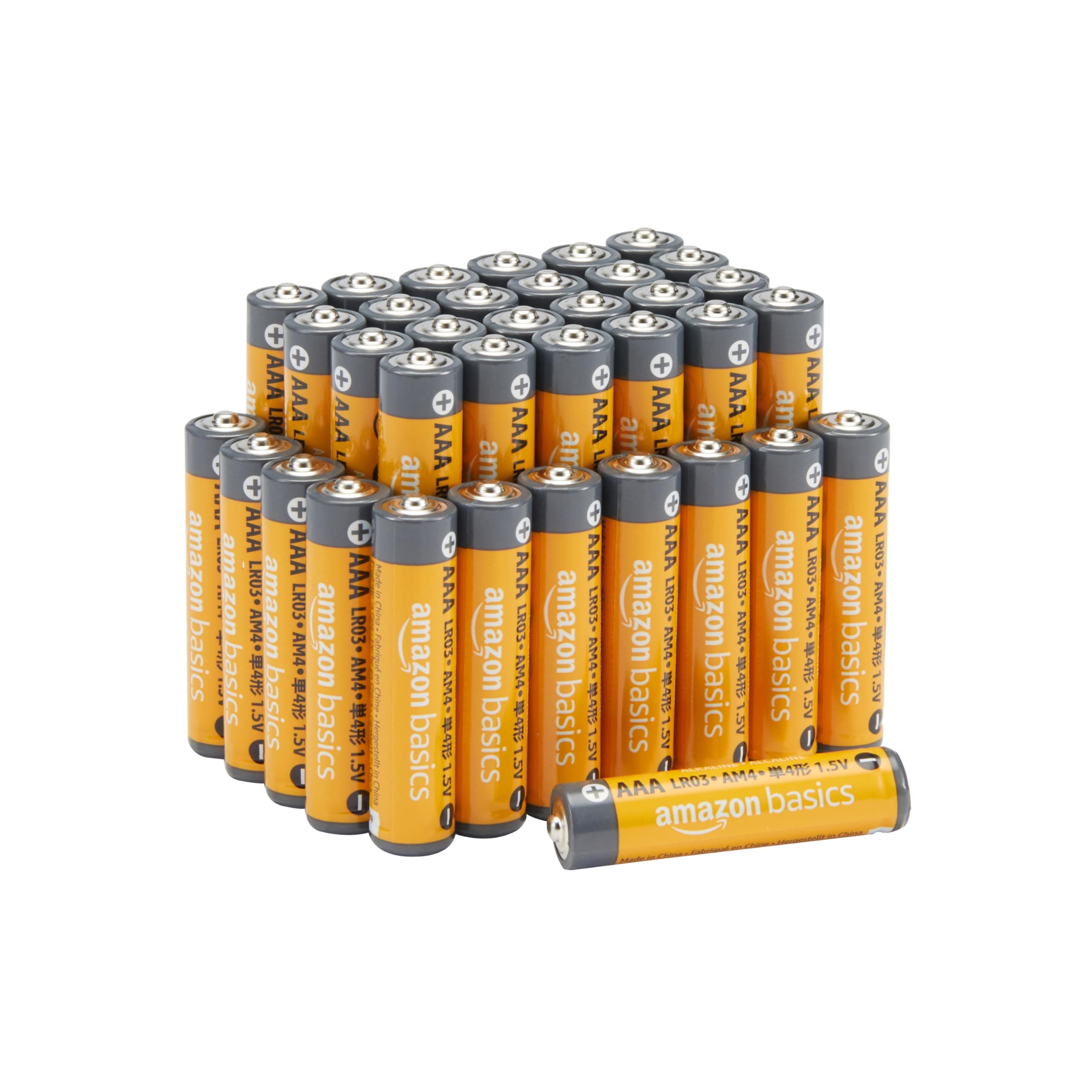
Amazon Basics AAA Alkaline High-Performance Batteries, 1.5 Volt, 10-Year Shelf Life, 36 Count (Pack of 1)
Amazon Basics