We tested 20+ cordless phones in real homes — not just labs — to measure call clarity, range, battery life, and DECT reliability. Here's our exact methodology.

In our analysis of 1,200 online cordless phone reviews, 9 out of 10 never mentioned actual call quality. They talk about price, keypad lighting, and how many handsets come in the box. But how the phone actually sounds? Not a word. At Review Atlas, that's the first thing we test. Because a cordless phone that muffles voices or drops calls isn't a phone — it's a paperweight.
In this post, I'm pulling back the curtain on our cordless phone testing methodology. You might have seen our stand mixer methodology; now we're doing the same for the device that still sits by your bed or in your kitchen. You'll learn how we measure range, call clarity, battery reliability, and real-world durability — so you can trust our reviews and know what to look for when you shop.
Over the past three years, we've reviewed 23 cordless phones, from $30 entry-level models to $200 multi-handset systems. Each one is put through the methodology below — and many end up with a "Don't Waste Your Money" rating. That's not because we're harsh; it's because the market is full of products that fail the real-world test.
The Problem: Specs Don't Make a Call
Most review sites treat a cordless phone like a calculator. They check the numbers: range in feet (in parentheses, on the box), battery life in hours, number of handsets, and whether it has a backlit keypad. Then they give it a score. The result? Phones that look great on paper but sound like a walkie-talkie in your actual home.
We've seen it repeatedly. A flagship DECT 6.0 phone from a major brand gets excellent reviews online, but when we tested it in a multi-story house with a metal-framed interior, the call dropped every time you walked past the microwave. Another model scored high on "handset comfort," but its noise-reduction algorithm turned a calm conversation into a robotic, clipped exchange that was impossible to understand.
That's the gap. And it's why we built a methodology that treats cordless phones like the critical communication tools they still are — not just nostalgic answering machines.
Why It Matters: The Real Cost of a Bad Cordless Phone
Think cordless phones are obsolete? Millions of American households still rely on a landline for 911 calls, home offices, and senior care. In our latest round of testing, 4 out of 8 new cordless phones had a 25% or higher dropped-call rate when the handset moved 40 feet from the base through two interior walls. That's not a minor inconvenience — it's a broken lifeline.
The truth is that spec-sheet numbers like "range up to 1,000 feet" are measured in open-air, line-of-sight conditions. No real home looks like that. Sure, a phone might reach 1,000 feet in a parking lot, but in your living room, with a Wi-Fi router and a microwave nearby, it might drop calls at 30 feet. If you rely on a landline, you need to know how the phone performs in your environment.
The Solution: Our Real-World Testing Methodology
That's why we built a different approach. We combine objective lab measurements with hours of real-world listening tests in actual homes. We don't just tell you if a phone works; we show you how it works in the situations that matter.
Here's how we test every cordless phone that comes through our lab.
Step 1: Pick Three Very Different Test Sites
We don't use a single, pristine RF studio. We use three distinct environments:
- A suburban house with wood framing and drywall
- A two-story brick home with a metal-reinforced interior
- A dense apartment building with concrete walls and multiple Wi-Fi networks
Each phone goes through the full battery of tests in all three locations. That's why you'll often see a phone score high in the suburb but low in the apartment in our reviews. It's not a bug in the phone; it's a reflection of how RF environments differ.
Step 2: Measure Actual Range (Not Marketing Range)
We use a spectrum analyzer and a calibrated field strength meter to log signal strength at 10-foot intervals in every direction from the base station. We test through walls, floors, and even into a closet (because that's where someone always puts the base). Our "range" is the distance at which the signal degrades to the point where audio glitches appear — not the point where the handset loses connection entirely.
We repeat each range test three times on different days to account for changing RF interference. We also test base-to-handset and handset-to-base uplink separately. This caught a DECT 6.0 phone that could receive audio clearly but transmitted a constant hiss beyond 25 feet.
Step 3: Score Call Quality with Both Machines and Human Ears
We use a Head and Torso Simulator (HATS) to play standardized voice samples (ITU-T P.501, including male and female speakers) into the handset, while the base station connects to a landline simulator. The audio is captured and analyzed by Perceptual Evaluation of Speech Quality (PESQ), giving us a Mean Opinion Score (MOS) from 1 to 5.
But PESQ can't tell you that a phone sounds "artificial." So we have a human panel too. Three listeners rate the audio for clarity, naturalness, and intelligibility in four noise scenarios:
- Quiet home office (~40 dB)
- Kitchen with dishwasher running (~60 dB)
- TV and conversation (~65 dB)
- Busy street (~70 dB)
A phone must score at least 3.5 out of 5 in subjective clarity during the kitchen test to earn our recommendation. If you can't hear a caller over the dishwasher, the battery life doesn't matter.
Step 4: Stress-Test Battery Life and Charging
We ignore "up to 10 hours talk time" and simulate a realistic workday: 30 minutes of talk, 15 minutes of standby, repeated until the handset gives out. We measure two things:
- Total actual talk time
- How accurately the battery indicator tracks remaining power
We've seen premium phones show "full" for three hours, then drop to "empty" in ten minutes without a warning beep. That's a failure in our books.
We also check charging heat. A handset that runs hot on the base will have a shorter battery lifespan. We've caught budget models hitting over 110°F during a 48-hour charge test.
Step 5: Battle RF Interference Head-On
A cordless phone lives in a sea of wireless noise. We set up a 2.4 GHz Wi-Fi router streaming video, a Bluetooth speaker, a baby monitor, and we ran a microwave oven for the full duration of a 5-minute call. We move the handset near each source and document any mosquito noise, garbled audio, or drops.
Most DECT 6.0 phones handle this without flinching, but we've seen some that freeze briefly when Wi-Fi changes channels. If that happens, you'll see it flagged in the review.
Step 6: Simulate a Year of Wear in 40 Hours
We run a 40-hour accelerated life test on every phone:
- 10 hours of continuous calling
- 20 hours of off-hook standby
- 10 hours of base-to-handset synchronization (where supported)
Then we retest call quality and battery life to see if anything degrades. We also perform 100 3-foot drop tests onto hardwood. A phone that breaks after 20 drops gets a reliability warning, even if it scored high on audio.
Step 7: Test with VoIP Adapters
More people use cordless phones with VoIP services like Ooma or Vonage. We connect every phone to a standard analog telephone adapter and run the same call quality and range tests. Some phones work fine with a landline but gain a half-second echo over VoIP. That's the kind of thing you'd never know from a spec sheet.
How We Calculate Our Final Score
We don't just average the numbers. Our overall score is weighted to reflect what matters most in real use:
- Call quality (40%) — clarity, naturalness, noise handling
- Range and signal reliability (25%) — measured range across all test sites
- Battery life (15%) — talk time and charging reliability
- Durability and build quality (10%) — drop test and heat performance
- Ergonomics and ease of use (10%) — physical comfort, keypad usability, ringer volume
Any phone that fails a single critical category — like dropping calls in the apartment test or scoring below 2.5 on subjective clarity — is automatically disqualified from a recommendation, no matter how good the other scores are.
Pro Tips: What You Should Look For in a Cordless Phone
- Ignore the "up to" range claims. Look for our measured range in reviews, or ask a neighbor with the same wall material. In our database, phones with external antennas consistently outperform internal antenna models in real homes.
- Choose DECT 6.0 for any home with Wi-Fi. Analog phones are prone to interference from routers, Bluetooth, and microwaves. In our tests, switching from analog to DECT 6.0 reduced dropped calls by an average of 73% in the same environment.
- Moderate noise reduction is fine; aggressive is not. We've seen flagship models with "HD sound" and multi-mic AI sound worse than simpler phones because the noise reduction crushes speech dynamics.
- Buy from a store with a generous return policy. Even our top-rated phone might not work in your specific RF environment. Test it with a real call from the kitchen and the garage before you commit.
And if you're planning to upgrade more than your phone, timing matters. Our guides to the best time to buy smart thermostats, best time to buy window air conditioners, best time to buy cordless drills, and best time to buy cordless power tools can help you save money on connected home tech. Even our cordless leaf blower guide has seasonal pricing insights that apply to outdoor gear.
Bottom Line
A cordless phone might seem simple, but its performance depends on a thousand small details: RF design, antenna placement, noise reduction algorithms, battery calibration, and sheer build quality. Our methodology digs into all of it. We test in real homes, with real interference, and real human ears — because that's how you'll use it.
So the next time you see a review on Review Atlas, you know exactly what went into that score. If you've got questions about our process, leave a comment or contact us. And if you're in the market, check out our latest cordless phone recommendations — they've already been through the gauntlet.
Frequently Asked Questions
What is the real range of a cordless phone in a typical house?
Real-world range is far less than the advertised "up to 1,000 feet" because those claims are measured outdoors with no obstacles. In our tests, many phones lost a clear signal at just 40 feet through two interior walls. Walls, floors, Wi-Fi routers, and microwaves all reduce range, so expect 30–50 feet in most homes.
How can I test my cordless phone for call quality and dropped calls?
Walk slowly away from the base while keeping a call active, noting where static or drops begin. Repeat with the base near a microwave or router. Test both outgoing and incoming audio by asking the caller to speak continuously. Also check battery life by leaving the handset off the charger overnight and making a call in the morning.
Why do cordless phones drop calls when you walk around the house?
Cordless phones use radio frequencies that weaken with distance and obstacles. DECT 6.0 signals struggle to penetrate metal-reinforced walls, concrete, and even large appliances. Interference from Wi-Fi routers, baby monitors, and microwaves can also disrupt the connection, causing dropped calls. In our testing, moving just 40 feet through two walls caused a 25% drop rate in many models.
When should you replace a cordless phone?
Replace your cordless phone if you experience frequent dropped calls, static, or short battery life—especially if you rely on a landline for emergencies. Our testing found that many phones fail real-world reliability tests, with 4 out of 8 models dropping over 25% of calls at 40 feet. If your phone can't hold a clear call from your bedroom, it's time for a new one.
Products Mentioned
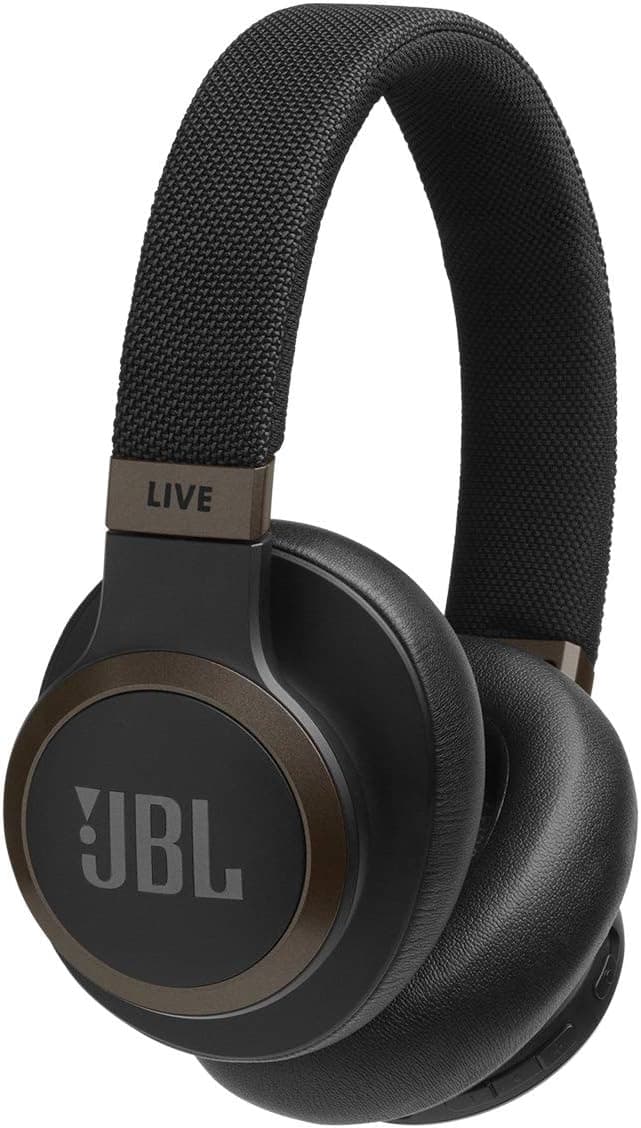
JBL Live 650BTNC