
Match the vacuum to your flooring type and home size. Pet owners need strong suction and self-emptying bins; apartment dwellers should prioritize quiet operation and a slim profile.
Match the vacuum to your flooring type and home size. Homes with pets need strong suction and self-emptying bins; apartments prioritize quiet operation and slim profile. Before you invest in a robot vacuum, take stock of your floor plan, your messiest areas, and how much maintenance you're willing to handle.
The Short Answer
- Flooring type: Hard floors require gentle brushes and anti-scratch sensors; carpet needs strong suction and a brush roll.
- Home size: Larger homes benefit from self-emptying bins and lithium-ion batteries; small apartments can get away with basic models.
- Pets and allergies: Look for high suction (2,500+ Pa), HEPA filters, and tangle-free brush rolls.
- Noise and navigation: Check decibel ratings (under 60 dB for apartment living) and whether the robot uses smart mapping or random navigation.
- Smart features: Decide if you need self-emptying, mopping, or voice control—these features add cost but can be worth it for busy households.
The Full Picture
Why It Matters
A robot vacuum is a long-term investment in daily cleanliness, but the wrong match can leave you with tangled brushes, half-cleaned rooms, and a device you manually unclog more than you actually run. Robot vacuums vary wildly in suction power, navigation smarts, bin capacity, and noise output—so choosing based on your specific living situation is the difference between a set-and-forget helper and a frustrating paperweight.
The Key Factors
Flooring Type
Your floors determine the essential cleaning mechanics. For hardwood, tile, or laminate, a robot with a single rubber brush roll and soft sweeping mode prevents scratching and scuffs. For carpet, you need a model with a bristle brush roll or a turbo mode that agitates deep-down dirt. If you have area rugs over hard floors, look for a robot with a height sensor or self-raising brush roll so it doesn't get stuck on transitions.
Home Size and Layout
A 1,000-square-foot apartment with open sightlines is a different challenge from a 3,000-square-foot suburban home with door thresholds and multiple rooms. For smaller spaces, a simple random-navigation robot with a standard bin is fine. For larger homes, you'll want smart mapping (LIDAR or VSLAM) so the robot learns your floor plan, cleans systematically, and recharges and resumes if it doesn't finish. Self-emptying bins also matter more when you have many rooms to cover—otherwise, you'll be removing hair and dust after every single run.
Pet Hair and Allergy Management
Pet owners and allergy sufferers should prioritize high suction (measured in Pascals, Pa) and true HEPA filtration. A robot with 2,500 Pa or more can pull embedded pet hair from carpets, while a HEPA filter traps dander and dust instead of recirculating them into the air. Self-emptying bases are especially valuable here, because they seal dust away in a bag you only change every 30 to 60 days—reducing your exposure to allergens. Also check for tangle-free brush rolls; otherwise, you'll be cutting thread and hair off the rollers weekly.
Noise and Bin Capacity
Apartment dwellers and parents of napping toddlers need to watch decibel ratings. A quiet robot operates around 50 to 55 dB, roughly the level of a refrigerator hum; louder models can hit 65 to 70 dB, comparable to a vacuum cleaner. Larger bins (500 mL or more) or self-emptying bases mean you go longer between empties, but self-emptying bases add a brief but loud “whoosh” (around 70 dB) when they dock.
Smart Features and Navigation
Modern robot vacuums offer everything from boundary strips to real-time mapping and voice control. Laser navigation builds accurate maps and allows zone cleaning; camera-based navigation works in darker areas but can struggle in dim light. Random navigation is cheaper but inefficiently bounces around, often missing spots. Decide early whether you want app scheduling, no-go zones, mopping functionality, or auto-empty docks—features that push the price up but can save hours of work each week.
Budget and Maintenance
Robot vacuums range from under $200 to over $1,500. The price reflects suction, navigation, and convenience. Remember to factor in consumables: filters, side brushes, and brush rolls need replacing every 3 to 6 months. A $500 robot with cheap parts might cost more to maintain than a $700 model with longer-lasting components. Read our Best Time to Buy Robotic Vacuums (2026 Guide) to time your purchase right—these devices see significant discounts during Black Friday and Amazon Prime Day.
Comparison Table: Which Robot Vacuum Suits Your Home?
| Scenario | Suction (Pa) | Bin Type | Noise (dB) | Navigation | Best For |
|---|---|---|---|---|---|
| Pet owners | 2500-4000 | Self-emptying | 55-65 | Laser mapping | Medium-large homes with dogs or cats |
| Hardwood/apartment | 1500-2500 | Standard | 45-55 | Gyroscope or camera | Small lofts, noise-sensitive households |
| Large home | 3000+ | Self-emptying | 60-70 | VSLAM or 3D mapping | Multi-room houses, daily cleaning |
| Budget | 1000-2000 | Standard | 50-60 | Random | Dorm rooms, first-time users |
Common Mistakes
- Buying on suction alone: A crazy-high Pa number doesn't matter if the robot can't navigate your layout or constantly gets stuck on furniture.
- Ignoring maintenance costs: Cheap filters and brushes can cost more annually than the vacuum itself.
- Choosing a self-emptying base in a tiny apartment: The base takes up floor space and makes noise; with a small home, you might empty the bin once a week anyway.
- Forgetting about water tanks for mopping: Mopping robots require refilling and cleaning the pad—factor in that time commitment.
- Shopping without checking the return policy: Robot vacuums are not one-size-fits-all; buy from retailers that allow a 30-day trial so you can test cleaning on your actual floors.
If you're also weighing a robot vacuum against a traditional stick vacuum, see our Best Time to Buy Vacuums (2026 Guide) for a pricing calendar. And if allergies are your main concern, our Best Time to Buy Air Purifiers (2026 Guide) can help you complete your air-quality setup.
Our Recommendation
For most modern households, we recommend a mid-tier robot vacuum with LIDAR mapping and self-emptying capability—as long as you have 500 square feet or more of floor to clean. This combination delivers systematic cleaning, minimal maintenance, and low allergy risk. If you live in a small apartment (under 600 square feet) with hard floors, a budget model with gyroscope navigation and a standard bin is sufficient and won't break the bank. For pet owners with carpeted homes, don't compromise on suction: go for a 3,000+ Pa model with a tangle-free brush roll and a HEPA filter, even if that means paying a little more. And remember to time your purchase strategically—robotic vacuums see their deepest discounts during holiday sales, so check our Best Time to Buy Robotic Vacuums (2026 Guide) before you pull the trigger. In the end, the right robot vacuum is the one that fits your floors, your family, and your tolerance for chore time—and with these criteria, you'll know exactly what to look for.
Frequently Asked Questions
What is the best robot vacuum for mixed flooring?
The best robot vacuums for mixed flooring feature a self-raising brush roll or height sensor to transition from hard floors to area rugs. Look for rubber brushes that work on both surfaces, strong suction (2000+ Pa) for carpets, and edge sensors to avoid carpet fringe tangles. Models with smart mapping let you set no-go zones for delicate rugs.
How does a robot vacuum recharge and resume?
When a robot vacuum's battery runs low, it automatically returns to its dock to recharge. Models with smart mapping can save their cleaning progress and resume exactly where they left off after recharging. Basic random-navigation robots typically restart the entire cycle from the beginning, which wastes time and battery.
Why do robot vacuums need HEPA filters?
HEPA filters trap microscopic particles like pollen, pet dander, and dust mites, preventing them from being blown back into the air. This is critical for allergy sufferers and pet owners. Without a HEPA filter, a robot vacuum can actually worsen indoor air quality by recirculating allergens instead of containing them.
When should you replace robot vacuum brushes and filters?
Replace filters every 2-3 months, or sooner if you have pets. Side brushes typically last 3-6 months, while main brush rolls may last 6-12 months depending on hair tangling. Check for visible wear and reduced cleaning performance. Many robots have app reminders, but a simple rule is to replace consumables at least twice a year.
Products Mentioned

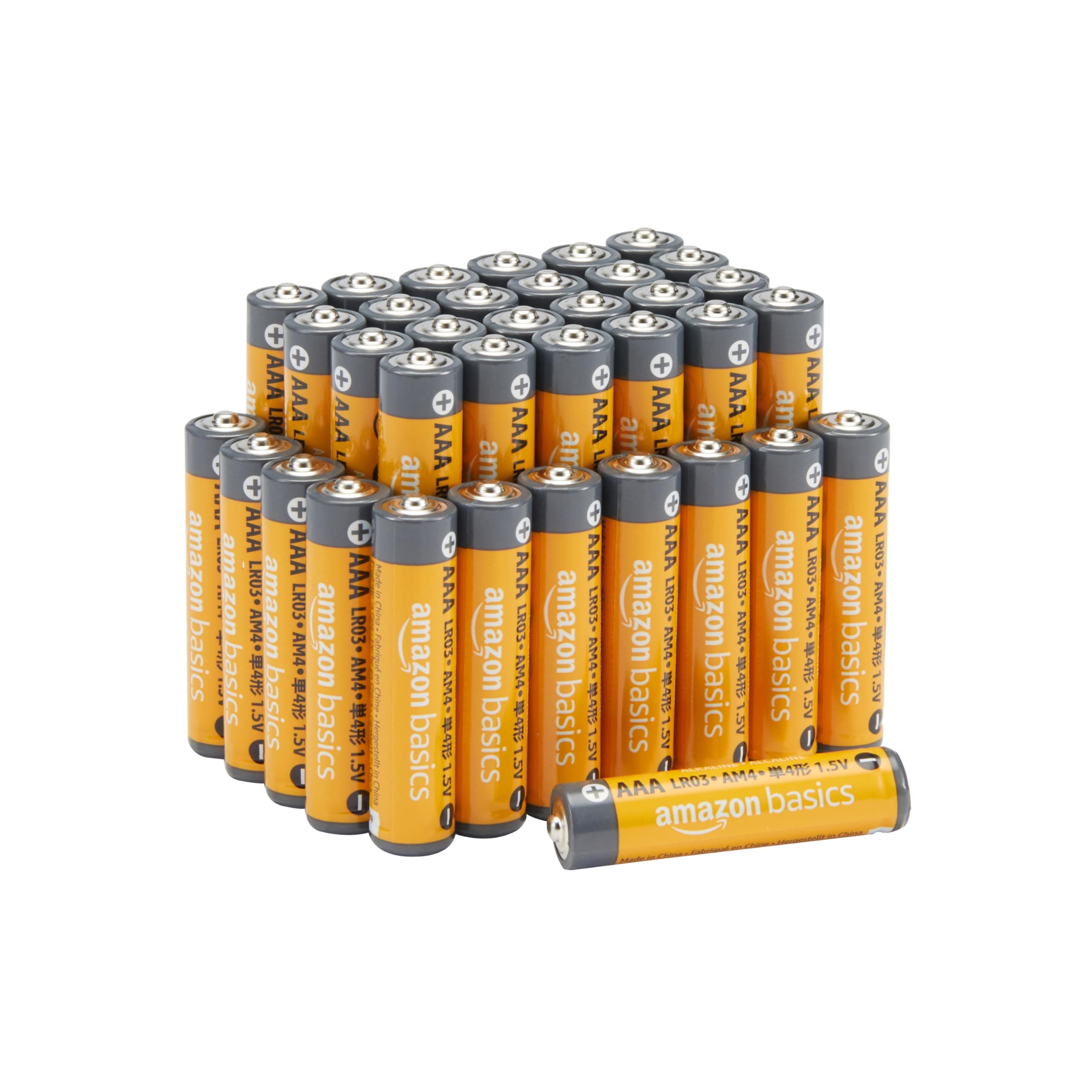
Amazon Basics AAA Alkaline High-Performance Batteries, 1.5 Volt, 10-Year Shelf Life, 36 Count (Pack of 1)
Amazon Basics