
Quick Verdict
The KitchenAid Artisan Tilt-Head is a great all-around mixer, but for small batches it has clear limitations. It works for medium-small batches that fill the bowl enough for the attachments to reach, but fails for very small quantities like a single egg white. With accessories and patience it can be usable, but alternatives like the Artisan Mini or a hand mixer often serve small-batch cooks better.
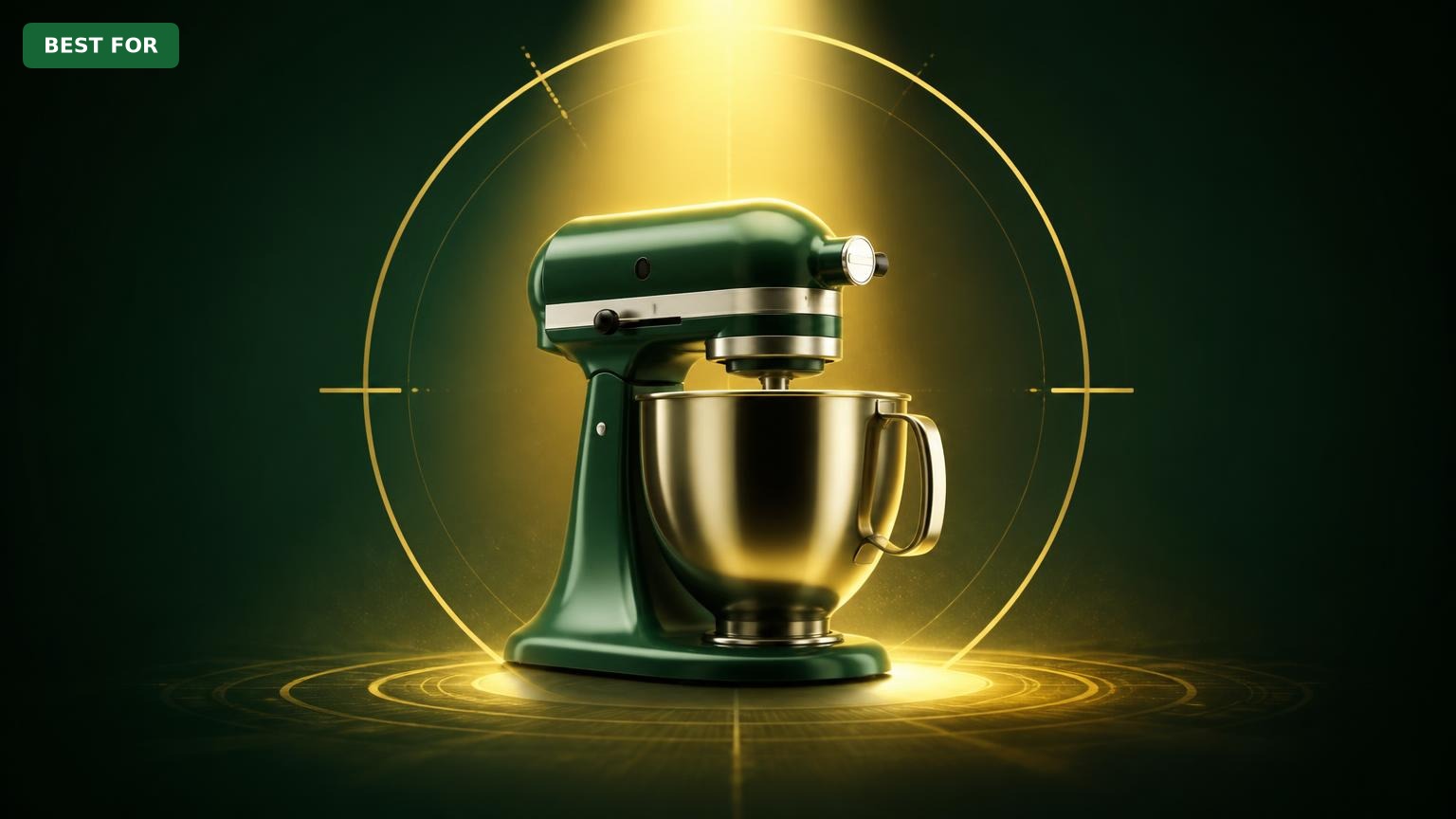
KitchenAid Artisan Tilt-Head
$449.99

✓ Key Strengths
- •Planetary mixing action gives thorough coverage for medium-size small batches like half-batch cookie dough.
- •Tilt-head design makes it easy to scrape down the bowl and switch attachments during mixing.
- •Powerful 10-speed motor handles thick dough even when the batch is small.
- •Compatible with the flexible-edge beater, which significantly improves small-batch results.
- •Available in many colors to match any kitchen decor.
- •Pouring shield reduces mess when adding small amounts of flour or liquid.
- •Long-lasting build quality and a large ecosystem of attachments for other cooking tasks.
✗ Key Weaknesses
- •5-quart bowl is too large for very small quantities, preventing proper contact with the beater or whisk.
- •Whisk cannot whip a single egg white or less than about 1/2 cup of cream.
- •Tall bowl sides make scraping small batches difficult and time-consuming.
- •Large footprint and heavy weight are overkill for simple small-batch recipes.
- •Price is significantly higher than smaller mixers or hand mixers, which are equally effective for tiny batches.
- •Requires extra accessories or regular manual scraping to get acceptable small-batch results.
What is KitchenAid Artisan Tilt-Head?
What is small batches?
Detailed Analysis
👍 Perfect For
- ✓Couples or small households who bake standard-size recipes and enjoy making an occasional half batch.
- ✓Home bakers who already own KitchenAid attachments and want a single machine that can also handle pizza dough and full-size cakes.
- ✓Enthusiasts who are willing to invest in the flexible-edge beater and don't mind scraping down the bowl.
- ✓People who sometimes need a large mixer for meal prep or entertaining and only occasionally make small portions.
👎 Not Ideal For
- ✗Solo bakers who only want to make a single serving or two of cookies, cupcakes, or meringues.
- ✗Anyone who regularly whips a single egg white or a few tablespoons of cream for coffee or cocktails.
- ✗Budget-conscious cooks who want a cheap, compact tool for small-batch baking without taking up countertop space.
- ✗Minimalists who prefer a simple hand mixer that is easier to clean and store.
Use Case Scenarios
Baking Half Batches of Cookies
You want to make six cookies instead of two dozen, using half the flour, sugar, and butter the recipe calls for.
✓ Strengths
- Dough hook and flat beater handle thick dough well.
- Cookie dough quantities in the 1.5-cup range are enough for the planetary action to work.
- Tilt-head design makes scraping the bowl faster than lifting a bowl in a bowl-lift mixer.
✗ Weaknesses
- Small amounts of butter and sugar get pushed into the corners before enough volume builds.
- Tall bowl makes scraping tedious, especially at the start of mixing.
💡 Workarounds
- Use the flexible-edge beater to automatically scrape the sides.
- Cream butter and sugar at a higher speed for a longer time with frequent stopping and scraping.
- Double the recipe and freeze half the cookies for another time.
Half-batch cookies use enough dough volume for the Artisan to mix effectively, especially with the flexible-edge beater. It's not perfect, but it's a practical use of the mixer without major frustrations.
Whipping a Single Egg White
Making a cocktail, a small batch of meringue, or a recipe that needs just one whipped egg white.
✓ Strengths
- None for this specific task; the mixer simply cannot whisk a single egg white.
✗ Weaknesses
- Whisk sits too high above a single egg white.
- Egg white spreads thinly across the wide bowl bottom, making aeration impossible.
- Time wasted and no usable result.
💡 Workarounds
- Use a hand mixer with a whisk attachment.
- Double or triple the egg whites and freeze the extra meringue for later.
- Use a small immersion blender with a whisk attachment.
A single egg white is far below the Artisan's effective minimum volume. The mixer physically cannot whip it into peaks, so it's not suitable for this scenario.
Making One Small Loaf of Bread
You want to bake a single small loaf of bread, using about 2 cups of flour.
✓ Strengths
- Spiral dough hook handles small flour amounts well.
- Motor has enough power for stiff bread dough.
- Consistent kneading produces good gluten development.
✗ Weaknesses
- Dough may ride up the hook and need occasional pushing down.
- Sticky small doughs can be more difficult to manage.
💡 Workarounds
- Add flour gradually and stop to scrape sides before it becomes too sticky.
- Use the pour shield to keep flour from escaping.
- Knead by hand for the first minute if the dough is very small.
Bread dough small enough for one loaf still has enough volume and structure for the Artisan's dough hook to work properly. It's one of the best small-batch tasks for this mixer.
Whipped Cream for Two Desserts
You need about 1 cup of whipped cream to top two slices of pie or two hot chocolates.
✓ Strengths
- Whisk can successfully whip 1 cup of cream.
- Fast whipping time saves energy.
- Pour shield helps when adding sugar gradually.
✗ Weaknesses
- 1/2 cup or less won't be whipped well.
- Cream can climb the whisk and make a mess if overbeaten.
- Large bowl makes it hard to gauge the amount visually.
💡 Workarounds
- Use a smaller bowl and a hand mixer for less than 1 cup of cream.
- Watch the mixer closely and stop at soft peaks.
- Use the flex-edge beater only for batter, not for whipping cream.
One cup of cream works, but smaller amounts are problematic. Since the use case often involves less than a cup, the Artisan is only a marginal fit for this scenario.
Preparing a Single-Layer Cake
You want to bake one 8-inch layer of vanilla cake or a small batch of six cupcakes.
✓ Strengths
- Flat beater mixes cake batter thoroughly when volume is just under the beater's reach.
- Variable speeds help avoid overmixing.
- Tilt-head allows easy scraping and incremental ingredient additions.
✗ Weaknesses
- Small cake batter volume often hides in the bowl's bottom corners.
- Requires frequent scraping or a flexible-edge beater.
- Cupcake-sized batters might not fill the mixer bowl enough for even mixing.
💡 Workarounds
- Use the flexible-edge beater to reduce scraping effort.
- Place the bowl so you can scrape the bottom thoroughly with a small spatula.
- Mix the dry ingredients in a separate bowl and add them in two parts.
With a flexible-edge beater and a bit of scraping, the Artisan makes a single-layer cake well. It's not effortless, but it is manageable and produces good results.
Bottom Line
Ready to get the KitchenAid Artisan Tilt-Head? Check the latest price on Amazon.
🛒 Buy on AmazonAs an Amazon Associate we earn from qualifying purchases.
Frequently Asked Questions
Is KitchenAid Artisan Tilt-Head good for small batches?
The KitchenAid Artisan Tilt-Head is moderately good for small batches, but it has limits. It works well for medium-small batches like half-batch cookie dough or a small loaf of bread, but it struggles with very small quantities like a single egg white or less than half a cup of cream. With the flexible-edge beater and thorough scraping, you can adapt, but it is not the ideal tool for true single-serving recipes.
Can you use KitchenAid Artisan Tilt-Head for small batches?
Yes, you can use it for small batches, but the results depend on the volume. Batches that use at least 1 to 1.5 cups of flour or equivalent volume tend to mix well. Smaller volumes, especially liquids like egg whites or cream, may not come into contact with the beater or whisk. You can improve performance by using a flexible-edge beater, scraping down the bowl often, and using the pour shield.
What is the minimum amount the KitchenAid Artisan can mix?
There is no official minimum, but based on customer experiences, the practical minimum is around 1 cup of dry ingredients or 2 egg whites. Recipes that call for less than that tend to be difficult because the beater or whisk sits too high above the contents of the 5-quart bowl. For very small amounts, a hand mixer is a more reliable choice.
What's better than KitchenAid Artisan Tilt-Head for small batches?
The KitchenAid Artisan Mini 3.5-Qt Stand Mixer is purpose-built for small batches and uses the same motor in a smaller frame. A high-quality hand mixer, like the Cuisinart Power Advantage, is also cheaper and handles tiny amounts with ease. For people who only make small batches, either of these is a better investment.
Does KitchenAid Artisan Tilt-Head work for whipping a single egg white?
No, the Artisan Tilt-Head does not work well for whipping a single egg white. The whisk is sized for the 5-quart bowl and won't reach the small volume of liquid. You'll get little to no aeration. Use a hand mixer or double or triple the recipe to create a larger volume that the whisk can actually beat.
Can I use a smaller bowl with my KitchenAid Artisan for small batches?
Some KitchenAid 3.5-quart glass or stainless steel bowls are marketed as compatible with tilt-head mixers. However, you need to ensure the beaters and whisk still fit the smaller bowl geometry. Many users report that using a smaller bowl helps with small batches, but you may also need to purchase smaller accessories. Check the product listing and customer reviews carefully before buying.
Does the flexible-edge beater help with small batches?
Yes, the flexible-edge beater significantly helps with small batches. Its silicone edge scrapes the sides and bottom of the bowl continuously, which prevents small amounts of batter from sticking and unmixed ingredients from hiding in corners. It's the most recommended accessory for improving the Artisan's small-batch performance.
Is the KitchenAid Artisan Mini better for small batches than the Artisan 5-Qt?
Yes, the Artisan Mini is unquestionably better for small batches. It has a 3.5-quart bowl and scaled-down attachments, meaning a single egg white, half-batch cookie dough, and small loaves of bread mix properly without constant scraping. The trade-off is that you can't make full-size cakes or large bread doughs in the Mini.
Should a single person buy the KitchenAid Artisan Tilt-Head for small batches?
It depends on your baking habits. If you bake full-size recipes occasionally and can tolerate a little extra scraping for small batches, the Artisan is a good choice. If you exclusively bake small batches for one, you'll likely be happier with a smaller mixer or hand mixer. Consider how much kitchen storage and budget you have before deciding.
How do I make the KitchenAid Artisan work better for small batches?
First, add the flexible-edge beater to your mixer. Always scrape down the bowl before and during mixing, especially at the beginning. Use the pouring shield to keep ingredients inside. For very small liquid quantities, transfer them out and use a hand mixer. You can also try increasing the batch size and freezing the extra portions.
Is the KitchenAid Artisan 5-quart too big for everyday small-batch cooking?
For everyday small-batch cooking, yes, the 5-quart Artisan is often overkill. It takes up significant counter space, and for tasks like whipping a single egg or mixing a small pancake batter, it's faster to pull out a hand mixer. If your daily cooking is truly small-batch, this mixer is not the best fit.
What are the best accessories for KitchenAid Artisan for small batches?
The best accessories are the flexible-edge beater, a pouring shield, and a small bowl scraper. If you want to reduce bowl size, consider a compatible 3.5-quart bowl. A digital kitchen scale and mini measuring cups are also helpful for scaling recipes accurately. Together, these tools make the Artisan far more usable for small-batch baking.