
Quick Verdict
The KitchenAid Stand Mixer is a good—not excellent—choice for kneading pizza dough. It handles standard dough batches with ease, but struggles with high hydration and large quantities. For the average home pizza maker, it's a solid investment.
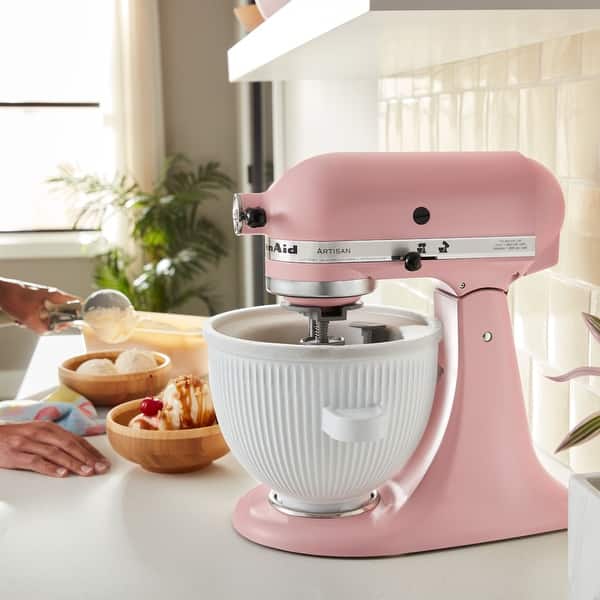
KitchenAid Stand Mixer
$449.99

✓ Key Strengths
- •Planetary mixing action ensures the dough hook covers the entire bowl, promoting evenly developed gluten.
- •Variable speed control includes a slow speed (2) that's perfect for kneading without creating flour dust storms.
- •The dough hook is simple to attach and clean, and many models are dishwasher-safe.
- •Durable construction means a quality KitchenAid can last through decades of pizza nights.
- •Available in multiple sizes, from the 3.5-quart Artisan Mini to the 7-quart bowl-lift, so you can choose the capacity that matches your pizza batch sizes.
- •Over 15 attachments (like a food grinder, pasta roller, or blender) make it a true multi-use appliance, not just a dough kneader.
✗ Key Weaknesses
- •The motor can overheat and even smell when kneading large or stiff doughs for extended periods.
- •Standard dough hooks are less effective at developing gluten than a spiral or fork mixer, sometimes requiring longer mixing times.
- •High-hydration dough (65%+) tends to climb up the hook, causing a mess and requiring frequent stopping to scrape.
- •The 5-quart bowl has a limited capacity—about 4-5 cups of flour at most—which caps you at 2-3 large pizzas per batch.
- •The mixer can be top-heavy and may 'walk' on the counter when kneading thick dough at higher speeds.
- •Price: A new KitchenAid is a significant investment, and budget-conscious users may find cheaper alternatives that do a decent job.
What is KitchenAid Stand Mixer?
What is kneading pizza dough?
Detailed Analysis
👍 Perfect For
- ✓Home bakers who make pizza once or twice a week and want a machine that also handles cakes, cookies, and other baking tasks.
- ✓Beginners who need a reliable, foolproof way to knead pizza dough without the guesswork.
- ✓Families who typically make 1-3 pizzas at a time and don't need huge batches.
- ✓Gift-givers looking for a long-lasting kitchen appliance that will be appreciated by novice and experienced cooks alike.
👎 Not Ideal For
- ✗Serious pizza enthusiasts who want to emulate authentic Neapolitan style with 65%+ hydration dough.
- ✗Small pizzerias or caterers who need to knead 5+ pounds of dough at a time.
- ✗Budget-conscious cooks who can't justify spending $400+ on a single-purpose-ish appliance and would rather use a cheap bread machine or their hands.
- ✗Users who expect 'set-and-forget' operation, as the dough hook still requires some supervision and scraping.
Use Case Scenarios
Beginner Home Pizza Maker
You're new to making pizza dough at home and want a machine to simplify the process.
✓ Strengths
- Easy to learn—no kneading technique needed.
- Hands-free operation means you can multitask while the mixer works.
- Built-in speed control prevents dough from flying out of the bowl.
✗ Weaknesses
- You might not know when to stop if you follow a poor recipe.
- The dough hook can leave dry bits at the bottom of the bowl, causing inconsistent dough.
💡 Workarounds
- Use a kitchen scale to measure ingredients accurately and follow a trusted pizza dough recipe.
- Stop the mixer and scrape down the sides with a flexible spatula at least once during kneading.
- Use a dough scraper to easily release the finished dough from the hook and bowl.
The KitchenAid removes the intimidation factor and produces consistent results, making it an ideal partner for a beginner.
Family Pizza Night Large Batch
You're feeding a crowd—making four or more large pizzas, which requires at least 5 cups of flour.
✓ Strengths
- If you have a 7-quart model, you can just barely do a double batch.
- You can split the dough into smaller balls and knead them sequentially.
✗ Weaknesses
- The motor is not designed for marathon kneading sessions.
- With sticky dough, the hook rides up and doesn't stay submerged, leading to under-kneaded parts.
💡 Workarounds
- For big batches, use a bowl-lift model like the KitchenAid 7-quart, which has a more robust motor.
- Consider using a spiral mixer or bread machine for large quantities.
- Let the mixer rest for a few minutes between batches to avoid overheating.
It's possible, but you're pushing the machine beyond its sweet spot, and results may be inconsistent or the machine may overheat.
High-Hydration Neapolitan Dough
You're aiming for authentic Neapolitan pizza with a hydration level of 65-70% or higher.
✓ Strengths
- The mixer can at least combine the ingredients without too much mess, unlike hand mixing.
- You can use the dough hook to do a partial knead before switching to hand techniques.
✗ Weaknesses
- Sticky dough sticks to the hook and doesn't get kneaded, remaining shaggy.
- The motor may falter, and the mixer may hop around the counter.
- Extra flour additions to make it easier can ruin the hydration balance.
💡 Workarounds
- For high-hydration dough, use a minimum amount of water and a strong bread flour, then hand-fold the rest.
- Try the 'windowpane' test after machine kneading to check if gluten is developed enough.
- Use a damp spatula to scrape down the sides and incorporate the dough, or switch to a bread machine with a dough cycle that handles wet dough better.
- Consider a spiral dough hook accessory, but it only comes with the 7-quart model.
The KitchenAid is not well-suited for very wet dough; however, a determined baker might get it to work with constant monitoring and hand assistance.
Serious Home Baker Making Multiple Types of Dough
You bake pizza weekly and also make breads, rolls, and other doughs regularly.
✓ Strengths
- Versatile enough to handle a variety of doughs, from sticky cinnamon rolls to firm pizza crusts.
- The 10-speed control lets you adjust between slow kneading and faster mixing for other recipes.
- Durable metal construction and easily replaceable parts make it a long-term companion.
✗ Weaknesses
- For a busy baker kneading multiple batches in one day, the motor might not tolerate prolonged use without cooling down.
- Some flours (like 100% whole wheat) produce a stiffer dough that can stall the mixer.
💡 Workarounds
- Use a digital kitchen scale to measure ingredients precisely, avoiding overly stiff dough.
- For whole grain doughs, let the dough rest for 20 minutes after mixing to soften the bran, then knead.
- Add the water gradually or use a mix of bread flour and whole wheat to achieve a workable consistency.
The KitchenAid shines as a versatile dough mixer for a serious home baker, balancing capacity, power, and convenience within reasonable limits.
Bottom Line
Ready to get the KitchenAid Stand Mixer? Check the latest price on Amazon.
🛒 Buy on AmazonAs an Amazon Associate we earn from qualifying purchases.
Frequently Asked Questions
Is a KitchenAid Stand Mixer good for kneading pizza dough?
Yes, for standard pizza dough (55-65% hydration) in small-to-medium batches, the KitchenAid Stand Mixer does an excellent job. It's convenient and produces consistent results in about 8 minutes. However, it has limitations with high hydration (sticky) dough or very large batches.
Can you make pizza dough in a KitchenAid Stand Mixer?
Absolutely. Attach the dough hook, add your ingredients to the bowl, and mix on speed 2. The planetary action will knead the dough until smooth and elastic. Many home pizza makers use a KitchenAid as their primary dough mixer.
How long should I knead pizza dough in a KitchenAid mixer?
For a standard recipe, 6 to 8 minutes on speed 2 is typical. The dough should pull away from the sides of the bowl and form a smooth ball. You can perform the windowpane test—stretch a small piece of dough thin; if it forms a translucent membrane without tearing, it's ready.
What speed should I use when kneading pizza dough?
Always use the lowest or second-lowest speed (1 or 2). Higher speeds can strain the motor and create excessive heat, and they won't knead the dough better—they'll just cause it to climb the hook and make a mess.
Why does my KitchenAid smell hot when kneading pizza dough?
The motor can overheat when working stiff or large dough batches for a long time. It's a sign you're pushing the machine beyond its capacity. Stop, let it cool, and split your dough into smaller batches or consider a larger model. Also, make sure to knead on a low speed to reduce strain.
Can I knead high-hydration dough in a KitchenAid?
It's challenging. Dough with 65% or higher hydration tends to climb the hook and not get kneaded properly. You can attempt it by stopping frequently to scrape the dough down, but many find hand folding or a spiral mixer works better for wet doughs.
What's the maximum amount of pizza dough for a 5-quart KitchenAid?
A safe maximum is about 4 cups of flour (around 500-600 grams), which yields roughly two to three 12-inch pizzas. Exceeding that can overwhelm the motor and lead to inconsistent kneading.
Is a bread machine better than a KitchenAid for pizza dough?
Bread machines are more hands-off—you throw in ingredients and press 'dough'—but they often don't knead as thoroughly as a KitchenAid and are less versatile. If you want a dedicated dough maker and also want to bake bread loaves, a bread machine can be a good alternative. But for pizza dough specifically, a KitchenAid gives you more control over kneading time and dough texture.
What is the best attachment for kneading pizza dough in a KitchenAid?
The standard coated dough hook that comes with the mixer is fine for most home pizza dough. Some users prefer the spiral dough hook, which is available with larger bowl-lift models—it kneads more efficiently by mimicking a spiral mixer. There are also aftermarket hooks, but stick to genuine KitchenAid parts for safety.
How do I clean pizza dough out of the dough hook?
Dough can be sticky, but it's easy to clean if you act quickly. Wipe off as much dough as possible with a paper towel, then wash the hook in warm, soapy water. It's dishwasher-safe on the top rack, but hand-washing is recommended to preserve the coating. For stubborn dried dough, soak it briefly in warm water.
Why does my dough hook not reach the bottom of the bowl?
On some models, especially when the bowl is overfilled, the dough hook may not reach the bottom. Always check that your batch size is within the recommended capacity. You can also adjust the bowl height on some models using the screw underneath, but be careful not to damage the motorhead.
What are some tips for making pizza dough in a KitchenAid?
1) Use a scale for accurate measurements. 2) Mix the dough on low speed until it comes together, then let it rest for 20 minutes to allow the flour to hydrate before kneading. 3) Knead only on speed 2 to avoid overheating. 4) Scrape the bowl and hook once or twice during kneading. 5) If the dough is too sticky, add flour a tablespoon at a time—let it incorporate before adding more. 6) After kneading, let the dough proof in a lightly oiled covered bowl until doubled in size.