Is Best Standing Desk for beginners Worth It? Honest Review (202…
Everything you need to confidently choose your first height-adjustable standing desk.
Thinking about getting a standing desk but feeling overwhelmed by choices and tech jargon? You’re not alone. Many beginners worry about picking the wrong desk, wasting money, or finding it too complicated to use. This guide cuts through the confusion. We’ll explain exactly what features matter for newcomers, what to ignore, and recommend the best budget-friendly, easy-to-use standing desks available on Amazon. By the end, you’ll feel confident to make a smart purchase that fits your space, budget, and needs.
📋 In This Guide
• Why Beginners Struggle with Standing Desk
• What to Look For (Key Features)
• Top 4 Beginner-Friendly Standing Desk
• Essential Accessories for Beginners
• Common Beginner Mistakes to Avoid
• Your Progression Path
• FAQ & Learning Resources
😰 Why Beginners Struggle with Standing Desk
Standing desks seem simple, but the market is full of confusing terms: dual motors, weight capacity, programmable heights, wobble, laminate vs bamboo. Beginners often don’t know which features are essential and which are just marketing hype. Another common frustration is the fear of assembly complexity or the desk being too heavy to adjust. With hundreds of options, it’s easy to overspend on features you never use or buy a desk that’s too small or too large. Many first‑timers also overlook the importance of simple operation—they end up with a desk that’s hard to raise or lower smoothly. Our goal is to highlight beginner‑friendly qualities like intuitive controls, sturdy stability at standing height, and hassle‑free setup so you can start working healthier from day one.
🔍 What to Look For: Key Beginner-Friendly Features
For a beginner, the most important thing is a desk that is easy to adjust, stable at both sitting and standing heights, and simple to assemble. Look for a height range that fits your body (typically 28–48 inches). Pay attention to the motor system: dual motors are quieter and lift heavier, but a single motor can still work well for a basic setup. Speed and noise level matter—a slow, noisy motor can be annoying. Control panels should have a memory function to save your favorite heights, so you don’t have to hunt for the perfect level every time. Avoid desks with complicated app connectivity if you just want to stand and sit. A solid frame is key: steel construction and a weight capacity of at least 150 lbs will support your monitor, accessories, and occasional leaning. Finally, consider the desktop material: laminate or engineered wood is durable and affordable, while bamboo offers a nicer look at a higher price. Beginners don’t need advanced features like health tracking or voice control – keep it simple.
✅ Essential Features for Beginners
•Simple up/down button control – No apps or programming needed.
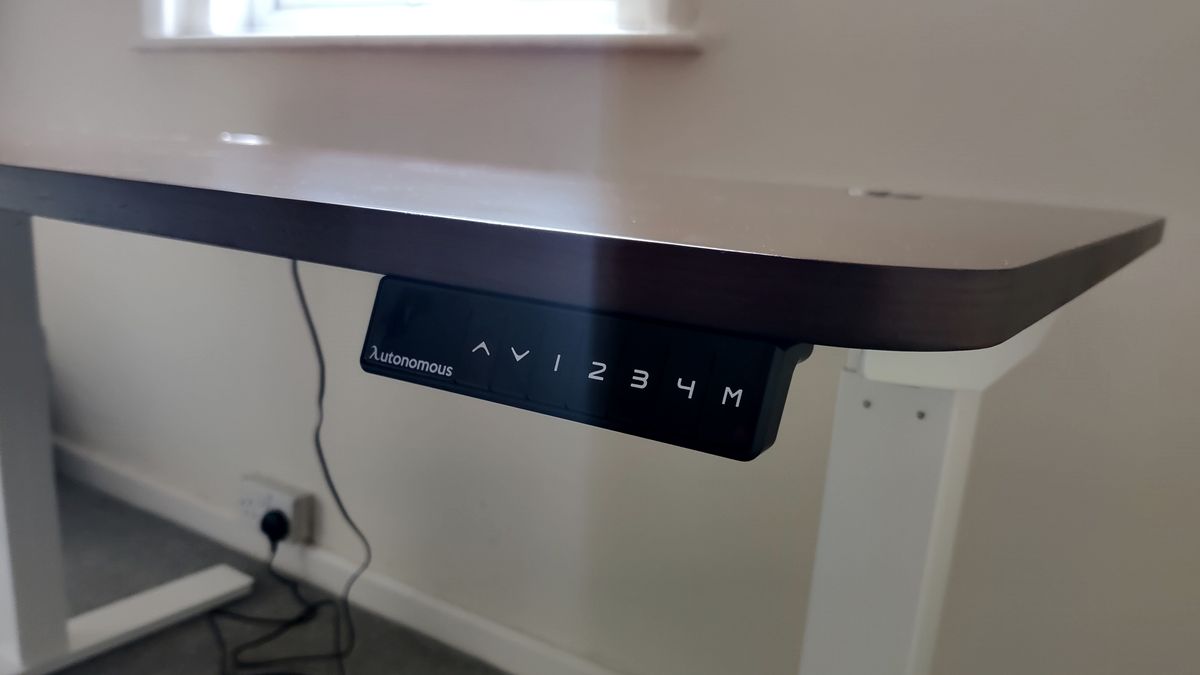
•Memory presets – Save 2-4 favorite heights for quick changes.
•Sturdy frame – Minimal wobble at standing height builds confidence.
•Quiet motor – Won't disturb your work or family.
•Easy assembly – Under an hour with clear instructions.
•Adequate height range – Fits your desk surface between 28" and 48".
•Good weight capacity – At least 150 lbs for monitor, laptop, and accessories.
•Warranty – 5+ years on motor and frame gives peace of mind.
Affordable dual-motor desk with a simple push-button control. Assembly takes about 45 minutes. The EC1 offers a smooth, quiet adjustment and a solid build that doesn’t wobble at standing height. Great for small spaces and first-time buyers on a tight budget.
✓ Beginner Pros
+Two-motor system for smooth lifting
+Memory presets to save two heights
+Compact 48x24 size fits most rooms
+Easy assembly with clear instructions
+Very affordable entry price
✗ Beginner Cons
-Desktop is laminate – may scratch easily
-Only two memory presets
-Weight capacity 154 lbs – fine for most beginners but not heavy setups
👍 Best for: Beginners with limited space and budget who want a reliable motorized desk without extra frills.
👎 Not for: Users needing a larger work surface (60”+), heavy-duty capacity, or premium desktop material.
The Uplift V2 is widely considered the best all-around standing desk for beginners. It offers exceptional stability, a wide range of height adjustment, and many customization options. The control panel is intuitive with four memory presets. Assembly is straightforward, and Uplift provides excellent customer support. It will last years and grow with you.
✓ Beginner Pros
+Extremely stable – minimal wobble at max height
+Four memory presets for quick position changes
+Wide size (60x30) fits dual monitors easily
+Optional wire management tray included
+Strong weight capacity (355 lbs)
✗ Beginner Cons
-Higher price – around $500 with basic desktop
-Assembly takes 1–2 hours
-Desktop may need additional drilling for some accessories
👍 Best for: Beginners who want a high-quality desk that will last for years, can accommodate a larger setup, and prefer the best stability.
👎 Not for: Budget-constrained buyers or those with very limited space who don’t need a 60” desk.
A balanced option with a clean design and reliable performance. The SmartDesk Core features a single motor but is surprisingly quiet and smooth. Its height range is generous, and the control panel has three memory presets. Assembly is moderate – about an hour. Great value for beginners who want a mid-size desk without breaking the bank.
✓ Beginner Pros
+Three memory presets for easy switching
+Quiet operation – won’t disturb others
+Good stability for its price
+Attractive look fits most home offices
+Comes in two size options (53x29 and 48x27)
✗ Beginner Cons
-Single motor – slower than dual-motor models
-Weight capacity 250 lbs – lower than recommended tier
-Some users report wobble at max height with heavy loads
👍 Best for: Beginners who want a reliable mid-priced desk with a clean look and don’t need super fast adjustment.
👎 Not for: Users who plan to stand for long periods with heavy monitors, or those who want the fastest lift speed.
A premium option that is incredibly easy to use right out of the box. The Vari desk has a one-touch height adjustment and a smooth lift system. Its frame is built like a tank – very stable at all heights. The desktop is scratch-resistant and easy to clean. Ideal for beginners who want a “forever” desk with minimal fuss.
✓ Beginner Pros
+Rock-solid stability – almost no wobble
+One-touch height adjustment with no programming needed
+Easy assembly (less than 30 minutes with Q-Lock system)
+Durable, high-quality desktop material
+Great warranty – 10 years on frame, 5 on motor
✗ Beginner Cons
-Higher price point (around $430+)
-Only one size option (48x30) – may be too small for some
-No memory presets – you must hold button to adjust
👍 Best for: Beginners who value simplicity and durability above all, and have a higher budget for a premium experience.
👎 Not for: Beginners who need multiple programmable heights or larger desktop space.
A standing desk, also called a sit-stand desk or height-adjustable desk, lets you raise and lower your work surface with the push of a button. For beginners, the goal is to improve posture, reduce back pain, and burn extra calories by alternating between sitting and standing throughout the day. There are three main types: manual crank (cheapest but slow), single motor (good balance of cost and convenience), and dual motor (fast, quiet, stable). For a beginner, a dual-motor desk offers the smoothest experience and is worth the extra cost. Most beginner-friendly desks come as a frame plus a desktop, or as a complete unit. Assembly usually involves attaching legs to the desktop and connecting cables – most modern desks take 30–60 minutes. Don’t stress about “wobble” at max height; modern dual-motor frames are very stable. Start by using the desk at seated height for the first week, then gradually introduce standing intervals. Beginner-friendly desks have memory buttons that let you save your seated and standing heights so switching takes one touch. Remember: you don’t need a fancy health app or voice control. A simple, reliable desk that adjusts smoothly is all you need to start building a healthier work habit.
🤔 How to Choose Your First Standing Desk
Start by measuring your available space – length and depth of your desk area. Standing desks come in sizes from 40x24 inches up to 72x30 inches. For most beginners, a 48x24 or 55x28 inch desktop is spacious enough for a monitor, keyboard, and accessories. Next, set a realistic budget: $200-$400 buys a reliable entry-level dual-motor desk; $400-$700 gets you better stability and a nicer desktop. Avoid desks under $150 – they often wobble, have slow motors, or break quickly. Think about your daily use: if you plan to sit and stand multiple times an hour, look for a desk with memory presets and a quiet motor. If you have a heavy monitor or multiple screens, prioritize weight capacity (300+ lbs). Also, consider the ergonomic setup – you may need a monitor arm or keyboard tray later, so ensure your desktop is thick enough or has grommets. Red flags to watch: vague weight specs (e.g., “heavy duty” without numbers), short warranty (<1 year), and negative reviews about wobble or motor failure after a few months. For a beginner, the sweet spot is a dual-motor desk with a 5-year warranty and solid customer support.
💰 Budget Guide for Beginners
700+
Professional entry – heavy-duty commercial grade, programmable settings, smart features. Overkill for most beginners unless budget is not an issue.
200 - $400
Sweet spot – most beginners find a reliable dual-motor desk with memory presets and good stability. Best value for long-term use.
400 - $700
Premium beginner – high-quality frame, premium desktop (e.g., bamboo), excellent stability, sometimes with advanced features like anti-collision. Won’t outgrow quickly.
Under $ - $200
Entry level – usually manual crank or basic single motor. Good for trying out standing, but may lack stability and speed. Upgrade likely needed within a year.
📈 Your Progression Path: Beginner to Intermediate
Start by using your desk only at seated height for a week to adjust to the new workspace. Then gradually introduce 15-minute standing intervals, using a timer to remind you. Within a month, you’ll naturally switch between sitting and standing. Many beginners stay at this beginner-friendly level for 6–12 months before exploring upgrades. When you find yourself wanting faster adjustment, more stability, or a larger desktop, it’s time to consider upgrading. Signs you’ve outgrown your beginner desk: the desk wobbles when you lean, the motor struggles to lift your newly added second monitor, or you find the height range insufficient for your tall frame. Next steps could be investing in a higher-end frame (e.g., from Uplift or Jarvis) or adding advanced accessories like a dual monitor arm or a balance board. But remember: the most important progression is learning to listen to your body and vary your position throughout the day – that’s the real skill.
🎯 Bottom Line: Our Recommendations
For most beginners, the best standing desk is one that is sturdy, easy to adjust, and fits your space and budget. Our top pick for overall value is the Uplift V2 – it’s a rock-solid foundation that will last for years. If you’re on a tight budget, the FlexiSpot EC1 gives you dual-motor reliability at a great price. And if you want absolutely hassle-free simplicity, the Vari desk is unbeatable. Don’t forget to add an anti-fatigue mat and a cable management tray from day one – they make a huge difference. The most important step is to start: order your desk, set it up, and begin alternating between sitting and standing. You won’t regret investing in your health. Happy standing!
❓ Frequently Asked Questions
The Uplift V2 (recommended tier) is widely considered the best for beginners due to its stability, memory presets, and customization options. For a budget-friendly option, the FlexiSpot EC1 is excellent.
Between $200 and $400 is the sweet spot for a reliable dual-motor desk with good stability. Avoid desks under $150 as they often have wobble or motor issues.
Beginners need a desk with simple up/down controls, memory presets (2-4), a sturdy frame (minimal wobble), a quiet motor, and easy assembly. Extra features like app connectivity are not necessary.
The Vari Electric Standing Desk is very easy because it has one-touch adjustment and assembly takes under 30 minutes. The FlexiSpot EC1 also has simple controls and quick setup.
Essentials: cable management tray and anti-fatigue mat. Highly recommended: a monitor arm. Nice-to-have: wireless keyboard/mouse to reduce cable clutter.
Measure your space, set a budget ($200-400), decide on size (48x24 to 60x30), and look for dual motors, memory presets, and good warranty. Read beginner-friendly reviews.
Not at all. Modern electric desks are very easy to operate – just push a button. The main challenge is remembering to alternate between sitting and standing, which takes time to build into habit.
Common mistakes include buying too cheap (wobble), not getting an anti-fatigue mat, ignoring cable management, and choosing a desk that’s too small for their equipment.
Dual motors are recommended for smoother, faster, and quieter adjustment. They also handle heavier loads better. Single motors can work for very light setups but may be slower and noisier.
48x24 inches is good for one monitor and a laptop. 55x28 or 60x30 inches is better if you have two monitors or want more space. Measure your area first.
Most beginner-friendly desks take 30–60 minutes. The Vari desk can be assembled in under 30 minutes. Uplift V2 may take 1–2 hours for a complete setup including cable management.
Yes, most Amazon sellers offer returns within 30 days. Some brands like Uplift have a 30-day money-back guarantee. Check the seller’s return policy before buying.