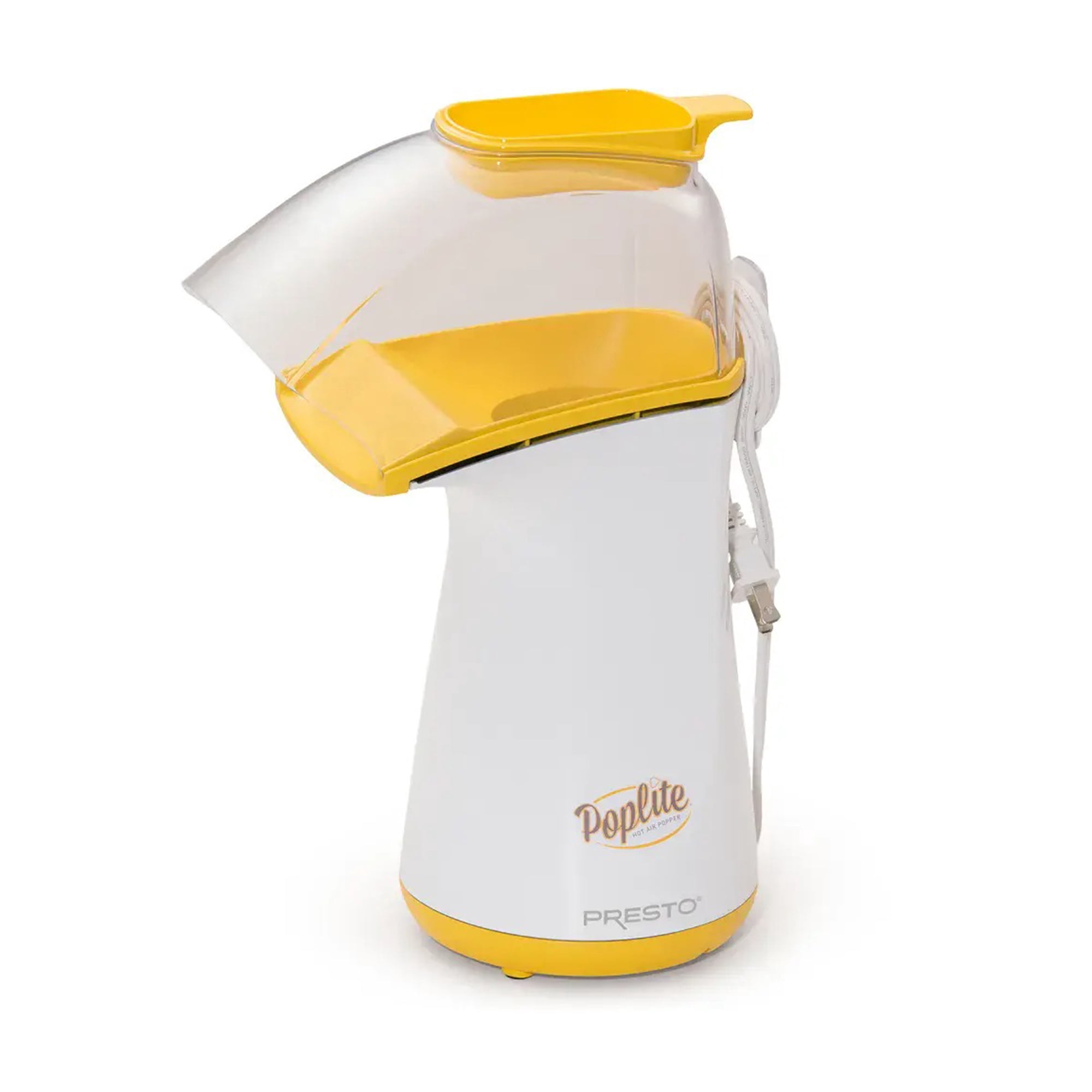
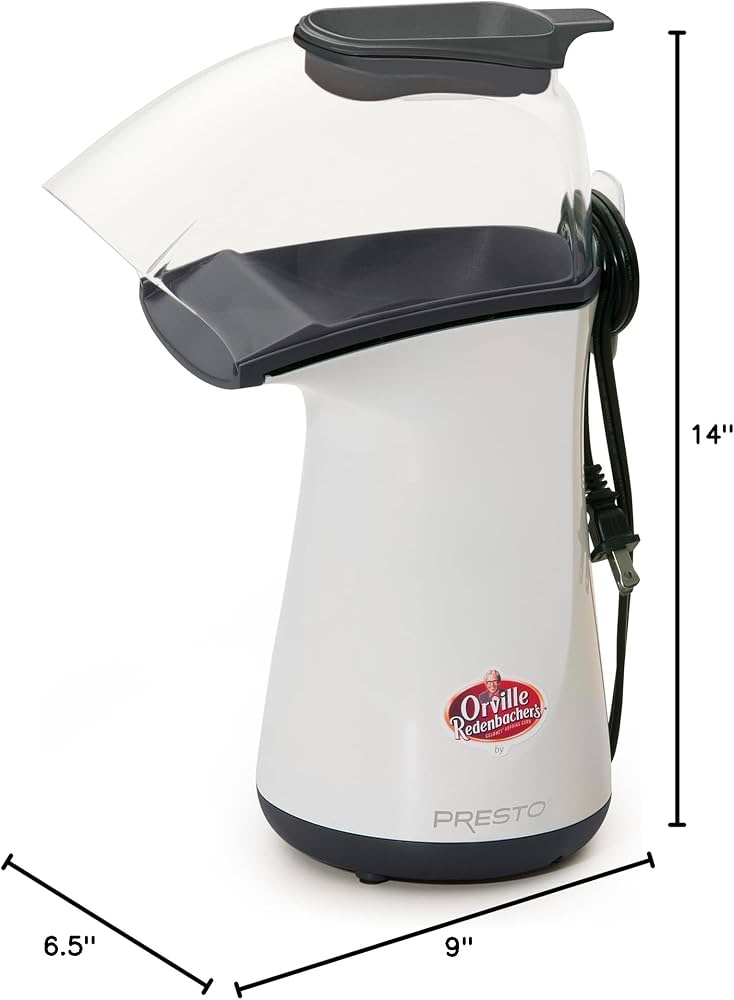
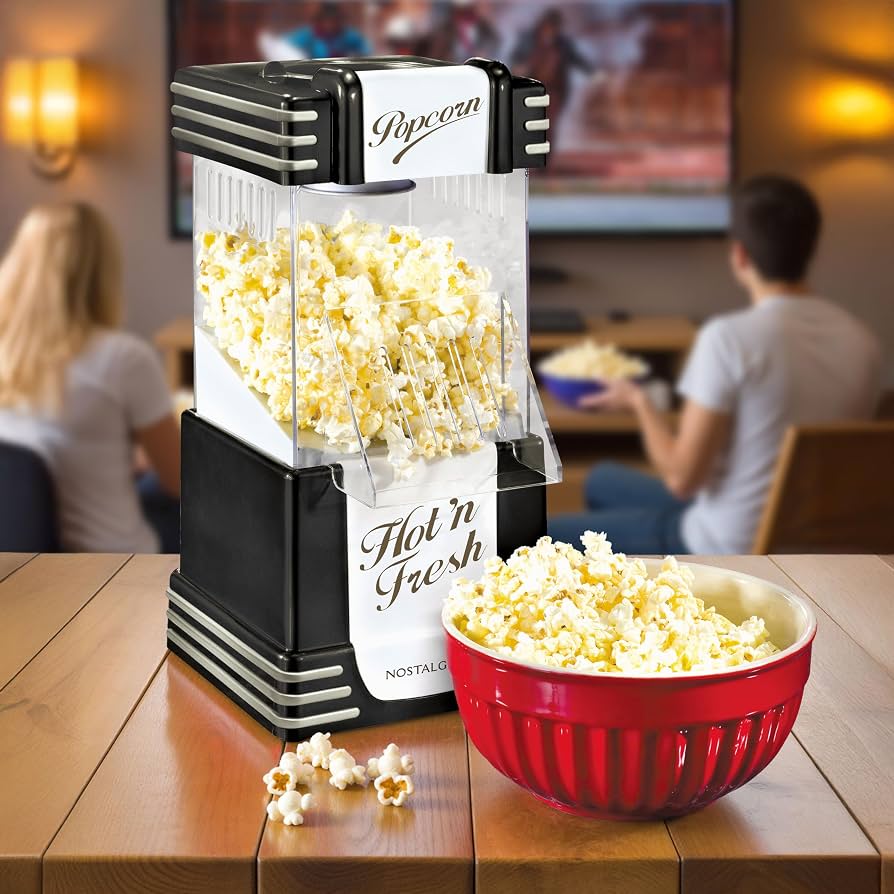
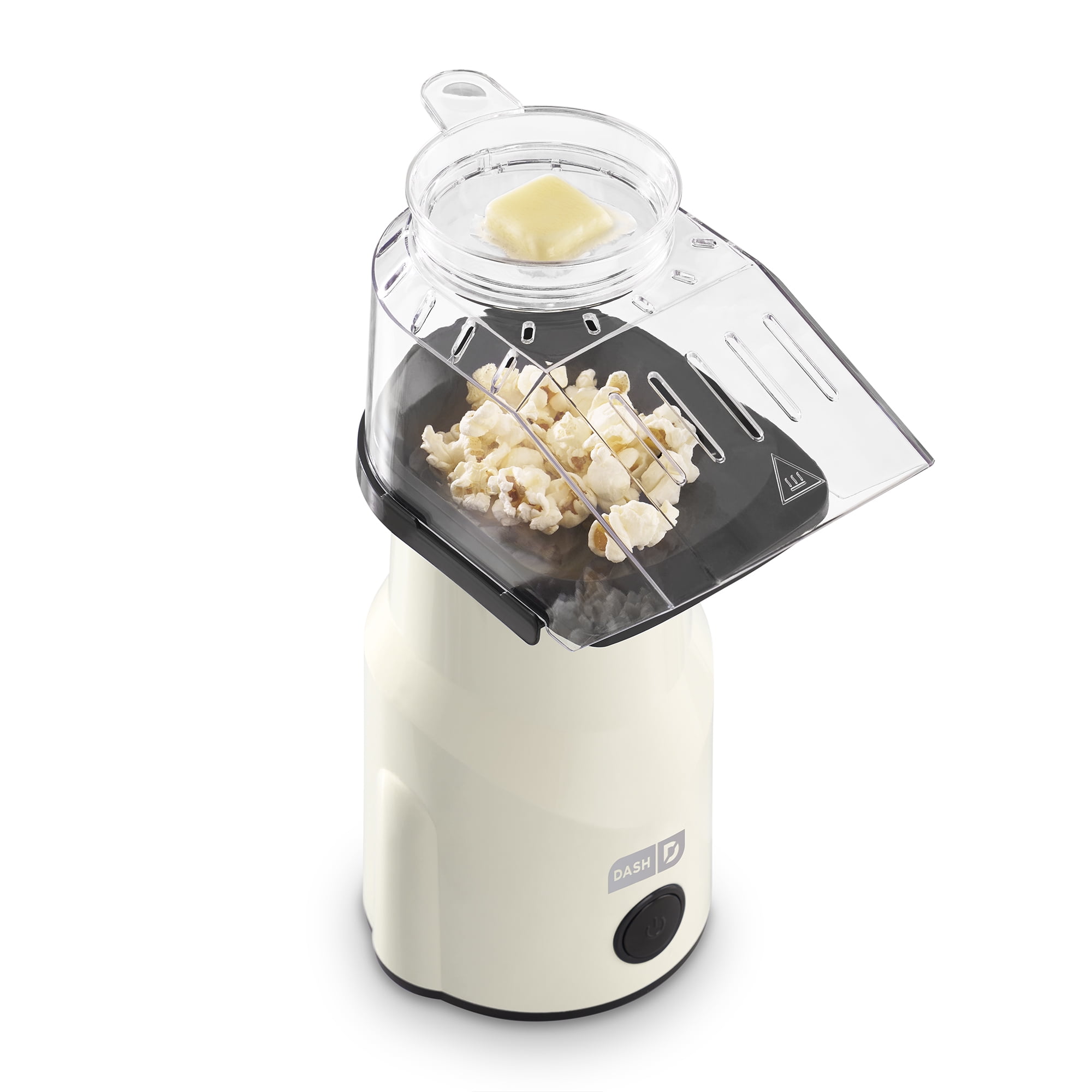
Hot air popcorn poppers work by blowing hot air through the kernels until they pop. Unlike oil-based poppers, they use no oil, which means you get fluffy, low-fat popcorn with minimal mess. For a beginner, this is ideal: there's no oil to measure, heat to regulate, or burnt kernels to scrape from a pot. Just add kernels to the top cup, place a bowl in front of the chute, and switch it on.
There are two main categories of hot air poppers: free-standing units and those that sit over a bowl. Free-standing poppers have their own base and shoot the popcorn outward, while others rest on top of a large bowl. Both work well, but free-standing ones are more common and easier to use with any bowl.
Some poppers include a butter melting tray that sits on top or near the exhaust. The hot air warms the butter, which then drips onto the popcorn as it pops. This is a huge convenience for beginners who want buttery taste without an extra step. Other poppers use a motorized stirring arm inside the popping chamber to keep kernels moving, which results in fewer unpopped kernels. While not essential, it's a nice feature that helps beginners get a higher yield.
Realistic expectations: no popcorn popper pops 100% of kernels. Even the best machines leave about 10-15% unpopped. Hot air poppers are also a bit noisy, and hollow kernels can fly out, but those are minor trade-offs for the convenience. When it comes to marketing terms, 'high output', 'turbofan', and 'airflow technology' are just ways of describing how many watts the heater uses. Higher wattage generally means faster popping, which is good. 'One-touch' simply means there's a single switch.