Is Best Oil Paint Set for beginners Worth It? Honest Review (202…
Find your perfect starter set with expert guidance and top picks for 2026.
Starting oil painting is exciting, but choosing your first paint set can feel overwhelming. With so many brands, pigment names, and price points, beginners often worry about making the wrong choice. This guide simplifies the process, explaining exactly what to look for in a beginner-friendly oil paint set, so you can start painting with confidence. We've researched customer feedback and expert opinions to bring you the best options for every budget.
📋 In This Guide
• Why Beginners Struggle with Oil Paint Set
• What to Look For (Key Features)
• Top 4 Beginner-Friendly Oil Paint Set
• Essential Accessories for Beginners
• Common Beginner Mistakes to Avoid
• Your Progression Path
• FAQ & Learning Resources
😰 Why Beginners Struggle with Oil Paint Set
New artists often get confused by technical terms like 'pigment load' and 'oil content.' They fear buying paints that are too low quality to blend properly or too expensive to waste. The sheer number of options—student vs. professional grades, different brands, and sets with varying colors—adds to the anxiety. Many beginners also underestimate the importance of starting with a limited palette, thinking more colors equals better results. Without clear guidance, it's easy to end up with a set that's either frustrating to use or overwhelming to learn with.
🔍 What to Look For: Key Beginner-Friendly Features
As a beginner, you need paints that are easy to blend, have good consistency, and are forgiving of mistakes. Look for 'student-grade' oil paints, which are formulated specifically for learners—they have lower pigment concentrations but still perform well and are affordable. The set should include a basic palette of colors (like yellow, red, blue, white, and a brown) rather than a giant selection. Avoid sets with too many specialty colors. Also consider the paint's fineness; well-milled paints are smoother and easier to mix. Non-toxic options (marked 'AP-certified') are also great for home studios.
✅ Essential Features for Beginners
•Student-grade formulation: Balances quality and cost for learning
•Limited color range (12-18 colors): Encourages color mixing skills
•Smooth consistency: Easy to blend without lumps
•Good lightfastness: Paints won't fade quickly
•Non-toxic certification: Safer for home use
•Affordable price under $50: Reduces risk of overspending
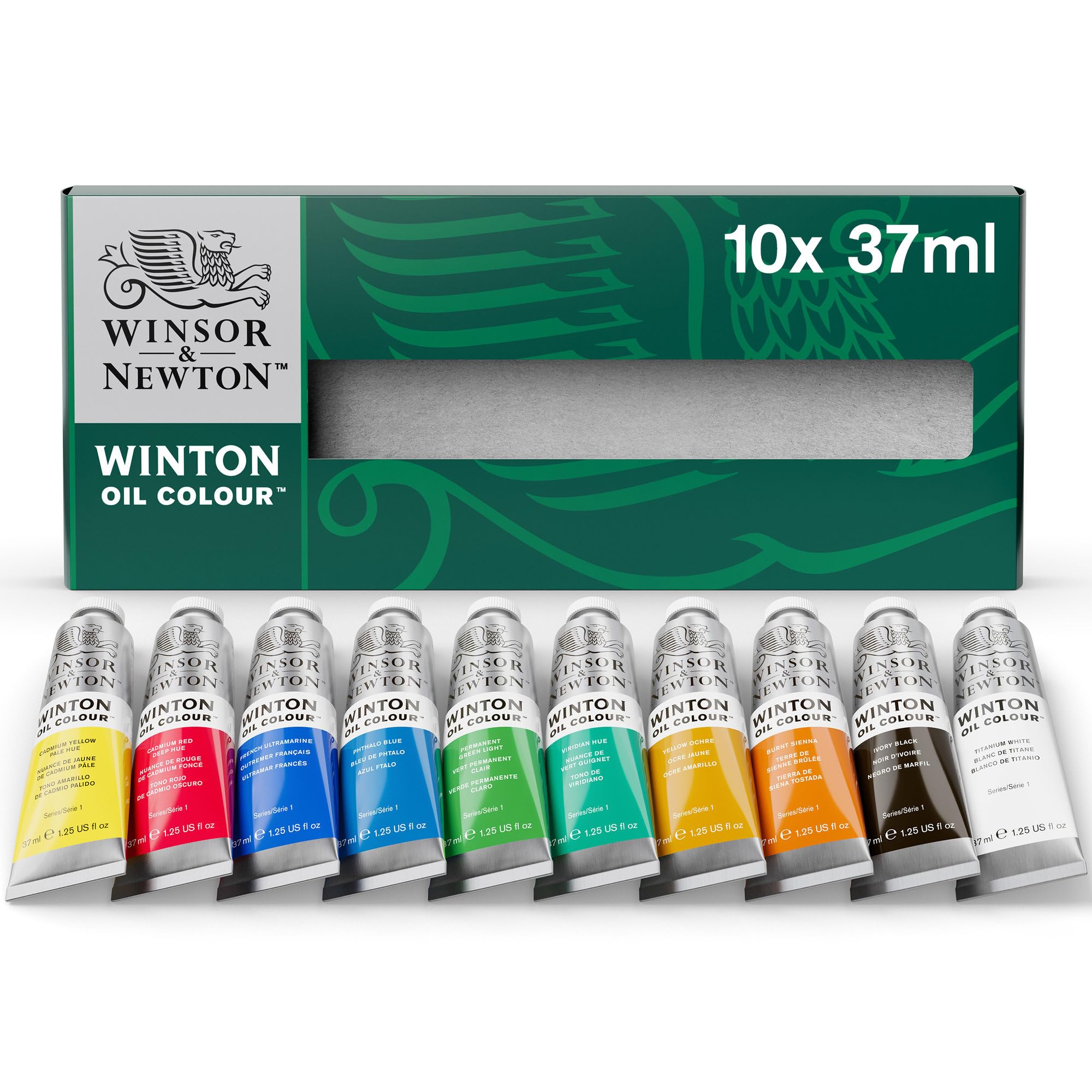
Winsor & Newton Winton Oil Colour Set, 10 x 37ml Tubes
Learning Curve: Easy
$34.99
Difficulty: 2/5
Why Great for Beginners:
Winsor & Newton is a trusted name; these Winton paints offer high-quality student-grade oil paints with excellent consistency and color strength for the price.
✓ Beginner Pros
+Better pigmentation than budget sets
+Smooth, buttery consistency great for blending
+Good range of colors (10 essential colors)
✗ Beginner Cons
-Slightly more expensive than basic sets
-No white included in some sets (check description)
👍 Best for: Beginners ready to invest a bit more for reliable performance and better learning experience.
👎 Not for: Those who prefer a very large color selection in a single set.
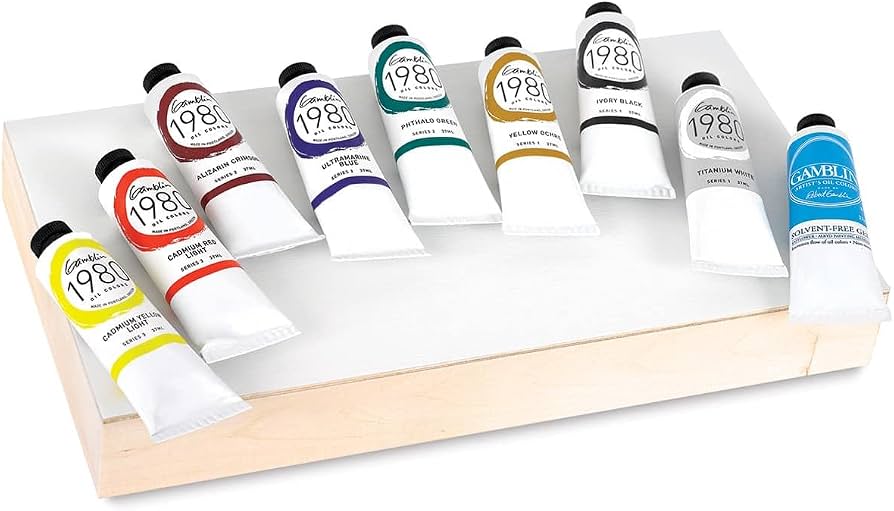
Gamblin 1980 Oil Color Starter Set, 6 x 37ml Tubes
Learning Curve: Easy
$49.99
Difficulty: 2/5
Why Great for Beginners:
Gamblin's 1980 line is a premium student-grade paint with high pigment load and a lovely buttery consistency that rivals professional paints. This starter set includes the essential colors for mixing a wide range.
✓ Beginner Pros
+Exceptional pigment strength for student paint
+Smooth, creamy consistency easy to manipulate
+Color choices encourage mixing skills
✗ Beginner Cons
-Only 6 colors; may need to buy additional tubes
-Higher price point; not for tight budgets
👍 Best for: Serious beginners who want high-quality paint that will last through intermediate level.
👎 Not for: Those who want many ready-made colors or are unsure about commitment.
Oil paints consist of pigment suspended in drying oil (usually linseed). Student-grade paints use lower-quality pigments and more oil, making them less vibrant but easier to work with and much cheaper. For beginners, a set of 12-18 colors is ideal—it gives you a good range without overwhelming you with choices. Stick to basic hues rather than specialized intermixes. Most starter sets include the primary colors (red, blue, yellow), plus white, black, brown, and some earth tones. Avoid 'hue' paints if possible (they use cheaper pigments labeled as a hue of a famous color), but for learning they are acceptable. When starting, focus on paints that are 'slow drying' to allow ample blending time. This is a key advantage of oil over acrylic. Remember, you can always upgrade to professional paints later once you understand your preferences.
🤔 How to Choose Your First Oil Paint Set
First, set your budget. For under $20, you can get a very basic set, but expect limited quality. The sweet spot for most beginners is $20–$40—this gets you a reliable student-grade set with decent pigment and consistency. If you can stretch to $40–$60, you'll find premium student sets or small professional sets that will last you much longer. Ask yourself: Do I want to experiment casually, or do I plan to paint seriously? If casual, a $15 set is fine. If serious, invest a bit more. Also consider the colors you'll use most (e.g., landscapes vs. portraits). Avoid sets with many unnecessary colors—they often include whites that won't be used.
💰 Budget Guide for Beginners
60+
Professional entry: serious beginners who want to skip student-grade; can use for years.
20 - $40
Sweet spot: best value for beginners, decent quality and color range for learning.
40 - $60
Premium beginner: higher pigmentation, better consistency, and more longevity.
Under $ - $20
Entry level: good for trying oils, but may frustrate with weak pigmentation and buttery consistency.
⚠️ Common Beginner Mistakes to Avoid
Many beginners buy a huge set of professional paints thinking ‘more is better,’ but they end up overwhelmed and waste money on colors they never use. Others skip essential accessories like brush cleaner and odorless solvent, thinking they can use dish soap or open windows. This leads to damaged brushes and health concerns. Another common error is not using a suitable painting surface; drawing paper soaks up oil and deteriorates. Starting with a limited, high-quality student set and a few accessories will save time, money, and frustration.
×Buying professional-grade paints and getting frustrated by high cost and fast drying
×Starting with too many colors (e.g., 48-set) which hinders color mixing learning
×Not buying a brush cleaner and ruining brushes after first use
×Using unprimed surfaces (paper or raw canvas) causing oil to bleed and degrade the support
×Skipping odorless solvent and suffering from strong fumes
×Buying cheap brushes that shed bristles or lose shape quickly
×Not understanding the slow drying time and accidentally smudging work hours later
📈 Your Progression Path: Beginner to Intermediate
Begin by mastering color mixing with a limited palette (e.g., primary colors plus white). Practice simple still lifes and landscapes to understand paint consistency and blending. After 3–6 months, you'll likely have a better idea of your preferred palette—at that point, consider adding a few professional tubes in colors you use most. Eventually, you may want to upgrade to professional-grade paints (like Winsor & Newton Artists' Oil or Gamblin Artist's Colors) for richer pigmentation and better handling. Also invest in higher-quality brushes and canvases. Most beginners spend 6–12 months with a good student set before feeling limited.
📚 Learning Resources for Beginners
📖{"type":"book","name":"Oil Painting for Beginners: A Step-by-Step Guide by Angela Gair","url":"https://www.amazon.com/s?k=Oil+Painting+for+Beginners+Angela+Gair&linkCode=gg3&tag=ra075-20"}
📖{"type":"book","name":"The Oil Painter's Bible: An Essential Reference for the Practicing Artist by Marylin Scott","url":"https://www.amazon.com/s?k=The+Oil+Painter%27s+Bible+Marylin+Scott&linkCode=gg3&tag=ra075-20"}
📖{"type":"accesory","name":"Mijello Air Tight Oil Paint Storage Box","url":"https://www.amazon.com/s?k=Mijello+Air+Tight+Oil+Paint+Storage+Box&linkCode=gg3&tag=ra075-20"}
📖{"type":"accesory","name":"Jerry's Artarama Student Oil Color Set with Palette and Brush","url":"https://www.amazon.com/s?k=Jerry%27s+Artarama+Student+Oil+Color+Set&linkCode=gg3&tag=ra075-20"}
🎯 Bottom Line: Our Recommendations
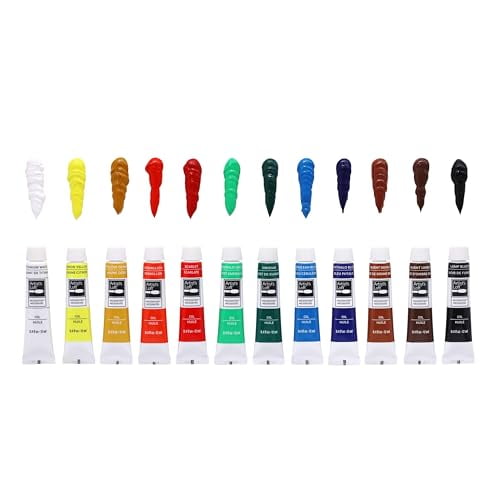
For most beginners, the Winsor & Newton Winton 10-tube set ($35) hits the perfect balance of quality, price, and color range—plus it's widely available on Amazon. If you're on a strict budget, the Artist's Loft 12-color set ($13) is a risk-free way to start. But don't forget to also pick up brushes, a cleaner, odorless mineral spirits, and primed paper. With these basics, you'll have everything you need to start painting. Remember, oil painting is a journey—be patient, practice mixing, and have fun!
❓ Frequently Asked Questions
The best oil paint set for beginners is generally a student-grade set like the Winsor & Newton Winton 10x37ml set, which offers good quality, consistent texture, and essential colors at an affordable price.
Beginners can start with a set between $20 and $40 for a reliable student-grade experience. Under $20 works for casual trials, but $40–$60 offers superior quality that can last longer.
Beginners need student-grade paints (lower cost, forgiving), a limited palette of 10–18 colors, slow drying time, non-toxic certification, and tubes rather than cups for convenience.
Sets with very smooth, buttery consistency like Gamblin 1980 or Winsor & Newton Winton are easiest to blend and manipulate, reducing frustration.
Essential accessories include a set of good synthetic brushes, brush cleaner, odorless mineral spirits, and primed paper or canvas panels. A palette and palette cups are also helpful.
Consider your budget and commitment. Start with a limited palette of student-grade paints from a reputable brand. Avoid large sets of cheap paints—they usually compromise quality.
Oil painting has a learning curve, especially with mixing and layering, but it's very forgiving due to slow drying time. With practice, beginners can achieve satisfying results quickly.
Common mistakes include buying too many colors, skipping brush cleaner, using wrong surfaces, exposing themselves to strong solvents, and buying cheap paints that are hard to blend.
For beginners, a set is more cost-effective and ensures you get a cohesive palette. As you progress, you can replace individual colors with higher-quality tubes.
With proper storage (tighten caps, store away from heat), student-grade paints can last several years. However, they may dry out faster than professional grades.