Is Best Laptop for beginners Worth It? Honest Review (2026)
Everything beginners need to know to choose their first Laptop with confidence
Choosing your first laptop can feel overwhelming. With countless models, specs, and price points, it's easy to get lost. But don't worry—this guide is designed to simplify the process for complete beginners. We'll walk you through what matters, what doesn't, and recommend the best laptops for your needs and budget. By the end, you'll feel confident and ready to make a smart purchase.
📋 In This Guide
• Why Beginners Struggle with Laptop
• What to Look For (Key Features)
• Top 4 Beginner-Friendly Laptop
• Essential Accessories for Beginners
• Common Beginner Mistakes to Avoid
• Your Progression Path
• FAQ & Learning Resources
😰 Why Beginners Struggle with Laptop
Many beginners struggle because of technical jargon like 'RAM', 'SSD', 'processor cores'—it's confusing. There are also hundreds of options, from Chromebooks to gaming laptops. Fear of buying the wrong thing often leads to paralysis. Beginners also worry about spending too much or too little, and they don't know which features are essential versus nice-to-have. This guide cuts through the noise.
🔍 What to Look For: Key Beginner-Friendly Features
For a beginner laptop, focus on ease of use, reliability, and value. Key features: a fast solid-state drive (SSD) for quick boot times, at least 8GB of RAM for smooth multitasking, a modern processor (Intel Core i5 or AMD Ryzen 5), and a comfortable keyboard and touchpad. Avoid cheap models with slow hard drives or old processors—they'll frustrate you. You don't need a dedicated graphics card unless you plan to game or edit video.
✅ Essential Features for Beginners
•Solid State Drive (SSD) for fast performance
•8GB RAM for smooth multitasking
•Full HD display for clear visuals
•Comfortable keyboard and touchpad
•Good battery life (8+ hours)
•Lightweight and portable (under 4 lbs)
🏆 Top 4 Best Laptop for Beginners
#1
⭐ Top Pick👍 Recommended
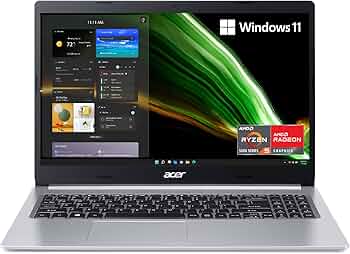
Acer Aspire 5 (2024)
Learning Curve: Easy
$449.99
Difficulty: 2/5
Why Great for Beginners:
The Acer Aspire 5 offers excellent value with a modern processor, 8GB RAM, and a fast SSD. It's lightweight and has a full HD display, perfect for everyday tasks.
✓ Beginner Pros
+Fast boot and app loading thanks to SSD
+Affordable price for specs
+Full HD screen is sharp and clear
+Good selection of ports (USB, HDMI)
✗ Beginner Cons
-Build quality is plastic and can feel cheap
-Battery life average (around 7-8 hours)
-Pre-installed bloatware may slow things down
👍 Best for: Students, home users, and anyone needing a reliable all-rounder for under $500.
👎 Not for: Gamers or creative professionals needing powerful graphics.
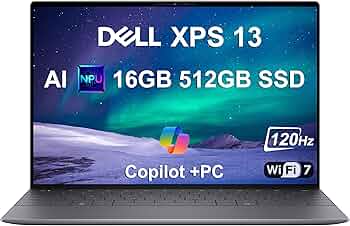
The Dell XPS 13 is a premium ultrabook known for its stunning display and build quality. It's lightweight, fast, and perfect for beginners who want a laptop that lasts.
✓ Beginner Pros
+Beautiful, nearly borderless Full HD+ display
+Excellent build quality (aluminum chassis)
+Fast performance with Intel Core i5/i7
+Lightweight and portable (under 3 lbs)
✗ Beginner Cons
-Higher price point
-Limited ports (only USB-C, need dongles)
-No touchscreen option at base price
👍 Best for: Beginners with a higher budget who want a premium feel and long-term reliability.
👎 Not for: Budget-conscious buyers or those needing many built-in ports.
A laptop is a portable computer. The main components are the processor (CPU), memory (RAM), storage (SSD or HDD), and display. For beginners, a laptop with an SSD is a must—it makes everything feel fast. 8GB RAM is the sweet spot; 4GB is too slow for modern tasks. The processor: Intel Core i5 or AMD Ryzen 5 are great for everyday use. Screen size: 14-15.6 inches is best for portability and comfort. Resolution: Full HD (1920x1080) is standard and sharp. Also consider battery life—look for 8+ hours. Brands like Acer, HP, Lenovo, Dell, and ASUS offer reliable beginner models.
🔧 Essential Accessories for Beginners
MOSISO Laptop Bag Sleeve
⚠️ Essential
$15.99
When to buy:
Day one
Protects your new laptop from bumps, scratches, and dust when carrying it in a backpack.
First, ask yourself: What will you use it for? Basic tasks (web, email, Office) need less power; programming, creative work, or gaming need more. Set a budget: $400-$600 is a great range for a solid beginner laptop. Consider future needs—a slightly better spec now means it will last longer. Avoid laptops with eMMC storage or Intel Pentium/Celeron processors—they are too slow. Read reviews from beginners on Amazon to see real experiences.
💰 Budget Guide for Beginners
800+
Enthusiast entry – powerful specs for demanding tasks like programming, creative work, or light gaming.
300 - $500
Sweet spot – best value for most beginners, with SSD and 8GB RAM, handles everyday tasks smoothly.
500 - $800
Premium beginner – faster processors, better build quality, longer battery life, and more storage.
Under $ - $300
Entry level – good for very basic web browsing and documents, but may struggle with multitasking and future apps.
⚠️ Common Beginner Mistakes to Avoid
Buying too cheap and getting a slow, frustrating laptop. Buying too expensive with features you won't use. Skipping an SSD—a hard drive laptop feels ancient. Ignoring battery life—you'll always be hunting for an outlet. Not checking the keyboard and touchpad—comfort matters. Choosing a laptop without upgradable RAM—future-proofing is smart.
×Buying a laptop with a slow hard drive (HDD) instead of SSD
×Getting too little RAM (4GB) – leads to frustration
×Ignoring battery life – constant searching for outlets
×Choosing a low-resolution screen (1366x768) – looks blurry
×Buying a model with no upgrade options (soldered RAM)
📈 Your Progression Path: Beginner to Intermediate
Start with basic tasks: browsing, streaming, documents. Then explore more: learn to use productivity suites, maybe try lightweight photo editing or coding. When you feel limited by your laptop's speed (e.g., multitasking slows down), it's time to upgrade. Signs you've outgrown: frequent lag, insufficient storage, poor battery. Next step: consider a laptop with a faster processor, more RAM (16GB), or a dedicated GPU if needed.
📚 Learning Resources for Beginners
📖YouTube tutorials for Windows/Mac basics
📖Online courses (e.g., LinkedIn Learning) for productivity
📖Books: 'Windows 10 for Dummies' or 'MacBook for Dummies'
🎯 Bottom Line: Our Recommendations
For most beginners, the best choice is the Acer Aspire 5 (budget) or the HP Pavilion 15 (recommended). Both offer great performance for everyday tasks without breaking the bank. If you have more budget, the Dell XPS 13 is a premium, future-proof option. Don't forget essentials: a laptop bag, wireless mouse, and possibly a USB hub. Remember, your first laptop doesn't have to be perfect—just right for now. Enjoy learning!
❓ Frequently Asked Questions
The Acer Aspire 5 or HP Pavilion 15 are excellent choices. They offer great performance, SSD storage, and full HD displays at reasonable prices.
For a balanced experience, spend between $400 and $600. This gets you an SSD, 8GB RAM, and a modern processor. Cheaper laptops often force compromises.
Must-haves: SSD (not HDD), at least 8GB RAM, a Full HD screen, decent battery life (8+ hours), and a comfortable keyboard. A modern Intel Core i5 or AMD Ryzen 5 processor is ideal.
Chromebooks are very simple if you only need web and apps, but Windows laptops like Acer Aspire 5 are also easy and more versatile.
Essential: a laptop bag or sleeve, and a wireless mouse. Highly recommended: a USB hub if your laptop has few ports. Optional: an external SSD for backups.
Start by defining your primary use (web, study, work, etc.) and your budget. Look for SSD, 8GB RAM, Full HD screen. Read beginner-friendly reviews. Avoid ultra-cheap models with HDD or 4GB RAM.
No, modern laptops are very user-friendly. Windows and macOS have guided setups. With a few hours of practice, anyone can become comfortable.
Common mistakes: buying too cheap (leads to frustration), ignoring the type of storage (HDD vs SSD), neglecting battery life, and not checking keyboard comfort.
If your tasks are mostly web-based (email, browsing, docs) and you don't need specific Windows software, a Chromebook is a fine, simple option. But for versatility, a Windows laptop is better.
A well-chosen laptop should last 3-5 years. Models with upgradable RAM and SSD can last longer. Premium builds like Dell XPS often last even longer.