Is Best Knife Sharpener for beginners Worth It? Honest Review (2…
Everything beginners need to know to choose their first knife sharpener with confidence.
Choosing your first knife sharpener can feel overwhelming. With so many types—pull-through, electric, whetstone—and technical terms like grit, angle, and burr, it's easy to get confused. This guide cuts through the noise, focusing on what truly matters for beginners: simplicity, safety, and results. By the end, you'll know exactly which sharpener suits your needs and budget.
📋 In This Guide
• Why Beginners Struggle with Knife Sharpener
• What to Look For (Key Features)
• Top 4 Beginner-Friendly Knife Sharpener
• Essential Accessories for Beginners
• Common Beginner Mistakes to Avoid
• Your Progression Path
• FAQ & Learning Resources
😰 Why Beginners Struggle with Knife Sharpener
Many beginners jump into sharpening without understanding the basics, ending up with a duller knife or even damaged edges. Terms like '1000 grit' or '20-degree angle' sound intimidating, and choosing between a $10 pull-through and a $100 electric model isn't clear-cut. Beginners also fear spending money on something they might not use correctly, or worse, ruining their kitchen knives. This section breaks down the common hurdles so you can avoid them.
🔍 What to Look For: Key Beginner-Friendly Features
As a beginner, look for sharpeners that are forgiving, safe, and require minimal skill. Ease of use is paramount: pull-through sharpeners with built-in guides are nearly foolproof. Safety features like non-slip bases and finger guards prevent accidents. Consistency matters—automatic angle guides ensure you get the same edge every time. Avoid complex whetstones at first; they have a steep learning curve and are easy to mess up. Also consider versatility: can it sharpen both straight and serrated blades? Price– you don't need to spend a lot, but dirt-cheap models may frustrate you. Aim for the $20–$60 sweet spot for a reliable beginner tool.
✅ Essential Features for Beginners
•Built-in angle guides – guarantee the correct sharpening angle every time
•Two-stage sharpening – coarse for dull blades, fine for honing
•Non-slip base – keeps the sharpener stable during use
•Safety features – finger guards or blade guides to prevent cuts
•Compatibility with both straight and serrated blades
•Clear instructions or visual indicators for use
•Durable construction – not flimsy plastic that breaks
🏆 Top 4 Best Knife Sharpener for Beginners
#1
💰 Budget
KitchenIQ 2-Stage Knife Sharpener (Model 50118)
Learning Curve: Easy
$23.99
Difficulty: 1/5
Why Great for Beginners:
This pull-through sharpener is incredibly easy to use: just insert your knife and pull it through a few times. The two-stage design works well for both dull and slightly dull knives. It's also very affordable, making it a low-risk first purchase.
✓ Beginner Pros
+Foolproof operation with built-in angle guides
+Very affordable – under $25
+Works on straight and serrated blades
+Lightweight and compact
✗ Beginner Cons
-Not very durable – may wear out after a year
-Doesn't handle extremely dull knives well
-Plastic construction feels cheap
👍 Best for: Beginners on a tight budget or those who only sharpen occasionally
👎 Not for: Anyone who wants a long-lasting tool or sharpens high-end knives
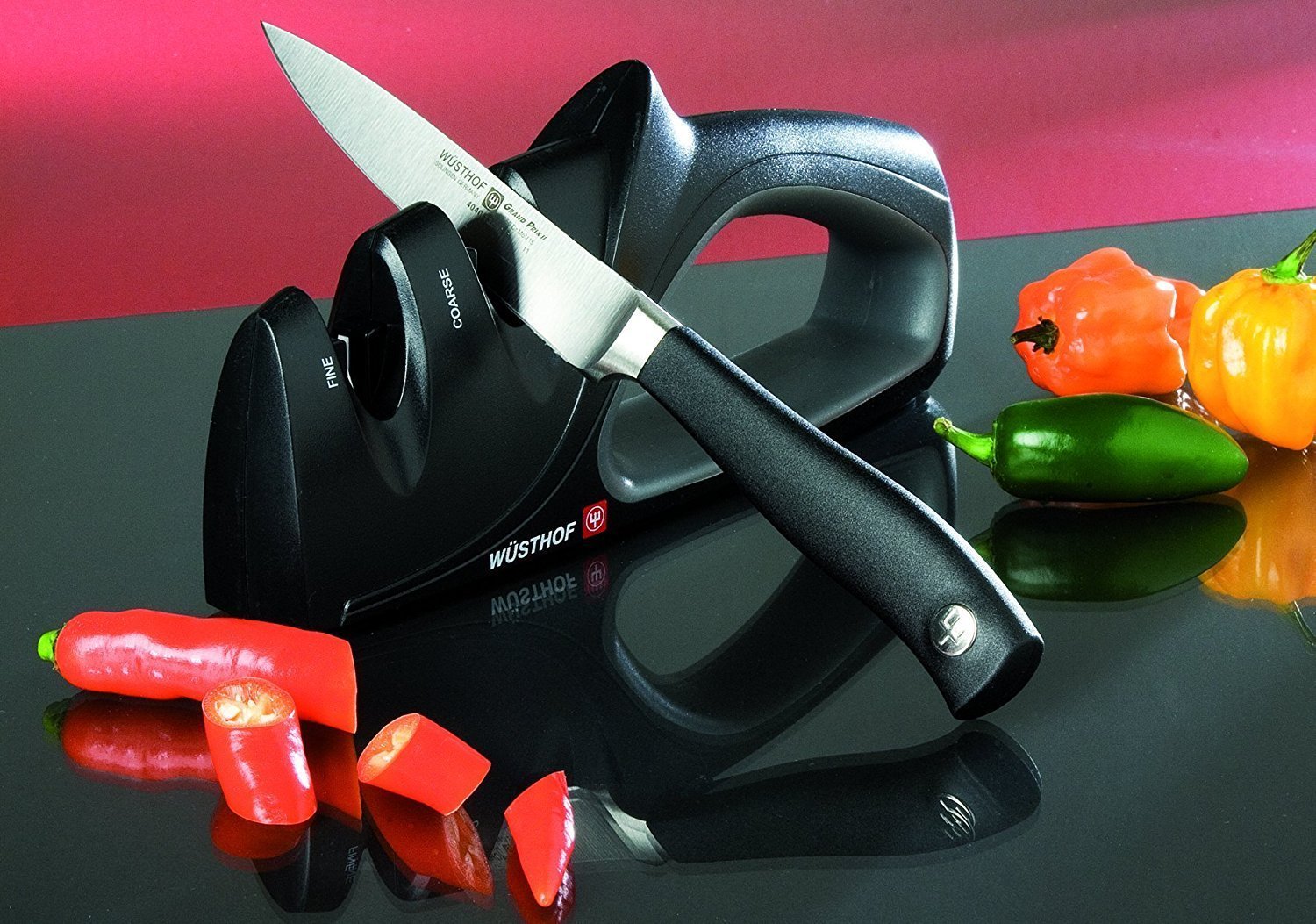
Wusthof is a trusted brand among chefs, and this handheld sharpener brings professional quality to beginners. It features two slots – one for coarse sharpening and one for fine honing. The ergonomic handle and solid build inspire confidence.
✓ Beginner Pros
+Superb build quality from a reputable brand
+Comfortable grip and easy to handle
+Consistent results with minimal effort
+Works on both straight and serrated blades
✗ Beginner Cons
-Slightly more expensive than basic pull-throughs
-Only suitable for standard kitchen knives (not thick blades)
-May need extra passes for very dull knives
👍 Best for: Home cooks who want reliable sharpening without breaking the bank
👎 Not for: Those needing to sharpen heavy-duty blades or serrated scissors
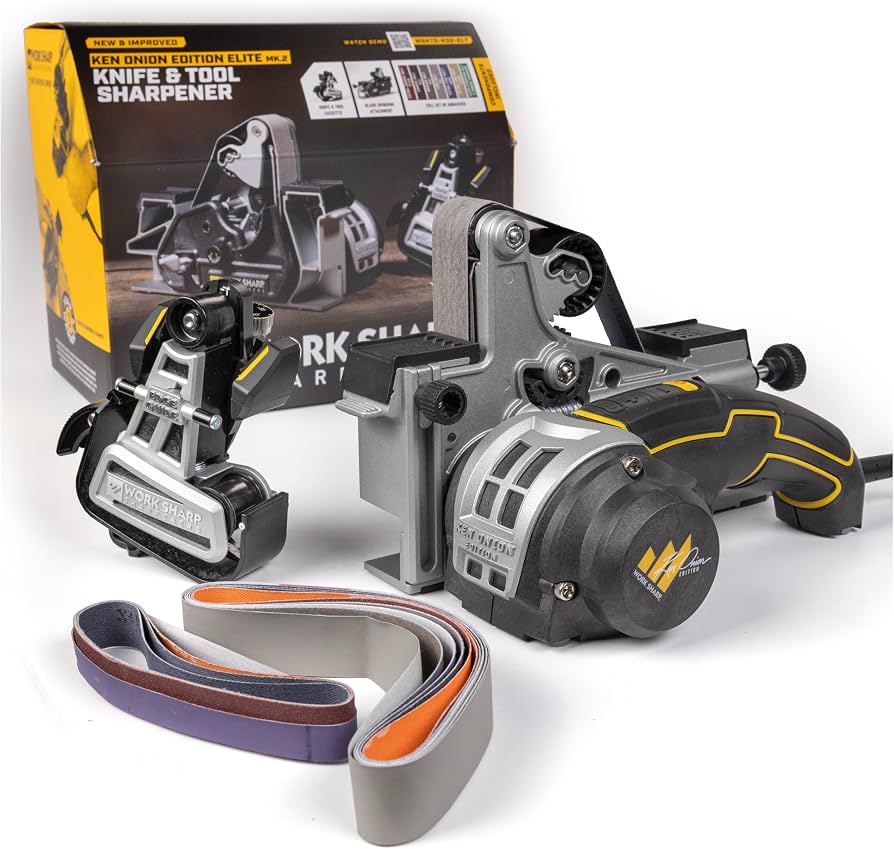
Work Sharp Ken Onion Edition Knife and Tool Sharpener
Learning Curve: Moderate
$79.99
Difficulty: 3/5
Why Great for Beginners:
This electric sharpener is a serious tool that's still beginner-friendly. It has adjustable angle guides from 15 to 30 degrees, so you can match your knife's original edge. The belt-driven system sharpens quickly and evenly, and the included honing guide helps you finish beautifully.
✓ Beginner Pros
+Very fast – sharpens a dull knife in under a minute
+Adjustable angle settings suit various knives
+Can sharpen scissors, serrated, and even tools
+Includes a blade guide for consistent results
✗ Beginner Cons
-Higher price point – $80+
-Learning curve for changing belts and adjusting angles
-Can remove more metal than necessary if overused
-Requires a power outlet
👍 Best for: Serious beginners who want professional-level sharpening at home
👎 Not for: Casual cooks who only sharpen once a year
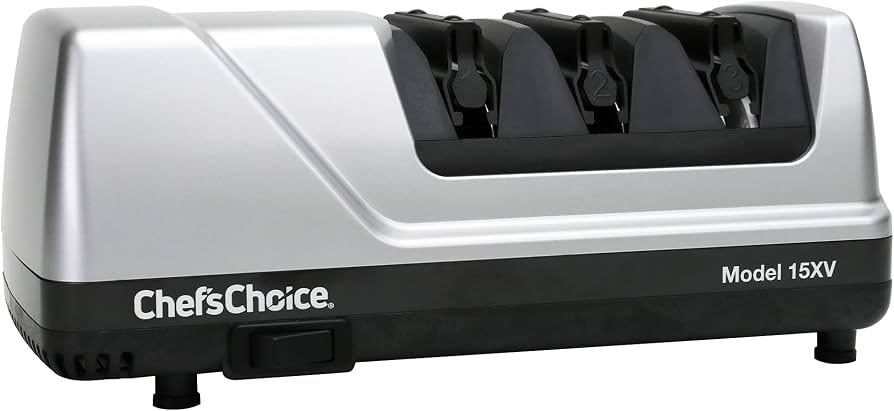
Chef'sChoice 15 Trizor XV EdgeSelect Electric Sharpener
Learning Curve: Moderate
$149.99
Difficulty: 3/5
Why Great for Beginners:
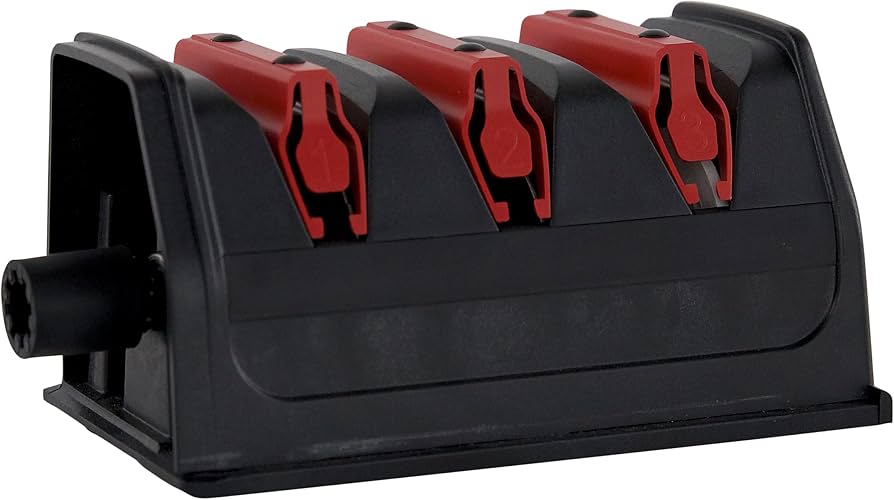
This electric sharpener is known for producing professional edges quickly. It uses a three-stage system: sharpening, honing, and polishing. The magnetic guides keep blades aligned, making it easy for beginners to achieve a razor-sharp edge without guesswork.
✓ Beginner Pros
+Three-stage process delivers exceptional sharpness
+Magnetic guides for perfect alignment every time
+Durable construction – built to last for years
+Can sharpen a wide variety of blade types
✗ Beginner Cons
-Expensive – over $140
-Bulky and takes up counter space
-Not ideal for serrated or extremely thick blades
-Learning the correct stages may take a few tries
👍 Best for: Beginners with high-end knife sets who want a premium one-time investment
👎 Not for: Budget-conscious cooks or those with limited counter space
Knife sharpeners fall into three main categories: pull-through, electric, and manual (whetstones). Pull-through sharpeners are the most beginner-friendly. You simply insert the blade and pull it through V-shaped slots. They’re fast, safe, and require no skill—perfect for everyday kitchen knives. Electric sharpeners do the work for you with rotating abrasive wheels, but they are more expensive and can remove metal quickly if overused. Whetstones offer the best control and edge quality but require practice to maintain a consistent angle. For true beginners, a quality pull-through sharpener is the best start. As you gain confidence, you can explore guided systems or whetstones. Realistic expectation: a beginner can expect to restore a dull knife to sharp-enough for everyday cutting within minutes, not hours.
🔧 Essential Accessories for Beginners
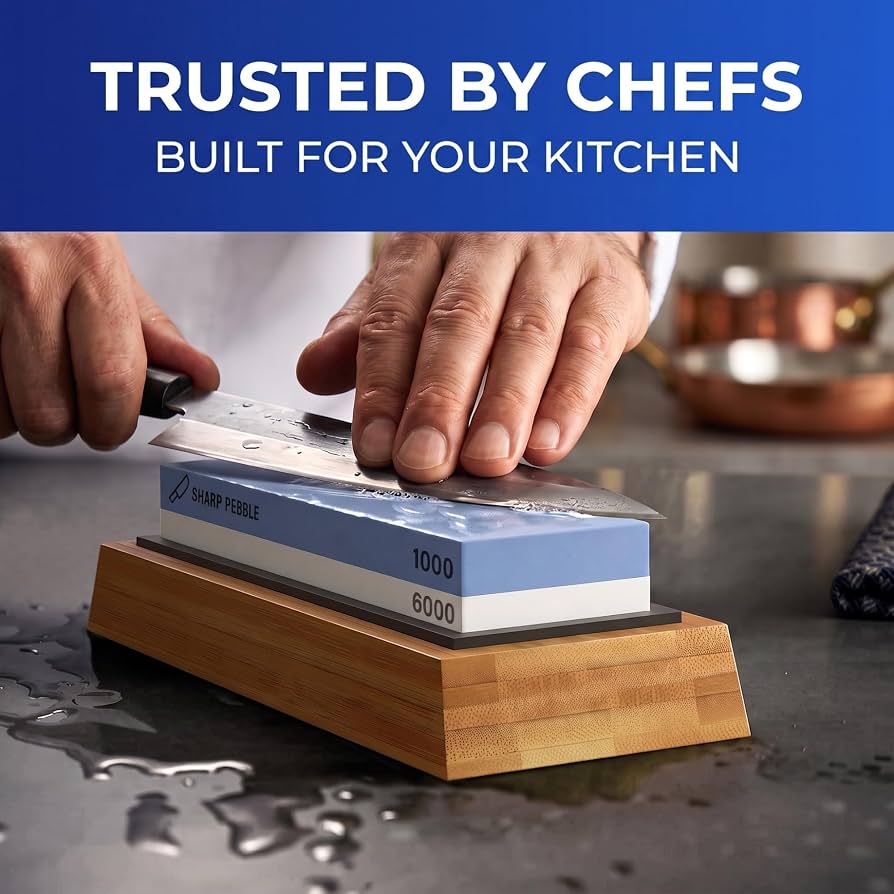
Sharp Pebble Premium Whetstone 1000/6000 Grit
💡 Nice to Have
$19.99
When to buy:
After you're comfortable
Once you're comfortable with pull-through sharpeners, a whetstone allows you to refine your skills and achieve an even sharper edge. This two-sided stone (1000 grit for sharpening, 6000 for polishing) is a great next step for beginners wanting to learn freehand sharpening.
Beginner Benefits:
• Teaches you the fundamentals of angle control
• Produces a superior edge compared to pull-throughs
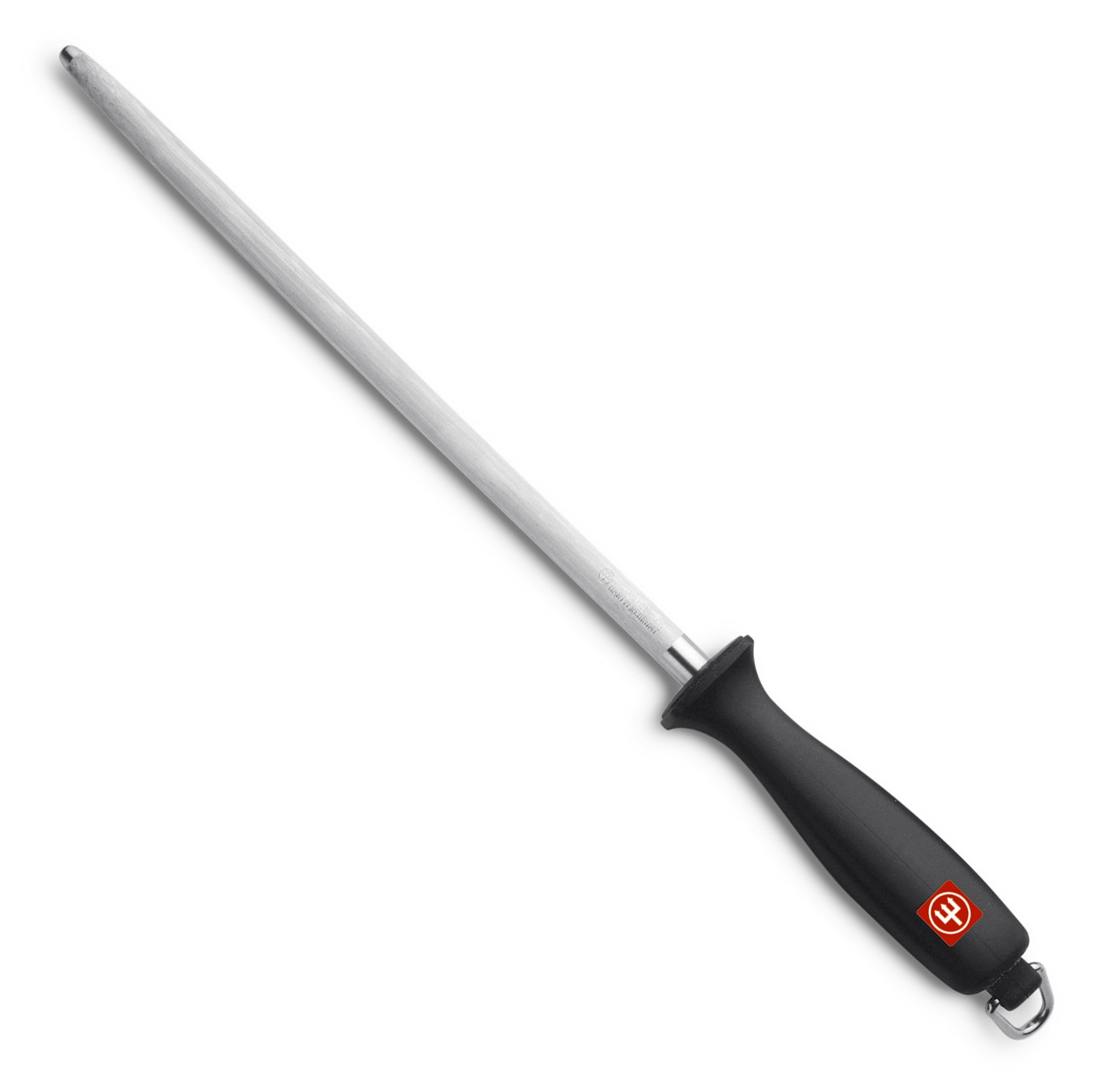
Regular honing keeps your knife aligned between sharpenings, extending the time between full sharpening sessions. This honing steel from Wusthof is easy to use (just swipe the blade at a 15-degree angle) and is a must-have for maintaining a sharp edge daily.
Beginner Benefits:
• Prevents the need for frequent sharpening
• Safe to use with proper technique (no stripping metal)
Chef'sChoice 15 Electric Sharpener Replacement Discs
⬆️ Upgrade
$29.99
When to buy:
When upgrading
If you own the Chef'sChoice 15 sharpener, these replacement discs are essential when the original ones wear out. They restore the sharpener's performance and ensure consistent edges. Beginners should have these on hand for long-term use.
Beginner Benefits:
• Extends the life of your electric sharpener
• Maintains consistent sharpening quality
• Simple replacement process – no special tools needed
Start by asking yourself: What knives do I sharpen most? (Chef’s knife, utility, serrated?) How often will I sharpen? (Weekly, monthly?) And what’s your budget? For most home cooks, a pull-through sharpener in the $20–$50 range is ideal. If you have expensive knives and want the best edge, consider a guided electric model. Avoid sharpeners that are overly complicated or require constant adjustment. Red flags: no angle guide, cheap plastic construction, or negative reviews about durability. Future growth: if you plan to learn advanced sharpening, start with a guided system like a work sharp that can also work freehand later.
💰 Budget Guide for Beginners
120+
Professional entry – top-tier electric sharpeners for serious beginners
30 - $60
Sweet spot – reliable performance, best value for most beginners
60 - $120
Premium beginner – excellent build and results, room to grow
Under $ - $30
Entry level – good for trying out, but may need replacement soon
⚠️ Common Beginner Mistakes to Avoid
Common mistakes include buying the cheapest pull-through (often works poorly and wears out quickly), not reading instructions (pulling the knife wrong can damage the edge), sharpening too often (removes too much metal), and neglecting knife cleaning before sharpening. Beginners also often try to sharpen very dull knives with a fine grit only, which takes forever. Instead, use a coarse stage first. Another pitfall: buying a whetstone as the first sharpener and giving up after one attempt. Start simple.
×Buying the cheapest model and getting poor results
×Not reading instructions and using it incorrectly
×Sharpening too often, wearing down the knife quickly
×Neglecting to clean the knife before sharpening
×Attempting a whetstone as the first sharpener
×Pulling the blade too fast or with uneven pressure
×Not using a honing rod between sharpenings
📈 Your Progression Path: Beginner to Intermediate
Begin with a pull-through sharpener (e.g., KitchenIQ) and learn the basic motion. After a few months, you'll understand how a sharp edge feels. Next, try a guided electric sharpener (e.g., Work Sharp) to see how angle control works. Finally, move to a whetstone for total control. Signs you're ready: you can consistently get a sharp edge with your pull-through, and you want to sharpen serrated or specialty knives. Intermediate level means learning freehand sharpening on a whetstone. Most beginners stay with pull-through for a year before upgrading.
📚 Learning Resources for Beginners
📖Book: 'The Complete Guide to Sharpening' by Leonard Lee
📖Practice: use a cheap knife to learn before sharpening good knives
📖Kitchen knife sharpening course on Udemy
🎯 Bottom Line: Our Recommendations
For most beginners, the best overall pick is the KitchenIQ 2-Stage Pull-Through Sharpener—it's cheap, effective, and nearly impossible to mess up. If you have a bit more to spend, the Wusthof 2-Stage Handheld offers better build and results. For the serious beginner who wants the best edge with minimal effort, the Work Sharp Ken Onion electric sharpener is a fantastic investment. Pair any sharpener with a honing rod (essential for daily maintenance) and a sharpie marker to mark your edge (to learn angle). Remember: a sharp knife is a safe knife. Start with the right tool and practice regularly.
❓ Frequently Asked Questions
The best beginner knife sharpener is a pull-through model with angle guides. The KitchenIQ 2-Stage is a top budget choice, while the Wusthof 2-Stage offers better quality. Both are easy, safe, and effective for everyday knives.
Beginners should spend between $20 and $60 for a reliable pull-through or handheld sharpener. This range offers good quality without breaking the bank. Avoid sharpeners under $10 as they often wear out quickly or damage knives.
Essential features include built-in angle guides, two-stage sharpening (coarse and fine), a non-slip base, and safety guards. These ensure consistent results and prevent accidents. Look for a sharpener that also works on serrated blades for versatility.
The easiest knife sharpener for beginners is a pull-through with magnetic guides or clear instructions. The KitchenIQ 2-Stage is nearly foolproof: just insert and pull. Electric sharpeners like the Work Sharp Ken Onion are also easy once set up, but cost more.
A honing steel is essential for daily edge maintenance. A sharpie marker helps you see where the stone contacts the blade. A leather strop can polish the edge. Also, a good cutting board to test sharpness without damaging the knife.
Start by assessing your knives (most are 15-20 degrees), budget, and how often you sharpen. For occasional use, a budget pull-through works. For weekly use, get a quality handheld or entry electric. Avoid whetstones until you're comfortable with the basics.
No, not if you choose the right type. Pull-through and electric sharpeners are designed to be easy and require minimal skill. Whetstones have a learning curve, so avoid them initially. Stick with guided systems and you'll get sharp knives with little practice.
Common mistakes include buying the cheapest model (poor results), pulling too fast or with uneven pressure, neglecting to clean the knife first, and over-sharpening (removing too much metal). Also, many beginners skip honing, which is vital for edge longevity.
Some electric sharpeners can handle Japanese knives if they have adjustable angles and fine grits. However, many pull-through and electric sharpeners are too aggressive and can damage the thin edge. For high-end Japanese knives, a whetstone or a guided manual system is safer.
If you hone regularly (before or after use), you only need to sharpen every 1-3 months depending on usage. If your knife feels dull during normal cutting (e.g., struggles with a tomato), it's time to sharpen. Over-sharpening wears down the blade rapidly.
Honing straightens the existing edge without removing metal; it's quick maintenance. Sharpening actually grinds away metal to create a new edge. Honing should be done frequently (before each session), while sharpening is occasional. Many beginners confuse the two and over-sharpen.
Cheap pull-through sharpeners can be too aggressive and leave a rough edge. However, quality pull-through sharpeners with ceramic or diamond rods are safe and effective. They are ideal for beginners because they prevent errors. Just avoid the very cheapest models.