Is Best Calligraphy Pen for beginners Worth It? Honest Review (2…
Everything beginners need to know to choose their first calligraphy pen with confidence.
Starting calligraphy can feel intimidating. With so many pens, nibs, inks, and styles, beginners often get lost in jargon and end up with the wrong tool. This guide cuts through the noise and helps you pick your first calligraphy pen the smart way. Whether you want to write fancy invitations or just explore lettering, we'll show you what to look for, what to avoid, and which pens are truly beginner-friendly—all available on Amazon.
📋 In This Guide
• Why Beginners Struggle with Calligraphy Pen
• What to Look For (Key Features)
• Top 5 Beginner-Friendly Calligraphy Pen
• Essential Accessories for Beginners
• Common Beginner Mistakes to Avoid
• Your Progression Path
• FAQ & Learning Resources
😰 Why Beginners Struggle with Calligraphy Pen
Most beginners struggle because calligraphy has a steep learning curve even with the best pen. Terms like 'nib size,' 'flex,' 'fountain vs dip pen,' and 'ink viscosity' are confusing. Many buy a cheap, scratchy pen and get frustrated, while others overspend on professional gear they can't use yet. The sheer number of options on Amazon makes it worse. Beginners don't know which features actually matter—like ease of cleaning, forgiving nibs, or good ink flow. Without clear guidance, they often choose a pen that fights them instead of helping them learn.
🔍 What to Look For: Key Beginner-Friendly Features
As a beginner, focus on three things: ease of use, forgiveness, and value. Look for pens with a comfortable grip, consistent ink flow, and a nib that glides smoothly without snagging. Avoid ultra-fine or super-flexible nibs initially. Pre-filled cartridges or easy-ink converters beat messy bottle filling. You want a pen that writes well even if you hold it at a slight angle. Ignore marketing about 'professional grade' or 'broad nib for calligraphy' until you've mastered basic strokes. The best beginner pen is one that lets you practice without fighting hardware.
✅ Essential Features for Beginners
•Broad or medium nib (1.0-1.5mm) for visible stroke contrast
•Cartridge or built-in converter – easy ink refill, no mess
•Comfortable grip – ergonomic, not too thick/thin
•Smooth ink flow – no skipping or scratching
•Durable body – survives drops and daily use
•Interchangeable nibs – allows experimentation without new pen
•Clear instructions and beginner guides included
🏆 Top 5 Best Calligraphy Pen for Beginners
#1
✨ Premium
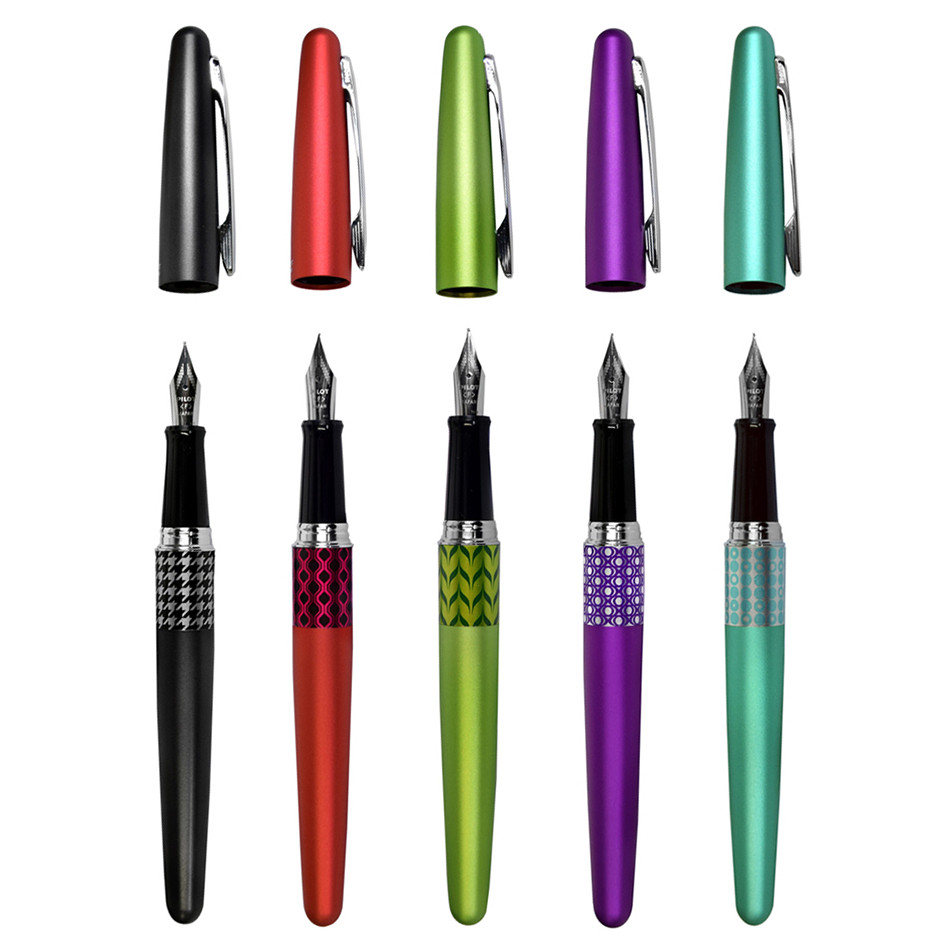
Pilot Metropolitan Calligraphy Pen Set
Learning Curve: Easy
$59.99
Difficulty: 2/5
Why Great for Beginners:
Smooth, reliable fountain pen with three nib sizes (fine, medium, broad). Beginner-friendly because it uses standard cartridges, has a comfortable grip, and writes consistently.
✓ Beginner Pros
+Smooth nib with no scratching
+Comes with three nib sizes
+Easy cartridge refill
+Durable metal body
+Good ink flow even when held at slight angle
✗ Beginner Cons
-Price higher than entry-level
-Converter not included (sold separately)
-Nib sizes could be closer together for beginners
👍 Best for: Beginners who want a reliable, high-quality pen that will last through intermediate level.
👎 Not for: Absolute minimum budget buyers (under $30).
Affordable set with four nib sizes (0.5, 0.8, 1.0, 2.0mm). Nibs are forgiving and ink flows smoothly. The ergonomic grip is comfortable for long practice.
✓ Beginner Pros
+Very affordable
+Four nib sizes to experiment
+Ergonomic grip
+Smooth ink flow
+Easy to clean
✗ Beginner Cons
-Nibs not replaceable (disposable pens)
-Ink may dry out if cap not sealed
-Not as durable as metal pens
👍 Best for: Absolute beginners on a tight budget who want to try calligraphy without big investment.
👎 Not for: Those who want a pen that can be refilled with bottled ink.
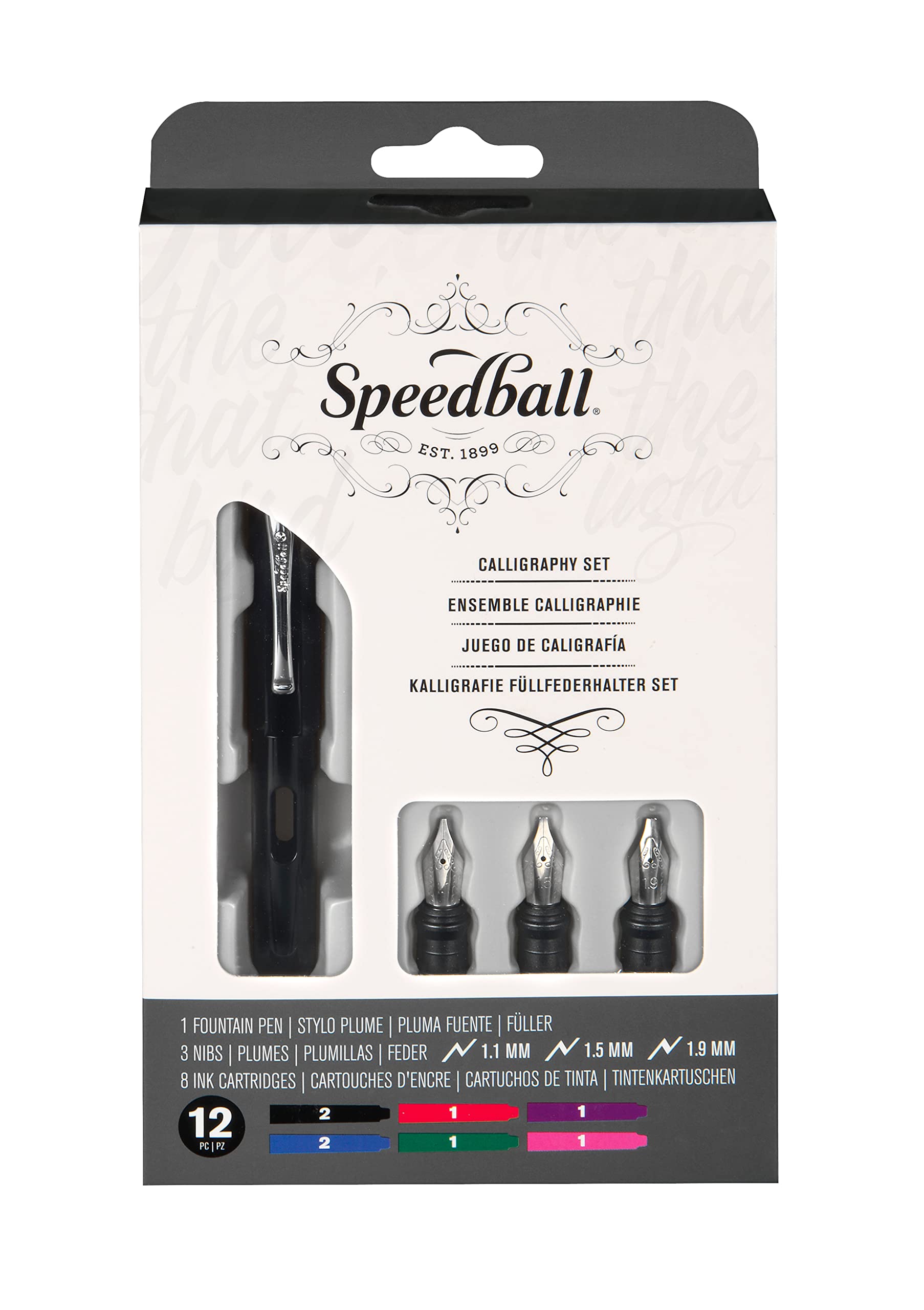
Versatile set with a fountain pen and four interchangeable nibs. The nibs are beginner-friendly (medium and broad) and the pen accepts both cartridges and a converter. Excellent value for learning.
✓ Beginner Pros
+Interchangeable nibs (0.8, 1.1, 1.5, 2.0mm)
+Compatible with standard cartridges and converters
+Smooth writing
+Comfortable grip
+Includes starting guide
✗ Beginner Cons
-Converter not included
-Pen body plastic – feels less premium
-Ink flow may need slight adjustment
👍 Best for: Budget-conscious beginners who want nib flexibility and a pen that can grow with them.
👎 Not for: Those who want a ready-to-use set out of box (requires cartridge purchase).
Complete kit with a fountain pen, three nibs, ink cartridges, and a practice pad. Designed specifically for beginners, with instructional booklet. Makes a great gift set.
✓ Beginner Pros
+All-in-one kit includes paper, cartridges, and pen
+Instructional booklet guides first steps
+Smooth nib
+Nice presentation box
+Good for lefties (nib angled for comfort)
✗ Beginner Cons
-Nib sizes limited (0.8, 1.0, 1.5)
-Ink cartridges may run out quickly
-Pen body lightweight
👍 Best for: Complete beginners who want everything in one box, especially as a gift.
👎 Not for: Experienced users or those wanting advanced nib options.
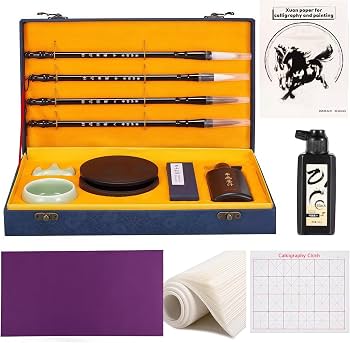
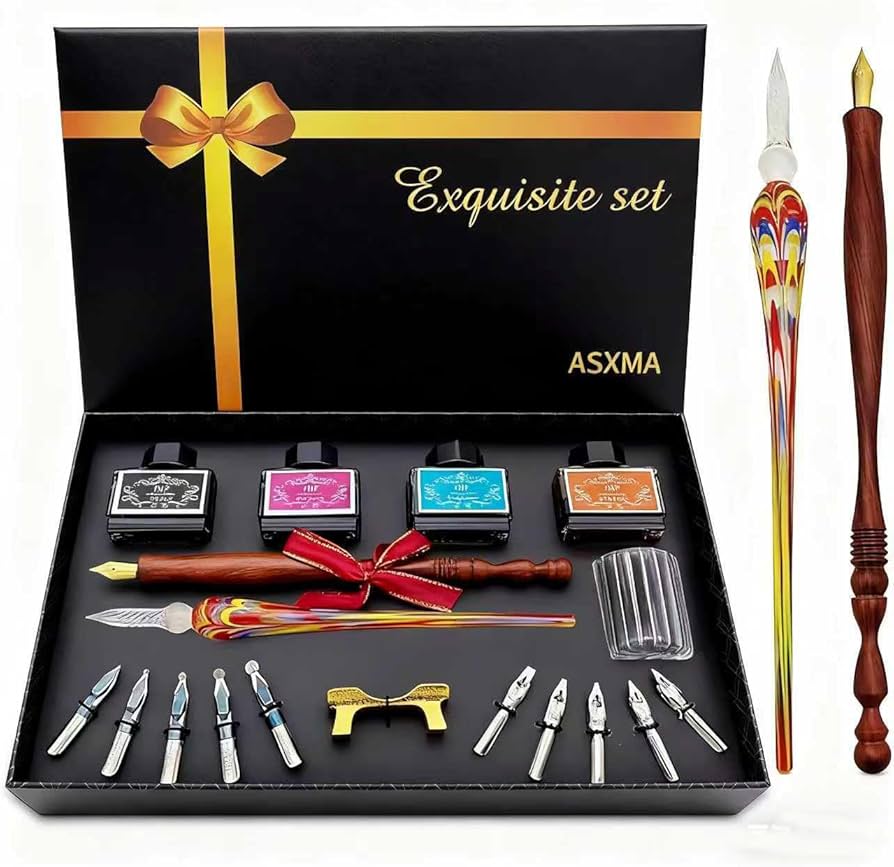
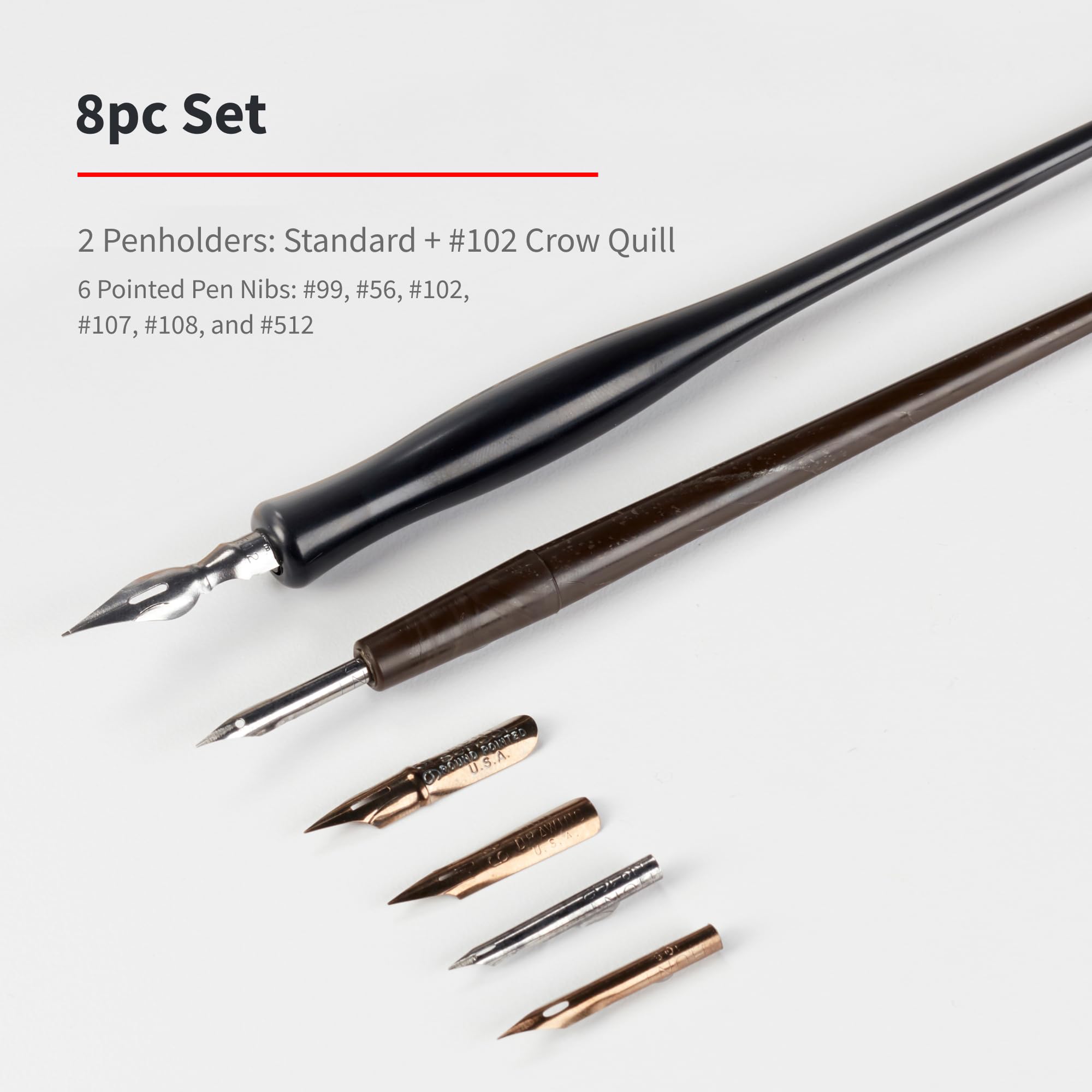
Budget-friendly dip pen set with six nibs, ink, and holder. Great for those willing to learn dip pen technique. Nibs are forgiving and the set includes a guide.
✓ Beginner Pros
+Very low cost
+Multiple nibs (6) to explore
+Includes ink
+Wooden nib holder comfortable
+Good for practicing pressure variation
✗ Beginner Cons
-Dip pen messy – ink bottle required
-Nibs may need smoothing
-Learning curve steeper than fountain pen
👍 Best for: Beginners interested in traditional dip pen calligraphy and willing to deal with ink pots.
👎 Not for: Those wanting a clean, simple experience (choose fountain pen instead).
Calligraphy pens come in two main types: dip pens (nib holder + replaceable nib) and cartridge/converter fountain pens. Dip pens are cheap but messy—great for serious practice but frustrating for beginners. Fountain pens are self-contained, cleaner, and easier to start with. Look for a pen with a medium or broad nib (1.0mm to 1.5mm) which produces thick downstrokes and thin upstrokes easily. Avoid italic nibs (which demand perfect angle) and flex nibs (hard to control). Stick with a simple, sturdy body and standard ink cartridges. Brands like Pilot, Lamy, and Speedball offer beginner sets that include multiple nib sizes. Remember: the pen is only half the battle—good paper (smooth, bleed-free) and proper ink are equally important.
🔧 Essential Accessories for Beginners
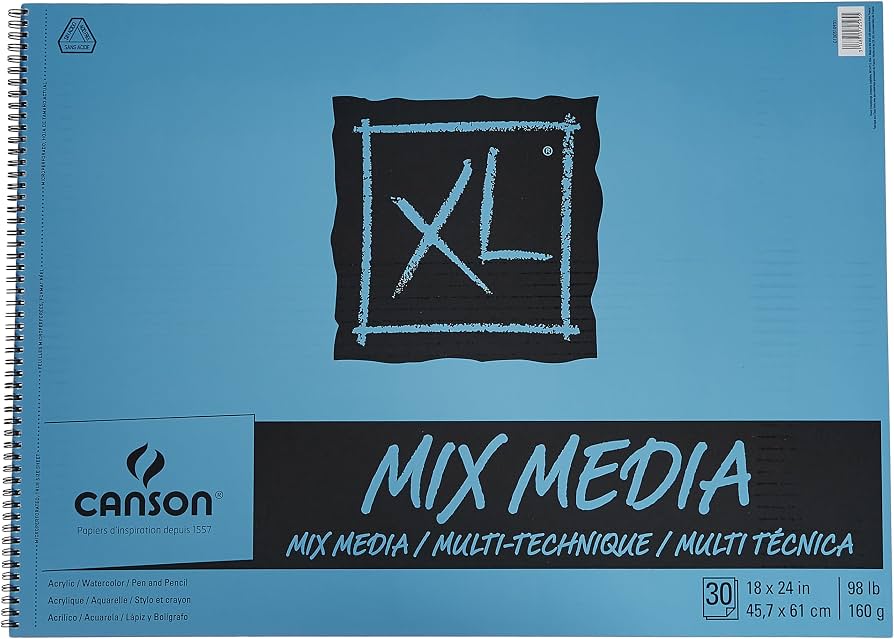
Canson XL Calligraphy Paper Pad
⚠️ Essential
$12.99
When to buy:
Day one
Smooth, bleed-resistant paper prevents feathering and ink bleeding. Essential for seeing clean strokes and avoiding frustration.
Ask yourself: Do I want to practice casually or dive deep? For casual, budget under $20 is fine. For serious learning, spend $30–$60 on a reliable fountain pen with a beginner-friendly nib. Do I want to use cartridges or bottled ink? Cartridges are easier but more expensive long-term. What style of calligraphy? Copperplate requires pointed nibs; broad-edge nibs are for Gothic, Italic. Most beginners should start with a broad-edge pen (1.1mm to 1.5mm). Red flags: 'ultra fine,' 'flex nib,' 'vintage'—these are not beginner-friendly. Look for 'beginner calligraphy set' or 'calligraphy pen system' and read reviews for ease of use.
💰 Budget Guide for Beginners
20 - $40
Sweet spot – excellent value, good nib quality, includes basic accessories.
40 - $60
Premium beginner – smooth nib, multiple nibs, durable build, will last through intermediate.
60 - $100
Serious beginner – professional-grade components, ensures best learning experience.
Under $ - $20
Entry level – OK for casual try, but may have poor nib quality and cause frustration.
⚠️ Common Beginner Mistakes to Avoid
Buying a cheap dip pen kit and giving up when it scratches. 2. Splurging on a professional fountain pen with a flex nib that's too hard to control. 3. Ignoring paper—using regular printer paper causes bleeding and frustration. 4. Not buying the correct ink for the pen type (India ink clogs fountain pens). 5. Choosing a pen with a grip too thin or too thick for their hand. 6. Forgetting to clean the pen regularly, causing clogs. 7. Buying a single nib size and not understanding stroke variation. 8. Watching advanced tutorials too soon and feeling discouraged.
×Buying a cheap dip pen that scratches and leaks
×Choosing a flex nib too early (hard to control)
×Using regular paper (causes feathering and bleeding)
×Using wrong ink (e.g., India ink in fountain pen)
×Not cleaning the pen between uses (clogs)
×Only buying one nib size (limits learning)
×Giving up after first few messy attempts
×Skipping basic stroke practice (jumping straight to letters)
📈 Your Progression Path: Beginner to Intermediate
Start by practicing basic strokes (horizontal, vertical, curves) with a medium nib (1.1mm). Once you can make consistent lines, move to letter formation. After a month, try different nib sizes (0.8mm and 1.5mm) to vary your style. When you feel limited by your beginner pen, consider upgrading to a pen with interchangeable nibs or a more refined nib. Signs you're ready: you can write whole words without ink splatters, you understand how pressure affects line width, and you want to try pointed nib calligraphy. Most beginners stay with their starter pen for 3–6 months before upgrading.
📚 Learning Resources for Beginners
📖Calligraphy for Beginners: A Complete Guide by Modern Calligraphy
📖The Art of Calligraphy: A Practical Guide to the Skills and Techniques by David Harris
📖Calligraphy Practice Workbook for Beginners (guided pages)
📖Online course: 'Modern Calligraphy for Beginners' on Amazon Prime Video
🎯 Bottom Line: Our Recommendations
For most beginners, the best calligraphy pen is a fountain pen with a medium or broad nib, using cartridges or a converter. Our top pick is the Pilot Metropolitan Calligraphy Pen Set (premium) for its smooth nib and multiple nibs. For budget, the STAEDTLER Calligraphy Pen Set is reliable and forgiving. Don't forget essentials like smooth paper and cleaning supplies. Start simple, practice daily, and you'll be writing beautiful letters in no time.
❓ Frequently Asked Questions
The best calligraphy pen for beginners is a fountain pen with a broad or medium nib (1.0–1.5mm) that uses cartridges. The Pilot Metropolitan Calligraphy Pen Set is a top choice for its smooth nib and multiple sizes. For a lower budget, the STAEDTLER Calligraphy Pen Set is excellent.
Beginners can start with a $15–$30 set that includes multiple nibs and cartridges. Spending more than $60 is unnecessary unless you want a premium pen that will last through intermediate level. Avoid cheap dip pens under $10—they often cause frustration.
Look for a forgiving nib (medium/broad), easy ink refill (cartridges or converter), comfortable grip, and consistent ink flow. Avoid flex nibs and ultra-fine tips. Multiple nib sizes in one set are a big plus.
Fountain pens with a built-in cartridge system are easiest. The STAEDTLER Calligraphy Pen Set is very easy to use and requires no extra equipment. The Pilot Metropolitan is also very user-friendly.
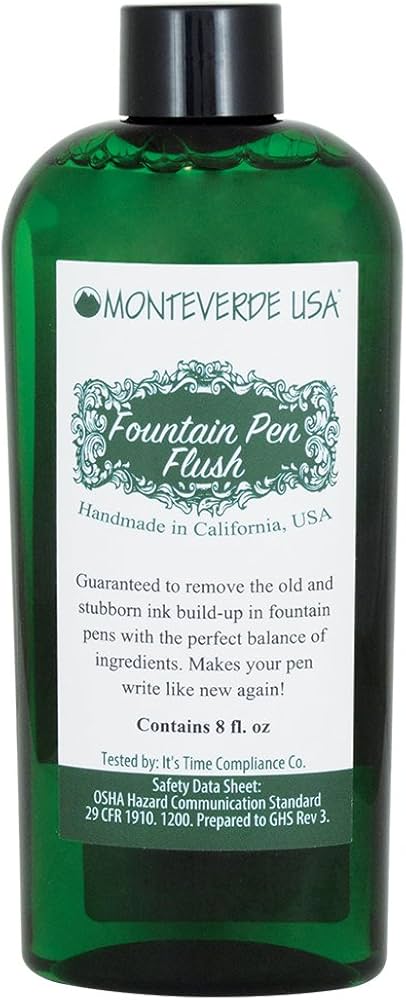
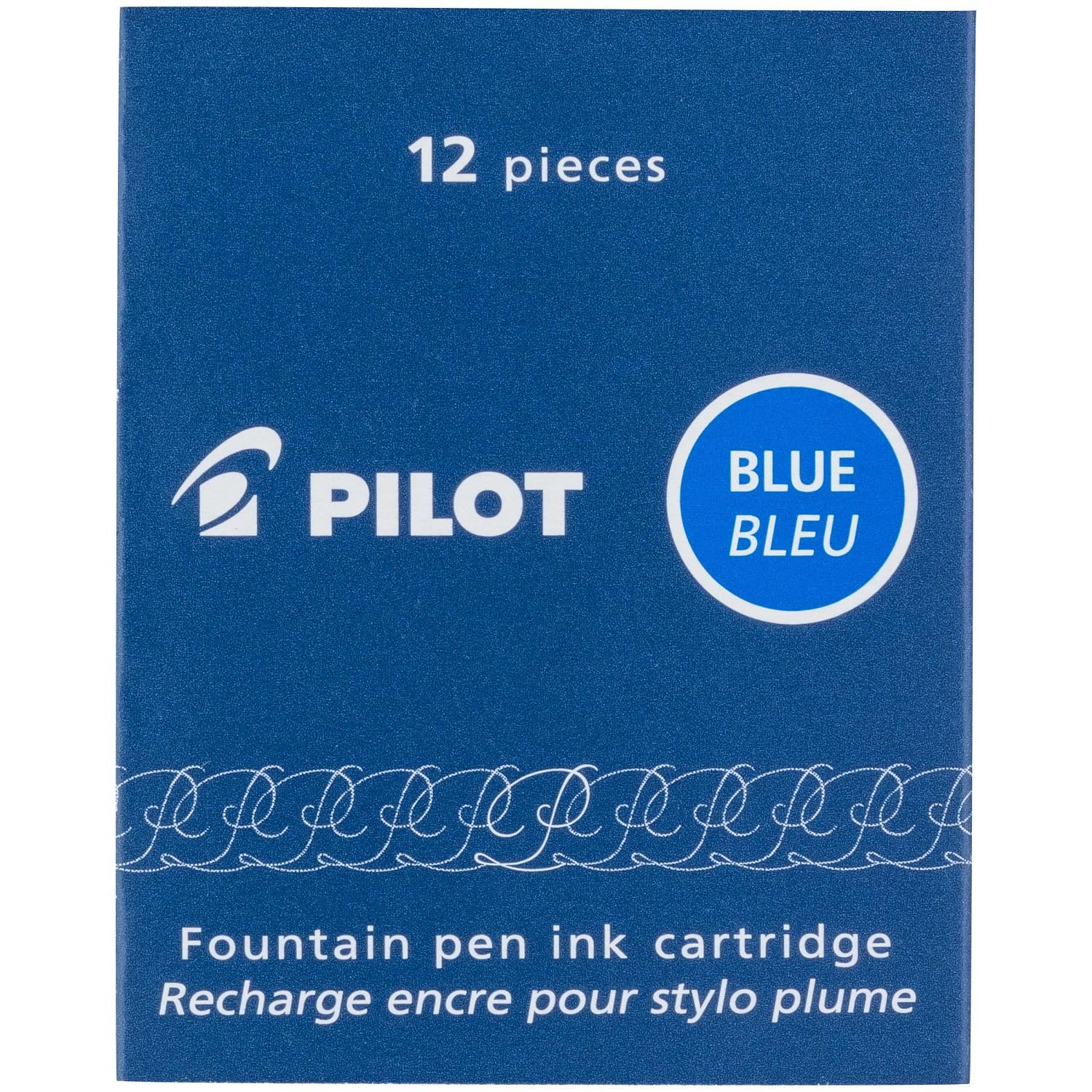
Essential accessories: smooth calligraphy paper (like Canson XL), extra ink cartridges, and a pen cleaning solution. Nice-to-have: a dot grid practice pad and a nib set for later exploration.
Decide if you want a fountain pen (cleaner, easier) or dip pen (traditional but messy). Stick to a set with at least three nib sizes (0.8, 1.1, 1.5mm). Read Amazon reviews for 'ease of use' and 'flow'. Avoid pens labeled 'flex' or 'professional'.
Calligraphy is a skill that requires practice, but a good beginner pen makes it much easier. Expect messy lines at first—that's normal. With daily 15-minute sessions, you'll see improvement in two weeks.
Common mistakes: buying a cheap dip pen, using wrong paper (regular copy paper), not cleaning the pen, choosing too fine a nib, and skipping basic stroke practice. Always start with a smooth paper and a medium nib.
Regular fine fountain pens do not produce the thick-thin contrast of calligraphy. You need a broad/italic nib. Some pens have interchangeable nibs—look for a pen that offers a calligraphy nib option.
Beginners should buy a set—it includes multiple nibs, ink, and sometimes paper. That eliminates guesswork. As you progress, you can buy individual nibs and holders to customize.
Use fountain pen ink for fountain pens (water-based). For dip pens, use calligraphy ink (like Higgins Eternal). Never use India ink in a fountain pen—it will clog. Cartridges are the easiest for beginners.
A quality beginner pen can last years if cleaned regularly. Nibs may wear after extensive use but are replaceable. Most beginners use their starter pen for 6–12 months before upgrading.