Review Atlas
Review AtlasYour guide to a better purchase

Menu

Shop by Category

Get the App

Better experience on mobile

7 Best Which Over-Ear Headphones should I buy in 2026: Tested &…

Compare the best over-ear headphones for travel — noise cancelling, battery, comfort and price — and pick the right pair for your trip.

Over-Ear HeadphonesTravelTravelers$200-$400
Buying travel headphones should be simple. You want quiet on a plane, all-day comfort, and enough battery to survive a long connection. Instead, you're staring at seven near-identical spec sheets that all claim "industry-leading noise cancellation," three different generations of the same model, and prices that swing by $150 depending on the week. That's decision paralysis by design. The stakes are higher than they look. Travel headphones get worn for 8-14 hours at a stretch, get folded into carry-on bags, get rained on in airport jet bridges, and get asked to do something no other gadget does: block out a screaming engine at 85 dB while still sounding good on a podcast. Pick the wrong pair and you'll notice it on every single trip — pressure on your temples, an ANC mode that hisses, or a dead battery over the Atlantic. This guide cuts through it. We researched published specifications, manufacturer documentation, expert reviews, and aggregated owner feedback across the most popular travel-focused over-ear models between $200 and $400, then ranked them by how well they actually serve travelers. Fair warning: prices in this segment move constantly, especially around new model launches, so treat the numbers below as a snapshot and confirm the live price on Amazon before you buy. Below you'll find the honest trade-offs (the AirPods Max cost more than most of this list and weigh nearly 100 grams more), the specific traveler each pair is built for, and a decision framework you can run in about five minutes. If you only read one section, jump to the scenarios — most people find their answer there.

Our Top Pick

Sony WH-1000XM5 Wireless Noise Canceling Headphones

Best Overall

Travelers who want the single best all-round over-ear headphone for flights and are comfortable spending around $300-$350.

View on Amazon →

Key Factors to Consider

  • 1.Active noise cancellation quality — the single biggest differentiator on a plane, but measured differently by every brand, so rely on consistent expert consensus and owner reports rather than marketing decibel claims
  • 2.Battery life and charging speed — a 10-hour flight plus a layover plus a return trip is the realistic bar; anything under 24 hours means you're carrying a cable
  • 3.Comfort and weight for multi-hour wear — clamping force and headband padding matter more than raw grams, but models above 300g (like the AirPods Max) tend to fatigue more on long trips
  • 4.Portability — folding hinges plus a rigid, crush-resistant case decide whether the headphones fit in a personal item or have to ride in checked luggage
  • 5.Analog and USB wired options — seat-back entertainment systems and dead batteries both make the 3.5mm jack or USB-C audio surprisingly valuable in flight
  • 6.Multipoint Bluetooth — the ability to stay connected to a laptop and a phone simultaneously is the most underrated feature for anyone working while traveling
  • 7.Codec support matched to your phone — LDAC and aptX Adaptive are real advantages on Android and largely irrelevant on iPhone, which caps at AAC
  • 8.Microphone and call quality — noise-rejecting voice pickup matters if you take calls in airports, hotel lobbies, or co-working spaces
  • 9.Ecosystem integration — Apple's automatic device switching and spatial audio are genuinely better inside Apple, and weaker or absent outside it
  • 10.Generation and timing — last-generation flagships usually deliver 85-90% of the current model's performance for 60-70% of the price, which is where the value lives

The Products

#1

Sony WH-1000XM5 Wireless Noise Canceling Headphones

Best Overall
Sony WH-1000XM5 Wireless Noise Canceling Headphones - Image 1 of 11
Overall
9.2/10
Value
8.5/10
Performance
9.3/10
The WH-1000XM5 is Sony's flagship travel headphone and, for most buyers, the default recommendation in this price bracket. It uses two processors and eight microphones to run adaptive noise cancellation that automatically adjusts to your environment and to how the headphones sit on your head — a meaningful upgrade over older ANC that only adapts to ambient sound. The result is the most consistently praised engine-noise reduction among current over-ear models, based on expert review consensus and aggregated owner feedback. Sound is handled by 30mm carbon fiber composite drivers with Sony's DSEE Extreme upscaling and LDAC support for high-bitrate streaming on Android. Battery life runs about 30 hours with noise cancellation on, and a quick-charge feature adds hours of playback from a short USB-C top-up. Multipoint Bluetooth lets you stay connected to a phone and a laptop simultaneously, and features like Speak-to-Chat and wear detection pause playback automatically when you start talking or take the headphones off. At roughly 250g, it's comfortable enough for a full overnight flight, and it ships with a rigid carry case that holds up in a packed bag. The main compromises: it doesn't fold like its predecessor, iPhone users can't take advantage of LDAC, and the touch controls take a few days to learn. It's the most balanced travel headphone on this list and the safest pick if you don't have a strong reason to choose otherwise.

Pros

  • Best-in-class adaptive noise cancellation that adjusts to fit and environment, ideal for aircraft cabins
  • About 30 hours of battery with ANC on, plus fast charging over USB-C
  • Multipoint Bluetooth connects to a laptop and phone at the same time — perfect for working travelers
  • Light at roughly 250g with a comfortable headband for long-haul wear
  • LDAC high-bitrate audio support for Android users, plus a 3.5mm jack for airline entertainment systems
  • Includes a rigid, crush-resistant travel case and smart features like Speak-to-Chat and auto-pause

Cons

  • Does not fold, so it takes up more room in a carry-on than the older WH-1000XM4
  • LDAC is unusable on iPhone, so Apple users pay for a feature they can't access
  • Touch controls have a learning curve and can misfire in cold weather with gloves
  • Typically costs $100 or more than the previous-generation WH-1000XM4 for relatively modest gains

Best For:

Travelers who want the single best all-round over-ear headphone for flights and are comfortable spending around $300-$350.

Not Recommended For:

Buyers who need to fold their headphones into a small bag pocket or who want to spend under $250.

Key Features:

Dual-processor adaptive noise cancellation with eight microphones and Auto NC Optimizer30mm carbon fiber composite drivers with DSEE Extreme upscalingApproximately 30-hour battery life with ANC enabled; fast charge over USB-CMultipoint Bluetooth for simultaneous connection to two devicesLDAC and AAC codec support plus a 3.5mm analog inputSpeak-to-Chat, wear detection with auto-pause, and Precise Voice Pickup for callsRoughly 250g weight with a rigid hard-shell carry case included

Standout Feature:

Adaptive noise cancellation that continuously re-optimizes itself based on how the headphones fit your head, not just the noise around you.

VS Others:

It beats the Bose QuietComfort 45 and Sony WH-1000XM4 on ANC and microphones but costs $100-$150 more and no longer folds. Against the Bose QuietComfort Ultra it's slightly behind on pure noise cancellation but roughly $50-$100 cheaper and lighter. Against the Sennheiser Momentum 4 it trades battery life for better ANC and a more polished app experience.

Why This One:

It's the only headphone here that scores near the top on every single travel criterion — ANC, comfort, battery, multipoint, portability — without an obvious weak spot. If you want to buy once and stop researching, this is the pair.

#2

Bose QuietComfort Ultra Wireless Noise Cancelling Headphones
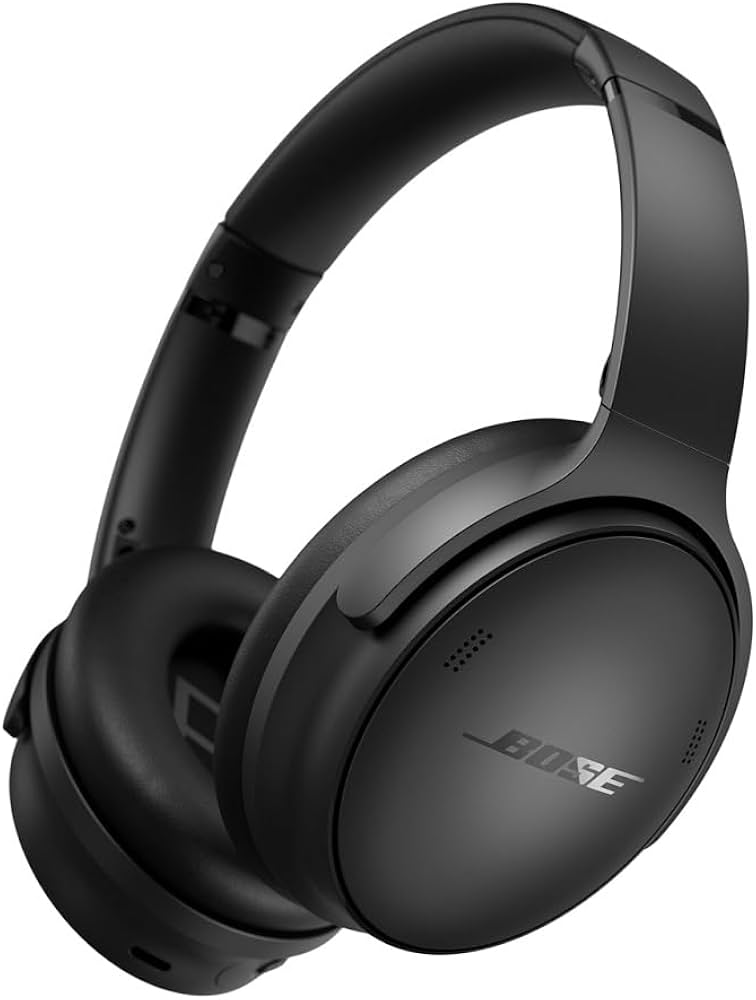
Best Premium
Bose QuietComfort Ultra Wireless Noise Cancelling Headphones - Image 1 of 7
Overall
8.9/10
Value
7.6/10
Performance
9.4/10
The QuietComfort Ultra is Bose's current flagship and the strongest pure noise-cancelling performer in this guide. Its CustomTune technology measures your ear canal acoustically and tailors both the sound and the noise cancellation to you every time you put the headphones on, which is why experts consistently rate its cabin-noise reduction at or above the Sony WH-1000XM5. Bose also layers in Immersive Audio, a spatial-audio mode that places sound in front of you rather than inside your head — a feature that's genuinely pleasant on a long flight with a movie. Build quality is classic Bose: soft synthetic leather ear cushions, a low-clamping headband, and a folded hard case that's compact enough for a personal item. Battery runs up to 24 hours with ANC on, dropping to roughly 18 hours with Immersive Audio engaged. Bluetooth 5.3 with Snapdragon Sound and aptX Adaptive support gives Android users a high-quality low-latency path, and multipoint is on board for staying connected to two devices. The trade-offs are price and codec practicality. At around $400 list, it's the most expensive option here that still fits the stated budget, and iPhone users get no benefit from aptX Adaptive. Battery life is also the shortest of the current-generation flagships. If noise cancellation is your number one criterion and you can find it on sale, nothing here does that job better.

Pros

  • Arguably the best active noise cancellation available in an over-ear headphone, ideal for engine and cabin drone
  • CustomTune personalizes both sound and ANC to your ears on every wear
  • Very comfortable low-clamping fit with plush ear cushions for long-haul flights
  • Immersive Audio spatial mode is excellent for in-flight movies
  • Bluetooth 5.3 with aptX Adaptive and Snapdragon Sound for high-quality Android streaming
  • Multipoint connectivity plus a compact hard case included

Cons

  • At roughly $400 list it's the priciest model that still fits this guide's budget
  • Up to 24 hours of battery is the shortest among current-generation flagships, and Immersive Audio cuts it further
  • aptX Adaptive is wasted on iPhone, which is limited to AAC
  • Slightly heavier and bulkier in the case than the Bose QuietComfort 45 it replaced

Best For:

Travelers who consider maximum noise cancellation the single most important feature and are willing to pay $350-$400 for it.

Not Recommended For:

Budget-focused buyers, or anyone who needs the longest possible battery life between charges.

Key Features:

CustomTune calibration that personalizes sound and ANC to the listener's earsBose Immersive Audio spatial sound modeUp to 24 hours of battery with ANC on, about 18 hours with Immersive AudioBluetooth 5.3 with multipoint, Snapdragon Sound and aptX AdaptiveAdjustable EQ and ANC modes through the Bose appPhysical controls for volume, playback and mode switchingCompact hard-shell carry case included

Standout Feature:

CustomTune ear-canal calibration, which retunes noise cancellation and sound signature every single time you put them on.

VS Others:

It edges the Sony WH-1000XM5 on raw noise cancellation and adds a genuinely useful spatial audio mode, but costs more, has shorter battery life, and offers fewer smart features. Against the QuietComfort 45 it's a clear generational upgrade in ANC and sound quality for roughly $150-$200 more.

Why This One:

If your flights are long, loud, and frequent, the QuietComfort Ultra buys you the quietest cabin experience in this guide. It's the pick for travelers who treat noise cancellation as the whole point of the purchase.

#3

Sennheiser Momentum 4 Wireless Headphones

Best Value
Sennheiser Momentum 4 Wireless Headphones - Image 1 of 11
Overall
8.7/10
Value
9.3/10
Performance
8.6/10
The Momentum 4 is the value standout of this group, and its headline number explains why: roughly 60 hours of battery life with noise cancellation on. That's two to three times what most competitors offer, which means a weekly business traveler can realistically leave the charging cable at home. Sennheiser pairs that with 42mm drivers, adaptive noise cancellation, and aptX Adaptive support, delivering sound quality that reviewers frequently rank at or near the top of this price class. It's also one of the most practical designs here. The Momentum 4 folds, weighs around 293g, uses touch controls on the right earcup, and offers extensive EQ customization plus adjustable ANC strength through the Sennheiser Smart Control app. USB-C charging, a 3.5mm analog cable, and multipoint Bluetooth round out a genuinely complete travel package, and Sennheiser backs it with a two-year warranty. The honest weaknesses: noise cancellation is excellent but not quite on the Sony or Bose level, particularly for low-frequency engine drone, and the understated fabric-and-plastic design feels less premium than the Bose or Apple options. If you can accept ANC that's a half-step behind in exchange for double the battery life and a lower price, this is one of the smartest buys in the category.

Pros

  • About 60 hours of battery with ANC on — by far the longest of any headphone here
  • Excellent sound quality with 42mm drivers and aptX Adaptive support on Android
  • Folds for compact packing and includes a carry case
  • Extensive EQ and adjustable ANC strength via the Sennheiser Smart Control app
  • Multipoint Bluetooth, USB-C charging, and a 3.5mm analog cable included
  • Backed by a two-year manufacturer warranty

Cons

  • Noise cancellation is very good but a step behind the Sony WH-1000XM5 and Bose QuietComfort Ultra
  • Understated, fairly plastic build feels less premium than its price suggests
  • Touch controls occasionally register unintended taps
  • No formal water or dust resistance rating, so it's not ideal for rainy outdoor use

Best For:

Frequent travelers who refuse to think about charging and want great sound for the money.

Not Recommended For:

Buyers who prioritize the absolute strongest noise cancellation above all else.

Key Features:

Up to roughly 60 hours of playback with adaptive noise cancellation enabled42mm transducer drivers with customizable EQ via the Smart Control appaptX Adaptive, AAC and SBC codec supportMultipoint Bluetooth for two simultaneous device connectionsFoldable design with included carry case, USB-C cable and 3.5mm analog cableAdjustable ANC intensity and transparency modesTwo-year manufacturer warranty

Standout Feature:

Sixty hours of battery life with ANC on — enough to cover a multi-week trip without ever plugging in.

VS Others:

It doubles the battery life of the Sony WH-1000XM5 and Bose QuietComfort Ultra at a lower price, and folds while the Sony doesn't. The trade-off is ANC that's a notch below both. Against the QuietComfort 45 it's more expensive but newer, better-sounding, and dramatically longer-lasting.

Why This One:

The Momentum 4 is the best pure value in this guide if battery life and sound quality matter more to you than squeezing out the last few decibels of noise cancellation. It's the smart-money pick for anyone who travels often and hates cables.

#4

Bose QuietComfort 45 Headphones

Best for Comfort
Bose QuietComfort 45 Headphones - Image 1 of 9
Overall
8.2/10
Value
8.8/10
Performance
7.8/10
The QuietComfort 45 is Bose's previous-generation flagship and, thanks to its successor, has settled into a genuinely attractive price point. What it retains is the thing Bose has always done best: comfort. It's one of the lightest headphones here at around 240g, with a soft headband and low clamping force that reviewers and owners consistently describe as easy to wear for an entire flight without adjustment. If you wear glasses, this is often the pair that presses least. Noise cancellation is simple rather than adaptive — two modes, Quiet and Aware, toggled with a physical button. That simplicity is a feature for travelers who don't want to fuss with an app, though it means the ANC doesn't automatically adjust as conditions change. Battery life is about 24 hours, and a short charge adds several hours of playback. Bluetooth is limited to SBC and AAC, so Android users don't get LDAC or aptX, and there's no multipoint on this model. The trade-offs are clear: no advanced codecs, no simultaneous two-device connection, and ANC that the newer Sony and Bose flagships beat. But it folds, includes a hard case and a 3.5mm cable, and costs roughly $130-$200 less than the flagships. For short-haul travelers who value comfort and simplicity above everything, it's arguably the most sensible purchase on this list.

Pros

  • Exceptionally light and comfortable for long wear, even with glasses
  • Very affordable now that it's a previous-generation model — often near or under $200
  • Simple two-mode ANC with physical controls requiring no app or setup
  • Folds compactly and ships with a hard case and a 3.5mm analog cable
  • About 24 hours of battery with quick charging over USB-C
  • Trusted Bose build quality and long-term parts and support availability

Cons

  • No advanced Bluetooth codecs — SBC and AAC only
  • No multipoint, so you must disconnect from one device before connecting to another
  • Non-adaptive ANC is noticeably behind the newer Sony and Bose flagships
  • Limited EQ adjustment compared with current-generation competitors

Best For:

Short-haul and domestic travelers who prioritize lightweight comfort, simplicity and price over maximum noise cancellation.

Not Recommended For:

Long-haul flyers who need the strongest possible engine-noise cancellation or Android users who want high-bitrate codecs.

Key Features:

Around 24 hours of battery life with noise cancellation enabledQuiet and Aware modes toggled by a physical buttonRoughly 240g weight with a low-clamping, plush headbandFoldable hinges with hard-shell carry case, USB-C cable and 3.5mm cable includedFour-microphone system for voice pickup on callsBose Music app support with a basic adjustable EQBluetooth 5.1 with SBC and AAC codec support

Standout Feature:

Its combination of a 240g weight and low clamping force makes it one of the most comfortable over-ear headphones available at any price.

VS Others:

It costs $100-$200 less than the Sony WH-1000XM5 and Bose QuietComfort Ultra and is more comfortable than either, but gives up adaptive ANC, multipoint and advanced codecs. Against the Sony WH-1000XM4 it's lighter and cheaper but behind on codecs, connectivity and smart features.

Why This One:

If your flights are mostly two to four hours and your priority is a headphone you forget you're wearing, the QuietComfort 45 delivers that for under $250. It's the best comfort-per-dollar option here.

#5

Sony WH-1000XM4 Wireless Premium Noise Canceling Headphones

Best Budget
Sony WH-1000XM4 Wireless Premium Noise Canceling Headphones - Image 1 of 11
Overall
8.6/10
Value
9.2/10
Performance
8.4/10
The WH-1000XM4 was Sony's flagship until the XM5 arrived, and that's exactly why it's now the best budget proposition in this guide. It keeps the vast majority of what made it a category leader: strong noise cancellation with Sony's QN1 processor, 30-hour battery life, multipoint Bluetooth, LDAC support, wear detection with auto-pause, and Speak-to-Chat. In practical travel terms, it delivers roughly 85% of the XM5 experience for roughly two-thirds of the price. It also has one advantage the newer model gave up: it folds. The XM4's earcups fold inward and the whole package stows into a smaller hard case, which genuinely matters if you travel carry-on only. At around 254g it's comfortable for long stretches, with Sony's familiar touch controls on the right earcup and a 3.5mm jack for seat-back entertainment systems. The compromises versus the XM5 are real but modest: the ANC is one generation behind, the microphones are less refined for calls, and the sound is slightly less detailed. There's also no aptX support, same as the XM5. For a traveler who wants flagship-grade quiet without paying flagship prices, the XM4 remains one of the smartest purchases in the entire category.

Pros

  • Excellent noise cancellation that's still competitive with current mid-tier models
  • Roughly 30 hours of battery life with ANC on
  • Folds for compact packing — an advantage over the newer Sony WH-1000XM5
  • Multipoint Bluetooth, LDAC support, wear detection auto-pause and Speak-to-Chat
  • Frequently available for well under $250, making it the best value flagship-adjacent pick
  • Includes a hard case and a 3.5mm analog cable

Cons

  • Noise cancellation and call quality are a generation behind the WH-1000XM5
  • No aptX support, and LDAC is unavailable on iPhone
  • Touch controls can be finicky and there's no physical playback button
  • Slightly bulkier when worn than the current-generation model

Best For:

Value-focused travelers who want genuine flagship-level noise cancellation without spending $300 or more.

Not Recommended For:

Buyers who want the absolute best ANC and microphone performance and don't mind paying full flagship price.

Key Features:

Sony QN1 noise-cancelling processor with 30-hour ANC battery lifeFoldable earcups and compact hard-shell travel caseMultipoint Bluetooth for two simultaneous device connectionsLDAC high-resolution audio support plus a 3.5mm analog inputWear detection with auto-pause and Speak-to-Chat voice detectionTouch controls for playback, volume and track skippingRoughly 254g weight and USB-C fast charging

Standout Feature:

It folds — something the newer Sony WH-1000XM5 does not — while still delivering nearly flagship-level noise cancellation at a much lower price.

VS Others:

It's the closest thing to the Sony WH-1000XM5 at roughly $100 less, and it beats the XM5 on portability thanks to its folding design. Against the Bose QuietComfort 45 it offers better ANC, multipoint and codecs, though it costs slightly more and is marginally heavier.

Why This One:

The WH-1000XM4 is the value play for travelers who want almost everything the current flagship offers and don't need the last 10% of performance. If you're price-sensitive but refuse to downgrade to a budget brand, start here.

#6

Beats Studio Pro Wireless Bluetooth Headphones

Best for Multi-Device Travelers
Beats Studio Pro Wireless Bluetooth Headphones - Image 1 of 8
Overall
8/10
Value
8.4/10
Performance
7.7/10
The Beats Studio Pro are the most flexible headphones in this guide when it comes to connecting to things. They support Bluetooth on both Apple and Android, USB-C digital audio for lossless playback, and a standard 3.5mm analog cable for seat-back entertainment systems and gaming consoles — a combination none of the other models here match. They also fold flat, weigh around 260g, and deliver roughly 40 hours of battery life, which puts them well ahead of the Bose and Apple options on endurance. Sound is Beats' most balanced tuning to date, with a customizable EQ in the app and spatial audio with dynamic head tracking that works on both iOS and Android — an unusual cross-platform capability. Transparency mode and a reasonably capable microphone array make them usable for calls in cafés and terminals. Where they fall short is noise cancellation. It's competent and will noticeably soften engine drone, but it's clearly behind the Sony WH-1000XM5, Bose QuietComfort Ultra and even the Sennheiser Momentum 4. They also lack wear detection, so playback doesn't pause when you take them off. At list price they're a middling value; when discounted, which happens often, they become a strong pick for multi-device travelers.

Pros

  • Works with USB-C digital audio, 3.5mm analog, and Bluetooth — the most connection options here
  • Spatial audio with head tracking is available on both iOS and Android
  • About 40 hours of battery life, well ahead of the Bose and Apple models
  • Folds flat for easy packing and includes a carry case
  • Customizable EQ and a balanced sound signature in the Beats app
  • Frequently discounted significantly below list price

Cons

  • Noise cancellation is noticeably weaker than the Sony and Bose flagships
  • No wear detection, so removing them doesn't automatically pause playback
  • Plastic build doesn't feel as premium as its list price implies
  • Battery life drops substantially when spatial audio and ANC are both active

Best For:

Travelers who juggle multiple devices and platforms and want wired plus wireless flexibility in one headphone.

Not Recommended For:

Long-haul flyers who need the strongest possible noise cancellation for engine and cabin noise.

Key Features:

Three listening modes: Bluetooth, USB-C digital audio, and 3.5mm analogUp to roughly 40 hours of battery life on BluetoothSpatial audio with dynamic head tracking on both iOS and AndroidActive noise cancellation with a Transparency modeCustomizable EQ through the Beats appFoldable design with included carry case and cablesRoughly 260g weight with on-earcup physical controls

Standout Feature:

USB-C lossless digital audio plus 3.5mm analog plus wireless Bluetooth — more ways to connect than any other headphone in this guide.

VS Others:

It beats the Sony WH-1000XM4 and Bose QuietComfort 45 on battery life and connection flexibility, and matches Apple's spatial audio on Android. But it's clearly behind the Sony WH-1000XM5, Bose QuietComfort Ultra and Sennheiser Momentum 4 on noise cancellation, which is the core travel job.

Why This One:

If you travel with a phone, a laptop, a Switch or an older seat-back screen, the Studio Pro's triple-connection design removes a lot of the accessory clutter other headphones force on you. It's the practical generalist pick.

#7

Apple AirPods Max

Best for Apple Users
Apple AirPods Max - Image 1 of 6
Overall
8.1/10
Value
6.9/10
Performance
8.6/10
The AirPods Max are the most premium-feeling headphone in this guide and the most tightly integrated with Apple's ecosystem. Machined aluminum earcups, a stainless steel frame, and a breathable knit mesh canopy give them a build quality nothing else here matches. Inside, a computational audio system with multiple microphones delivers excellent noise cancellation and what many reviewers consider the best transparency mode in the industry — it genuinely sounds like you're not wearing headphones. Inside Apple's ecosystem, the advantages multiply: instant pairing and automatic switching across iPhone, iPad, and Mac, spatial audio with dynamic head tracking, Find My support, and hands-free Siri. The digital crown borrowed from the Apple Watch makes volume control precise and satisfying. Battery life is about 20 hours with ANC and spatial audio on, charged over Lightning or USB-C depending on the version you buy. The travel-related drawbacks are significant enough to be honest about. At roughly 385g they're the heaviest headphones here by a wide margin, and that weight becomes noticeable on a long flight. There's no standard power button and no true powered-off state — they rely on the Smart Case for low-power mode. There's no 3.5mm analog jack, so older seat-back systems need an adapter, and wired lossless requires a specific cable. And at around $499 they exceed this guide's budget range. This is a purchase driven by ecosystem love, not by travel practicality per dollar.

Pros

  • Best-in-class build quality with aluminum earcups and a stainless steel frame
  • Excellent noise cancellation and widely considered the best transparency mode available
  • Seamless automatic switching across iPhone, iPad and Mac
  • Spatial audio with dynamic head tracking plus hands-free Siri
  • Precise digital crown volume control
  • Comfortable knit mesh canopy that distributes weight well despite the overall heft

Cons

  • Roughly 385g — the heaviest headphone in this guide, which wears on long flights
  • No standard power button and no powered-off state; relies on the Smart Case
  • No 3.5mm analog jack, so older in-flight entertainment systems need an adapter
  • At around $499 it sits above this guide's $200-$400 budget range
  • Only about 20 hours of battery life, the shortest here
  • Very few advantages if you don't use Apple devices

Best For:

Apple-ecosystem travelers who want premium build quality, best-in-class transparency, and seamless cross-device switching.

Not Recommended For:

Android users, budget-conscious buyers, or anyone who wants the lightest possible headphone for a 14-hour flight.

Key Features:

Computational audio with multiple microphones and adaptive EQActive noise cancellation plus an industry-leading Transparency modeSpatial audio with dynamic head trackingAutomatic device switching across Apple hardware and Find My supportDigital Crown for volume, playback and call controlAbout 20 hours of battery with ANC and spatial audio enabledAluminum and stainless steel construction with a knit mesh canopy

Standout Feature:

Transparency mode so natural that conversations and airport announcements come through without removing the headphones.

VS Others:

It beats everything here on build quality, transparency mode, and Apple integration, but it's the heaviest, has the shortest battery life, costs the most, and offers little to Android users. The Sony WH-1000XM5 is a better travel tool for most people at a lower price.

Why This One:

Choose the AirPods Max if your whole life runs on Apple hardware and you value seamless switching and premium materials over battery life and low weight. It's the right answer for a specific buyer, not the right answer for everyone.

Who Should Get What?

The Long-Haul Economy Flyer

A frequent international traveler who books overnight flights two to four times a year and wants to actually sleep. They need maximum engine-noise cancellation, a headphone that doesn't press on their glasses after hour six, and enough battery for a return leg without hunting for an outlet. They're willing to spend around $350 but not $500.

Budget:$300-$400
Use:Overnight and long-haul flights, plus airport and hotel use

Recommended:

Sony WH-1000XM5 Wireless Noise Canceling Headphones

The WH-1000XM5 pairs class-leading adaptive noise cancellation with a genuinely light 250g build and roughly 30 hours of battery, which is exactly the combination an overnight flyer needs. Multipoint Bluetooth means it can stay connected to a phone and a laptop at the same time, and the included rigid case survives being stuffed into a carry-on. It costs more than the last-generation options but delivers visibly better quiet and a more comfortable fit over a full overnight.

View on Amazon →

The Budget-Conscious Student Traveler

A university student heading home for breaks and taking one or two budget trips a year. They want real noise cancellation, not a gimmick, but their entire travel budget is tight and every dollar counts. They've never owned premium headphones and don't want to overpay for features they can't hear on a Spotify stream.

Budget:$180-$250
Use:Flights, trains, buses and library study sessions

Recommended:

Sony WH-1000XM4 Wireless Noise Canceling Headphones

The WH-1000XM4 is the previous flagship, which means it inherited almost everything that made the XM5 great — excellent ANC, multipoint, LDAC, wear detection, speak-to-chat — and now sells for well under $250. It also folds, making it easier to pack than the newer XM5. For a student who wants flagship-adjacent performance at a mid-range price, this is the clearest value on the list.

View on Amazon →

The Frequent Flyer Who Hates Charging

A consultant or sales rep who flies weekly and refuses to add another charging cable to their bag. They want to charge once a week, not once a trip, and they want to be able to take back-to-back calls from hotel rooms. Sound quality matters to them, but battery life matters more.

Budget:$250-$350
Use:Weekly business travel, calls, and long working sessions

Recommended:

Sennheiser Momentum 4 Wireless Headphones

The Momentum 4's roughly 60-hour battery life is in a completely different class from everything else here — you can genuinely leave the charger at home for a week of travel. It also folds, supports aptX Adaptive on Android, and offers a customizable EQ and adaptive ANC through the Sennheiser app, so it stays musically satisfying. The trade-off is ANC that's a step behind Sony and Bose, which is a reasonable price for a week of freedom from cables.

View on Amazon →

The Apple-Only Road Warrior

Someone whose entire kit is Apple — iPhone, MacBook, iPad, Watch. They travel for work, value automatic switching between devices above almost everything, and are willing to pay full price for hardware that feels premium. They're not price-sensitive, but they do care about having the best experience inside their ecosystem.

Budget:$450-$550
Use:Cross-device work and travel inside Apple's ecosystem

Recommended:

Apple AirPods Max

Nothing else here switches between an iPhone, iPad, and Mac as seamlessly, and spatial audio with head tracking is genuinely better on Apple's own hardware. The aluminum build feels premium and the ANC is excellent. The honest caveats are the 385g weight on long flights, the lack of a standard power button, and the price, which sits above this guide's budget range — so this is a deliberate splurge, not a value play.

View on Amazon →

The Short-Hop Comfort Seeker

A traveler who mostly takes domestic flights of two to four hours, values a lightweight, barely-there fit above all else, and doesn't want to pay flagship prices. They take work calls on the road and want something simple that just works without an app or a manual.

Budget:$180-$250
Use:Domestic flights, commutes and light work calls

Recommended:

Bose QuietComfort 45 Headphones

The QuietComfort 45 is one of the lightest and most consistently praised headphones for long-wear comfort, with a soft headband, low clamping force, and a simple two-mode ANC toggle that anyone can figure out without reading a manual. It folds, it has a 3.5mm jack for seat-back screens, and as a previous-generation model it now regularly sells near or below $200. It gives up some ANC refinement and codec support to the newer flagships, which is a fair trade at this price.

View on Amazon →

The Multi-Device Digital Nomad

A remote worker who travels with an iPhone, a Windows laptop, and occasionally a Nintendo Switch, and wants one pair of headphones to cover all of it — including wired audio for gaming and airline systems. They work from cafés and co-working spaces, so microphone quality and transparency mode matter too.

Budget:$200-$300
Use:Mixed OS devices, calls, wired gaming and travel

Recommended:

Beats Studio Pro Wireless Bluetooth Headphones

The Beats Studio Pro work well on both Android and Apple, support USB-C digital audio and a 3.5mm analog cable, fold flat, and offer around 40 hours of battery — the broadest device compatibility on this list. They're also frequently discounted well below their list price. Noise cancellation isn't as strong as the Sony or Bose flagships, which is the main reason they sit below them in the ranking.

View on Amazon →

Buying Guide: How to Choose

Start by answering one question honestly: what is the longest single stretch you'll wear these? A two-hour commuter flight and a 14-hour overnight to Tokyo demand different headphones. For short hops, comfort and price dominate. For long-haul, active noise cancellation quality, clamping force, and battery life become non-negotiable, because you can't take a break from a headphone that hurts. Second, decide how much you care about portability versus protection. Folding designs like the Sony WH-1000XM4 and Bose QuietComfort 45 pack into noticeably smaller hard cases than non-folding models, which matters if you travel carry-on only. Non-folding designs often have simpler, more robust hinges and fewer failure points. There is no universally correct answer, but if your bag is tight, folding wins. Third, map your ecosystem and your wiring. If you're deep in Apple, the AirPods Max deliver seamless device switching and spatial audio that other brands can't match. If you split time between an iPhone and a Windows laptop — the normal digital-nomad setup — multipoint Bluetooth on the Sony WH-1000XM5, Sennheiser Momentum 4, or Bose QuietComfort Ultra is more valuable than any ecosystem trick. And do not overlook the 3.5mm jack: a surprising number of aircraft seat-back entertainment systems still need an analog cable, and a wired option is also your insurance policy when the battery dies. Finally, think about timing and generation. Two of the best travel headphones on this list — the Bose QuietComfort 45 and Sony WH-1000XM4 — are previous-generation flagships that were superseded by better models. That's exactly why they're now the value plays. You're giving up, at most, some ANC refinement and a few software features, and saving $100-$150. Conversely, buying the current flagship the month it launches means paying full price for marginal gains. The sweet spot is usually a current-generation mid-tier model or a last-generation flagship on discount. Common mistakes worth avoiding: over-indexing on ANC numbers that aren't measured consistently across brands; assuming a heavier, more premium-feeling headphone is more comfortable (usually the opposite for long wear); ignoring microphone quality if you take work calls from hotel rooms; and buying based on codec support you can't actually use — LDAC and aptX Adaptive only matter if your phone supports them. Android users should prioritize LDAC or aptX; iPhone users are capped at AAC, so pay for comfort and ANC instead of codecs you'll never hear.

Bottom Line

If you want one answer: buy the Sony WH-1000XM5. It has the best combination of noise cancellation, comfort, battery life, portability, and multi-device connectivity for travelers, and it sits right in the middle of this budget at around $300-$350. It is the safest recommendation in the category and the one most frequent flyers end up with. If your priority is different, the choice changes cleanly. Want the absolute best noise cancellation and have the budget? The Bose QuietComfort Ultra is the premium pick. Hate charging things? The Sennheiser Momentum 4's 60-hour battery is in a different league. Fly mostly short trips and want to save money? The Bose QuietComfort 45 is the lightest, most comfortable pair here and often costs $200 or less. Want the cheapest genuinely capable option? The Sony WH-1000XM4 remains excellent value. Live entirely inside Apple's ecosystem? The AirPods Max are worth the stretch — just know you're paying for integration, not for travel practicality. And if you bounce between a phone, a laptop, and a wired airline system, the Beats Studio Pro cover more ground than their price suggests. One last piece of reassurance: there is no bad choice on this list. Every pair here will meaningfully improve a flight. The real difference between them is comfort fit and battery, not sound quality — so if you can, try the two finalists on your head for ten minutes before you commit. Buy from a retailer with an easy return window, take them on one trip, and let your ears decide.

Frequently Asked Questions

Which over-ear headphones should I buy for travel in 2026?
For most travelers, the Sony WH-1000XM5 is the best all-round choice: it has excellent adaptive noise cancellation, about 30 hours of battery, a light 250g build, multipoint Bluetooth, and a rigid travel case. If you want maximum noise cancellation and have the budget, the Bose QuietComfort Ultra edges it out. If battery life is your obsession, the Sennheiser Momentum 4 offers roughly 60 hours. If price matters most, the Sony WH-1000XM4 and Bose QuietComfort 45 are the value picks.
Which is better for travel: Sony WH-1000XM5 or Bose QuietComfort Ultra?
The Bose QuietComfort Ultra has a slight edge on raw noise cancellation and adds a genuinely enjoyable Immersive Audio spatial mode, plus it's a touch more comfortable. The Sony WH-1000XM5 wins on battery life (about 30 hours versus 24), weight, smart features like Speak-to-Chat and wear detection, and price. Choose the Bose if silencing an aircraft cabin is your top priority; choose the Sony if you want the better all-round package and want to spend less.
Is the Sony WH-1000XM5 worth the extra money over the WH-1000XM4?
It depends on two things: how much you fly and how tight your bag is. The XM5 has meaningfully better noise cancellation, improved call microphones, a lighter build, and a more refined fit. The XM4 costs roughly $100 less and, crucially, folds. If you take several long flights a year, the XM5 is worth it. If you fly a few times a year and pack carry-on only, the XM4 gets you about 85% of the experience for two-thirds of the price.
Is the Sennheiser Momentum 4 worth it compared to Sony and Bose?
Yes, if battery life and sound quality are your priorities. Its roughly 60 hours of playback with ANC on is more than double what the Sony WH-1000XM5 and Bose QuietComfort Ultra offer, and it folds for easy packing. It also costs less than both. The catch is noise cancellation that's a half-step behind — still very good, but not class-leading for deep engine drone. Buy it if you hate charging; skip it if silence above all else is the goal.
Are the Apple AirPods Max good for travel?
They're excellent for the right traveler and awkward for everyone else. Noise cancellation, transparency mode, build quality, and Apple-ecosystem switching are all outstanding. But at roughly 385g they're the heaviest option here, battery life is only about 20 hours, there's no standard power button and no 3.5mm jack, and they cost around $499 — above this guide's budget. Buy them if you're fully invested in Apple hardware and don't mind the weight and price.
What's the best budget over-ear headphone for travel?
The Sony WH-1000XM4 is the strongest budget pick at around $200-$250, offering near-flagship noise cancellation, multipoint Bluetooth, folding earcups, and 30-hour battery. The Bose QuietComfort 45 is the alternative if comfort and simplicity matter more than codecs and connectivity — it's lighter with a plush fit and often sells for around $200 or less.
Which over-ear headphones have the best noise cancellation for flying?
Based on consistent expert consensus and aggregated owner reports, the Bose QuietComfort Ultra and Sony WH-1000XM5 are the two strongest performers for aircraft noise, with Bose slightly ahead on pure low-frequency engine drone and Sony ahead on adaptivity and overall polish. The Sennheiser Momentum 4 and Sony WH-1000XM4 are a close step behind. The Beats Studio Pro and Bose QuietComfort 45 are competent but noticeably less effective.
Do I need multipoint Bluetooth for travel?
If you work while traveling, yes — multipoint lets you stay connected to your laptop and phone at the same time, so a call rings through while you're listening to music. The Sony WH-1000XM5, Sony WH-1000XM4, Bose QuietComfort Ultra, and Sennheiser Momentum 4 all support it. The Bose QuietComfort 45 and Apple AirPods Max do not use standard multipoint, though Apple substitutes its own automatic device switching.
Should I care about LDAC or aptX if I use an iPhone?
No. iPhone Bluetooth tops out at AAC, so LDAC on Sony models and aptX Adaptive on the Bose QuietComfort Ultra and Sennheiser Momentum 4 make no audible difference on iOS. If you're an iPhone user, spend your money on noise cancellation, comfort, and battery instead of codecs. Android users, by contrast, should factor codec support in.
Do I need a 3.5mm jack on travel headphones?
It's more useful than you'd expect. Many aircraft seat-back entertainment systems still require an analog cable, and a wired connection is also your backup when the battery dies mid-flight. The Sony WH-1000XM5, Sony WH-1000XM4, Bose QuietComfort 45, Bose QuietComfort Ultra, Sennheiser Momentum 4, and Beats Studio Pro all include a 3.5mm input. The Apple AirPods Max do not, and need an adapter.
How much should I spend on travel headphones?
Between $200 and $350 is the sweet spot. Below $200 you're making real concessions on noise cancellation and build. From roughly $300 to $350 you get current-generation performance from Sony, Bose, or Sennheiser. Above $400 you're paying for premium materials or ecosystem integration rather than meaningfully better travel capability — and remember that prices in this category swing widely, so a last-generation flagship on sale often beats a current mid-tier model at the same price.
What about the Jabra Elite 85h?
The Jabra Elite 85h was a well-liked travel headphone with strong battery life and a weather-resistant design, but it's an older model that's increasingly hard to find and has been outpaced on noise cancellation by everything in this guide. Unless you find it deeply discounted, the Sony WH-1000XM4 or Bose QuietComfort 45 are better uses of a similar budget in 2026.

Need More Help Deciding?

Explore more buying guides to find the perfect product for your needs.

View All Buying Guides

Related Articles