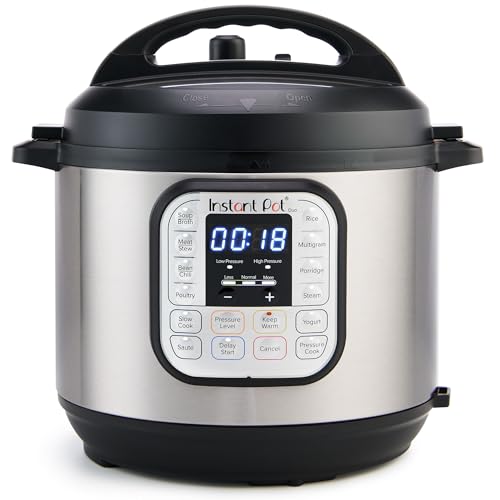
The Duo makes the most sense for households that cook at home at least three or four nights a week and whose menus include the foods pressure cooking does best: dried beans, lentils, rice and grains, chili, stews, soups, braised meats, shredded chicken or pork, hard-boiled eggs, and yogurt. It is also a strong fit for anyone who batch cooks on weekends, feeds a family of three or more, or lives somewhere that makes long stovetop simmering unpleasant, whether that is a hot climate, a tiny kitchen, or high electricity costs. The 6-quart size is the default recommendation for most households because it handles a whole chicken or a big batch of chili while still fitting in a normal cabinet.
What owners report follows a fairly consistent pattern. People who love the Duo use the pressure-cook function constantly, use rice and steam modes sometimes, and either treat yogurt mode as a weekly ritual or never touch it at all. The most common frustrations are texture, since pressure cooking turns vegetables and pasta mushy if you follow generic timing charts; the extra 10 to 20 minutes of pressurizing and releasing that recipes often gloss over; and the learning curve around liquid ratios. People who buy the Duo expecting it to behave like a slow cooker or a microwave, with zero adjustment, are the ones most likely to be disappointed.
Compared with alternatives, the Duo occupies a specific spot. Air fryers and air-fry-lid multi-cookers such as the Instant Pot Duo Crisp or a standalone air fryer are better if crispy food is your priority, because the Duo cannot crisp anything. The Duo Plus, Pro, and newer Instant Pot models add better displays, more presets, and in some cases sous-vide or canning programs; they are worth the extra money if you will interact with the interface daily, but not if you just want beans and stew. Ninja Foodi and Crock-Pot Express multi-cookers are the closest direct competitors, with the Foodi generally stronger on crisping and the Crock-Pot line often cheaper. A basic stovetop pressure cooker is faster and costs less but demands stovetop attention and more skill. And if you already own a slow cooker, a rice cooker, and a large Dutch oven, the Duo overlaps with all three without fully replacing any of them.
Long-term ownership is where the low price pays off and also where small costs appear. The appliance itself is durable, and many owners describe years of regular use, but the silicone sealing ring needs replacing periodically because it stretches, wears, and holds onto strong smells, and the inner pot can be scratched or dented over time. Both are inexpensive, widely available parts. It is worth checking the current warranty terms at the time of purchase, especially given that Instant Brands went through a Chapter 11 bankruptcy in 2023 and emerged under new ownership. The brand is still operating and selling, but confirming warranty coverage and parts availability before you buy is a reasonable precaution rather than paranoia.
In market context, the electric pressure cooker category cooled considerably after its late-2010s peak, largely because air fryers took over the must-have countertop appliance role. That is actually good news for Duo shoppers: the model is mature, thoroughly documented, and frequently discounted, and the enormous body of recipes, blogs, and third-party accessories built around it has not gone anywhere. The main forward-looking consideration is that new purchases increasingly include air-frying capability, so if you suspect you will want crispy food within a year or two, buying a crisping-capable model now is cheaper than buying twice.