
Is Yamaha P-225 Digital Piano Worth It? Honest Review (2026)
Balanced look at the P-225’s strengths, weaknesses, and who should buy it in 2026.
Quick Decision
Buy the Yamaha P-225 if you want a realistic 88-key piano that you can carry easily and plug into your computer or phone for recording and apps. Skip it if you need balanced 1/4-inch outputs for gigs or demand a larger sound library; the Roland FP-30X or Kawai ES120 will suit you better.
Best if you...
- Apartment dwellers who need a compact, light keyboard
- Beginners who want a realistic hammer action to build technique
- Students using learning apps like Simply Piano or Flowkey
Skip it if you...
- Gigging musicians who need balanced 1/4-inch outputs
- Players who need many sounds for pop, gospel, or synth work
- Advanced pianists who demand a more responsive action
If you’re shopping for a digital piano in 2026, the Yamaha P-225 probably appears on your shortlist. It fills that important gap between basic 88-key starters and much heavier stage pianos, offering a realistic feel in a small, light package. This analysis breaks down the P-225’s strengths and weaknesses based on manufacturer specs, published reviews, and current pricing. We’ll also compare it to key rivals and outline which buyers will get the most value, so you can decide with confidence.
About the Yamaha P-225 Digital Piano
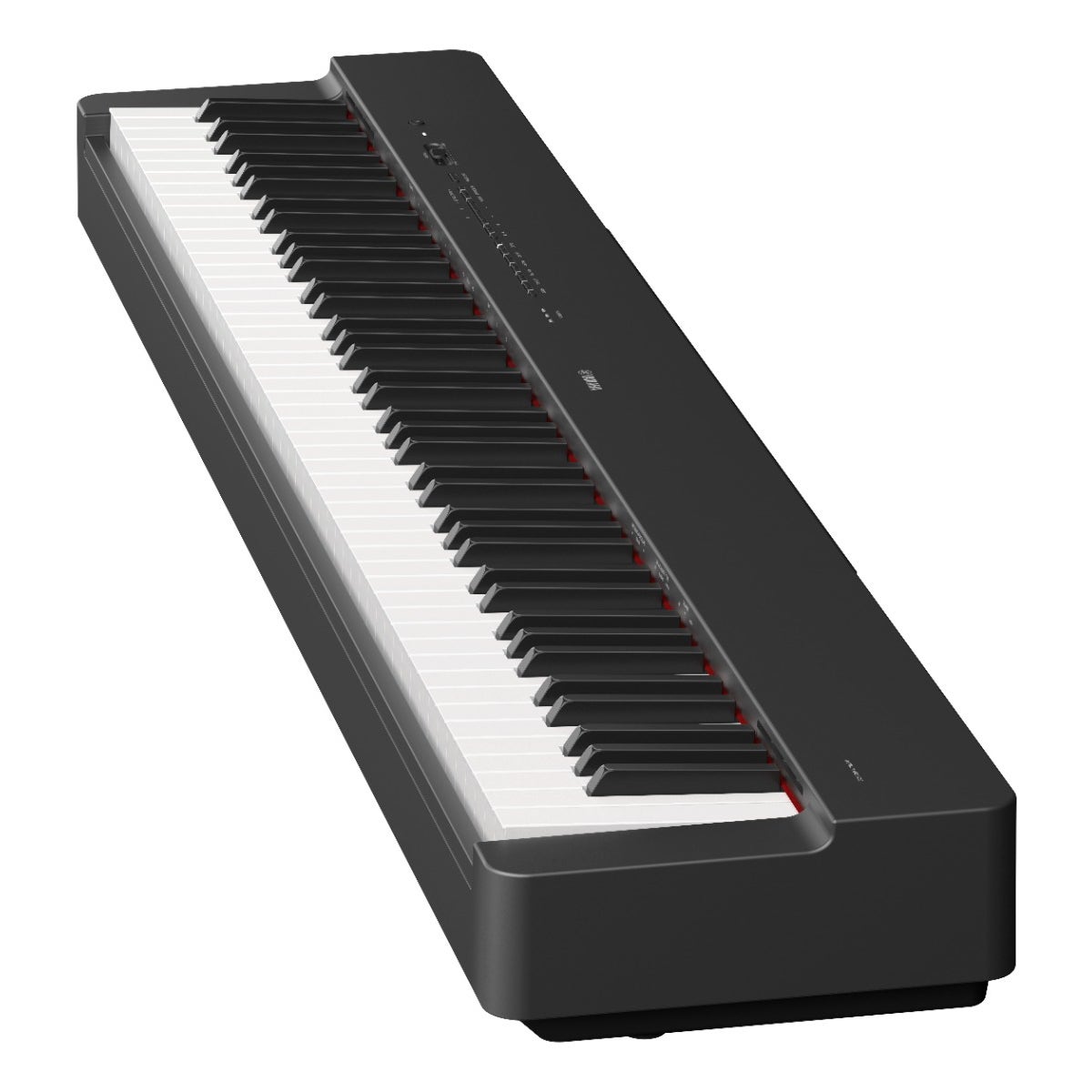
The Yamaha P-225 is a compact 88-key digital piano with a graded hammer action, 192-note polyphony, and a 10-voice sound engine. It’s designed for home practice, lessons, and portable performance, with built-in Bluetooth and USB-C audio/MIDI for modern music-making.
Key Specifications
- Color
- Black or White
- Pedal
- Included FC3A half-damper pedal
- Power
- 12W (AC adapter included)
- Weight
- 11.5 kg
- Outputs
- 3.5mm mini line-out
- Keyboard
- 88-key GHC (Graded Hammer Compact) graded hammer action
- Speakers
- 15W x 2 (30W total), 8cm drivers
- Polyphony
- 192 notes
- Dimensions
- 1322 x 154 x 247 mm
- Connectivity
- USB-C (audio/MIDI), Bluetooth 5.0 (audio + MIDI)
- Tone Generator
- CFX engine, 10 voices
- Headphone Jacks
- 2 x 3.5mm
Overview
The Yamaha P-225 is the successor to the P-125, and it was introduced to give home players a more realistic key action and better connectivity in a ultra-portable design. It uses Yamaha’s Graded Hammer Compact (GHC) action, which is deliberately similar to an acoustic grand in weight distribution. The P-225 weighs only 11.5 kg (25.4 lbs) and measures about 132 cm wide, making it one of the most space-efficient 88-key digital pianos around. You can find the P-225 at most major music retailers, including on Amazon, with street prices hovering between $700 and $800 depending on bundles and seasonal deals.
Pros
The P-225 earns its reputation by hitting the sweet spot where feel, size, and modern features come together. Its key action, polyphony, and connectivity options stand out for the price, as do a few thoughtful touches like the bundled half-damper pedal. Below are the strengths that matter most in daily use.
Realistic 88-Key Hammer Action in a Light, Compact Body
The P-225 uses Yamaha’s Graded Hammer Compact (GHC) action, which reproduces the heavier bass and lighter treble of a grand piano. Each key is weighted rather than spring-loaded, allowing for expressive dynamics. At just 11.5 kg, it’s one of the lightest 88-key hammer-action instruments, so you can easily move it between rooms or carry it to a lesson.
This combination matters for apartment dwellers and students: you get a real piano feel that builds finger strength, without needing the floor space or back strength to accommodate a console piano. The cabinet is only about 25 cm deep, so it can fit against a wall or on a sturdy desk. The GHC action is a clear upgrade over old P-125 keyboards, with better consistency across octaves.
192-Note Polyphony Prevents Dropped Notes
Polyphony is the number of notes a digital piano can sound simultaneously. The P-225’s 192-voice polyphony gives you plenty of headroom, even when you hold the sustain pedal and play dense chords. Budget keyboards often have 64 or 96 notes, but at 192 you’re unlikely to ever run out in practice. This is crucial for classical pedaling, complex jazz chords, and layered performances. The generous polyphony matches the Kawai ES120 and exceeds the Roland FP-30X (128), giving the P-225 a clear edge for demanding repertoire.
Built-In USB-C Audio and MIDI Interface
A standout feature is the USB-C port, which works as a class-compliant audio and MIDI interface. Connect it to a Mac, iPad, or Android device and you can record clean, direct piano audio into your DAW without any extra hardware. The same cable handles MIDI, so you can use the P-225 to control virtual instruments or record performances to edit as notation.
For owners of Apple devices, it works plug-and-play, and Yamaha’s support pages confirm that Windows users can install the appropriate driver for full audio. This turns the P-225 into a practical home production hub, something rarely found in this price range.
Bluetooth Audio and MIDI for Modern Music Apps
The P-225 supports Bluetooth 5.0 for both audio and MIDI. You can stream backing tracks or YouTube tutorials wirelessly through the internal speakers and play along. The Bluetooth MIDI connection is responsive enough for interactive apps like Simply Piano, Flowkey, or GarageBand, making lessons and practice more engaging.
This wireless flexibility is a big convenience for younger students and tech-savvy players who don’t want cable clutter. While latency is still slightly higher than a wired connection, it’s acceptable for everyday practice and casual recording.
Premium Half-Damper Pedal Included
Most budget digital pianos throw in a flimsy switch pedal that only offers on/off. The P-225 includes the Yamaha FC3A, a full-sized pedal that supports half-pedaling. This means you can partially engage the damper for nuanced sustain, just like you would on an acoustic grand. The FC3A retails for around $50 on its own, so it’s a significant value bonus.
Having a proper pedal from day one prevents beginners from developing poor pedal technique and gives more advanced players the control they expect. The pedal’s rubber base keeps it in place on most floor surfaces.
Dual Headphone Jacks and Duo Mode
Two 3.5mm headphone outputs let two people practice silently at the same time, which is a blessing for teachers, siblings, or couples. The built-in Duo mode splits the keyboard into two identical 44-key zones with the same pitch, perfect for teacher/student side-by-side lessons or family playing sessions.
Both users can wear headphones and hear only the piano, making late-night practice or early morning sessions completely unobtrusive. This ability to share the instrument is a major plus for households with multiple musicians.
Compact Footprint That Fits Modern Living Spaces
At 132 cm wide, 15.4 cm tall, and 24.7 cm deep, the P-225 is smaller than many alternatives such as the Roland FP-30X (which is 128 mm taller and 40 mm deeper). It can sit on a slim stand, a desk, or even a reinforced table. Its light weight also means you can pack it away in a closet or take it to a friend’s house for a session.
For city dwellers with small apartments, the P-225’s dimensions are a deciding factor. It delivers acoustic-style playability without dominating the room.
Cons
No instrument is perfect. The P-225 makes deliberate compromises to keep its price and size down. Some of these limitations may not matter for a bedroom player, but they are critical for keyboardists who need a more complete tool. Here’s what to watch out for.
Limited 10-Voice Sound Selection
The P-225 is piano-focused, but it only comes with 10 different sounds: a few grand pianos, electric pianos, organs, strings, harpsichord, and a couple of others. That’s lower than many rivals, with the Roland FP-30X offering 12 voices and the Kawai ES120 providing 15. Players who want to recreate full-band arrangements will quickly hit the ceiling.
The core acoustic piano sounds are excellent, so if you mostly practice classical or pop ballads, this won’t be an issue. But if you enjoy experimenting with synth-like patches, orchestral stems, or other instrument textures, the limited library will feel restrictive. There’s no expansion slot or downloadable sound packs.
Speakers Are Fine for a Bedroom, Not for a Gig
The P-225’s internal sound system consists of two 15W amplifiers driving 8cm speakers, for a total of 30W. That’s enough to fill a small room, and Yamaha’s Intelligent Acoustic Control keeps the tone balanced at low volume. But when you push the volume, you’ll notice a lack of low-end punch and headroom. The sound starts to compress, especially with heavy sustained chords.
For practice, that’s perfectly acceptable. If you intend to perform in front of an audience, even in a small café, you’ll need external amplification. The P-225 isn’t designed as a gigging instrument, and the speaker limitations reflect that.
No 1/4-Inch or XLR Line Outputs
Connecting the P-225 to a PA system, studio monitors, or an audio mixer isn’t as convenient as it should be. The piano has a stereo mini-jack line out (3.5mm) and a USB-C port, but no balanced 1/4-inch outputs like you get on the Roland FP-30X. You’ll often need a 3.5mm-to-dual-1/4-inch cable or a DI box to get a clean signal to professional gear.
This is a dealbreaker for active gigging musicians. The extra adapters add cost, potential signal noise, and setup time. If you plan to use the P-225 on stage regularly, the lack of proper outputs is a significant drawback.
GHC Key Action Is Good, but Not the Class Leader
While the Graded Hammer Compact action is a major step up from semi-weighted keyboards, it isn’t the most natural or responsive action in its price bracket. The keys are a bit lighter and more compact than the Roland PHA-4 Standard or the Kawai RHC actions. Some players describe the response as slightly digital, with less of the subtle resistance and escapement feel found in more expensive instruments.
For a beginner, this won’t matter — you’ll still develop proper technique. But experienced pianists who are used to an acoustic grand may notice the difference in dynamic control during fast repeated notes or soft passages. If you’re upgrading from a high-end instrument, you’ll want to try the P-225 in person before buying.
Basic Onboard Controls and No Intuitive Display
The front panel of the P-225 is minimal, with small buttons and an LED indicator rather than a full screen. Changing sounds, adjusting reverb, or turning on Duo mode requires memorizing button combinations or referencing the printed panel. This can be frustrating for older players or those who prefer a more visual interface.
The optional Smart Pianist app adds graphical control, but setting that up isn’t always seamless. The app-based approach also means you’re dependent on a mobile device for anything beyond the basics. If you want a piano with a simple, built-in menu system, consider the Kawai ES120 or the Casio CDP-S360 with their clearer displays.
Stand and Bench Not Included
The P-225 is sold as a portable keyboard only. Unlike some bundles, there’s no furniture stand or bench in the box. That means you’ll need to budget extra for these essentials: a basic X-style stand costs around $50–$80, a furniture stand closer to $150, and a decent bench another $80–$150.
That raises the total cost of ownership, especially when you also want a cover or speakers. Make sure to factor these items into your budget when comparing with consoles that include stands and benches.
👍 Who It's For
The Yamaha P-225 is ideal for apartment-dwelling beginners and intermediate pianists who need a compact, lightweight instrument with an authentic key touch. It’s also perfect for students who want to use apps like Simply Piano or GarageBand, thanks to the Bluetooth and USB-C audio. Home studio owners who want to record directly into a DAW without fuss will appreciate the built-in interface, and teachers who offer private lessons will value the dual headphone jacks.
If you value portability — taking your instrument to a friend’s house, a band rehearsal, or a small acoustic gig now and then — the P-225 is one of the easiest full-sized pianos to carry. Its slim body also means it fits in car trunks and small elevators, which is a surprisingly huge advantage in urban settings.
For players who are comfortable with a 10-voice sound engine and will use external speakers for bigger rooms, the P-225 offers a balanced package at a reasonable price. It’s a piano-first instrument for players who care about feel more than a deep sound library.
👎 Who Should Avoid
If you define yourself as a stage performer, the P-225 will frustrate you with its lack of 1/4-inch outputs and modest internal speakers. You’ll get much better value from the Roland FP-30X or the Kawai ES120, both of which were built with live performance in mind. Similarly, if you need a huge variety of sounds for pop, synth-heavy, or worship-music settings, the limited 10-voice library is a serious bottleneck.
Advanced pianists who are used to high-end acoustic-like actions may find the GHC keyboard a step down. The slightly shallow key depth and lighter spring release can make fast repeated notes feel mushy compared with pricier Clavinova or Roland models. If you are shopping for your forever piano, you’ll likely outgrow the P-225 quickly.
Finally, anyone who prefers a simple, appliance-like interface will find the tiny buttons and lack of a display annoying. You’ll either rely on a smartphone app or memorize key combos, which can make quick adjustments during practice more tedious than necessary.
See today's Yamaha P-225 Digital Piano price and available configurations on Amazon.
🛒 Buy on AmazonAs an Amazon Associate we earn from qualifying purchases.
Alternatives to Consider
| Product | Choose Yamaha P-225 Digital Piano if... | Choose the alternative if... |
|---|---|---|
| Yamaha P-145About $150 less expensive | You want the same key action but need to save money and don’t need USB audio, Bluetooth, or a midline. | You are on a strict budget and are willing to trade polyphony and connectivity for a lower price. |
| Roland FP-30XAbout $50 more expensive | You want a lighter, slimmer piano with built-in USB-C audio and Bluetooth without paying extra for Roland’s stronger output. | You need 1/4-inch line-outs, a more responsive key action, or a slightly larger built-in sound library. |
| Kawai ES120About $250 more expensive | You prioritize compact size and a more affordable price while still getting Bluetooth and a solid piano sound. | You want a more refined key action and a deeper, richer piano tone, especially for advanced classical playing. |
The P-225 has three main rivals that dominate the $600–$800 category. The Yamaha P-145 is the budget version, offering the same action but fewer functions, less polyphony, and no USB-C audio. If your budget is tight and you only need piano practice, the P-145 is worth a look. The Roland FP-30X and Kawai ES120 are the most direct competitors; both beat the P-225 in sound customization and speaker/line-out connectivity, though they are heavier and pricier. Casio’s CDP-S360 is another alternative for players who want more built-in sounds and a lower price, but its action and speaker system are less refined.
A key difference is that the P-225 excels at portability and modern connectivity, which is not something the competition does as neatly. Think about which trade-offs you’re most willing to accept before making a final call.
Is it worth the price?
At approximately $749, the P-225 is worth it for beginners and intermediate players who value portability and modern connectivity over raw sound variety. Against the Roland FP-30X (usually around $799) and the Kawai ES120 (about $999), the P-225 undercuts both in price while offering the lightest body and built-in USB-C audio interface. However, if you play live or need more than 10 voices, spending an extra $50 on the FP-30X gives you more performance features and proper line-outs.
📝 Bottom Line
The Yamaha P-225 is the right choice for anyone who wants an authentic 88-key piano feel in an apartment-friendly package, with the flexibility of modern Bluetooth and USB-C connectivity. Its key action and sound engine are significantly better than the P-145, and the included FC3A pedal is a pleasant upgrade over typical budget bundles. For home practice, lessons, and mobile recording, the P-225 is a top contender.
That said, its limited 10-voice library and lack of standard line outputs hold it back from being a do-everything keyboard. Players who want more sounds, stage connectivity, or a more responsive action should strongly consider the Roland FP-30X or the Kawai ES120 instead. The trade-off is clear: the P-225 gives up some performance features to stay light and simple.
In the end, the P-225 is worth it if you live in a small space, if you value portability, and if you practice or record at home. Skip it if you gig regularly, need a broad palette of instrument voices, or are an advanced pianist chasing the last 10% of action realism. For its target audience, the P-225 remains one of the most balanced 88-key digital pianos you can buy in 2026.
Check current Yamaha P-225 Digital Piano availability and bundle options on Amazon.
🛒 Buy on AmazonAs an Amazon Associate we earn from qualifying purchases.
Frequently Asked Questions
Quick Summary
Key Pros
- ✓Weighs only 11.5 kg, yet has a full graded hammer action
- ✓192-note polyphony handles complex pedal work without dropouts
- ✓USB-C audio/MIDI interface for direct recording to devices
- ✓Bluetooth audio and MIDI for wireless app integration
- ✓Includes the premium FC3A half-pedal sustain pedal
Key Cons
- ✗Only 10 onboard sounds, less than key rivals
- ✗30W speakers lack headroom for performances
- ✗No 1/4-inch line outputs, only mini jack and USB-C
- ✗GHC action isn’t as refined as FP-30X or ES120
- ✗Controls are basic and menu navigation is awkward
Ratings
Best For
- →Apartment dwellers who need a compact, light keyboard
- →Beginners who want a realistic hammer action to build technique
- →Students using learning apps like Simply Piano or Flowkey
- →Home producers recording piano via USB-C audio interface