
Is Steelcase Gesture Chair Worth It? Honest Review (2026)
An in-depth 2026 look at the Steelcase Gesture chair: strengths, weaknesses, and who should invest.
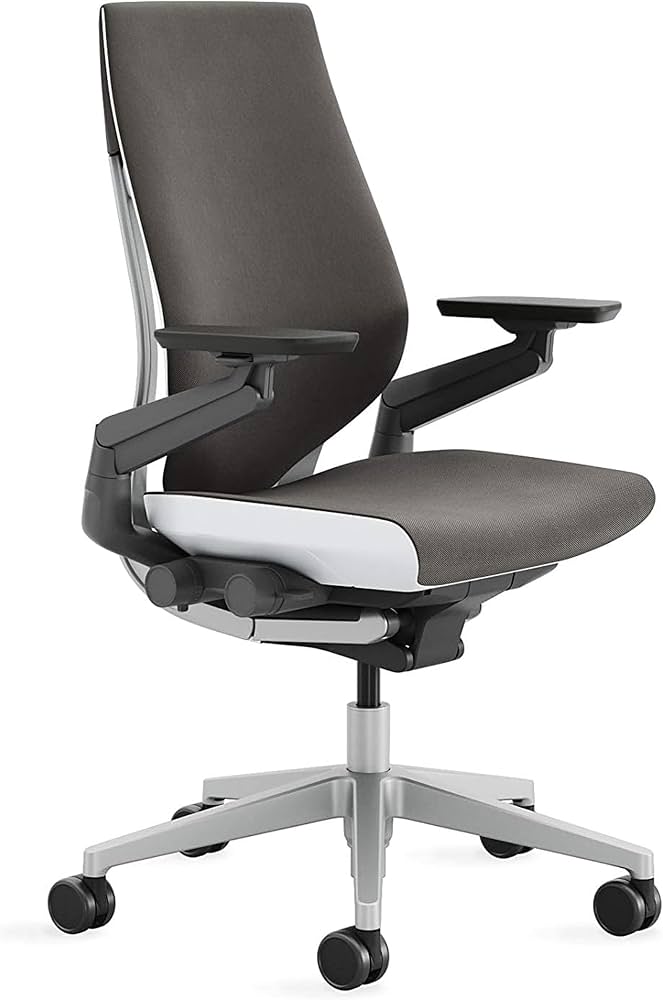
Quick Decision
Buy the Steelcase Gesture if you spend 8+ hours at a desk and need the most adjustable armrests and a backrest that adapts to your every movement. Skip it if you need a headrest, a breathable mesh seat, or if you're not ready to invest $1,500. It's the right chair for people who prioritize long-term comfort over short-term cost.
Best if you...
- Office professionals working 8+ hours daily
- Tall and large users up to 400 lbs
- People with back pain looking for an adjustable chair
Skip it if you...
- Budget buyers under $1,000
- Users who require a headrest
- People in hot climates who sweat
Back pain and discomfort are the reasons most people start shopping for an ergonomic chair, and the Steelcase Gesture is frequently on the shortlist. With a base price that often climbs past $1,500, it's far from an impulse buy. This analysis breaks down the Gesture's real strengths and weaknesses in 2026, using manufacturer specifications and feedback from major third-party reviewers like Wirecutter and RTINGS.
We'll cover what the chair does exceptionally well, where it falls short, who it's best suited for, and how it compares to top alternatives like the Herman Miller Aeron and Steelcase Leap. You'll also find a quick verdict for decision-makers and a list of worthwhile accessories if you do buy it on Amazon.
About the Steelcase Gesture Chair
The Steelcase Gesture is a premium ergonomic task chair designed for people who spend long hours at a desk. It features 4D adjustable armrests, adaptive 3D LiveBack support, and a 400-pound weight capacity. Built to last, it carries a 12-year warranty.
Key Specifications
- Warranty
- 12 years
- Materials
- Steel frame, polyurethane foam, fabric/leather
- Lumbar Support
- Adjustable height, fixed tension
- Weight Capacity
- 400 lbs
- Seat Height Range
- 15.5–21 in
- Armrest Adjustments
- 4D (height, pivot, depth, side-to-side)
- Seat Depth Adjustment
- 2.5 in
- Back Height Adjustment
- Yes
Overview
The Gesture is Steelcase's flagship chair, launched in 2013 and still highly relevant in 2026. It was designed after a global study of how people actually sit in a variety of postures, not just the 'correct' ergonomic positions. The result is a chair that adapts to you rather than forcing you into a single seating posture.
The Gesture sits in the premium tier of ergonomic chairs, competing directly with the Herman Miller Aeron and Embody. Its signature features are the 4D adjustable armrests (up/down, forward/back, side-to-side, and pivot) and the 3D LiveBack backrest that flexes with your spine. It's a heavy, robust piece of furniture built for years of daily use.
You can purchase the Steelcase Gesture through authorized dealers or directly on Amazon, where it's offered in multiple fabric colors and configurations. Because pricing varies with fabric and features, the chair typically lands between $1,300 and $2,000 in 2026.
Pros
The Gesture earned its reputation through a combination of thoughtful adjustability and rock-solid construction. Here are the areas where it genuinely stands out.
Exceptionally Adjustable 4D Armrests
The 4D armrests are the Gesture's headline feature. They can be raised or lowered, slid forward and back, moved side-to-side to change the distance between them, and pivoted to match your elbow angle. This level of adjustability is rare even among other premium chairs. According to Wirecutter's testing, the Gesture's armrests are a standout because they stay put and offer the full range of motion.
Most people rest their arms at a different height and distance depending on whether they're typing, reading, or using a mouse. With the Gesture, you can position the armrests within a few degrees of your natural resting angle, which helps reduce shoulder strain for many users. The armrest pads themselves are firm—some users may prefer a softer material—but their adjustability compensates.
3D LiveBack Technology Keeps Your Back Supported in Every Position
The backrest is made of a flexible co-polyester material that moves independently from the seat. This 'LiveBack' design is designed to mimic the natural movement of your spine, so the chair keeps in contact with your back whether you're leaning forward to read, sitting upright to type, or reclining. It's a dynamic form of support that encourages movement without sacrificing stability.
RTINGS, in their review, noted that the Gesture supports a wide range of postures and does not force you into a single pose. For people who shift positions frequently throughout the day, this can make a tangible difference in comfort. The built-in lumbar support can also be moved up or down to align with the natural curve of your lower back.
Exceptionally Strong Build Quality with 12-Year Warranty
Steelcase uses steel and aluminum framing, dense polyurethane foam, and a heavy-duty gas lift. The chair is rated for users up to 400 pounds and the mechanism is tested to withstand 1,000,000 cycles of adjustment. The 12-year warranty covers parts and labor, which is among the longest in the industry.
That warranty is a signal of the manufacturer's confidence. For a buyer who intends to keep the chair for a decade or more, the upfront cost becomes comparable to replacing a $400 chair every few years. Many owners report well-maintained Gesture chairs lasting past the warranty period.
Adjustable Seat Depth for Taller Users and Improved Leg Support
The seat can be moved forward and back across a 2.5-inch range. That's a significant travel distance that allows you to adjust the seat so your knees bend at a comfortable angle and your thighs are fully supported. This is particularly valuable for users who are 6 feet or taller, as many chairs offer limited seat depth.
The seat cushion itself is also shaped to reduce pressure at the front edge, and the cushion angle can be tilted independently. Combined with the seat depth adjustment, it's easy to find a position that keeps your legs comfortable without cutting off circulation.
High Weight Capacity and Wide Adjustability Range
The Gesture supports users up to 400 pounds, which is substantially higher than the majority of ergonomic chairs. It also has a seat height range of 15.5 to 21 inches, accommodating users from about 5 feet to more than 6 feet 8 inches. The back height is adjustable in 4-inch increments, and the seat width is standard 19 inches.
This broad range makes the Gesture a safe choice for households where two different-sized people will use the same chair. Since it's rare to find a chair that supports both tall, heavy users and smaller users without compromise, the Gesture covers a wider swath of body types than most alternatives.
Trusted by Gamers and Extended-Seat Users
While positioned as an office chair, the Gesture has become a popular choice among gamers who spend hours in the same position. The chair combines the adjustability of a high-end ergonomic chair with a clean aesthetic that fits any setup. Its lack of a headrest might surprise some, but for users who maintain an upright posture, the dynamic back support provides a better long-term solution than a typical gaming chair.
Because the Gesture is built to last, it can tolerate the 8+ hour sessions and heavy usage patterns common in gaming. The high weight capacity and robust casters (available in both hard and soft versions) also appeal to taller or heavier users.
Cons
No chair is perfect, and the Gesture has trade-offs that might matter more to you than its strengths. Here are the biggest drawbacks based on manufacturer specs and user feedback.
A Significant Price Premium
The Gesture's biggest obstacle is cost. At roughly $1,500 for a base configuration and more with upgraded fabric, it's twice the price of many well-reviewed ergonomic chair alternatives. The Steelcase Leap v2, a similarly capable chair, often sells for $1,200–$1,400, while the Branch Verve starts at $350. For consumers who aren't sure if they need that level of adjustability, the investment is hard to justify.
For many, the 12-year warranty and durability offset the price, but the upfront cash flow is a barrier. If you're on a tight budget, it's far more practical to start with a $300–$500 chair and save for an upgrade later.
No Factory Headrest Option
Steelcase does not offer an OEM headrest for the Gesture. While some third-party headrests exist, they can interfere with the backrest's movement and may void the warranty. For users who need to recline and support their head, the Gesture requires you to rely on a separate neck pillow or simply adjust your posture. This is a common dealbreaker for people who like to lean back during phone calls or short breaks.
The lack of a headrest is unusual even in budget-friendly chairs—the Branch Verve and Herman Miller Aeron (with third-party add-on) both offer optional headrests. If neck support is non-negotiable, the Gesture may not be the right fit.
Upholstery Retains Heat; No Full-Mesh Option
The Gesture is available in fabric and leather, but not a full-mesh version. Fabric upholstery, even breathable varieties, traps more body heat than the suspended mesh used on the Aeron and many other chairs. In warm environments or for users who tend to sweat, this can be a source of daily discomfort.
While the fabric's breathability varies by option, the design inherently doesn't promote airflow as well as a mesh seat and back. If you work in a hot office or don't use air conditioning, a mesh chair like the Aeron may be the more comfortable daily choice.
Heavy and Difficult to Move
At roughly 69 pounds, the Gesture is among the heaviest task chairs you'll encounter. Moving it between rooms—upstairs, through doorways, into another desk—can be a two-person job. Even rolling it across carpet requires some effort, and the chair doesn't include a lift system to help you transport it. That's a practical consideration for anyone who moves desks or works from home.
While the weight contributes to its stability and durability, it also makes it impractical to swap chairs between workstations. If you frequently rearrange your home office or need to move a chair between shared spaces, a lighter model is easier to live with.
Lumbar Support Tension Is Not Adjustable
The Gesture's lumbar support can be moved up and down, but it's not adjustable in depth or tension. For users with severe lower back issues, the fixed cushion pressure may be insufficient. The Steelcase Leap, by contrast, offers adjustable lumbar depth and tension, allowing a more tailored fit for sensitive backs.
Most users will find the built-in support comfortable, but it's worth knowing that if you need more aggressive lordosis support, the Gesture won't let you dial it in the way many physical therapists recommend.
Armrest Pads Are Firm and Narrow
Despite being endlessly adjustable, the actual armrest pads are only moderately padded and are relatively narrow. Some users report that after several hours of typing, the firmness of the pad can cause discomfort under the forearms. The Herman Miller Embody's armrests, while less adjustable, have a softer, wider surface.
If you're a heavy user who rests your arms constantly, you can buy aftermarket armrest covers, but such accessories also move around. A more plush pad might be a better starting point for some.
👍 Who It's For
The Steelcase Gesture is tailored for anyone who spends 8+ hours a day at a desk and values adjustability over everything else. It's particularly well-suited for remote workers and IT professionals who often sit for long stretches and need reliable lumbar support. Tall or large-framed users are also a key audience, as the seat depth, height range, and 400-pound capacity ensure a comfortable fit for people often neglected by standard chairs.
People with pre-existing back conditions who want a chair that encourages movement without compromising on support will find the 3D LiveBack technology genuinely helpful. Gamers and streamers who need a chair that can keep pace with marathon sessions and offer a professional look will also appreciate the Gesture's adjustability and durability. For these users, the upfront investment translates into fewer days with a sore neck or back, making it a worthwhile purchase.
👎 Who Should Avoid
The Gesture isn't for everyone. If your budget tops out at $500, you're better off with a different chair until you're ready to invest more. If you absolutely need a headrest for frequent reclining, the Gesture will frustrate you, as the lack of an OEM headrest is a notable omission. Similarly, anyone living in a hot climate or who sweats a lot may find the fabric back less comfortable than a mesh alternative like the Herman Miller Aeron.
If you frequently move desks or need a chair that's easy to transport, the Gesture's 69-pound weight is a practical drawback. Users with specific lumbar needs who want tension adjustment will be better served by the Steelcase Leap v2. Ultimately, if the Gesture's key features don't align with your daily routine, the high price is hard to justify.
See today's Steelcase Gesture Chair price and available configurations on Amazon.
🛒 Buy on AmazonAs an Amazon Associate we earn from qualifying purchases.
Alternatives to Consider
| Product | Choose Steelcase Gesture Chair if... | Choose the alternative if... |
|---|---|---|
| Herman Miller AeronComparable price; Aeron can be $100–$300 more depending on options. | You want the most adjustable armrests on the market and a backrest that moves naturally with your daily shifts in posture. | You prefer a breathable full-mesh seat and a more minimalist design, and you don't need seat depth adjustment. |
| Steelcase Leap v2About $100–$200 cheaper. | You want adjustable lumbar tension and a slightly lower price, while still getting 4D arms. | You spend a lot of time leaning forward or in unconventional postures; the Gesture's 3D LiveBack adapts better. |
| Herman Miller EmbodySimilar price; Embody can be slightly more. | You want the most armrest adjustability and high weight capacity. | You want the Embody's backrest to distribute pressure evenly and you don't need seat depth adjustment. |
| Branch VerveRoughly $1,100 less. | You want a premium build with a 12-year warranty and the best-in-class arms. | Your budget is under $500 and you want a headrest and breathable mesh. |
At the same price point, the Herman Miller Aeron remains the classic alternative. Its mesh seat and back provide superior air circulation, and the chair has a sleeker aesthetic. However, the Aeron has a narrower range of armrest adjustability and its seat depth adjustment is only available on certain sizes. Choose it if breathability matters more than armroom.
The Steelcase Leap v2 is often the more pragmatic fit for people who want the same durability and adjustability but at a slightly lower price. The Leap offers tension-adjustable lumbar support and a more flexible backrest, making it a better choice for those who need extra lower back control. The Branch Verve is a budget pick with a headrest and mesh back, but it sacrifices material quality and adjustability.
Is it worth the price?
At approximately $1,500, the Gesture is worth it for dedicated desk workers with back complaints, especially if they're taller than average and rarely use a headrest. Compared to the Steelcase Leap v2 at around $1,200, the Gesture offers more armrest flexibility but at a $300 premium. For casual users, a $400–$500 chair will meet most needs, so the Gesture only makes sense if you'll use its adjustability daily.
📝 Bottom Line
The Steelcase Gesture is the right choice for ergonomic purists who spend most of their waking hours at a desk and want a chair that adapts to them, not the other way around. Its 4D armrests are the best in the business, the 3D LiveBack keeps you supported across all positions, and the build quality ensures it will outlive most tech gadgets in your office. The main cons—the steep price, lack of a headrest, and weaker lumbar tension—are serious but not fatal for those who fit its ergonomic philosophy.
If you fit the profile—tall, prone to back tension, and working 6+ hours daily—the Gesture is a long-term investment that saves you from repeating purchases of cheaper chairs. However, if you need a headrest for reading or reclining, or if you live in a hot climate and prefer breathable mesh, the Herman Miller Aeron might offer better day-to-day comfort at a similar price.
In the end, the Gesture is about prioritization. It's not the most affordable, breathable, or feature-complete chair on the market, but it is the most adjustable in the ways that matter for seated posture. Buy it if you need that adjustability and a 12-year warranty. Skip it if those specific benefits don't outweigh the cost.
Check current Steelcase Gesture Chair availability and bundle options on Amazon.
🛒 Buy on AmazonAs an Amazon Associate we earn from qualifying purchases.
Frequently Asked Questions
Quick Summary
Key Pros
- ✓Best-in-class 4D armrests with height, pivot, depth, and side-to-side adjustment
- ✓3D LiveBack backrest moves naturally with your spine
- ✓12-year warranty and heavy-duty construction rated for 400 lbs
- ✓2.5-inch seat depth adjustment supports tall users
- ✓Wide height range (15.5–21 in seat) fits users from 5' to 6'8"
Key Cons
- ✗Premium price tag often above $1,500
- ✗No factory headrest option
- ✗Fabric upholstery retains body heat; no full-mesh version
- ✗Heavy (69 lbs) and difficult to move
- ✗Lumbar support tension is not adjustable
Ratings
Best For
- →Office professionals working 8+ hours daily
- →Tall and large users up to 400 lbs
- →People with back pain looking for an adjustable chair
- →Gamers who spend long sessions at a desk