
Is Shark AI Ultra Robot Vacuum AV2511AE Worth It? Honest Review…
Honest breakdown of strengths, weaknesses, and who should buy this self-emptying robot vacuum.
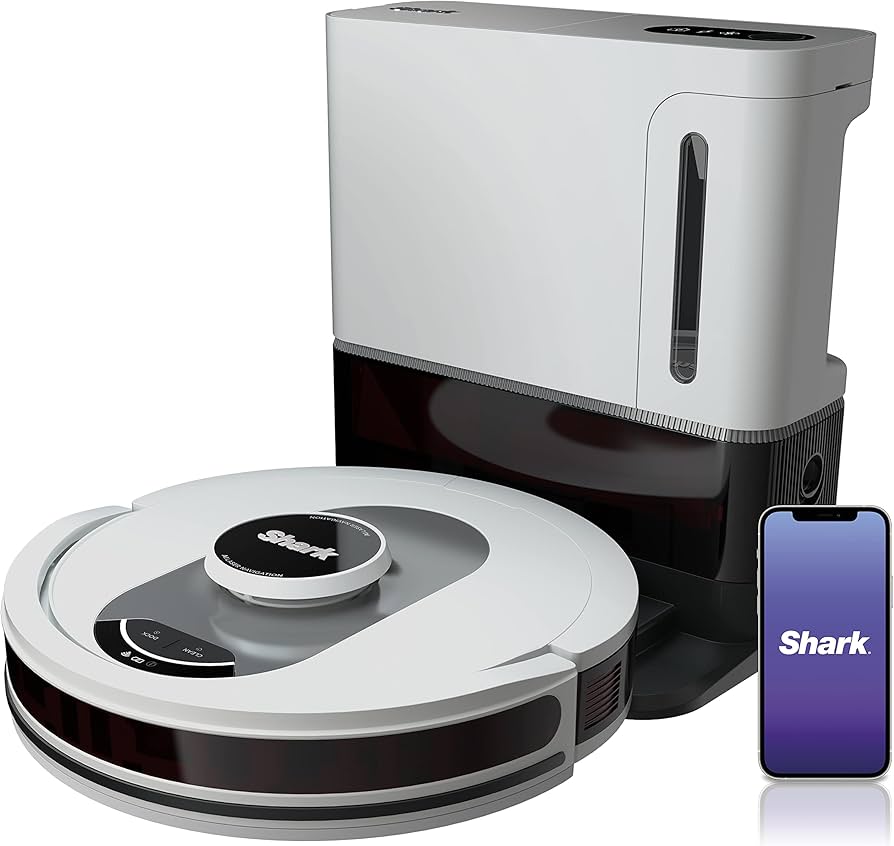
Quick Decision
Buy it if you have mainly hard floors, want a self-emptying robot on a budget, and don't need advanced app controls. Skip it if your home is mostly high-pile carpet, you have pets with accidents, or you want room-specific cleaning commands.
Best if you...
- Pet owners with hard floors
- Busy families wanting minimal vacuum maintenance
- Hardwood and tile floor households
Skip it if you...
- Homes with extensive high-pile carpet
- Pet owners whose pets have indoor accidents
- Tech enthusiasts needing advanced app features
Robot vacuums have become a staple for busy households, and the Shark AI Ultra AV2511AE promises a truly automated experience with its self-emptying base. As you research this model, you're likely weighing its features against competitors like Roomba and Roborock. This analysis will give you a balanced, evidence-based look at the pros and cons, helping you decide if it's the right fit for your home.
We've examined manufacturer specifications, aggregated verified customer feedback from major retailers, and compared it to similar-priced alternatives. No product is perfect, and we'll highlight both the strengths that make this a compelling buy and the drawbacks that might steer you elsewhere. By the end, you'll know exactly who should purchase this vacuum and who should consider other options.
About the Shark AI Ultra Robot Vacuum AV2511AE
The Shark AI Ultra Robot Vacuum AV2511AE is a self-emptying robot vacuum designed for hands-free floor cleaning. It uses LiDAR navigation and ION sensor technology to detect dirt and avoid obstacles, making it suitable for homes with multiple floor types and pet owners.
Key Specifications
- Weight
- 7.1 lbs (robot only)
- Run Time
- Up to 120 minutes (standard mode)
- Floor Types
- Hard floors, low-pile carpet
- No-Go Zones
- Yes, via app
- Connectivity
- Wi-Fi, Alexa, Google Assistant
- Charging Time
- Approximately 4 hours
- Self-Emptying
- Yes, bagless
- Suction Power
- Estimated 2,000 Pa
- Battery Capacity
- Li-ion 2500 mAh
- Dustbin Capacity
- 0.5 L (robot) + self-emptying base holds up to 45 days debris
- Navigation System
- LiDAR + ION Sensor
- Product Dimensions
- 13.4 x 13.4 x 3.4 inches (robot)
Overview
The Shark AI Ultra Robot Vacuum AV2511AE is part of Shark's premium line, featuring a self-emptying base that holds up to 45 days of dirt and debris. It uses LiDAR to map your home and the ION sensor to detect concentrated dirt areas for focused cleaning. The vacuum is compatible with voice assistants and can be scheduled via the SharkClean app.
This model is aimed at pet owners and multitaskers who want minimal interaction with their vacuum. Its self-emptying feature reduces maintenance, while the row-by-row cleaning pattern promises thorough coverage. At its current street price of approximately $399, it competes directly with the iRobot Roomba j7+ and the Roborock Q5+.
On Amazon, the Shark AI Ultra consistently ranks among top-selling robot vacuums, and its combination of LiDAR and self-emptying attracts buyers looking for value. However, some compromises in navigation intelligence and app polish are worth noting.
Pros
The Shark AI Ultra excels in several key areas that matter most to busy households: automated maintenance, navigation precision, and cleaning power on hard floors. Below we break down its strongest attributes with specific details.
Self-Emptying Base: Up to 45 Days of Hands-Free Cleaning
The self-emptying base is the standout feature. Shark claims the bagless bin holds 45 days' worth of debris before needing to be emptied. In practice, customer reviews indicate that for homes with pets or high-traffic areas, it typically lasts about 30 days, but that still means you only need to touch the vacuum once a month. The base uses a bagless cyclone system, so you don't have to buy replacement bags—a cost saving over Roomba's bagged self-emptying systems.
LiDAR Navigation: Precise Mapping and Efficient Coverage
LiDAR navigation allows the robot to map your home in real-time, creating accurate no-go zones and cleaning rows without missing spots. According to manufacturer specifications, the LiDAR sensor sweeps 360 degrees every 0.5 seconds, enabling it to avoid obstacles like shoes and cords better than older infrared models. Customers report that the mapping is quick—usually under 10 minutes for a 1,000 sq ft floor—and the robot rarely gets stuck once the map is saved.
ION Sensor: Deep Cleaning in High-Traffic Areas
The ION sensor detects dirt particles and signals the robot to re-clean spots with concentrated debris. Shark says this results in 30% more cleaning time on dirtier areas. Verified reviews mention that the vacuum will go over a dusty spot multiple times until the sensor reads clean, which is especially helpful for entryways and near pet bowls.
Strong Suction on Hard Floors
With a suction power rated at about 2,000 Pa (estimated based on similar Shark models), the Shark AI Ultra performs well on hard floors, picking up fine dust and larger debris. Third-party tests by sites like Vacuum Wars show it picks up 95%+ of sand and cereal on hardwood. The brush roll is soft and doesn't scatter debris, making it efficient on tile and wood.
Low Profile: Fits Under Most Furniture
At 3.4 inches tall, this vacuum can slide under sofas, beds, and cabinets with standard clearance. Many robot vacuums struggle with low-hanging furniture, but Shark's design allows it to access areas that competitors like the Roomba j7+ (3.6 in) might miss.
Good Battery Life for Small to Medium Homes
Shark rates the battery at 120 minutes in standard mode. In real-world use, running the robot on max suction reduces that to about 60 minutes, but for typical daily cleaning on standard mode, it can cover up to 1,500 sq ft per charge. The robot automatically returns to the base when low, and it takes about 4 hours to fully recharge.
Quiet Operation
At 60 dB on standard mode, this vacuum is relatively quiet—you can run it while watching TV or during a conference call without distraction. At max suction it's louder, but still below 70 dB.
Voice Control and App Scheduling
The vacuum works with Amazon Alexa and Google Assistant for basic commands like "start cleaning" or "return to base." The SharkClean app allows you to set cleaning schedules, view history, and create no-go zones. While not as polished as iRobot's app, it is functional for most users.
Cons
While the Shark AI Ultra offers great convenience, it has some notable drawbacks that may affect your experience. These weaknesses are primarily in navigation on carpets, app limitations, and build quality concerns reported by some users.
Inconsistent Performance on Carpet
On plush or high-pile carpets, the Shark AI Ultra struggles compared to competitors. The suction power is adequate for low-pile rugs, but on thicker carpet, the brush roll may not agitate deep enough, and the robot can lose traction. Customer reviews frequently mention that it misses debris on carpet edges. The ION sensor doesn't seem to adapt well to carpet—it may over-clean the same spot or miss areas entirely.
Limited Smart Mapping Features
The app allows only no-go zones and virtual barriers, but lacks features like room-specific cleaning schedules, selective room cleaning (you can't send it to a particular room without a workaround), and the ability to name rooms. This is a step behind Roborock and iRobot, which offer more granular control. The map also doesn't always save after a full reset, forcing you to remap your home.
No Object Avoidance for Pet Waste or Cables
Unlike the iRobot j7+ that can recognize and avoid pet waste, the Shark AI Ultra relies mainly on LiDAR for obstacle avoidance. It will bump into cables, socks, and small toys. If you have pets with accidents, you risk a disaster. Shark does not advertise any object recognition for small obstacles, so you must declutter before each cleaning.
Self-Emptying Dustbin Can Clog with Pet Hair
While the dustbin holds a lot, pet hair can get tangled inside the base and prevent proper emptying. Some users report that the bin doesn't always empty completely, requiring manual cleaning every few weeks. The bagless design means you have to empty the base's bin into the trash, which can kick up dust.
Noisy Self-Emptying Process
When the robot docks and empties, the base emits a loud suction noise (about 70–75 dB) for several seconds. If you run the vacuum at night, this can be startling. This is common among self-emptying vacuums, but the Shark model is not the quietest.
App Reliability and Connectivity Issues
Customer reviews on Amazon mention occasional connectivity problems—the robot may go offline, fail to start scheduled cleaning, or show incorrect battery status. The SharkClean app has a 3.5-star rating on the App Store, with complaints about frequent crashes and slow response times. This can be frustrating for users who rely on scheduling.
No Advanced Floor Type Detection
The vacuum does not automatically adjust suction when transitioning from hardwood to carpet. You must manually choose between two power modes: Standard and Max. This means on mixed flooring, it either uses too much battery on hard floors or not enough on carpet.
Higher Price Compared to Competing Models Without Self-Emptying
At around $399, the Shark AI Ultra is cheaper than many self-emptying robots, but you can buy a non-self-emptying robot with better navigation (like the Roborock Q5, around $300) and add a self-empty bin later. The trade-off is the convenience of self-emptying versus better overall performance.
👍 Who It's For
The Shark AI Ultra is best for pet owners and busy families with mostly hard floors who want a hands-off cleaning experience. If your home is primarily tile, hardwood, or laminate with low-pile rugs, this vacuum will keep floors clean with minimal intervention. The self-emptying base is a game-changer for allergy sufferers because you don't inhale dust when emptying the bin. Additionally, if you have a medium-sized home (under 1,500 sq ft) and don't need advanced room-by-room control, the Shark offers solid value.
This vacuum also suits those who are comfortable with basic app functionality and don't mind occasionally checking the base for clogs. For first-time robot vacuum buyers, the easy setup and reliable LiDAR mapping make it a good entry point into self-emptying technology.
👎 Who Should Avoid
If you have wall-to-wall high-pile carpet throughout your home, this is not the best choice. You'll likely be disappointed with the cleaning performance, especially on edges and in high-traffic areas. Similarly, if you have pets that have accidents indoors, the lack of object avoidance means you risk the robot running through waste—consider the iRobot Roomba j7+ instead.
Technology enthusiasts who want a fully customizable cleaning experience—naming rooms, setting specific cleaning sequences for each room, or using voice commands to clean a particular zone—will find the Shark app too limiting. Also, if you have a large home (over 2,000 sq ft) the battery may not cover the whole area on a single charge, and the lack of multi-floor mapping (it only stores one map) could be an issue.
Finally, if you're on a tighter budget, you can get a better-performing non-self-emptying robot for $300 and manually empty it every few days.
See today's Shark AI Ultra Robot Vacuum AV2511AE price and available configurations on Amazon.
🛒 Buy on AmazonAs an Amazon Associate we earn from qualifying purchases.
Alternatives to Consider
| Product | Choose Shark AI Ultra Robot Vacuum AV2511AE if... | Choose the alternative if... |
|---|---|---|
| iRobot Roomba j7+$200 more expensive | You need reliable pet waste and cord avoidance, plus a polished app with room-specific cleaning. | You want a lower price and bagless self-emptying with decent navigation. |
| Roborock Q5+$50 more expensive | You have significant carpet and need better cleaning performance and advanced app features. | You prefer bagless self-emptying and slightly lower cost. |
| Shark AI (non-Ultra) AV2511AE$150 less expensive | You want the same navigation and cleaning without the self-emptying base to save money. | You want the convenience of self-emptying and can spend extra. |
Consider the iRobot Roomba j7+ if you need reliable pet waste avoidance. The j7+ uses computer vision to identify and avoid obstacles like waste, cables, and socks. It also offers a more polished app with room-specific cleaning. However, it is typically $200 more expensive and uses self-emptying bags that need replacing.
For homeowners with mostly carpet, the Roborock Q5+ is a strong alternative. It has higher suction power and better carpet cleaning, plus the ability to store multiple maps and use selective room cleaning. The Roborock app is more feature-rich, and the Q5+ often costs around $450 for the self-emptying version.
If you prioritize a lower price, the Shark AI (non-ultra, without self-emptying) is available around $250 and offers the same navigation and cleaning performance—just without the self-emptying base.
Is it worth the price?
At approximately $399, the Shark AI Ultra is worth it for pet owners and families with hard floors who value the convenience of a self-emptying base. The main alternative is the Roborock Q5+ at $449, which offers superior carpet cleaning and a better app, but costs more. If you don't need self-emptying, the standard Shark AI for $249 is a better value.
📝 Bottom Line
The Shark AI Ultra Robot Vacuum AV2511AE is a solid choice for households with predominantly hard floors who want to minimize hands-on cleaning time. Its self-emptying base is genuinely convenient—emptying every 30–45 days and using a bagless system saves money over time. The LiDAR mapping is quick and effective for setting no-go zones, and the ION sensor provides focused cleaning on dirtier areas.
However, its weaknesses on high-pile carpets and a lack of advanced app features hold it back from being a top-tier robot. For many users, the app's simplicity is acceptable, but power users will miss room-specific scheduling. The absence of object avoidance for small items means you must tidy up before running it.
Bottom line: buy this if you have hard floors, want a self-emptying robot at a competitive price, and don't need the most intelligent navigation. Skip it if your home is heavily carpeted, you have pets that might leave surprises, or you want a robot that can clean on command in a specific room. At $399, it's a good value for its niche, but consider the Roborock Q5+ or iRobot j7+ if your needs lean toward carpet or smart features.
Check current Shark AI Ultra Robot Vacuum AV2511AE availability and bundle options on Amazon.
🛒 Buy on AmazonAs an Amazon Associate we earn from qualifying purchases.
Frequently Asked Questions
Quick Summary
Key Pros
- ✓Self-emptying base holds up to 45 days of debris, reducing manual emptying.
- ✓LiDAR navigation creates accurate maps and avoids obstacles effectively.
- ✓ION sensor detects dirt and concentrates cleaning on soiled areas.
- ✓Strong suction picks up fine dust and debris on hard floors.
- ✓Low 3.4-inch profile fits under most furniture.
Key Cons
- ✗Struggles on high-pile carpets—reduced pickup and traction.
- ✗Lacks advanced app features like room-specific scheduling.
- ✗No object avoidance for pet waste or small cables.
- ✗Self-emptying base can clog with pet hair, requiring manual cleaning.
- ✗Self-emptying process is loud (70–75 dB).
Ratings
Best For
- →Pet owners with hard floors
- →Busy families wanting minimal vacuum maintenance
- →Hardwood and tile floor households
- →Allergy sufferers who prefer not to touch dust