
Nikon Z8 pros and cons: Complete Buyer's Guide (2026)
Honest breakdown of strengths, weaknesses, and who should buy in 2026
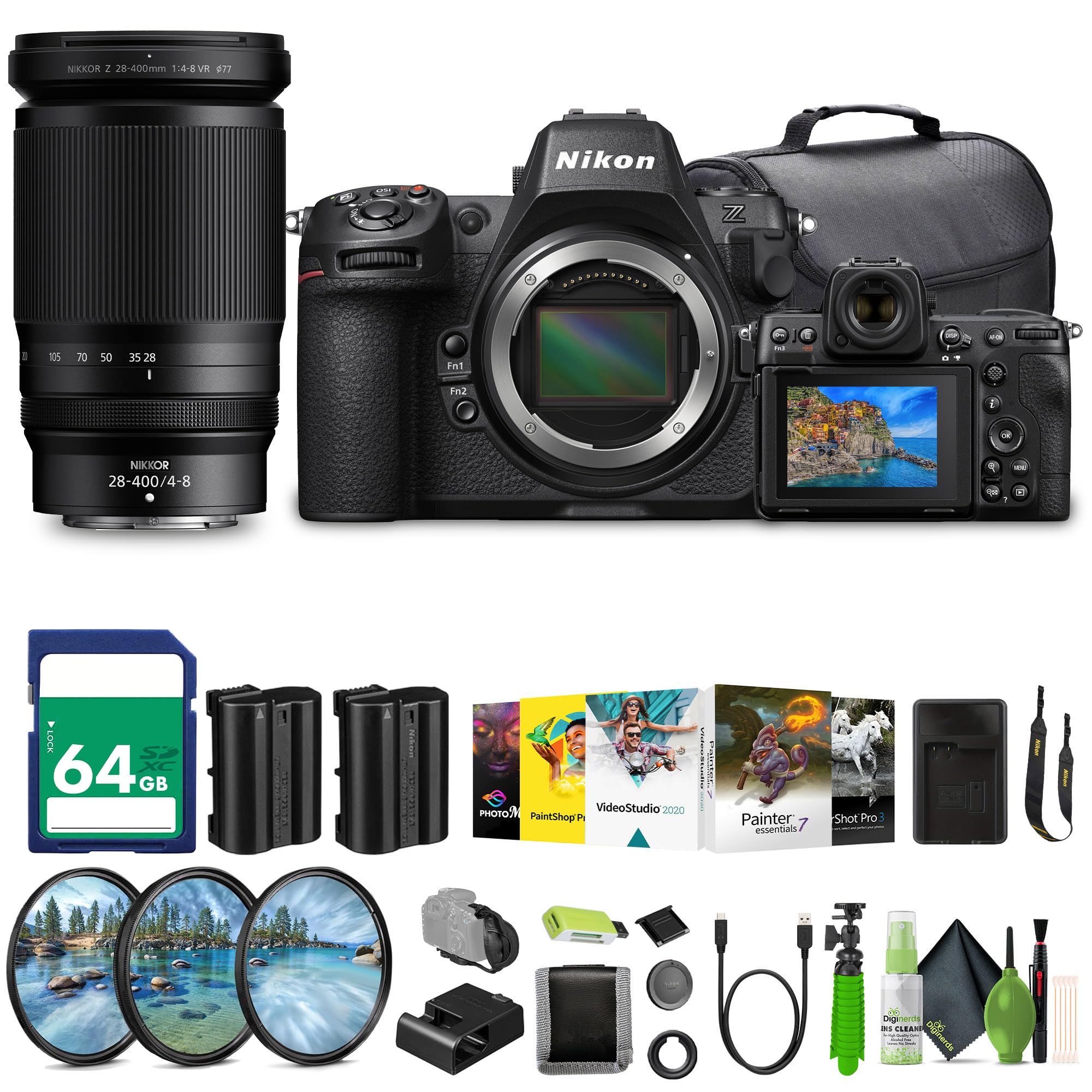
Quick Decision
Buy the Nikon Z8 if you need a compact high-speed, high-resolution camera for wildlife and action photography, and you can manage its battery limitations. Skip it if you require long-duration 8K video or a built-in vertical grip—the Z9 or Sony A7R V might suit you better.
Best if you...
- Wildlife photographers needing high burst rates and fast AF
- Action and sports shooters who require 20 fps with tracking
- Landscape and studio photographers wanting 45MP resolution
Skip it if you...
- Casual photographers or beginners on a budget
- Videographers needing unlimited 8K recording in hot environments
- Photographers who shoot vertical orientation all day (no grip)
The Nikon Z8 arrived in 2023 as a smaller, more affordable sibling to the flagship Z9, and it remains a top contender in 2026 for anyone needing a high-resolution, high-speed mirrorless camera. This analysis covers the Z8's performance, handling, and value, drawing from Nikon's official specifications and third-party testing from DPReview and Imaging Resource. We will examine where the Z8 excels and where it falls short, helping you decide if it's the right tool for your photography.
About the Nikon Z8
The Nikon Z8 is a high-resolution full-frame mirrorless camera designed for professional and advanced enthusiast photographers. It combines a 45.7MP stacked CMOS sensor with 8K video recording, offering 20 fps burst shooting and advanced subject detection autofocus. Targeted at wildlife, action, and studio photographers, it bridges the gap between the Z7 II and the flagship Z9.
Key Specifications
- Sensor
- 45.7 MP Full-Frame Stacked CMOS
- Weight
- 910 g (body only with battery and memory card)
- Battery
- EN-EL15c (CIPA 330 shots)
- Display
- 3.2-inch 2.1M-dot Tilting Touchscreen
- ISO Range
- 64–25600 (expandable to 32–102400)
- Processor
- EXPEED 7
- Card Slots
- 1x CFexpress Type B/XQD, 1x SD UHS-II
- Dimensions
- 144 x 118.5 x 83 mm
- Viewfinder
- 3.69M-dot OLED, 0.8x magnification
- Stabilization
- 5-axis IBIS, up to 5.5 stops
- Video Resolution
- 8K/30p, 4K/120p
- Continuous Shooting
- 20 fps (electronic shutter)
Overview
The Nikon Z8 is a full-frame mirrorless camera built around a 45.7MP stacked CMOS sensor and the EXPEED 7 image processor—the same engine found in the Z9. This combination enables 8K/30p video recording, 4K/120p slow motion, and continuous shooting at up to 20 fps with full autofocus tracking. The body is approximately 30% smaller and lighter than the Z9, making it more portable while retaining most of its flagship capabilities. It features a 3.2-inch 2100k-dot tilting touchscreen and a 3690k-dot OLED electronic viewfinder with 0.8x magnification. The Z8 is available on Amazon and other retailers for roughly $3,997, though prices can fluctuate.
Pros
The Nikon Z8 delivers exceptional image quality and speed in a more portable body than the Z9. Its stacked sensor and robust autofocus make it a versatile tool for a wide range of photographic disciplines.
Outstanding Image Quality and Resolution
With a 45.7MP full-frame stacked CMOS sensor, the Z8 captures extraordinary detail, making it ideal for landscape, studio, and fine-art photography. According to DPReview, the sensor offers excellent dynamic range (around 14.4 stops at base ISO) and low noise performance up to ISO 6400. The high resolution allows for generous cropping, which is valuable for wildlife and sports shooters who may need to frame tighter in post.
Blazing Fast Continuous Shooting with Full AF
The Z8 can shoot up to 20 fps using the electronic shutter (30 fps in a reduced-resolution DX crop mode) with full autofocus and exposure tracking. This real-time performance, inherited from the Z9, is critical for capturing decisive moments in action sports, wildlife, and events. The blackout-free viewfinder ensures you never lose sight of the subject.
Advanced Subject Detection Autofocus
Nikon's EXPEED 7-powered autofocus offers deep learning-based subject detection for people (eyes, faces, heads), animals (dogs, cats, birds), and vehicles (cars, motorcycles, bicycles, trains, airplanes). In testing by Imaging Resource, the Z8's AF acquisition and tracking proved reliable even in low-light conditions down to -7 EV. The real-time tracking is sticky and consistent, minimizing missed shots.
8K Video Recording with Pro Features
The Z8 records internal 8K/30p video using the full sensor width, oversampled from 8.3K. It also supports 4K/120p slow motion and 10-bit 4:2:2 N-Log or HLG recording. The camera can output 12-bit ProRes RAW to an external recorder via HDMI. These video capabilities rival those of dedicated cinema cameras, making the Z8 a hybrid powerhouse for videographers.
Robust Build with Weather Sealing
Constructed with a magnesium alloy chassis and extensive weather sealing, the Z8 is designed to withstand harsh conditions. Nikon claims sealing is equivalent to the Z9, which is rated for professional use in dust and moisture. The shutter unit is rated to 400,000 cycles, and the electronic shutter eliminates mechanical wear when using silent mode.
Excellent Electronic Viewfinder
The 3.69 million-dot OLED EVF offers 0.8x magnification and a fast 120 fps refresh rate in high-brightness mode. It provides a bright, clear view with minimal lag, which is crucial for tracking fast-moving subjects. The viewfinder is comfortable for long shooting sessions.
Dual Card Slots with High-Speed Support
The Z8 has two card slots: one CFexpress Type B/XQD and one SD UHS-II. This flexibility allows users to choose faster primary storage for burst shooting and 8K video while using cheaper SD cards for backup or overflow. CFexpress cards enable fast buffer clearing; the camera can capture over 100 compressed Raw frames before slowing.
Effective In-Body Image Stabilization (IBIS)
The Z8 features 5-axis sensor-shift stabilization rated up to 5.5 stops (CIPA standard). This stabilizes all Z-mount lenses and helps achieve sharp handheld shots at low shutter speeds, as well as smoother handheld video. Combined with VR lenses, stabilization can exceed 6 stops.
Cons
Despite its many strengths, the Z8 has several drawbacks that may affect certain users. These include compromises inherited from its smaller body, as well as some feature limitations compared to the flagship Z9.
Smaller Body Means Less Battery Life
The Z8 uses the same EN-EL15c battery as the Z6 II and Z7 II, which has a lower capacity than the Z9's EN-EL18d. CIPA-rated battery life is only about 330 shots per charge (using the EVF) or 340 shots (rear screen). Real-world usage may yield 400-600 shots, but heavy burst shooting or video recording can drain the battery quickly. For all-day shoots, a battery grip or spare batteries are essential.
No Built-in Vertical Grip
Unlike the Z9, the Z8 lacks an integrated vertical grip. Adding the optional MB-N14 grip improves handling for portrait orientation and provides an extra battery, but it adds cost ($349) and bulk. For event and wedding photographers who shoot predominantly vertical, this is a notable omission.
Limited Cooling for Extended 8K Recording
The Z8 can overheat when recording 8K video in warm environments. Nikon specifies a maximum recording time of 90 minutes at 23°C (73°F), but testing by DPReview showed the camera can overheat in as little as 20-30 minutes at higher ambient temperatures. The lack of active cooling (fan) means it's not as reliable for long-form 8K production as dedicated cinema cameras.
Mechanical Shutter Not Rated for High-Speed Sync
If you need fast flash sync speeds, the Z8's mechanical shutter syncs at only 1/200 sec. The electronic shutter can sync at 1/250 sec with some triggers, but it may cause banding under artificial light. Compared to the Z9's 1/250 sec mechanical sync, this is slightly less flexible for studio flash work.
No Built-in GPS or Bluetooth Remote
The Z8 lacks built-in GPS for geotagging; you must use the SnapBridge app with your smartphone for location data. Additionally, there is no built-in intervalometer for time-lapse without a third-party accessory. While these are relatively minor, some competing cameras (like the Sony A7R V) offer built-in GPS and timelapse features.
Large File Sizes Demand Fast Storage
45.7MP Raw files are large—around 50 MB for compressed Raw, and over 100 MB for lossless compressed Raw. This quickly fills drives and requires fast CFexpress cards for smooth shooting. Editing workflow may require significant processing power and storage capacity.
Menu System Can Be Overwhelming
Nikon's menu structure, while powerful, is dense and not as intuitive as Sony or Canon offerings. Many settings require deep menu diving, and the custom controls (while plentiful) take time to configure. New users may experience a steep learning curve.
👍 Who It's For
The Nikon Z8 is best for professional and serious enthusiast photographers who need top-tier image quality, high-speed performance, and advanced video in a relatively compact body. It is ideal for wildlife and action photographers who require fast burst rates and reliable subject tracking, as well as landscape and studio photographers who want resolution and dynamic range. Hybrid shooters who produce 8K video alongside stills will find it versatile. Users upgrading from older Nikon DSLRs will appreciate the familiar ergonomics and Z-mount lens compatibility.
👎 Who Should Avoid
The Z8 is not the best choice for casual photographers or those on a tight budget—its high price and demanding workflow (large files, need for fast cards) make it overkill for everyday snapshots. Video professionals who shoot long 8K sessions in hot environments may be frustrated by overheating limitations and should consider the Z9 or a dedicated cinema camera. Users who prioritize compact size and portability above all may prefer the Sony A7R V or Nikon Z7 II, which are lighter and often cheaper. Finally, anyone heavily invested in Canon or Sony ecosystems may find switching lenses and accessories costly.
See today's Nikon Z8 price and available configurations on Amazon.
🛒 Buy on AmazonAs an Amazon Associate we earn from qualifying purchases.
Alternatives to Consider
| Product | Choose Nikon Z8 if... | Choose the alternative if... |
|---|---|---|
| Nikon Z9$1,000 less expensive | You want a more compact body than the Z9 but still need flagship speed and resolution. | You need longer battery life, a built-in vertical grip, and extended 8K recording without overheating. |
| Sony A7R VSimilar price, around $3,900 | You prioritize resolution (45.7MP) and speed (20 fps) over dynamic range, and you prefer Nikon's lens ecosystem. | You want 61MP resolution, 8 stops of IBIS, AI autofocus, and a more compact body with an articulating screen. |
| Canon EOS R5$100 more expensive (approx. $4,100) | You want faster burst rates (20 fps vs 12 fps), better subject detection for wildlife, and a smaller body than the R5. | You are already invested in Canon RF lenses or prefer Canon's color science and menu system. |
If the Z8's battery life or overheating issues give you pause, consider the Nikon Z9—it offers longer battery life, a built-in vertical grip, better thermal management, and an integrated GPS, but costs $1,000 more and is heavier. The Sony A7R V is a compelling alternative with a 61MP sensor, 8-stop IBIS, AI-based autofocus, and a more compact body; it lacks 8K video but offers 4K/60p with 10-bit capture and a fully articulating screen. For those who emphasize video, the Panasonic Lumix S5 IIX provides 6K ProRes RAW and unlimited recording time at a lower price, though with only 24MP. Finally, the Canon EOS R5 offers 45MP and 8K video but is known for overheating issues similar to the Z8; the R5 Mark II (if released by 2026) may address this.
Is it worth the price?
At approximately $4,000, the Nikon Z8 is worth it for professional photographers who will leverage its speed and resolution regularly. It offers 90% of the Z9's performance in a smaller, lighter body at a $1,000 discount. However, for videographers needing extended 8K recording, the Z9's improved thermal performance justifies the extra cost. If you only occasionally shoot high-resolution stills, the Z7 II or Sony A7R V provide better value.
📝 Bottom Line
The Nikon Z8 is an outstanding mirrorless camera that brings professional-grade speed and resolution to a more accessible form factor. Its 45.7MP stacked sensor, 20 fps burst shooting, and advanced autofocus make it a formidable tool for wildlife, action, and portrait photography. The addition of internal 8K video and high-quality slow-motion further cements its status as a hybrid powerhouse. However, battery life is a significant compromise compared to the Z9, and overheating can limit extended 8K recording. For photographers who can work around these limitations, the Z8 delivers phenomenal image quality and performance at a reasonable price. If you primarily shoot stills (especially action and wildlife) and value portability, the Z8 is a smart buy. But if video is your main focus or you need a built-in vertical grip, consider the Z9 or a competing model.
Check current Nikon Z8 availability and bundle options on Amazon.
🛒 Buy on AmazonAs an Amazon Associate we earn from qualifying purchases.
Frequently Asked Questions
Quick Summary
Key Pros
- ✓45.7MP stacked sensor delivers exceptional detail and dynamic range.
- ✓20 fps burst shooting with full autofocus and no viewfinder blackout.
- ✓Deep learning AF accurately tracks people, animals, and vehicles.
- ✓Internal 8K/30p and 4K/120p video with 10-bit N-Log and ProRes RAW output.
- ✓Weather-sealed magnesium alloy body rated for professional use.
Key Cons
- ✗Battery life is mediocre (approx. 330 shots CIPA).
- ✗No built-in vertical grip; optional grip adds weight and cost.
- ✗8K video can overheat in warm conditions after 20-30 minutes.
- ✗Mechanical flash sync limited to 1/200 sec.
- ✗No built-in GPS or intervalometer.
Ratings
Best For
- →Wildlife photographers needing high burst rates and fast AF
- →Action and sports shooters who require 20 fps with tracking
- →Landscape and studio photographers wanting 45MP resolution
- →Hybrid shooters who mix high-res stills with 8K video